Crappie Jigging Techniques
There’s nothing quite as frustrating as heading out to your favorite crappie spot, seeing fish on the sonar, but just not getting them to bite. It feels like you’ve tried everything, from minnows to different colors, but those slabs remain elusive. This comprehensive guide will dive deep into various crappie jigging techniques, helping you understand crappie behavior, select the right gear, and master the tactics that will put more fish in your boat or on the bank here in Oklahoma.
Understanding Crappie Behavior for Better Jigging
Before you even think about dropping a jig, you’ve got to get inside the mind of a crappie. These aren't just random swimmers; they have patterns, preferences, and predictable movements based on what's happening in their world. Knowing these nuances is absolutely key to successful jigging, because you can have the fanciest gear, but if you're not putting it where the fish are, you're just casting for exercise.
Seasonal Movements and Depths
Crappie, like most fish, are creatures of habit tied to the seasons. As the water temperatures fluctuate throughout the year, their location and depth preferences change dramatically. Understanding these shifts is foundational to knowing where to drop your jig.
In the springtime, when the water starts to warm up, usually hitting that sweet spot between 55-65 degrees Fahrenheit, crappie will move shallower. This is their spawning season, a time when they congregate in vast numbers in coves, creek arms, and along protected shorelines. You’ll often find them in water as shallow as 2-5 feet, tucked into brush, reeds, or around flooded timber. They're looking for firm bottoms to lay their eggs, and they’re often aggressive, protecting their nests. This is prime time for active jigging in relatively shallow water. You can learn more about Crappie Fishing Techniques and Seasonal Patterns in Oklahoma to fine-tune your approach for this period.
As summer progresses and water temperatures climb into the 70s and 80s, crappie tend to retreat to deeper, cooler waters. They'll often suspend over channel bends, humps, or near deep brush piles, seeking refuge from the heat and bright sun. During this period, you might find them anywhere from 10 to 30 feet deep, often relating to baitfish schools. Night fishing can be incredibly effective in summer, as crappie move shallower under the cover of darkness to feed. The challenge shifts from finding them in shallow cover to pinpointing their precise depth in deeper, more open water.
Fall brings a refreshing cool-down, and crappie become much more active again. As the water temperatures begin to drop back into the 60s, baitfish start to school up in open water, and crappie follow suit, gorging themselves to build up fat reserves for winter. You'll often find them roaming creek channels, along river ledges, and sometimes in shallower coves as they chase bait. This can be a fantastic time for both vertical jigging and slow trolling, as crappie are on the move and feeding heavily.
Winter is often overlooked, but it can be surprisingly productive. Crappie move to their deepest haunts, often congregating in large schools around deep timber, bridge pilings, or submerged structure in 20-50 feet of water. They become less active, but if you can locate a school, you can often catch multiple fish from the same spot. Vertical jigging directly over these schools with smaller, subtle jigs is the name of the game. They might not bite aggressively, but a slight lift and fall can be enough to entice them.
Favorite Structures and Cover
Crappie are masters of camouflage and ambush. They love to relate to structure and cover, using it for protection from predators, as ambush points for feeding, and as places to rest. If you're not fishing around something, you're likely missing out on the best opportunities.
Submerged timber, whether it's standing trees or fallen logs, is an absolute magnet for crappie. These areas provide shade, protection, and a rich ecosystem for insects and baitfish, all of which crappie adore. Fishing around a dense brush pile requires precision and patience, as snags are inevitable, but the rewards can be huge. You’ll often find schools of crappie packed tightly within the branches. Using a weedless jig head or a careful presentation is crucial here.
Bridge pilings and dock structures are another prime location, especially on lakes with significant man-made elements. The pilings themselves offer vertical cover and shade, while the underside of docks can hold large schools of crappie looking for shelter. These spots are often accessible from the bank or by boat, making them popular for anglers. The shade provided by docks is particularly important during sunny days or the hotter parts of the year, drawing crappie in close. Techniques like "dock shooting" become invaluable here, allowing you to get your jig far under the structure where fish feel safe.
Channels and creek bends, especially those with some sort of depth change or irregularities, are also crucial. Crappie will use these deeper paths for travel and to ambush baitfish that are pushed along by currents or wind. Looking for old creek beds, submerged roadbeds, or sharp drops on your sonar can reveal hidden crappie hotbeds. The edge where a deep channel meets a shallower flat is often a transition zone where crappie will suspend, ready to move up and feed.
Impact of Water Temperature and Clarity
Water temperature is arguably the single most important factor influencing crappie activity. It dictates everything from their metabolic rate to their spawning behavior. A few degrees difference can mean the difference between a hot bite and a dead day.
Crappie are cold-blooded, meaning their body temperature mirrors the water around them. In colder water, their metabolism slows down, making them less active and less likely to chase a fast-moving bait. This is why a slow, subtle jig presentation is often more effective in winter or during cold fronts. Conversely, in warmer water, their metabolism speeds up, making them more aggressive and willing to chase down a jig. This is when you can often get away with a faster retrieve or more erratic jigging action. The optimal temperature range for crappie activity and feeding is generally between 60-75 degrees Fahrenheit. Anything outside of that, and you'll need to adjust your approach significantly.
Water clarity also plays a massive role in jig selection and presentation. In clear water, crappie rely heavily on their eyesight to hunt. This means you’ll often want to use more natural-colored jigs—think greens, browns, and subtle patterns—that mimic real baitfish or insects. Lighter lines and a more stealthy approach become crucial to avoid spooking wary fish. If you're fishing a crystal-clear lake like Broken Bow, this becomes even more important.
On the flip side, stained or muddy water presents a different challenge. Crappie's visibility is reduced, so they rely more on scent and vibrations. This is where brighter, more contrasting colors really shine. Chartreuse, orange, and electric chicken jigs can stand out better in murky conditions. Jigs with blades or paddle tails that create more vibration can also be highly effective. The key is to make your jig noticeable in low-visibility conditions. Sometimes, a larger profile jig can also help fish locate your bait.
Essential Crappie Jigging Gear You'll Need
Having the right tools for the job makes all the difference, especially when you're trying to coax a bite out of a finicky crappie. You don't need to break the bank, but investing in a few key pieces of specialized crappie jigging gear will significantly improve your success rate and overall enjoyment on the water.
Rods and Reels for Precision Jigging
When it comes to crappie jigging, precision and sensitivity are far more important than brute strength. A good crappie rod is specifically designed to detect those incredibly light bites that often feel like nothing more than a slight "tick" or added weight on your line.
Most crappie anglers opt for light to ultralight spinning rods, typically ranging from 5 to 7 feet in length. The longer rods offer better casting distance for pitching jigs and can help absorb shock, preventing hooks from tearing out of a crappie's papery mouth. The key characteristic is a fast or extra-fast action tip, which means the rod bends mostly in the top third, allowing for quick, responsive hooksets without needing to move the entire rod. This sensitive tip is what transmits those subtle bites directly to your hand. Graphite rods are usually preferred for their lightweight feel and superior sensitivity. For those who prefer a baitcasting setup, some manufacturers like BnM offer specific crappie jigging rods designed for smaller baitcasting reels, which can offer even greater control for certain techniques.
Pairing your rod with a small, lightweight spinning reel (sizes 500 to 1000) is ideal. The goal is balance; you want a reel that complements the lightness of your rod, making it comfortable to hold and jig with all day long. A smooth drag system is essential, as crappie have delicate mouths, and an erratic drag can lead to pulled hooks. A good quality reel will also ensure consistent line lay, preventing tangles and allowing for smoother casts. You can find excellent options for specific crappie rods and reels for precision jigging on popular online retailers like Amazon, offering a wide selection to match any budget.
Line Choices: Mono, Fluoro, and Braid
Your fishing line is the direct connection between you and the fish, so choosing the right type and pound test is crucial for effective crappie jigging. Each line type has its pros and cons, and the best choice often depends on the technique and conditions you're fishing.
Monofilament (mono) line is a classic choice for crappie anglers, and for good reason. It's affordable, has good knot strength, and, most importantly, it has a fair amount of stretch. This stretch acts as a shock absorber, which can be beneficial when a crappie strikes, preventing the hook from tearing out. Mono is also very forgiving for beginners and floats, which can be useful for certain presentations. However, its stretch can also reduce sensitivity, making it harder to detect light bites, especially in deeper water. It also tends to have more memory, meaning it retains coils from the spool. Typical mono pound tests for crappie range from 4 to 6 lb.
Fluorocarbon (fluoro) line is practically invisible underwater due to its refractive index, making it an excellent choice for clear water and wary crappie. It has less stretch than mono, offering better sensitivity and more direct contact with your jig, which is fantastic for detecting those subtle taps. Fluoro also sinks, which can help your jig get down faster and stay at the desired depth. The main downsides are that it's generally more expensive than mono and can be a bit stiffer, sometimes leading to more line twist if not managed properly. Many anglers use a short fluorocarbon leader (2-4 feet) tied to a braided main line to get the best of both worlds.
Braided line offers the ultimate in sensitivity and strength for its diameter. It has virtually no stretch, allowing you to feel every bump, tick, and subtle bite. Its thin diameter also allows for longer casts and less water resistance, which can be advantageous in windy conditions or when fishing deep. The downside is that braid is highly visible underwater, so it's almost always recommended to use a fluorocarbon or monofilament leader. Braid can also be abrasive, and knots need to be tied carefully. Common braid pound tests for crappie jigging range from 6 to 10 lb, usually paired with a lighter leader. When exploring line options, consider what kind of water you'll be fishing the most; for example, clear waters like Tenkiller Lake might demand a fluoro leader for better concealment.
The Art of Jig Selection: Size, Weight, and Color
If there's one area where crappie anglers can obsess, it's jig selection. And for good reason! The perfect jig can turn a slow day into a banner day. It’s not just about what looks good to you, but what looks irresistible to a crappie.
Size and Weight: The size and weight of your jig are determined by several factors: depth, current, wind, and the desired fall rate. For shallow water (under 10 feet), or when crappie are very active, 1/32 to 1/16 ounce jigs are often perfect. They have a slower, more natural fall, giving crappie more time to react. As you move deeper (10-25 feet) or encounter stronger wind/current, you'll need to step up to 1/8 ounce. Anything deeper or in strong current might warrant a 1/4 ounce or even heavier jig to ensure it gets to the fish quickly and stays in the strike zone. Remember, the goal is to present the jig naturally without it falling too fast or too slow. Sometimes, when crappie are lethargic, a painfully slow fall from a tiny 1/64 ounce jig is the only thing that will trigger a bite.
Color: Crappie jig colors are a hot topic, with every angler having their personal "secret weapon." However, general rules apply based on water conditions. In clear water, natural colors like greens, browns, clear, and white tend to be most effective. Think about what natural baitfish or insects look like. Silver and blue combinations can also mimic baitfish well. When fishing in stained or muddy water, you need colors that stand out. Chartreuse, orange, bright pink, electric chicken (a mix of chartreuse and orange/pink), and neon green are fantastic choices. These high-contrast colors create a stronger silhouette and are easier for crappie to see in low visibility. On cloudy days or at dawn/dusk, a dark color like black or junebug (dark purple flake) can create a strong silhouette against the dim sky, which can be very effective. It’s always a good idea to have a variety of colors and sizes in your tackle box. Many experienced anglers start with a bright color in murky water, then switch to a more natural one if the bite is slow, or vice-versa. You'll find an extensive collection of crappie jigs in every conceivable size and color on Amazon, making it easy to experiment and stock up.
Mastering Different Crappie Jigging Techniques
Now that you understand crappie behavior and have your gear dialed in, it's time to talk about how to actually make that jig dance in the water. There’s more to jigging than just dropping a line; different situations call for different techniques, and mastering them will give you a significant edge.
Vertical Jigging for Suspended Fish
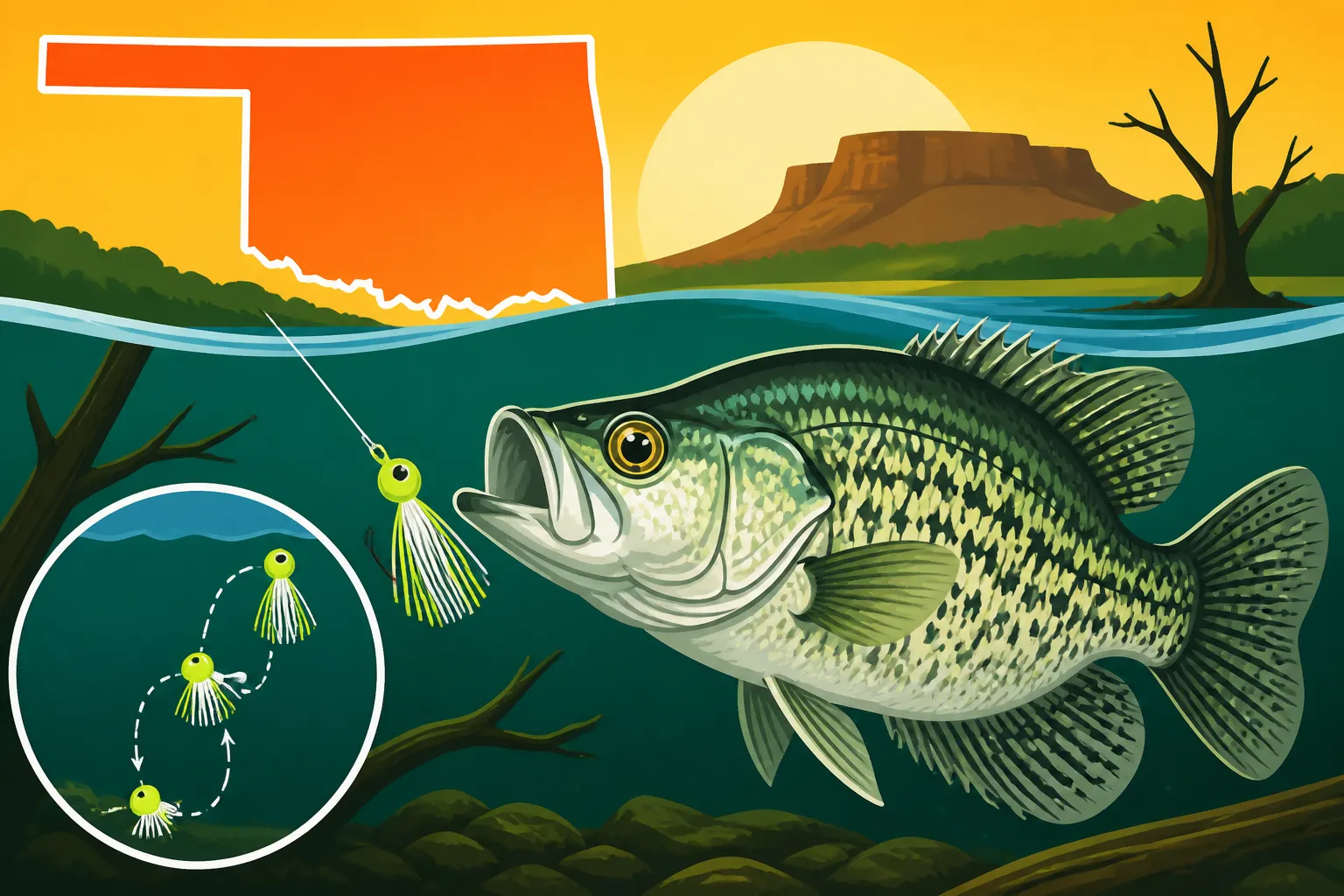
Vertical jigging is probably the most fundamental crappie jigging technique, and it's incredibly effective when fish are concentrated in specific depths, especially around structure or in open water. This technique involves positioning your boat directly over the fish, as identified by your sonar, and dropping your jig straight down.
The key to successful vertical jigging is maintaining your position over the school. A good trolling motor with GPS capabilities like a Minn Kota Ulterra can be a game-changer here, allowing you to "spot-lock" and stay put even in wind or current. Once positioned, drop your jig to the depth where you're seeing fish. The retrieve is usually a slow, subtle lift-and-fall motion. Lift your rod tip a few inches to a foot, then slowly let it fall back down on a semi-slack line, keeping just enough tension to feel the jig. Many crappie bites occur on the fall, so pay close attention for any "thump" or subtle slackening of your line.
This technique is particularly deadly in deeper water, say 15-40 feet, when crappie are suspended over channel swings, brush piles, or bridge pilings. It’s also excellent in winter when fish are lethargic and clustered tightly. You'll often see anglers using multiple rods (spider rigging) when vertical jigging from a boat, spreading their jigs at different depths or with different color/size combinations until they find what the fish prefer. This allows for excellent coverage of the water column. You might also pair your jig with a live minnow, tipping it on the hook for added scent and appeal, especially on tough days.
Pitching and Casting Jigs to Structure
While vertical jigging is for fishing over fish, pitching and casting jigs is about reaching fish that are tucked into cover or along shorelines where you can't get your boat directly over them. This technique requires a bit more finesse and accuracy.
Imagine you're targeting a brush pile along a shoreline, or a stump field in a shallow cove. You want to cast your jig as close to that cover as possible without getting hung up immediately. Use your ultralight spinning gear to make accurate casts, letting the jig land softly near the target. Once the jig hits the water, let it sink to the desired depth, often allowing it to pendulum slightly under the cover. Then, begin a slow, retrieve, often with subtle twitches and pauses of the rod tip. The idea is to make the jig "swim" tantalizingly past the cover, mimicking a vulnerable baitfish or insect.
This technique is excellent during the spring spawn when crappie are holding tight to shallow cover like flooded timber or docks. It's also great for targeting scattered fish in weed lines or along rocky points. Don't be afraid to experiment with your retrieve speed and jigging action. Sometimes a steady, slow retrieve works, while other times a series of quick twitches followed by a long pause is what triggers a strike. Being able to cast accurately is key here; practice pitching your jig to specific targets in your yard before hitting the water. If you're fishing from the bank, learning How to Catch Crappie from the Bank with this technique will be essential for your success.
Dock Shooting for Hidden Crappie
Dock shooting is a specialized, incredibly effective jigging technique for reaching crappie that hide way back under docks, marinas, and other overhead structures where a normal cast simply can't reach. It's a bit like shooting a bow and arrow, but with your fishing rod.
To "shoot" a jig, you'll need a flexible rod, usually 5 to 6 feet long, with a fast action tip. Hold the jig in one hand and the rod handle in the other, letting about 6-12 inches of line hang from the rod tip. Pull the jig back, bending the rod tip significantly, creating tension. Aim the rod tip at your target under the dock, then release the jig and the rod tip simultaneously. The rod's stored energy will slingshot the jig far under the obstruction, skipping it across the water's surface like a stone. Once the jig lands, allow it to sink to the desired depth, then retrieve it slowly with subtle twitches.
This technique takes practice to master, but once you get the hang of it, you'll unlock crappie that other anglers can't reach. Crappie often feel safest deep under these structures, especially on sunny days, and can be quite aggressive when a jig finally makes its way into their sanctuary. The key is to be stealthy, making minimal noise, and accurate, getting your jig as far back as possible. It's an absolute game-changer for fishing around popular marinas and public docks on lakes like Grand Lake O' the Cherokees or Lake Eufaula.
Spider Rigging and Trolling with Jigs
Spider rigging and slow trolling are techniques designed to cover a lot of water and present multiple jigs simultaneously, especially useful for locating scattered crappie or targeting fish holding over open water structures. These methods are most effective from a boat.
Spider rigging involves using multiple rods (often 4-8 or more) deployed from rod holders around the boat, creating a "spider web" effect of lines. Each rod has a jig (or minnow rig) set at a different depth or distance from the boat. The boat then moves very slowly, typically 0.5 to 1.5 mph, allowing the jigs to drift or "swim" through the water column. This technique is fantastic for finding crappie in large areas where they might be loosely schooled or spread out. You can experiment with different jig colors, sizes, and depths until you find the sweet spot, then duplicate that setup on other rods. It's incredibly efficient for locating fish and presenting multiple bait options. Learning How to Spider Rig for Crappie can significantly increase your catch rates on bigger reservoirs.
Slow trolling is similar but often involves fewer rods and can be done slightly faster. You'll typically use jigs (sometimes with a small spinner blade) or crankbaits, letting out a consistent amount of line behind the boat while moving at a slow pace. Trolling is excellent for covering long stretches of creek channels, ledges, or flats, systematically searching for schools of crappie. Both spider rigging and slow trolling excel when crappie are suspended or actively chasing baitfish in open water, which is often the case during late summer and fall. The vibrations and movements of multiple jigs or crankbaits can draw fish in from a wider area, leading to more strikes.
Effective Strategies for Oklahoma's Diverse Waters
Oklahoma is blessed with an incredible variety of fishing environments, from vast reservoirs like Lake Texoma to countless smaller ponds and winding rivers. Each type of water body demands a slightly different approach to crappie jigging. What works on one lake might not be as effective on another, so knowing how to adapt is crucial.
Lake Texoma and Grand Lake: Open Water vs. Structure
These two giants, Lake Texoma and Grand Lake O' the Cherokees, are iconic for a reason. They offer incredible fishing, but their sheer size and diverse habitats mean you need to be strategic with your crappie jigging.
On the massive, often wind-swept expanses of Lake Texoma, crappie can frequently be found suspended in open water, especially during the summer and fall, chasing schools of baitfish. This is where your sonar becomes your best friend. Look for baitfish schools and arcs of crappie around them, often relating to submerged humps, old roadbeds, or creek channels in 20-30 feet of water. For these open-water scenarios, slow trolling with multiple jigs or spider rigging is exceptionally effective. Use jigs that mimic the local baitfish, like small shad or minnows, and experiment with different depths until you find where the fish are holding. The sheer size of Texoma means you'll need to cover ground to find those schools. The Oklahoma's Statewide Crappie Bag Limit is generous, so once you find a school, you can often put a lot of fish in the boat!
Grand Lake O' the Cherokees, while also large, has a more complex structure with numerous coves, extensive rocky shorelines, and plenty of standing timber, especially in its upper reaches. Here, crappie will often relate tightly to visible and submerged structure. Dock shooting is a killer technique around the lake's abundant boat docks and marinas. Pitching jigs into flooded timber or working them slowly along rocky bluff walls can also produce big results. The Neosho and Spring River arms, which feed into Grand Lake, provide excellent current-related fishing opportunities. Always remember to check Checking Crappie Rules Before Fishing Grand Lake as special regulations can sometimes apply to specific bodies of water.
Smaller Lakes and Ponds: Bank and Kayak Jigging
Don't overlook Oklahoma's countless smaller lakes, municipal ponds, and private impoundments. These can be crappie goldmines, often less pressured and more accessible, especially for bank anglers or those fishing from kayaks.
For smaller lakes and ponds, the crappie often relate to whatever limited structure is available: fallen trees, weed lines, culverts, or even just subtle depth changes. Bank fishing is highly productive here, and casting or pitching jigs becomes the primary method. Focus on corners of the pond, areas with submerged brush, or where a deeper channel might run close to shore. A 1/32 or 1/16 ounce jig is often ideal for these shallower waters, offering a slower, more enticing fall. You'll find that a diverse selection of jigs on Amazon can ensure you're ready for any pond. For tips on fishing without a boat, definitely look into How to Catch Crappie from the Bank.
Kayakers have a unique advantage in these smaller waters. They can silently access areas that bigger boats can't, like shallow back coves, narrow channels, or dense timber. Kayak jigging often involves a combination of pitching to cover and vertical jigging around submerged brush piles. The stealth of a kayak allows you to get right on top of fish without spooking them. Consider using a small, portable fish finder to locate structure and schools. Lakes like Lake Arbuckle, which has stricter limits like Arbuckle Lake Crappie Rules in Oklahoma, can be fantastic for kayak fishing due to their clear waters and abundant structure.
River and Stream Crappie Jigging
River and stream crappie fishing offers a different challenge and reward compared to lakes. The constant current dictates where crappie hold and how you present your jig.
In rivers, crappie will seek out eddies, current breaks, and slack water behind obstructions like log jams, bridge pilings, or submerged rocks. These areas provide refuge from the main current and allow crappie to ambush baitfish without expending too much energy. Your jigging technique needs to account for the current. Often, a heavier jig (1/8 to 1/4 ounce) is necessary to get down to the fish and stay in the strike zone. You might need to cast upstream and let the current carry your jig naturally past the structure, then retrieve with a slow, twitching motion.
Another effective river technique is to vertical jig near bridge pilings or log jams, using your boat to maintain position against the current. This allows you to present your jig directly to fish holding tight to the structure. Look for deeper holes and slower sections of the river, especially during colder months, as crappie will seek out these calmer areas. Remember that even in rivers, Black and White Crappie Counted Together towards your bag limit, so keep an eye on your numbers.
Tips for Maximizing Your Crappie Catch
You’ve got the gear, you understand the techniques, but what about those little extra insights that really make a difference? Maximizing your crappie catch isn't just about showing up; it's about continuously learning, adapting, and using all the tools at your disposal.
Reading Your Electronics and Sonar
In modern crappie fishing, especially on larger reservoirs, your fish finder and sonar unit are as important as your rod and reel. Learning to effectively interpret what your electronics are telling you can save hours of fruitless casting.
Start by understanding your display. You're looking for arches or dots that represent fish. Crappie often appear as distinct arches, and when you see a "Christmas tree" effect – a dense cluster of arches or dots – you've likely found a school. Pay attention to the depth of these schools. Your fish finder will also reveal bottom contours, submerged timber, brush piles, and channel swings. Identifying these structures is crucial because that's where crappie will congregate. If your unit has side imaging or down imaging, even better! These technologies provide photo-like views of the bottom, allowing you to clearly see brush piles, stumps, and even individual fish around them.
Don't just drive around aimlessly; use your electronics to systematically scan areas. Mark waypoints on your GPS whenever you find a productive spot or significant structure. This allows you to return to those "honey holes" in the future. Once you locate a school, use your trolling motor to position your boat directly over them for vertical jigging, or to accurately cast to the edges of the school. Remember, crappie can be incredibly finicky, so if you see them but they aren't biting, try adjusting your depth by a foot or two, or experiment with different jig colors and fall rates. Sometimes, the fish are there, but you just haven't presented it quite right.
Pairing Jigs with Live Bait
While jigging with artificial lures is highly effective, sometimes crappie need a little extra persuasion, especially when conditions are tough or fish are lethargic. This is where combining your jigs with live bait can be a game-changer.
The most common live bait for crappie is the humble minnow. Tipping your jig with a small minnow adds natural scent, flavor, and live action that artificial lures simply can't replicate. Hook the minnow lightly through the lips or just behind the dorsal fin. When vertical jigging, the minnow's natural movements can entice a hesitant crappie. When casting, the added scent trail can draw fish in from a distance. This "jig-and-minnow" combo is particularly effective during colder months, after a cold front, or in heavily pressured waters where crappie have seen every artificial lure in the book. It’s also a great tactic when you are unsure of the crappie's preferred forage, as minnows are universally appealing.
Another option is to use small pieces of worm or grubs, though minnows are generally preferred for crappie. The key is to add just enough live bait to enhance your jig, not overpower it. You still want the jig to have its characteristic action. This combination increases your chances by appealing to both a crappie's visual hunting instincts and its sense of smell and taste. It's a fantastic way to turn a slow day into a productive one, especially when you know fish are present but just aren't committing to a purely artificial presentation. When you're thinking about How Many Crappie You Can Keep in Oklahoma, this technique can certainly help you reach your limit efficiently!
Adapting to Changing Conditions
The weather, water conditions, and even fishing pressure are constantly changing, and a truly successful crappie angler is always ready to adapt. Stubbornly sticking to one technique or lure when the bite is slow is a sure recipe for frustration.
Keep a close eye on the weather forecast. Approaching cold fronts or sudden temperature drops can make crappie much less active, requiring slower presentations, smaller jigs, and perhaps the addition of live bait. Conversely, warming trends can spur them into more aggressive feeding. Wind can make boat control difficult, but it can also push baitfish and crappie into specific areas, like wind-blown points or banks. Adjust your boat positioning and casting angles to leverage the wind, rather than fight it.
Water clarity changes significantly after heavy rains or prolonged dry spells. As discussed earlier, this directly impacts your jig color choices. Always start with what you believe is the best approach for the current conditions, but if you're not getting bites within a reasonable time, change something. Switch jig colors, try a different size, alter your retrieve speed, move to a different depth, or even change locations entirely. Don't be afraid to experiment. The crappie will tell you what they want, but only if you're listening. Understanding details like Tenkiller Lake's 10-Inch Crappie Minimum or Hudson Lake Crappie Limit Explained before you go out can also influence your approach to a specific body of water, making sure you're always fishing legally and effectively.
| Crappie Jigging Technique | Best Conditions/Time | Key Gear | Advantages | Considerations |
|---|---|---|---|---|
| Vertical Jigging | Deep water, calm conditions, winter, suspended fish, over brush piles | Ultralight rod (5-7ft), small spinning reel (500-1000), 1/32-1/8 oz jigs, fluorocarbon/braid to fluoro | Precise depth control, effective on lethargic fish, can use live bait combo | Requires accurate boat positioning, can be slow for covering water |
| Pitching/Casting | Shallow water, spring spawn, around visible cover (stumps, laydowns), bank fishing | Ultralight rod (5-6.5ft), small spinning reel, 1/32-1/16 oz jigs, monofilament/braid to fluoro | Reaches tight cover, covers broad shallow areas, stealthy | Accuracy required, prone to snags in heavy cover |
| Dock Shooting | Under docks, marinas, overhead structures, sunny days | Flexible ultralight rod (5-6ft), small spinning reel, 1/32-1/16 oz jigs, monofilament | Accesses untouched fish, highly effective for wary crappie | Requires practice to master, can be noisy if done improperly |
| Spider Rigging | Open water, scattered fish, searching large areas, slow trolling | Multiple rods (long, flexible), robust rod holders, 1/16-1/4 oz jigs, monofilament/braid | Covers vast areas, presents multiple baits/depths, efficient for finding schools | Requires a boat with trolling motor, can be cumbersome with many rods |
| Slow Trolling | Open water, following contours, summer/fall, covering distance | Medium-light trolling rods, level-wind/spinning reels, 1/8-1/4 oz jigs/small crankbaits, monofilament | Efficient for finding active fish, covers specific depth ranges | Requires a boat, can be difficult in windy conditions |
Disclaimer
The information provided in this article is for general guidance and informational purposes only. Fishing regulations, license requirements, and local rules can change frequently. Always consult the official Oklahoma Department of Wildlife Conservation (ODWC) website or relevant local authorities for the most current and accurate information before planning your fishing trip. Adherence to all applicable laws and regulations is the responsibility of the angler.