How to Spider Rig for Crappie
Crappie fishing in Oklahoma can be incredibly rewarding, but sometimes it feels like those elusive schools are playing hide-and-seek. You might spend hours casting, moving from spot to spot, only to come up with just a few bites. This guide is all about spider rigging, a highly effective technique designed to cover more water, present multiple baits, and dramatically increase your chances of finding and catching crappie, especially when they’re scattered or holding deep.
Understanding the "Why" Behind Spider Rigging for Crappie
If you've ever felt frustrated by crappie that seem to move around constantly or refuse to commit to a single bait, you're not alone. Traditional casting and jigging can be fantastic when crappie are grouped up, but what about those days when they're spread out, holding tight to subtle breaks, or hugging brush piles you can't quite pinpoint? That's where spider rigging shines, offering a solution to these common challenges by essentially transforming your boat into a floating crappie-catching machine.
Why Traditional Methods Fall Short for Large Schools
Picture this: you’re on a big Oklahoma reservoir like Lake Eufaula, known for its sprawling coves and submerged timber. You've got your favorite jig tied on, casting it towards a brush pile you marked on your sonar. You might catch one or two, but then the bites stop. Why? Because you're only covering a tiny fraction of the water column and presenting a single bait in one specific area. Crappie often roam in loose schools, especially in open water or when responding to baitfish movements. A traditional cast-and-retrieve method simply can't keep up with these nomadic schools or effectively explore the vastness of their habitat. You're trying to hit a moving target with a single dart, when what you really need is a wide net. This method becomes particularly challenging when you're trying to locate fish that are suspended at different depths or are spread across a wide flat.
Maximizing Your Chances in Various Depths and Conditions
Spider rigging isn't about luck; it's about strategy and coverage. Imagine running eight or even ten rods out from the bow of your boat, each presenting a different bait, at a different depth, and often with a slightly different color or type of lure. This multi-rod, multi-bait approach is an absolute game-changer. When you're slowly trolling or drifting with this spread, you're essentially testing a huge amount of water simultaneously. You might have one rod with a chartreuse jig at 10 feet, another with a black and blue jig at 12 feet, and a third with a live minnow at 15 feet. This lets the crappie tell you exactly what they want and where they are holding.
This technique is especially potent when you're facing finicky crappie that are particular about bait presentation or when you're trying to decipher their preferred depth during a cold front. It allows you to quickly identify patterns – maybe they’re hitting minnows better than jigs today, or perhaps they’re all stacked up at 14 feet. This kind of real-time feedback is invaluable, helping you adjust your other rods to match the successful pattern. It’s also fantastic for fishing large, featureless flats where crappie might be spread out, giving you the ability to systematically search for them. If you're looking for more general strategies, our guide on Crappie Fishing Techniques and Seasonal Patterns in Oklahoma delves deeper into seasonal behaviors.
Essential Gear for Your Spider Rigging Setup
Alright, let's talk gear. You can't spider rig effectively with just one rod and reel. This method is all about the spread, and that means a dedicated setup. Don't worry, you don't need to break the bank on ultra-high-end equipment for every single rod, but having the right tools makes a huge difference in both your efficiency and your catch rate.
Rods, Reels, and Line: Building Your Multi-Rod Arsenal
For spider rigging, specialized rods are a must. You're not casting these rods; you're using them as extensions of your boat to present baits vertically. Look for rods that are 10 to 16 feet long, with a light to medium-light action. This length helps you spread your baits out wide, preventing tangles and covering a broader swath of water. The light action is crucial for detecting those subtle crappie bites, as they often just "tick" the bait or put slight pressure on the line. Brands like BnM Poles or Ozark Trail offer affordable and effective spider rigging rods. You can often find great deals on these specialized crappie rods on platforms like Amazon.
When it comes to reels, simple spinning reels are perfectly adequate. You won't be making long casts, so a high-end, super smooth reel isn't necessary. Look for reels with a decent drag system, as you might hook into a bigger crappie or even a rogue catfish while slow trolling. Spool these reels with 6 to 10-pound monofilament or fluorocarbon line. Monofilament is a popular choice due to its stretch, which can act as a shock absorber, and its affordability. Fluorocarbon offers less stretch and better sensitivity, which can be an advantage for detecting light bites in deeper water. The key is consistency across your rods so you can easily manage your lines.
Here's a quick overview of typical rod and reel setups:
| Component | Recommendation | Why It Works |
|---|---|---|
| Rods | 10-16 feet, light to medium-light action, telescopic | Spreads baits wide, sensitive to light bites, compact storage |
| Reels | Small spinning reels (500-1000 size) | Simple, reliable, good drag, less expensive |
| Line (Mono) | 6-8 lb test monofilament | Good stretch, forgiving, cost-effective, easy to see |
| Line (Fluoro) | 6-8 lb test fluorocarbon | Low stretch, high sensitivity, less visible to fish |
| Rod Holders | Multi-rod spider rigging racks (e.g., driftmaster) | Securely holds multiple rods, adjustable angles |
Terminal Tackle: Jigs, Weights, and Hooks
Your terminal tackle is where you get to experiment and find what the crappie are biting on that day. For jigs, an assortment of sizes from 1/32 to 1/8 ounce is a great starting point. The jig head color and body color can make a huge difference. Think about natural colors like minnow imitations, and also brighter "attractor" colors like chartreuse, pink, and orange. Soft plastic crappie baits, often called tubes, grubs, or small paddletails, come in an endless variety. Don't be afraid to mix and match colors and styles on your different rods. For ideas on specific colors, check out our guide on Best Crappie Jig Colors for Clear Water.
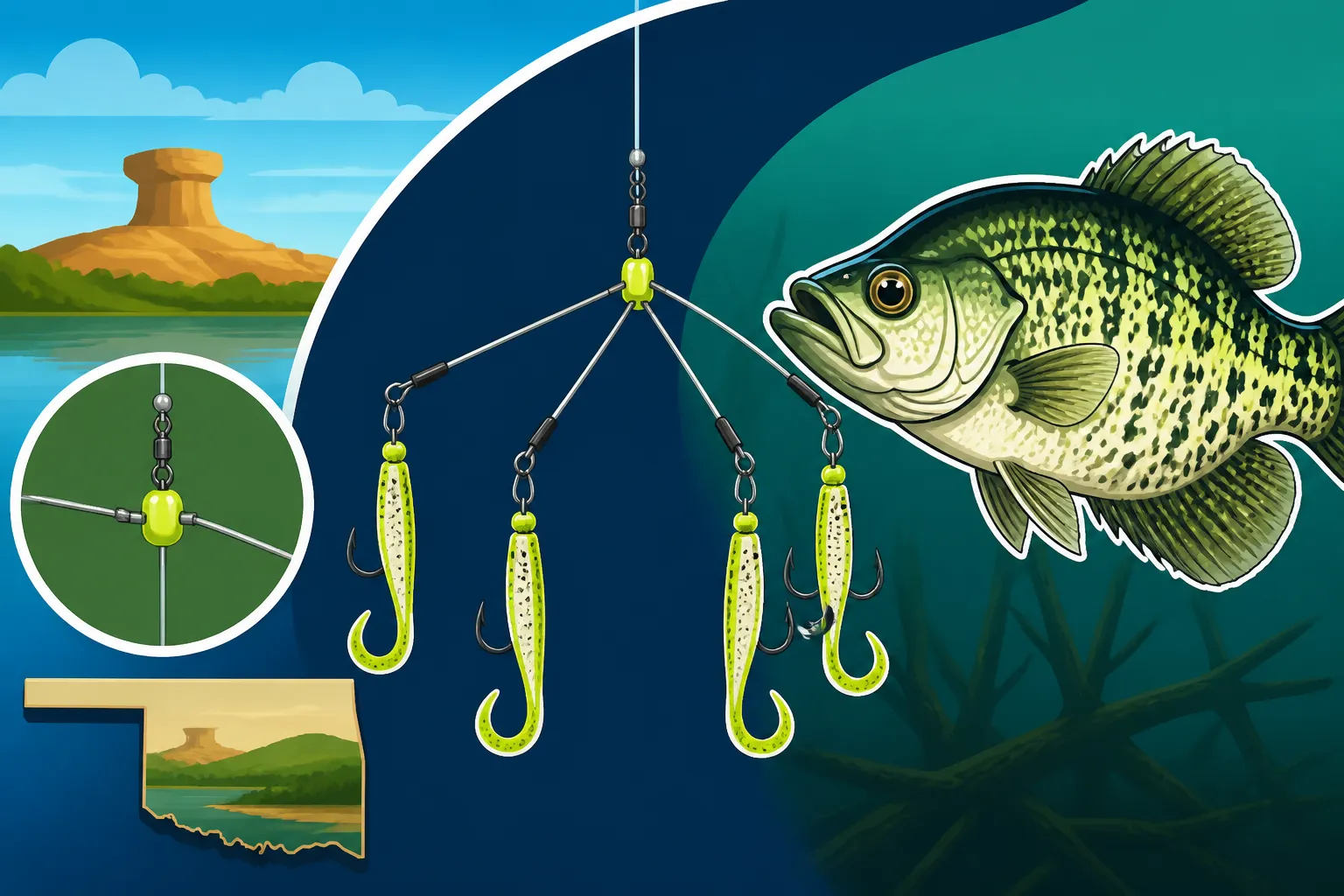
When it comes to weights, you'll need bell sinkers or similar styles ranging from 1/4 to 1 ounce. The weight you choose depends on the depth you're fishing and the current. Heavier weights help keep your bait vertical in deeper water or stronger current, while lighter weights allow for a more natural drift. For live bait, like minnows, you'll want small, sharp Aberdeen hooks (sizes 2 to 6) that are designed to be thin and less likely to snag or gut-hook the fish. A popular setup is a "double minnow rig" or "double jig rig" using a three-way swivel or an ultralight crappie rig leader system. This allows you to present two baits at slightly different depths on the same line, effectively doubling your presentation.
Electronics and Boat Setup for Efficiency
While you could spider rig without fancy electronics, a good fish finder with down imaging and side imaging capabilities is a huge advantage. Features that matter most on Oklahoma reservoirs include the ability to easily mark waypoints, identify brush piles, and see suspended fish or baitfish schools. Being able to see crappie holding at 15 feet over a 20-foot brush pile allows you to precisely dial in your bait depth. A good quality unit from brands like Lowrance or Humminbird can pay for itself in saved time and increased catches. You can find many great options on Amazon for every budget.
Your boat setup is critical for comfort and effectiveness. You'll need specialized rod holders that allow you to spread multiple rods out from the bow. These "spider rigging racks" or "driftmaster-style" holders can securely hold anywhere from four to eight rods, keeping them separate and preventing tangles. A quality trolling motor is also essential for maintaining precise speed and direction. Whether it's a bow-mount electric motor with GPS spot-lock features or a transom-mount motor for smaller boats, the ability to control your drift or troll speed is paramount. Many seasoned crappie anglers also install a portable livewell to keep their bait minnows lively throughout the day, ensuring they're always presenting the freshest offering. If you're looking for larger boat options, our guide on Best Boats for Grand Lake's Open Water can provide insights on suitable vessels.
Step-by-Step Guide to Spider Rigging Techniques
Now that you're armed with the right gear, let's talk about how to actually get those baits in front of the crappie and bring them into the boat. Spider rigging isn't just about putting rods out; it's about a methodical approach to crappie fishing.
Locating Crappie and Setting Your Spread
The first step, as with any fishing, is finding the fish. Don't just motor out and drop lines randomly. Use your sonar to look for concentrations of baitfish, brush piles, submerged timber, creek channels, or any changes in bottom contour. Crappie love structure, especially during certain times of the year. For example, during fall, crappie often school up in deeper water, so understanding Fall Crappie Fishing Patterns in Oklahoma can be a huge advantage. Look for those tell-tale arches or "clouds" of fish on your fish finder.
Once you've identified a promising area, it's time to set your spread. Deploy your rods one by one, staggering the depths and perhaps using different baits or jig colors on each. For instance, you might have the two outermost rods fishing shallow (say, 8-10 feet), the next pair slightly deeper (12-14 feet), and the two innermost rods fishing the deepest (15-20 feet). This creates a "stair-step" effect that effectively searches the water column. When you get a bite, note which rod it was, the depth, and the bait. This immediately gives you a clue about what the crappie prefer that day. Don't forget, when using live minnows, our guide on How to Rig a Minnow for Crappie Fishing offers some excellent tips.
Mastering Speed and Depth Control
This is where the "art" of spider rigging really comes into play. Your speed is critical. Crappie are often ambush predators, and they prefer a bait that's moving slowly enough for them to intercept. A typical spider rigging speed is between 0.3 and 1.0 miles per hour. Your trolling motor is your best friend here, allowing you to fine-tune your speed. Experiment with slight variations. Sometimes just a tiny increase or decrease in speed can trigger more bites.
Depth control is equally important. If your sonar shows crappie at 15 feet, you want your baits at 15 feet. This is achieved through a combination of your weight, line length, and boat speed. The faster you go, the higher your baits will ride in the water column. The heavier your weight, the deeper they'll stay. Many anglers use line counters on their reels or simply measure out a consistent amount of line. Remember, crappie often suspend just above structure, not necessarily right in it, so paying attention to those slight depth changes displayed on your electronics is key.
Reading Your Electronics and Adjusting on the Fly
Your fish finder isn't just for locating fish; it's your real-time feedback system. Watch for bait balls. Watch for crappie arches. More importantly, watch how your baits are behaving on the screen if your unit is sensitive enough. You might see your jig riding too high or dragging on the bottom. If you see fish at a certain depth but aren't getting bites on those rods, adjust. Change a jig color, swap to a minnow, or move a weight up or down a foot.
If you hit a brush pile and suddenly get multiple bites, immediately mark that spot on your GPS. You can then make another pass over it. If you're not seeing fish but getting bites, it means you're effectively covering water, and the fish are just more spread out. Keep your eye on wind and current. They can drastically affect your boat speed and bait presentation, even when your trolling motor is trying to hold a course. Constant adjustments are part of the game.
Common Challenges and Troubleshooting Your Spider Rig
Spider rigging is effective, but it's not without its quirks. There will be days when the wind seems determined to tie your lines into knots, or when every other pass results in a snag. Knowing how to anticipate and deal with these challenges will save you a lot of frustration and keep you on the fish.
Dealing with Wind and Current
Oklahoma lakes can get windy, and strong currents can develop, especially near river channels or dams. Wind and current are the bane of the spider rigger's existence because they make maintaining a consistent speed and line angle incredibly difficult.
If you're battling the wind, try to troll into it or with it, rather than broadside. Trolling into the wind gives you more control over your boat speed, albeit at a slower pace. Trolling with the wind can get you moving too fast, so you'll need to use your trolling motor to slow down or even "back troll" (drive the boat in reverse) to maintain a slower speed and keep your lines more vertical. Heavy weights become essential in these conditions to keep your baits from "blowing out" too far behind the boat. If you find yourself drifting too quickly, dropping a drift sock or two off the bow can help slow your boat down to a more manageable speed. Remember, consistency in presentation is key, and wind and current are always trying to disrupt that.
Snags, Tangled Lines, and Other Annoyances
Ah, the dreaded tangle! With so many rods out, tangles are almost inevitable, especially if you're not paying attention. The best way to prevent them is to use those long rods to create a wide spread, as discussed earlier. Make sure your rods are securely in your rod holders and not swinging around. When turning your boat, make wide, gradual turns to avoid lines crossing and tangling.
Snags are another common issue, especially when fishing around submerged timber or brush piles – which is precisely where crappie like to hang out! The key here is prevention and quick action. Use jig heads with lighter wire hooks that are designed to bend out with moderate pressure, allowing you to retrieve your jig from a snag. If you get snagged, stop the boat immediately, keep tension on the line, and try to motor directly over the snagged spot. Sometimes, this angle change is enough to free the jig. Many anglers will also add a small bobber stop a foot or so above their weight, allowing the weight to slide down and potentially free a hung-up hook.
Adapting to Different Oklahoma Lake Conditions
Oklahoma's diverse lakes present a variety of conditions, and a good spider rigger knows how to adapt. Lake Texoma, for instance, is a massive reservoir with open water and often significant wind, requiring heavier weights and potentially higher trolling motor power. Smaller, clearer lakes like Broken Bow might require lighter lines and more subtle jig colors, as the crappie can be more easily spooked in clear water.
Consider the depth of the lake. In shallow, muddy farm ponds, spider rigging might be overkill; you might do better with How to Catch Crappie from the Bank. But for larger reservoirs where crappie are often suspended or relating to deep structure, it's perfect. The color of the water also plays a role. In stained or muddy water, brighter jig colors like chartreuse or orange often perform better. In clear water, more natural minnow imitations or subtle colors are usually the way to go. Our guide on Best Crappie Jig Colors for Stained Water offers more insights on this. It’s all about being flexible and letting the fish and the conditions dictate your approach. Don't be afraid to experiment with your baits, depths, and speeds until you find what's working on that particular day, on that particular lake.
Disclaimer
Fishing involves inherent risks. Always prioritize safety on the water. Adhere to all Oklahoma Department of Wildlife Conservation regulations, including those pertaining to life jackets, boat operation, and fishing licenses. Always check current weather conditions before heading out and inform someone of your float plan. Practice responsible angling, including catch-and-release when appropriate, and properly dispose of all trash. This guide is for informational purposes only and does not guarantee fishing success.