Trotline Fishing for Catfish
Many Oklahoma anglers know the thrill of a bending rod, but sometimes, the pursuit of big catfish calls for a different strategy. Constantly casting and reeling can be exhilarating, but for those seeking a more efficient, less hands-on approach to consistently land trophy-sized channel, blue, and flathead catfish, trotline fishing offers a time-honored solution. This guide dives deep into the world of trotline fishing in Oklahoma, from understanding the rules to setting your lines, baiting them, and harvesting your catch, ensuring you're well-equipped to bring home a cooler full of delicious catfish.
Understanding Trotline Fishing and its Appeal in Oklahoma
Trotline fishing is a distinct and often incredibly effective method for catching multiple fish, especially large catfish, with less direct effort than traditional rod and reel angling. Instead of actively pursuing fish with a single line, you're essentially setting up a passive, multi-hook system that works for you while you attend to other things, or even sleep! For many Oklahomans, it’s a cherished tradition, a way to put food on the table, and an exciting challenge to outsmart the biggest cats in the lake or river.
What Exactly is a Trotline?
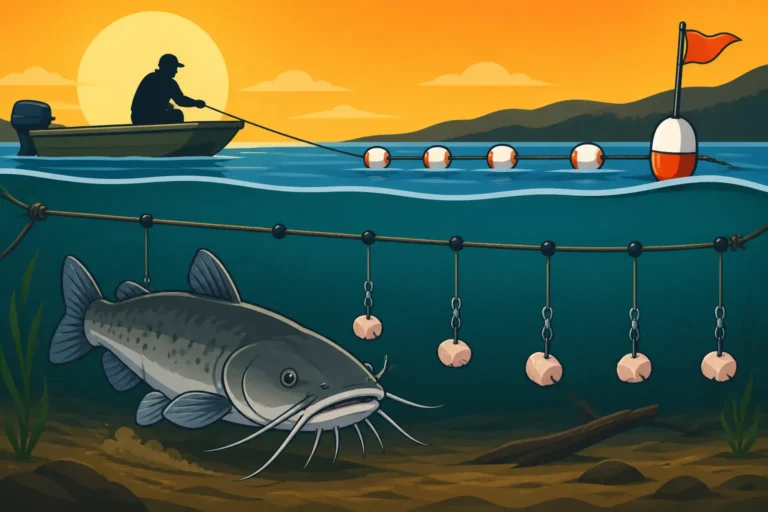
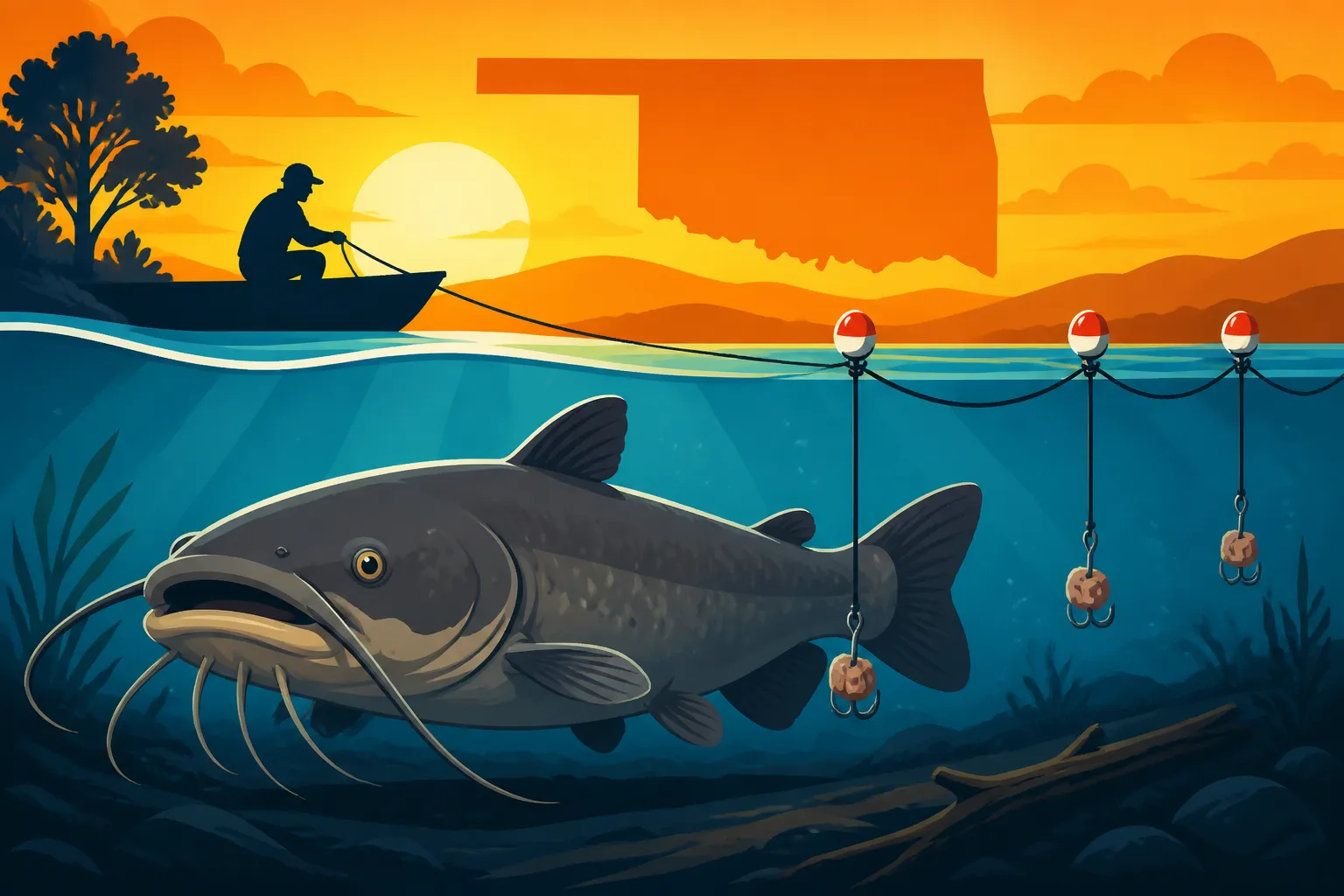
At its core, a trotline is a long length of main line, typically heavy-duty cord, anchored at both ends and strung across a body of water or along a bank. Attached to this main line, at spaced intervals, are shorter lines called "snoods" or "droppers," each with a baited hook. Unlike limb lines, which are single hooks tied to tree limbs, or jug lines, which are free-floating single hooks attached to a buoy, a trotline is fixed and can have many hooks. The beauty of it lies in its ability to cover a larger area and present multiple baits simultaneously, dramatically increasing your chances of a catch. When properly set, a trotline becomes a silent, persistent hunter in the depths.
For those just starting out, the sheer variety of methods can be confusing. While a rod and reel requires constant attention, a trotline allows you to "set it and forget it" for a period, making it ideal for busy anglers or those looking to maximize their fishing time. It's not about being lazy; it's about being strategic. You're leveraging the fish's natural feeding patterns over an extended period. Plus, there's a unique anticipation that comes with checking a trotline – you never quite know what giants might be waiting for you.
Why Oklahoma Anglers Turn to Trotlines
Oklahoma's vast network of lakes and rivers, brimming with healthy catfish populations, makes trotlining an exceptionally popular and productive technique. Anglers here use trotlines for several compelling reasons:
- Efficiency and Volume: You can legally run a trotline with up to 100 hooks in Oklahoma, which means you're presenting a huge "buffet" to the fish. This dramatically increases your chances of catching multiple catfish, and often, larger ones, compared to fishing with just one or two rods. For families or groups looking to stock up on fish, it's incredibly efficient.
- Targeting Bigger Fish: Larger, more wary catfish often cruise deeper waters or specific structures that can be difficult to target consistently with a casting rod. A well-placed trotline, baited with substantial offerings, can stay in these prime spots for hours, enticing these elusive giants. Blues and flatheads, in particular, are common trotline catches because of their size and feeding habits.
- Hands-Off Approach: While it requires effort to set up and check, once deployed, the trotline does the work. This frees up anglers to enjoy other activities, fish with a rod and reel in other areas, or simply relax. It’s perfect for multi-day camping trips where you want to fish passively overnight.
- Cultural Tradition: For many Oklahomans, trotlining isn't just a fishing method; it's a deep-rooted tradition passed down through generations. It connects them to a simpler, more self-sufficient way of harvesting food, echoing practices that have been around for centuries.
It's this blend of practicality, potential for big catches, and cultural significance that keeps trotline fishing alive and well across the Sooner State.
The Legalities: A Crucial First Step
Before you even think about buying a main line or hooks, you must understand the regulations set forth by the Oklahoma Department of Wildlife Conservation (ODWC). Ignoring these rules can lead to hefty fines and confiscation of your gear. The rules are in place to ensure fair chase, sustainable harvesting, and safety for all water users. For a deeper dive into the broader regulations, make sure to check out our guide on Oklahoma's Catfish Fishing Rules and Limits.
Here are the key legal points for trotlines in Oklahoma:
- Licensing: You must possess a valid Oklahoma fishing license. This is non-negotiable for anyone over the age of 16.
- Hook Limit: A trotline can have no more than 100 hooks. This sounds like a lot, but for a truly long line, you'll find yourself needing every bit of that allowance.
- Spacing: Hooks must be spaced at least 24 inches apart. This prevents hooks from tangling and gives fish enough room to strike without immediately hitting another hook.
- Identification: This is critical! Each trotline must be marked with the angler's name, address, and fishing license number. This information must be clearly visible and permanently attached to the line or its floats. This allows game wardens to identify owners and ensures accountability. You can often find durable tags for this purpose on Amazon or at local sporting goods stores.
- Non-Game Fish Only: Trotlines in Oklahoma are generally restricted to taking non-game fish species, which primarily includes catfish (channel, blue, flathead) and other species like carp and drum. You cannot target or keep game fish (like bass or crappie) on trotlines. If you accidentally catch a game fish, it must be immediately released.
- Prohibited Areas: Trotlines are not allowed in certain "Designated Trout Areas" or within 300 feet of a dam spillway. Always check local regulations for specific lakes or rivers you plan to fish, as some areas may have additional restrictions. For instance, some state parks or smaller municipal lakes might prohibit them entirely.
- Checking Frequency: While not explicitly a "checking frequency" rule, the humane treatment of fish and the quality of your catch depend on regular checks. Leaving lines unchecked for days is not only unethical but can result in spoiled fish.
Understanding and adhering to these rules is paramount. Always consult the current Oklahoma Fishing Guide, available on the ODWC website, before heading out, as regulations can sometimes change.
Essential Gear for a Successful Oklahoma Trotline
Just like any specialized fishing method, trotline fishing requires specific gear to be effective and compliant with regulations. Skimping on quality here can lead to lost lines, lost fish, and frustration. Think of it as an investment in a highly productive fishing system.
The Main Line: Foundation of Your Trotline
The main line is the backbone of your trotline setup. It needs to be incredibly strong, durable, and resistant to abrasion from underwater structures, propellors, and constant tension.
- Material: Most experienced trotliners opt for heavy-duty nylon or polypropylene rope.
- Nylon: Known for its strength, elasticity (which can help absorb shock from a fighting fish), and resistance to UV degradation. It tends to sink, which is often desirable.
- Polypropylene: Floats, which can be a benefit or drawback depending on your setup. It's generally less expensive than nylon but can be more susceptible to UV damage over long periods.
- Test Strength: You're not looking for something delicate here. Aim for a minimum of 200-pound test line. Many anglers go even heavier, up to 400-pound test, especially when targeting trophy blue catfish or flatheads in powerful currents. Remember, this line needs to hold not just one, but potentially dozens of heavy fish simultaneously. You can find excellent bulk spools of this kind of rope on Amazon or at marine supply stores.
- Length: The length of your main line will depend on the area you plan to fish. Consider the width of the creek or cove you want to span, or the length of the bank you wish to cover. It's always better to have a little extra than not enough.
Choosing the right main line is critical for the longevity and success of your trotline. A cheap, weak line will quickly become a lost line, wasting your time and effort.
Snoods and Hooks: The Business End of the Line
The snoods (also called drop lines or staging) are the shorter lengths of line that connect your hooks to the main trotline. Their construction and the hooks attached are crucial for presentation and holding power.
- Snood Material: Many anglers use heavy monofilament or braided nylon for their snoods. The key is to use a line that is slightly weaker than your main trotline. This way, if a hook gets badly snagged, the snood will break before you lose your entire main line and all its hooks. A 50-80 pound test monofilament is common.
- Snood Length: Typically, snoods are 12-24 inches long. This length prevents them from tangling excessively with each other and allows the bait to hang naturally in the water column. You want them long enough to allow the bait to move enticingly but not so long they become a tangled mess.
- Hook Types and Sizes:
- Circle Hooks: Increasingly popular and, in some areas, legally mandated, circle hooks are excellent for trotlines. They are designed to hook fish in the corner of the mouth, leading to fewer gut-hooked fish (which is better for release and healthier eating). They also tend to stay put once a fish is hooked, reducing lost fish.
- J-Hooks: Traditional J-hooks are also used, but require more aggressive bites to set properly and can lead to more deeply hooked fish. If using J-hooks, ensure they are heavy-duty and very sharp.
- Size: For catfish, you'll want robust hooks. Common sizes range from 5/0 up to 10/0, depending on the size of catfish you're targeting and the bait you'll be using. Larger hooks can accommodate larger baits and are less likely to straighten out under the strain of a big fish.
It's a good practice to pre-tie your snoods and hooks before you go out. This saves valuable time on the water, especially when dealing with bait, anchors, and current.
Anchors and Floats: Keeping Everything in Place
Without proper anchors and floats, your trotline is just a long, unmanageable piece of rope. These components ensure your line stays where you put it and that you can find it again.
- Anchors: You'll need two heavy anchors, one for each end of your trotline. The type and weight will depend on the current and bottom composition.
- Common Choices: Bricks, cinder blocks, heavy rocks, old window weights, or purpose-built river anchors are all viable. The key is weight. In strong currents, you might need 20-30 pounds per anchor to keep the line from dragging.
- Attachment: Use a strong rope (again, at least 100 lb test) to attach the anchor to the main line, and secure it with reliable knots.
- Floats/Buoys: These serve two critical purposes: to keep your main line at the desired depth (if you're not bottom-fishing it) and, more importantly, to mark the ends of your trotline for identification and retrieval.
- Visibility: Use bright, easily visible floats (e.g., orange, yellow, white). Empty plastic milk jugs were once common but are often frowned upon or illegal now due to litter and being less durable. Purpose-built buoys are best.
- Identification: As mentioned, your name, address, and license number must be permanently and legibly affixed to each float. This is a common point of compliance checks by game wardens.
- Depth Control: If you want your trotline suspended off the bottom, you can use additional floats along the main line to achieve the desired depth. However, most catfish trotlines are set close to the bottom.
Properly weighted anchors will keep your line from drifting, and clearly marked floats will prevent other boaters from running into your line and ensure you can easily locate it for checking.
Other Must-Have Tools for the Trotline Angler
Beyond the main components, a few ancillary items will make your trotline experience safer and more efficient.
- Bait Knife: A sharp knife is indispensable for cutting bait, especially if you're using large chunks of cut bait or preparing live bait.
- Pliers/Hook Remover: Large catfish have powerful jaws and often swallow hooks. Long-nosed pliers or a specialized hook remover are essential for safely dislodging hooks without injuring yourself or the fish.
- Heavy-Duty Gloves: Catfish have sharp pectoral and dorsal fins, and a fighting fish can easily cut or puncture unprotected hands. Heavy leather or thick rubber gloves are a must for handling fish and protecting your hands from hooks and rough lines.
- Measuring Device: To ensure compliance with any size limits for specific catfish species (like the 30-Inch Blue Catfish Rule in Oklahoma or general Oklahoma Forked-Tail Catfish Bag Limit), a tape measure or measuring stick is essential.
- Cooler and Ice: You're hoping for a big haul! A large cooler filled with ice is necessary to keep your catch fresh, especially in Oklahoma's warm weather.
- Headlamp/Lantern: If you plan to set or check your lines during low light or at night, a reliable source of light is crucial.
- First Aid Kit: Accidents happen, especially with sharp hooks and thrashing fish. A basic first aid kit should always be on board.
Having these tools readily available will make the entire process smoother, safer, and more enjoyable, allowing you to focus on the thrill of the catch. You can assemble a comprehensive kit from various items available on Amazon or at local fishing and hunting stores.
Strategic Placement: Where to Set Your Trotline for Optimal Catfish Success
You've got your gear, you know the rules – now comes the art of placement. Setting your trotline in the right spot is perhaps the most critical factor in determining your success. Catfish are creatures of habit, and understanding their preferred habitats and feeding grounds will guide your choices.
Reading the Water: Currents, Depths, and Structures
Catfish, regardless of species, are heavily influenced by a few key environmental factors. Understanding these will help you pinpoint prime trotline locations.
- Current: Catfish often relate to current, especially blue and channel cats. Current delivers food, oxygen, and can concentrate baitfish.
- Rivers and River Arms: Look for areas where the main river channel meets a feeder creek, or where a bend in the river creates an eddy. The outside bends of rivers often have deeper water and stronger currents, which are ideal for large blue catfish.
- Lakes and Reservoirs: Even in large lakes like Lake Texoma or Lake Eufaula, there are subtle currents, particularly near dam spillways, creek channels, or constricted areas between islands. A slight current can be enough to disperse bait scent and attract hungry cats.
- Depth: Catfish are often found in deeper waters, especially during the day or in warmer months. However, they will move into shallower areas to feed, particularly at night or during cooler periods.
- Deep Channels: Old river or creek channels winding through a reservoir are classic catfish highways. Set your trotline along the edges or within the deepest parts of these channels.
- Drop-offs and Ledges: Where a flat area suddenly drops into deeper water, you'll often find catfish ambushing prey. Setting your line along these contours can be very productive.
- Structure and Cover: Catfish love to hide in and around structure. This provides them with cover from predators, ambush points for prey, and a place to rest.
- Submerged Timber and Brush Piles: These are absolute magnets for catfish. However, trotlining in heavy timber requires careful planning to avoid excessive snagging. If you do set near timber, consider setting your main line above the snags with floats, or use a sacrificial snood system to minimize line loss.
- Rock Piles and Riprap: Rocky areas, especially along dams or bridges, provide excellent habitat and often hold crayfish and other forage.
- Bridge Pilings and Culverts: The structure and current breaks around man-made features like bridge pilings are excellent ambush points for catfish.
By observing these elements, you can make informed decisions about where to drop your lines. Don't be afraid to experiment with different depths and structures until you find a pattern that works.
Targeting Different Catfish Species
While all three major catfish species in Oklahoma (channel, blue, flathead) can be caught on trotlines, they do have some preferences that can influence your placement and bait choices. If you're looking to learn more about identifying these species, check out our article on Channel Catfish vs Blue Catfish vs Flathead Catfish in Oklahoma.
- Blue Catfish: These are the big boys of Oklahoma waters, known for their immense size. They prefer open water, strong currents, and deeper areas of large lakes and rivers.
- Prime Locations: Main river channels, expansive flats in large reservoirs (like Lake Texoma or Lake Eufaula) where shad congregate, and areas with significant current. They often suspend in the water column, so a trotline set slightly off the bottom can be effective.
- Bait Preference: Primarily piscivorous (fish-eaters). Cut bait (shad, sunfish, carp) is king for blues.
- Channel Catfish: The most widespread and commonly caught catfish, channel cats are adaptable and found in almost every body of water.
- Prime Locations: Creek channels, humps, flats, brush piles, and even shallower coves. They are less particular about current than blues but still relate to it.
- Bait Preference: Omnivores. Will eat almost anything – cut bait, worms, stink baits, prepared baits, chicken liver, hot dogs. Our guide on Best Bait for Catfish in Oklahoma Lakes and Rivers has more details.
- Flathead Catfish: The true predators of the catfish world, flatheads are ambush hunters that prefer live bait and heavy cover.
- Prime Locations: Deep holes with submerged timber, undercut banks, rock piles, and log jams. They are almost always found directly on the bottom, in heavy cover.
- Bait Preference: Almost exclusively live bait – live bluegill, sunfish, perch, or small carp. They rarely take cut bait or stink bait.
If you're specifically targeting flatheads, you'll need to focus your trotline placement on areas with significant submerged structure and use only live bait. For blue and channel cats, you have more flexibility in both location and bait.
Avoiding Navigation Hazards and Other Anglers
As a responsible angler, it's crucial to consider the safety of others and practice good fishing etiquette.
- Navigation Channels: Never set a trotline across a marked navigation channel or in an area where it could impede boat traffic. This is not only dangerous but illegal. Always ensure your floats are visible from a distance, particularly if you have chosen a location with moderate boat traffic.
- Swim Areas/Docks: Keep your trotline well away from public swim beaches, boat docks, and private property lines.
- Other Anglers: Be respectful of other anglers. Don't set your trotline right on top of someone who is actively fishing with a rod and reel, or near another trotline without permission. Communicate and share the water. There are plenty of Best Catfish Holes on Lake Eufaula, Best Catfish Holes on Keystone Lake, and Best Catfish Holes on Fort Gibson Lake to go around!
Choosing your trotline location thoughtfully, with an understanding of catfish behavior and respect for others, will lead to a more enjoyable and successful experience for everyone.
Setting Up Your Trotline Safely and Legally
Once you've identified your prime fishing spot and gathered all your gear, it's time to deploy your trotline. This process involves careful planning and execution to ensure safety, legality, and maximum effectiveness.
Pre-Rigging on Shore: Efficiency and Safety First
Trying to tie all your snoods and hooks while battling waves and current in a boat is a recipe for frustration and potential injury. Pre-rigging your trotline on shore is a game-changer.
- Layout: Find a clear, open space. Stretch out your main line. If it’s a very long line, you can coil it neatly at one end as you work your way down.
- Attach Snoods: Starting from one end, attach your pre-tied snoods and hooks at the legally required 24-inch minimum spacing. There are various knots you can use, but a consistently strong and secure knot like a snell knot for the hook and a loop-to-loop or double uni knot for the snood to main line connection works well. Ensure each snood hangs freely without tangling with its neighbors.
- Secure Floats and Identification: At both ends of your main line, securely attach your floats with strong rope, ensuring they are positioned to keep the line at the desired depth (typically, you want your main line just off the bottom, or even on it, for most catfish). Don't forget to attach your identification tags (name, address, license number) to both floats. This is a critical legal requirement.
Pre-rigging not only makes deployment easier but also gives you a chance to double-check all your knots and ensure everything is correctly assembled before it hits the water.
Deployment from the Boat: Smooth Sailing
Deploying a long trotline with many hooks from a small boat can be tricky. A systematic approach prevents tangles and keeps you safe.
- Teamwork (if possible): If you have a partner, one person can slowly motor the boat while the other feeds out the line. This is the ideal scenario for long lines.
- Solo Deployment: If you're alone, start by dropping one anchor and its associated float/ID tag at your chosen starting point.
- Slowly motor or paddle away, feeding out the main line, being extremely careful to ensure no hooks catch on you, the boat, or anything else.
- Keep the main line neatly coiled in a bucket or tub to prevent tangles as it pays out.
- As you approach each snood, quickly bait the hook and let it drop. Some prefer to bait all hooks first and then deploy, but this increases the risk of snags during deployment. Baiting as you go is often safer.
- Maintain Tension: Keep a gentle tension on the main line as you deploy it. This helps prevent hooks from dragging on the bottom and snagging immediately.
- Avoid Propellers: Always be mindful of your boat's propeller and motor. Never let the line get near it, as it can quickly become entangled, causing damage and a dangerous situation.
The goal is a smooth, controlled deployment, ensuring the line settles on the bottom (or at your desired depth) without kinks or major snags.
Securing and Marking: Crucial for Legality and Retrieval
Once the entire line is deployed and all hooks are baited, the final steps are critical for compliance and successful fishing.
- Second Anchor: Reach your intended end point and carefully drop your second anchor, along with its float and identification tag. Ensure the line is taut but not overly stretched; you want some give to absorb the shock of fighting fish.
- Check ID Tags: Double-check that both floats have your required identification clearly visible and securely attached. Game wardens frequently check for this.
- Observe Float Position: Take note of where your floats are resting. This will be your reference point for checking the line later. If one float seems to be drifting excessively, your anchor might not be holding, or the current is stronger than anticipated.
- GPS Marking: For peace of mind and easier retrieval, especially in large, featureless bodies of water, mark the location of your trotline on your boat's GPS or a mapping app on your phone. This is invaluable if you lose sight of your floats due to weather, other boat traffic, or simply forget their exact location.
A properly set trotline is an investment of time and effort, but when done correctly, it sets the stage for a rewarding fishing experience. Remember, proper setup is not just about catching fish; it's about being responsible and respecting the resource and other users.
The Ultimate Catfish Buffet: Best Baits for Your Trotline
No matter how perfectly placed or meticulously rigged your trotline is, it won't catch fish without the right bait. Catfish are opportunistic eaters, but different species and even different sizes of fish have preferences. Selecting the right "ultimate buffet" for your target catfish species is key to a productive trotline. You can delve even deeper into this topic with our guide on Best Bait for Catfish in Oklahoma Lakes and Rivers.
Natural Baits: Live vs. Cut Bait
Natural baits are often the most effective for trotlining, as they mimic the catfish's natural diet.
- Cut Bait (King for Blues and Channels): For blue and channel catfish, fresh cut bait is incredibly hard to beat. The scent trail it leaves in the water is a powerful attractant.
- Shad: Gizzard shad and threadfin shad are absolute catfish magnets, especially for blue catfish. They are oily, bloody, and readily available in most Oklahoma waters. Use whole small shad or chunks of larger shad.
- Sunfish/Perch: Bluegill, green sunfish, and other small panfish (check local regulations on using game fish as bait) are excellent cut bait. Their tough scales hold up well on hooks, and their natural oils are attractive.
- Carp/Drum: These rough fish, when cut into strips or chunks, also make fantastic cut bait, especially for larger blue and flathead catfish.
- Preparation: Cut bait should be fresh – the fresher, the better. Chunks should be large enough to deter smaller nuisance fish but small enough for a catfish to swallow. Bone-in chunks often stay on the hook better.
- Live Bait (Essential for Flatheads): Flathead catfish are notoriously picky and almost exclusively prefer live bait. For many trophy flathead anglers, if it's not alive and kicking, they won't bite.
- Sunfish/Perch: Live bluegill, green sunfish, and other small panfish (again, check bait regulations) are the go-to for flatheads. Hook them through the back (avoiding the spine) or lips to keep them lively.
- Small Carp/Suckers: Larger live baits can entice larger flatheads.
- Keeping Bait Alive: This requires a well-aerated baitwell or bucket. Healthy, active live bait is far more attractive than sluggish or dead bait.
The key to natural bait is freshness and movement (for live bait). Don't use bait that has been sitting out in the sun or is partially spoiled; it significantly reduces its effectiveness.
Prepared Baits: Stink Baits and Punch Baits
While natural baits are often preferred for their universal appeal, prepared baits have a place, particularly for channel catfish.
- Stink Baits: These concoctions are designed to emit a powerful, pungent odor that drives channel catfish wild. They come in various forms – dips, doughs, and sponges.
- Pros: Extremely convenient, long shelf life, and highly effective for channel cats, especially in warmer water. Many don't require refrigeration. Brands like Catfish Charlie or Sonny's Super Sticky are popular.
- Cons: Less effective for blue and flathead catfish. Can be very messy to handle. They also attract smaller nuisance fish more readily than cut or live bait.
- Application: Typically applied to a sponge hook, a specialized treble hook with a spring, or simply kneaded onto a bare hook.
- Punch Baits: Similar to stink baits but often with a thicker, dough-like consistency, these are "punched" onto a treble hook. They are designed to stay on the hook better in current.
- Pros: Great for channel cats, stays on the hook well, good scent trail.
- Cons: Also messy, primarily for channel cats, and can attract smaller fish.
While prepared baits are excellent for quantity with channel cats, if you're targeting those elusive trophy blues or flatheads, you'll want to stick with fresh natural baits.
Matching Bait to Species and Conditions
The "best" bait isn't a one-size-fits-all answer. It depends on what you're trying to catch and the conditions.
- Targeting Flatheads: Always, always use live bait. A frisky sunfish on a hook in a deep, brushy hole is a flathead's weakness.
- Targeting Blues: Fresh cut bait, especially oily fish like shad, is your best bet. Place lines in current and deeper channels.
- Targeting Channels: You have the most options here. Cut bait, worms, chicken liver, and prepared stink baits will all work. In smaller lakes or ponds, traditional baits like worms or hot dogs can be very effective.
- Water Temperature: In colder water, fish metabolisms slow down, and they might prefer less "loud" baits. Live bait might be less active. In warmer water, the strong scent of cut bait or stink bait disperses quickly and can be highly effective.
- Time of Day/Night: Catfish are primarily nocturnal feeders. They often move shallower to feed under the cover of darkness. Overlooking the night bite on your trotline is a mistake. Set your baits in the evening and check them early in the morning for the best results.
By understanding the preferences of the catfish you're pursuing and adapting your bait selection accordingly, you'll significantly increase your chances of a successful and rewarding trotline experience.
Managing Your Trotline: Checks, Maintenance, and Hauls
Setting your trotline is only half the battle; proper management is crucial for both success and ethical angling. A well-managed trotline ensures healthy catches, complies with regulations, and maximizes the lifespan of your gear.
Frequency of Checks: Legality, Welfare, and Quality
How often should you check your trotline? This is a question with legal, ethical, and practical implications.
- Legal Requirements: While Oklahoma doesn't specify a maximum time between checks, it is implied that lines should be tended responsibly. Neglecting a line for days is seen as abandonment and can lead to legal issues. Some local bodies of water, or adjacent states like Texas, might have specific 24-hour rules, so always be hyper-aware of your specific location.
- Fish Welfare: Leaving fish on a hook for extended periods causes undue stress, injury, and can lead to mortality. It's a matter of humane treatment. Unchecked lines also make fish vulnerable to predators like otters or birds, which can ruin your catch.
- Catch Quality: A fish left on a line for too long, especially in warm Oklahoma waters, will spoil quickly. The meat quality deteriorates rapidly, and the fish can become inedible. You want your catch to be fresh and firm.
- Optimal Schedule: The best practice is to check your trotline at least once every 12-24 hours. Many experienced trotliners check their lines in the early morning and again in the late evening, especially in warmer months. This balances the passive nature of trotlining with the need for fresh, healthy fish.
Regular checks are not just about compliance; they're about ensuring you're harvesting the best possible quality fish and being a responsible steward of the fishery.
Handling Your Catch: Safety and Ethical Practices
When you pull up your trotline, you might have multiple fish thrashing on the hooks. Handling this safely and ethically is paramount.
- Approach with Caution: Always approach your trotline slowly and carefully. A boat motor can cause the line to tangle or injure a hooked fish.
- Gloves are Essential: As mentioned earlier, wear heavy-duty gloves. Catfish fins are sharp, and their spines can deliver a painful poke or cut.
- Pliers/Hook Remover: Have your long-nosed pliers or hook remover ready. Some fish might be deeply hooked, and these tools are vital for safe removal.
- Culling and Keeping:
- Size Limits: If there are any size limits for the catfish species you've caught (e.g., the Oklahoma Forked-Tail Catfish Bag Limit), measure each fish. Release any undersized fish immediately and gently.
- Bag Limits: Be aware of the daily bag limits for catfish. Do not exceed these limits. If you've caught your limit, release any additional fish you encounter.
- Release Safely: For fish you intend to release, handle them as little as possible. Support their body, especially larger fish, and avoid touching their gills. Get them back into the water quickly.
- Securing Your Catch: Once unhooked, immediately place fish you intend to keep into a cooler filled with ice. This quickly cools them down, preserving meat quality and dispatching them humanely. Avoid letting fish flop around in the bottom of the boat, as this stresses them and can damage their meat.
Ethical treatment of your catch is a hallmark of a responsible angler. It ensures the resource remains healthy for future generations and that your efforts result in high-quality table fare.
Cleaning and Storing Your Trotline: Longevity and Readiness
After a successful day (or night) of fishing, the work isn't quite over. Proper cleaning and storage of your trotline will extend its lifespan and ensure it's ready for your next outing.
- Remove All Bait and Hooks: Carefully remove any remaining bait from the hooks. Inspect each hook for sharpness and integrity; replace any dull or bent hooks.
- Clean the Line: If your line is muddy or covered in debris, rinse it thoroughly with fresh water. This removes grit that can abrade the line and prevents odors.
- Inspect for Damage: Check the entire length of your main line and all snoods for any signs of fraying, cuts, or weak spots. Repair or replace damaged sections immediately. This preventative maintenance can save you from losing fish or your entire line on a future trip.
- Neat Storage: This is crucial to prevent the dreaded "rat's nest" when you try to deploy it next time.
- Coiling: Coil the main line neatly into a bucket or a large, flat container. As you coil, neatly lay the snoods and hooks within the coils of the main line, ensuring they don't tangle with each other. Some anglers use a section of PVC pipe or a "trotline wheel" to keep everything organized.
- Secure Ends: Make sure the ends of the main line, with their floats, are easily accessible at the top of the coil.
- Dry Storage: Store your clean, coiled trotline in a dry, cool place away from direct sunlight. UV rays can degrade nylon and polypropylene over time, weakening the line.
Taking the time to properly clean and store your trotline after each use might seem like a chore, but it's an investment that pays off in durability, ease of use, and continued success.
Common Challenges and Troubleshooting in Trotline Fishing
Even seasoned trotline anglers face challenges. From snags to current issues and pesky critters, a number of factors can complicate your efforts. Knowing how to anticipate and troubleshoot these problems can save your gear, your fish, and your sanity.
Dealing with Snags and Lost Lines
Snags are perhaps the most common and frustrating issue in trotline fishing. Whether it's submerged timber, rocks, or old debris, snags can cost you hooks, snoods, or even your entire line.
- Prevention is Key: The best way to deal with snags is to avoid them. Thoroughly scout your fishing area beforehand, using sonar on your boat to identify submerged structure. If fishing in heavy timber is unavoidable (as it often is for flatheads), consider running your main line higher in the water column, suspended by floats, with shorter snoods that just reach the top of the cover.
- The Sacrificial Snood: If you know you'll be fishing in snag-prone areas, make sure your snoods are intentionally tied with a lighter test line than your main line. This way, if a hook snags, only the snood breaks, and you can retrieve the rest of your line. It's much easier to re-tie a single snood than to lose a whole section of your trotline.
- Retrieval Tools: Keep a grapple hook or a sturdy pole with a hook on board. If your line gets snagged or you lose sight of a float, these tools can sometimes help you snag and retrieve the main line. For deep snags, a specialized "line puller" can be a lifesaver.
- Cutting Your Losses: Sometimes, despite your best efforts, a snag is simply too severe. It's often better to cut the line and sacrifice a section or anchor than to risk capsizing your boat or severely injuring yourself trying to retrieve an impossible snag. Ensure any cut line is properly retrieved if possible, or sinks to avoid becoming a hazard.
Managing Current and Line Drift
Current is a double-edged sword: it attracts catfish but can also make trotline management difficult.
- Anchor Weight: If your trotline is constantly dragging or moving, your anchors are too light for the current. Increase the weight significantly, especially in rivers or strong reservoir currents. Two heavy anchors (20-30 lbs each) are not overkill for a long line in moving water.
- Line Sag: Strong current can create a significant sag in your trotline, causing hooks to bundle up or lift off the bottom. To combat this, you can:
- Shorten the Span: Set a shorter trotline with heavier anchors.
- Add Mid-Line Weights: Attach additional weights at strategic points along the main line to keep it closer to the bottom.
- Add Floats (if suspending): Conversely, if you want your line suspended, add more floats to counter the downward pull of the current.
- Angle of Attack: Sometimes, setting the trotline at a slight angle across the current rather than directly perpendicular can reduce the force of the current on the line, preventing excessive sag. Experiment to find the optimal angle for your specific spot.
Dealing with Nuisance Critters and Bait Stealers
It's not just catfish that are attracted to your bait! Turtles, gar, carp, and even raccoons can be nuisance critters that steal bait or damage your catch.
- Bait Selection:
- Turtles: Turtles are notorious bait stealers. Using harder, tougher baits like whole small shad or larger, tougher chunks of cut bait can make it harder for them to strip the hook. Avoiding softer stink baits can help.
- Gar: If you're plagued by gar, they'll often hit baits intended for catfish. There's not much you can do if they're abundant, but if you're not targeting them, focus on deeper areas away from vegetation where gar often lurk.
- Raccoons: If setting lines in very shallow water near the bank or checking lines at night, raccoons can be a problem. They'll pull at lines, steal bait, and sometimes damage fish. Keep your lines away from easy access points for land animals.
- Checking Frequency: More frequent checks mean you can remove smaller nuisance fish or turtles before they spoil your bait or get too tangled.
- Bait Toughness: For tough critters, consider using bait that is more securely attached to the hook, perhaps threaded through multiple times or secured with a small piece of dental floss.
Trotline fishing is a skill that improves with experience. Each challenge you face and overcome teaches you valuable lessons about the water, the fish, and your gear. Embrace the troubleshooting, and you'll become a more proficient and successful trotline angler.
| Gear Item | Description | Key Considerations | Where to Find (Example) |
|---|---|---|---|
| Main Line | Heavy-duty cord, typically nylon or poly | At least 200 lb test, resistant to abrasion and UV, clearly marked with name/address/license number | Amazon, sporting goods |
| Snoods/Droppers | Shorter lines attaching hooks to main line | Heavy monofilament or braided, slightly weaker than main line (to break off if snagged) | Local tackle shops |
| Hooks | Strong, sharp hooks designed for catfish | Circle hooks (legal requirement in some cases), size 5/0 to 10/0 depending on target fish | Amazon, fishing supply stores |
| Anchors | Weights to hold the trotline in place | Heavy enough for current (brick, cinder block, heavy metal), at both ends | Hardware stores, salvage yards |
| Floats | Buoys to keep main line at desired depth and mark location | Visible (bright colors), durable, clearly marked with name/license | Sporting goods, marine suppliers |
| Bait Bucket | Container for bait (especially live bait) | Sturdy, easy to access, keeps bait fresh, possibly aerated for live bait | Amazon, tackle shops |
| Pliers/Hook Remov | Essential for safe hook removal from powerful jaws | Long-handled, strong, rust-resistant | Sporting goods, hardware stores |
| Gloves | Protect hands from hooks, fish fins, and lines | Heavy-duty, waterproof, puncture-resistant | Hardware stores, workwear shops |
| Cooler | Large, insulated container for fresh catch | Durable, good ice retention, large enough for multiple fish | Sporting goods, big box stores |
| Measuring Device | Tape measure or stick for checking size limits | Clearly marked in inches, durable, waterproof | Hardware stores, sporting goods |
| Headlamp | Hands-free light source for night operations | Bright, long battery life, waterproof, red light option for stealth | Amazon, outdoor stores |
Disclaimer
Fishing regulations, including those for trotlines, can change. Always consult the most current Oklahoma Fishing Guide published by the Oklahoma Department of Wildlife Conservation (ODWC) before you head out. This guide is for informational purposes only and should not be considered a substitute for official regulations. Ensure you understand and comply with all local, state, and federal laws.