Do You Need a GPS Fish Finder for Oklahoma’s Big Lakes?
Oh, the age-old question that keeps many of us Oklahoma anglers up at night! You’ve heard the chatter, seen the fancy rigs on the water, and maybe even felt a twinge of "do I really need that?" when eyeing those high-tech GPS fish finders. On Oklahoma's sprawling lakes like Texoma, Eufaula, or Grand Lake, knowing what's beneath your boat and precisely where you are can feel like the difference between a day of catching fish and a day of just… fishing. This guide is all about cutting through the noise to help you understand if a GPS fish finder is a must-have tool for your adventures on our magnificent, expansive waters.
Understanding What a GPS Fish Finder Brings to the Table
Let's start by demystifying what these units actually do. Many anglers, especially those new to advanced electronics, might think a "fish finder" just shows you fish. While that's a huge part of it, adding GPS capability elevates these devices from simple fish locators to comprehensive navigational and fish-finding command centers, especially when you're out on Oklahoma's vast inland seas.
The Basics: Sonar and Navigation in One Unit
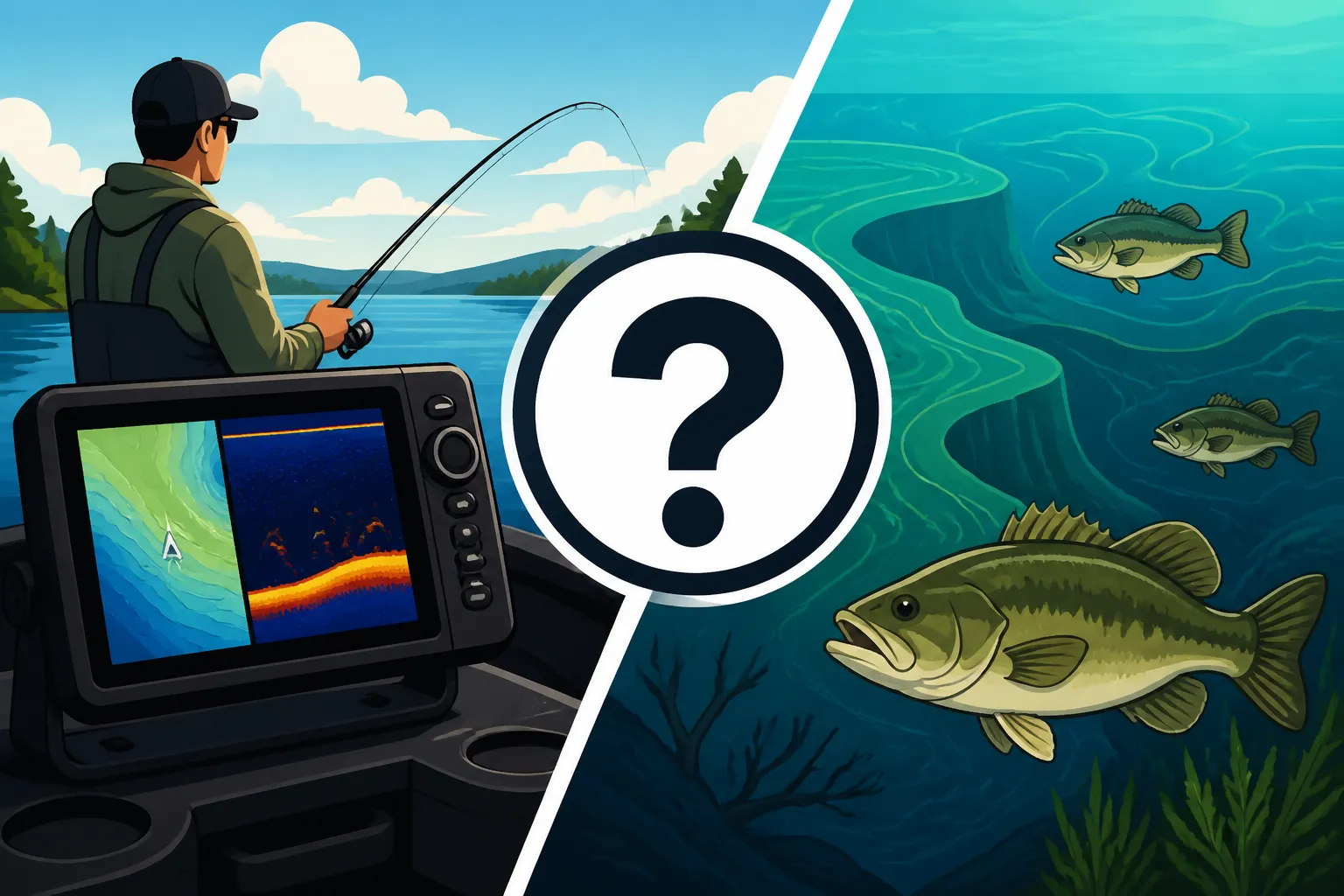
At its core, a GPS fish finder combines two crucial technologies: sonar and Global Positioning System (GPS). The sonar component is what most folks are familiar with—it sends sound waves into the water, and when they bounce back off fish, structure, or the bottom, the unit interprets those echoes to create a visual representation on the screen. You'll see depths, contours, and those tantalizing arches or dots that signify fish. This alone is a huge step up from guessing games.
But here's where the GPS truly shines. It’s not just about showing you where you are on a map; it's about giving you the ability to remember exactly where you've been and where you want to go. Imagine you're out on Lake Eufaula, known as Oklahoma's gentle giant. You're cruising along, scanning the depths, and suddenly, your sonar pings a beautiful brush pile teeming with crappie. Without GPS, you might try to remember that spot using landmarks, but on a vast lake with miles of similar-looking shoreline, that's a fool's errand. With GPS, you hit a button, and bam! – a waypoint is saved. You can then navigate directly back to that brush pile time and time again, even if you drift a hundred yards away while fighting a fish. This precision is invaluable, transforming random discoveries into repeatable success.
Why GPS is a Game-Changer on Expansive Waters
Oklahoma boasts some truly massive lakes, each with its own character and hidden treasures. Think about the sheer scale of Lake Texoma, straddling the Oklahoma-Texas border, or the intricate coves and channels of Grand Lake O' the Cherokees. These aren't your grandpa's farm ponds where you can see from one side to the other. Navigating these vast bodies of water, especially in pursuit of specific fish species that relate to structure, can be incredibly challenging without the right tools.
This is precisely where the GPS aspect becomes a game-changer. Without it, finding a productive hump, a submerged roadbed, or a secret brush pile is hard enough. But re-finding it, especially if it's miles from the boat ramp or out in the middle of a main lake basin? That's nearly impossible. Picture yourself on a blustery day on Keystone Lake, known for its dynamic water levels and sometimes tricky navigation. You've found a fantastic submerged creek channel where the bass are stacked up. The wind is pushing you, the waves are rocking, and trying to triangulate your position using shore features becomes a frustrating exercise in futility. A GPS fish finder removes all that guesswork. It displays your boat's position on a detailed map, allowing you to see your drift, plot a course, and return to that exact creek channel with unwavering accuracy. It's not just about efficiency; it's about safety too. When dense fog rolls in unexpectedly, or you find yourself on the water after sunset, relying on a detailed GPS map for navigation is a comfort and a critical safety feature. Knowing your precise location relative to hazards, channels, and the boat ramp can turn a potentially dicey situation into a manageable one.
Practical Applications on Oklahoma's Large Lakes
So, you understand the core concept, but how does this translate to actual fishing success on the water? The practical applications of a GPS fish finder on Oklahoma's big lakes are incredibly diverse, catering to everything from targeting specific species to simply getting around safely and confidently.
Pinpointing Productive Fishing Structure
Fish love structure – it provides cover, ambush points, and often holds baitfish. On enormous lakes, this structure can be anywhere, from subtle depth changes to sprawling underwater forests. A GPS fish finder helps you not only locate these hotspots but also dissect them. Imagine you're trying to find some trophy bass on Lake Murray, a deep, clear lake in Southern Oklahoma. You might mark a promising point with a steep drop-off. With your GPS, you can drop a waypoint exactly on that point, then make repeated casts from different angles, always knowing your precise relation to the structure below. This allows you to meticulously work the area, covering it thoroughly until you find where the fish are holding.
Many modern GPS fish finders come pre-loaded with highly detailed mapping, including contour lines, depths, and even highlighted navigation channels for popular Oklahoma lakes. This is a huge advantage for anglers exploring new waters or trying to understand complex underwater topography. You can virtually scout a lake from home, identifying potential humps, submerged timber, or old roadbeds, and then mark them as waypoints before you even launch your boat. Then, once on the water, you can navigate directly to these pre-scouted spots. This transforms random exploration into a targeted, efficient search, drastically increasing your chances of finding fish. For instance, knowing the precise location of brush piles where crappie congregate or the subtle ledges where bigger catfish roam can make all the difference. Best Bass Fishing Lakes Across Oklahoma or Best Crappie Lakes in Oklahoma often have these nuanced structural elements that only a GPS fish finder can help you consistently leverage.
Navigating Safely and Efficiently
Beyond finding fish, the navigation capabilities of a GPS fish finder are paramount for safety and efficiency on Oklahoma's vast reservoirs. These lakes can be deceptively tricky, with hidden stumps, shallow flats, and intricate river channels. Trying to run across Grand Lake O' the Cherokees at full speed without knowing the location of hazards can be risky business. With detailed mapping and your boat's real-time position, you can avoid these pitfalls, steering clear of submerged obstacles and sticking to safe, deep channels.
Think about a common scenario: you're planning a morning trip to a remote cove on Lake Tenkiller to chase some crappie, but you know there are some notoriously shallow areas on the way. By plotting a route on your GPS fish finder, you can ensure a smooth, safe journey, avoiding prop-damaging rocks or stumps. This is especially true for Lake Eufaula: Oklahoma's Gentle Giant for Bass and Crappie, which has many shallow, stumpy backwaters that can quickly ruin a fishing trip if you're not careful. For tournament anglers, this efficiency is critical. Every minute saved navigating is a minute spent fishing, and consistent, precise navigation back to productive spots can be the difference between placing in a tournament and going home empty-handed. It allows for quick runs between distant fishing grounds, optimizing time on the water.
Tracking Your Success and Learning Patterns
One of the most powerful, yet often overlooked, benefits of a GPS fish finder is its ability to help you track your fishing success and learn patterns over time. Every time you catch a fish, especially a keeper or a trophy, you can quickly mark that spot with a waypoint. Over time, these waypoints accumulate, creating a personal "hotspot" map of the lake. You might start to notice patterns: perhaps the big channel catfish on Skiatook Lake are consistently found along a certain depth contour during the summer, or the striped bass on Lake Texoma Fishing Guide for Oklahoma Anglers tend to school up in specific areas during the fall migration.
The GPS doesn't just mark single spots; it can also record your "trails." If you're trolling for striped bass or spider-rigging for crappie, you can record the exact path your boat takes. If that path proves productive, you can follow it again with incredible accuracy on subsequent trips. This becomes a powerful tool for building a mental database of a lake. Reviewing your saved waypoints and trails after a trip can help you analyze what worked, what didn't, and identify environmental factors (like water temperature, time of day, or wind direction) that might have contributed to your success. This transforms each fishing trip into a learning experience, continually refining your approach and making you a more effective angler. Best Catfish Fishing Spots in Oklahoma often require this kind of meticulous tracking to consistently find those elusive monsters.
| Feature Area | Without GPS Fish Finder | With GPS Fish Finder |
|---|---|---|
| Locating Fish | Relies on visual cues, guesswork, or simple sonar. | Precise sonar imaging, clearly identifying fish and bait schools. |
| Finding Structure | Difficult to pinpoint subtle humps, ledges, or brush piles. | Detailed mapping reveals contours, submerged features. |
| Re-finding Spots | Challenging on large lakes, relies on memory and landmarks. | Mark waypoints and easily navigate back to exact locations. |
| Navigation | Requires traditional maps, charts, or local knowledge. | Real-time position on detailed maps, path plotting, hazard avoidance. |
| Safety | Higher risk in fog, darkness, or unfamiliar waters. | Enhanced awareness of surroundings, clear routes, emergency marking. |
| Efficiency | Wasted time searching, less consistent success. | Streamlined movement, targeted fishing, repeatable success. |
| Learning | Haphazard, difficult to connect success to specific spots. | Track successful patterns, build a personal "hotspot" database. |
Weighing the Investment: Is It Worth It for You?
Now for the big question: given all these capabilities, do you really need one? The answer, like most things in fishing, depends heavily on your individual angling style, your budget, and the types of water you typically fish. For some, it's an absolute game-changer; for others, it might be more of a luxury.
For the Serious Angler: A Near Necessity
If you consider yourself a serious angler, whether you're chasing tournament wins, targeting trophy fish, or simply maximizing your time on the water, a GPS fish finder is rapidly becoming a near necessity. Tournament anglers, in particular, rely on these units to quickly find fish-holding structure, navigate vast lakes with precision, and revisit productive areas with pinpoint accuracy under pressure. Time is money, and every minute spent searching instead of fishing is a competitive disadvantage.
Anglers targeting specific species that often relate to deep or complex structure will also find immense value. Think about those elusive striped bass on Lake Texoma that might be suspended over deep water or relating to subtle changes in depth. A high-quality GPS fish finder with advanced sonar features (like side imaging or down imaging, which many units from brands like Humminbird or Lowrance offer) allows you to "see" underwater in incredible detail, distinguishing between baitfish and game fish, and identifying brush piles, rock formations, or even individual stumps. For those who travel to different large Oklahoma lakes regularly, investing in a unit with robust mapping capabilities or the ability to download detailed charts from services like Navionics or Lakemaster is invaluable. It’s about having the most complete picture possible of the underwater world, giving you a distinct advantage.
For the Casual Angler: A Strong Convenience, Not Always Essential
On the flip side, if your fishing trips are more about relaxation, sticking to familiar bank fishing spots, or exploring smaller, more manageable ponds, a top-tier GPS fish finder might be overkill. For a casual angler who knows their local lake like the back of their hand and isn't too concerned with finding that exact brush pile again, a simpler, more affordable fish finder without GPS can still provide valuable information about depth and fish presence. You can still use a traditional sonar unit to see what's directly beneath your boat and identify fish, which is a massive help over just blind casting.
If you predominantly fish from the bank, your need for GPS navigation is obviously minimal. Even if you're in a small jon boat or kayak and tend to stick to a couple of known coves on Broken Bow Lake or a familiar stretch of the Arkansas River, the added expense of a GPS-enabled unit might not justify the features you won't fully utilize. It’s all about matching the tool to the task. Don't feel pressured to buy the most expensive unit if your fishing style doesn't demand its full suite of capabilities. There are plenty of fantastic Fish Finder Features That Matter Most on Oklahoma Reservoirs that might be more relevant to you.
Budget Considerations and Where to Buy
Let's be real, these units can represent a significant investment. The price range for GPS fish finders varies wildly, from a few hundred dollars for basic models to several thousand for feature-packed, multi-screen setups. When considering a purchase, think about the screen size you need (larger screens make it easier to interpret complex sonar images and maps), the level of detail in the pre-loaded mapping, and the transducer capabilities (e.g., traditional sonar, down imaging, side imaging).
It's always a good idea to do your homework. Sites like Amazon often have a wide selection and customer reviews that can give you a sense of what other anglers think. However, for a hands-on experience and expert advice, visiting a dedicated outdoor retailer like Bass Pro Shops can be incredibly helpful. You can see the units in person, talk to staff who understand the nuances of fishing electronics, and compare different models side-by-side. Don't forget to factor in installation costs if you're not comfortable doing it yourself, or accessories like transducer mounts and power cables. Ultimately, the question isn't whether a GPS fish finder is good, but whether its capabilities align with your fishing goals and budget for your specific Oklahoma fishing adventures. For many, the peace of mind, increased efficiency, and consistent success it brings make it an indispensable piece of gear.
Disclaimer
This article is for general informational purposes only and does not constitute professional advice. Laws, prices and regulations vary by location and change over time. Consult a qualified professional for guidance on your specific situation.