Best Side Imaging Fish Finder for Bass Fishing
For serious bass anglers in Oklahoma, there's a common frustration: you know the fish are there, but finding those subtle, fish-holding structures in our vast lakes can feel like searching for a needle in a haystack. Traditional sonar only gives you a narrow view directly beneath your boat, leaving huge swaths of water unexplored. This guide will walk you through everything you need to know about side imaging fish finders, revealing how this incredible technology can transform your bass fishing success by showing you exactly where the lunkers are hiding.
What Side Imaging Is and Why Bass Anglers Absolutely Need It
Let's cut through the jargon for a moment. Imagine you're standing on the bow of your boat, looking down into the water. Traditional 2D sonar is like looking straight down through a toilet paper roll, giving you a very narrow cone of vision. Now, picture yourself with a flashlight, shining it out to the sides of your boat, illuminating everything far and wide beneath the surface. That, my friends, is essentially what side imaging does for you. It's a game-changer because it takes away the guesswork and paints a detailed, picture-like view of the underwater world to the left and right of your boat. For bass anglers, especially on sprawling Oklahoma reservoirs, this means less time blindly casting and more time putting your bait directly on structure where fish are likely to be.
The "Wow" Factor: Seeing the Whole Picture
The most immediate benefit of side imaging is its incredible coverage. Instead of just seeing what's directly under you, you're now scanning a massive area, often hundreds of feet wide, with each pass. Think about fishing a vast, featureless flat on Lake Eufaula or the expansive main lake areas of Best Bass Fishing Lakes Across Oklahoma. Without side imaging, you might spend hours idling back and forth, trying to stumble upon a brush pile or a rock reef. With side imaging, you can cover that same area much faster, painting a clear picture of submerged timber, old roadbeds, changes in bottom composition, and even schools of baitfish or bass themselves, all without driving directly over them. This wide-angle perspective means you're no longer just guessing; you're seeing the bass's living room.
Pinpointing Bass-Holding Structure with Clarity
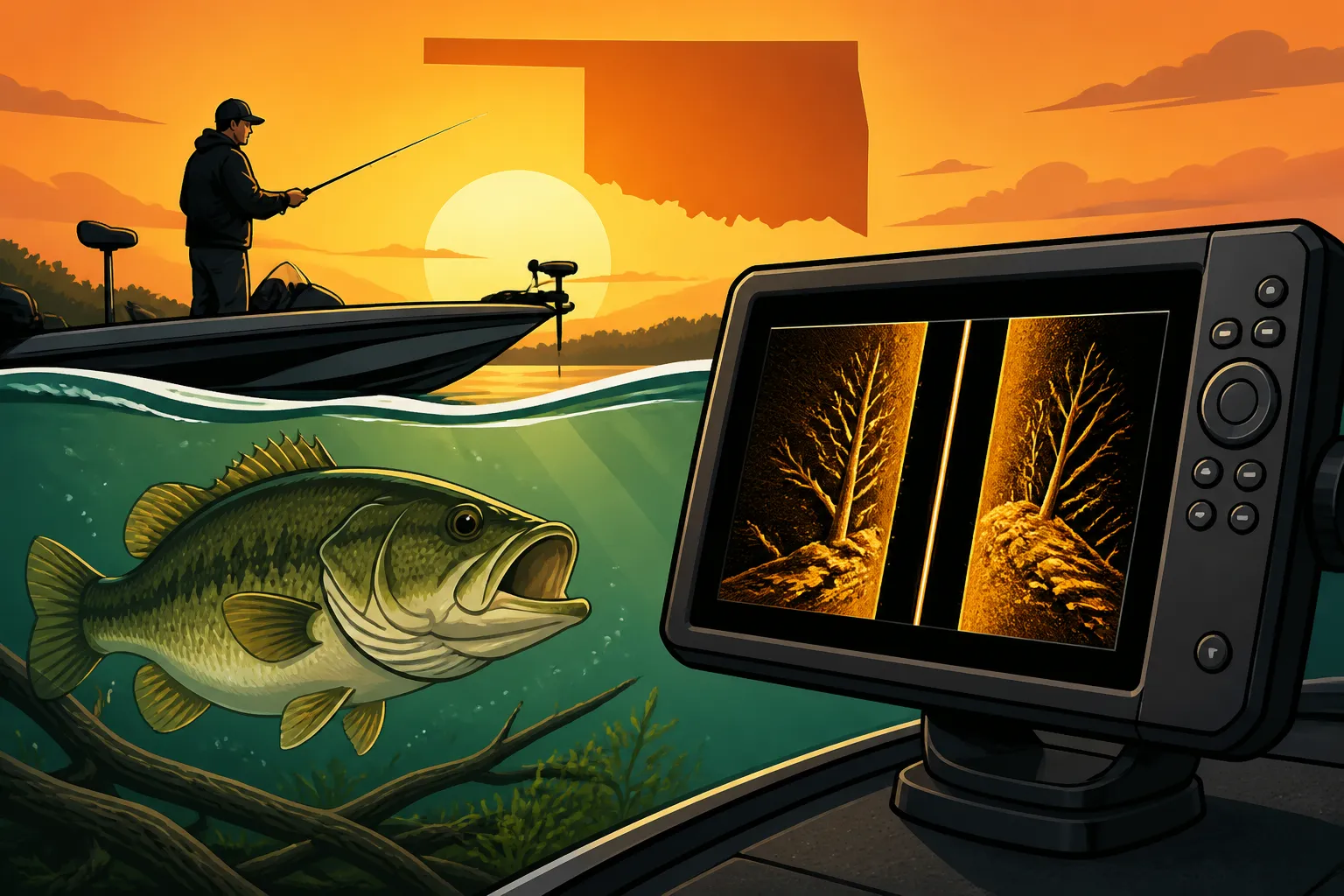
Bass are ambush predators, and they absolutely love to relate to structure and cover. Whether it's a sunken boat, a submerged bridge, a deep rock pile, or a brush pile dropped by another angler, these features offer protection and feeding opportunities. Side imaging excels at revealing these hidden gems with astounding detail. You can literally see the individual limbs of a submerged tree, the subtle contour changes of a creek channel, or the distinct shape of a gravel pile that's holding fish. This level of detail allows you to identify not just that there's structure, but what kind of structure it is, and often, even if there are fish sitting on or near it. You can then make precise casts to these spots, rather than just casting generally into an area you think might hold fish.
Key Features to Look For in a Side Imaging Fish Finder
When you're ready to invest in a side imaging unit, it's easy to get overwhelmed by all the options out there. Manufacturers are constantly pushing the envelope with new technology, but for bass fishing in Oklahoma, there are a few core features that really make a difference. Focusing on these will ensure you get a unit that helps you find more fish, rather than just collecting dust on your console.
Screen Size and Resolution: Your Window to the Underwater World
This is probably the most overlooked, yet critical, feature. Side imaging data is highly detailed, and trying to decipher it on a small, low-resolution screen is like trying to enjoy a movie on a postage stamp. For serious bass anglers, a screen size of at least 9 inches is a fantastic starting point, with 10-12 inches being even better if your budget and console space allow. The larger screen gives you more real estate to split your display into multiple views (like side imaging, 2D sonar, and mapping) without making any single view too cramped.
Beyond size, resolution is king. Look for units with high pixel counts, often advertised as "HD" or "Mega" imaging. Higher resolution means sharper images, allowing you to distinguish between a rock and a log, or even a bass from a submerged branch. You'll be able to pick out subtle details that make all the difference, like a faint shadow indicating a fish tucked tight to a piece of cover. Spending a little extra here will pay dividends every time you're on the water.
Transducer and Frequency: The Heart of Your Imaging System
The transducer is what sends and receives the sonar waves that create your side imaging picture. The quality of this component is paramount. Most modern side imaging units come with a multi-frequency transducer that handles several types of sonar, including traditional 2D, down imaging, and side imaging.
For side imaging, frequency matters a great deal. Lower frequencies (like 200-455 kHz) provide greater depth penetration and range, allowing you to see further to the sides of your boat, which is great for scouting large areas on lakes like Texoma. However, lower frequencies typically mean less detail. Higher frequencies (like 800 kHz or even 1.2 MHz, often marketed as "Mega Imaging" by brands like Humminbird) offer incredible detail and clarity, but with a more limited range. For bass fishing, where identifying specific structure and fish around it is key, a higher frequency option is highly desirable. Some premium units allow you to switch between frequencies or even use multiple frequencies simultaneously, giving you the best of both worlds.
GPS Mapping and Networking: Navigating and Marking Your Finds
A side imaging unit without good GPS mapping capabilities is like having a powerful telescope but no star chart. Integrated GPS allows you to see your boat's position on a detailed map, mark waypoints for promising structures you find with side imaging, and navigate back to them with precision. Look for units that support high-definition mapping cards (like those from Navionics or LakeMaster), which provide contours, hazards, and other crucial navigation information for Oklahoma's major reservoirs.
Networking capabilities are also important, especially if you plan to run multiple units on your boat. Being able to share waypoints, transducers, and other data between units at the bow and console can dramatically improve your efficiency on the water. Imagine finding a perfect brush pile with your console unit's side imaging, marking it, and then having that waypoint instantly appear on your bow unit for precise casting. This seamless integration can make a huge difference in your fishing experience. Best Fish Finder Features That Matter Most on Oklahoma Reservoirs details even more about this.
Ease of Use and Durability: Practical Considerations for the Angler
No matter how powerful the technology, if it's too complicated to use or can't withstand the rigors of bass fishing, it's not going to serve you well. Look for units with intuitive menus, easily accessible controls, and perhaps even touchscreen functionality for quick adjustments. Modern fish finders should be relatively easy to learn, but some brands have a steeper learning curve than others. Don't be afraid to watch some online tutorials or talk to experienced anglers about their preferences.
Durability is also a non-negotiable. Your fish finder will be exposed to sun, rain, vibration, and occasional bumps. Ensure the unit you choose is built to withstand these conditions. Waterproof ratings, robust mounting systems, and high-quality construction are all indicators of a unit that will last season after season on the unpredictable waters of Oklahoma.
Top Contenders in the Side Imaging World for Bass Anglers
When it comes to side imaging fish finders, there are a few dominant players in the market that consistently deliver high-quality products. While I can't give you specific model numbers or current prices, knowing the brands and what they generally offer will help you navigate the options. You'll typically find these brands and their extensive product lines at major retailers like Bass Pro Shops or through online vendors such as Amazon, where you can compare features and read reviews.
Entry-Level vs. High-End: Matching Your Budget and Needs
Just like with fishing rods or reels, side imaging units come in a wide range of price points.
- Entry-level units might offer basic side imaging capabilities, often with smaller screens or slightly less detailed imaging, but they can still be a fantastic step up from traditional sonar. These are great for anglers who want to try out the technology without breaking the bank, or who fish smaller bodies of water where extreme range isn't as critical. They provide enough detail to identify major structures and gain a significant advantage.
- Mid-range units typically offer larger, higher-resolution screens, more powerful transducers, and often include advanced features like GPS mapping, basic networking, and multiple sonar views (2D, Down Imaging, Side Imaging). This is where many serious bass anglers find their sweet spot, getting excellent performance for a reasonable investment.
- High-end units are the crème de la crème, boasting the largest and highest-resolution screens, cutting-edge transducer technology, advanced networking, detailed mapping, and often touchscreens with customizable interfaces. These are designed for competitive anglers or those who simply demand the absolute best performance and integration into a sophisticated electronics suite. They offer the clearest, furthest views and the most seamless user experience.
Reputable Brands to Consider
Several manufacturers have consistently pushed the boundaries of side imaging technology.
- Humminbird is often credited with popularizing side imaging (which they call Side Imaging® and Mega Side Imaging®). Their units are known for incredibly detailed, photo-like imagery, particularly with their Mega series. Many anglers rave about the clarity and ease of distinguishing fish from structure. They offer a wide range of models, from compact units perfect for kayaks to large, networked displays for bass boats.
- Lowrance offers a similar technology called StructureScan® and ActiveImaging™. Lowrance units are renowned for their user-friendly interfaces, powerful GPS mapping capabilities, and robust performance. Many tournament anglers appreciate the speed and responsiveness of Lowrance systems, especially when covering large areas quickly.
- Garmin has made significant strides in recent years with their SideVü™ technology, often praised for its crisp, clear imagery and excellent integration with their mapping and trolling motor systems. Garmin units are also known for their intuitive operation and overall reliability, making them a strong contender for any bass angler.
Each of these brands has its loyal following, and each offers a variety of models that could be considered the "best" depending on an individual angler's needs, budget, and boat setup. The key is to research the specific features each line offers and how they align with your fishing style. For example, Best Fishing Boats for Oklahoma's Big Reservoirs might require a different setup than fishing a smaller, more intimate lake.
Integrating Side Imaging into Your Oklahoma Bass Fishing Strategy
Having a side imaging unit is one thing; effectively using it to catch more bass is another. This technology isn't just a fancy toy; it's a powerful tool that, when understood and properly utilized, can drastically improve your fishing efficiency and success, especially on our challenging Oklahoma lakes.
Scouting New Water and Patterns
One of the most valuable applications of side imaging is its ability to help you quickly scout new water or understand current patterns. Instead of wasting time making speculative casts, you can use side imaging to identify prime bass habitat before you even make a single presentation.
Imagine you're on a new lake like Tenkiller or Grand Lake, known for its diverse structure. You can idle over promising areas, such as points, humps, or creek channels, and let your side imaging screen reveal what lies beneath. Are there brush piles? Rock ledges? Old stumps? Are fish suspended off those structures, or are they buried in the cover? You can quickly identify areas worth exploring further, marking waypoints on your GPS for later investigation. This is particularly useful when the bite is tough, and you need to find those subtle differences that are holding fish. It also helps in understanding How Water Temperature Affects Bass Spawning in Oklahoma by locating appropriate depth zones.
Targeting Specific Cover with Precision
Once you've identified a promising piece of structure with your side imaging, the real magic begins. The clarity of the image allows you to understand the exact shape and orientation of the cover. Is it a long, skinny brush pile, or a dense, compact one? Is it sitting on a clean bottom, or is there surrounding debris? You can see exactly where the cover is, allowing you to position your boat perfectly to make a precise cast.
For instance, if you spot a sunken boat on Lake Murray, you can see if fish are holding on the bow, stern, or inside. You can then make a cast that lands your lure just beyond the optimal strike zone and retrieve it right through the fish. This level of precision minimizes wasted casts and increases your chances of getting a bite. It also helps you differentiate between cover that's holding fish and cover that isn't, saving you valuable time. Being able to see this detail is a far cry from just hoping your Best Rods for Oklahoma Largemouth Bass and Best Lures for Largemouth Bass at Lake Eufaula hit something productive.
Pairing with Other Sonar Views for Maximum Advantage
Side imaging is incredibly powerful on its own, but its true potential is unlocked when you pair it with other sonar technologies, particularly traditional 2D sonar and down imaging. Most modern fish finders allow you to display multiple views simultaneously on a split screen, giving you a comprehensive understanding of the underwater environment.
- Side Imaging + Down Imaging: Use side imaging to scan a wide area and locate promising structure. Once you've found something, use down imaging to get a high-resolution, photographic-like view directly beneath your boat as you pass over or near the target. Down imaging will often give you a clearer picture of fish directly on or in the structure.
- Side Imaging + 2D Sonar: While side imaging shows you width and down imaging shows you verticality directly under the boat, 2D sonar (especially with CHIRP technology) is still excellent for showing bait balls, fish arches, and interpreting bottom hardness directly beneath your transducer. Pairing it with side imaging gives you both the broad overview and the specific details you need.
- Side Imaging + Mapping: This combination is indispensable. As mentioned, side imaging helps you find new spots, and mapping helps you keep track of them and navigate. You can see your boat moving over your map while simultaneously scanning the sides for hidden gems. This is particularly useful when trying to find How to Fish Deep Structure for Bass in Summer on vast reservoirs.
Mastering the use of side imaging, in conjunction with your other electronics, will give you a significant advantage in finding and catching bass across Oklahoma's diverse fishing landscape. It truly provides How a Fish Finder Helps You Find Structure on Oklahoma Reservoirs and helps you become a more efficient and successful angler.
| Feature | Primary Benefit for Bass Fishing | Why it Matters in Oklahoma |
|---|---|---|
| Wide Coverage | Rapidly scans large areas, showing structure far from the boat. | Crucial for vast lakes like Texoma, Eufaula, Grand. |
| Detailed Imagery | Clearly distinguishes brush piles, rock formations, creek channels. | Pinpoints exact ambush points for bass in varied terrain. |
| Fish Identification | Often shows individual fish or schools relating to cover. | Confirms bass presence before making a cast. |
| GPS Integration | Marks exact locations of productive spots for future return. | Essential for navigating and relocating subtle structure. |
| Multiple Frequencies | Allows choice between long-range scouting or high-detail viewing. | Adaptable to different fishing scenarios and water clarity. |
This table provides a quick overview of why each feature is important for Oklahoma bass fishing.
Disclaimer
This article is for general informational purposes only and does not constitute professional advice. Laws, prices and regulations vary by location and change over time. Consult a qualified professional for guidance on your specific situation.