How to Bottom Fish for Catfish
There’s nothing quite like the thrill of feeling that solid thump on your line, knowing a big Oklahoma catfish has just taken your bait. But let's be honest, sometimes it feels like they’re just not biting, or you're setting up all wrong. Many anglers struggle to consistently put catfish in the cooler, especially when trying to reach those bottom-dwelling monsters. This comprehensive guide is here to break down the ins and outs of bottom fishing for catfish, ensuring your next trip to an Oklahoma lake or river is a successful one, leaving you confident in your technique.
Understanding Why Bottom Fishing Works for Catfish
Catfish are fascinating creatures, and what makes them such a popular target for anglers across Oklahoma is their predictable feeding habits. They are primarily scavengers and opportunistic predators, often lurking in the deeper, darker parts of a water body, close to the bottom where food settles. Bottom fishing isn't just a technique; it's practically a philosophy for targeting these whiskered warriors, capitalizing on their natural tendencies.
The Catfish's Natural Habitat and Feeding Habits
Think about where catfish spend most of their time. Whether it's the muddy currents of the Red River, the vast depths of Lake Texoma, or the timber-filled coves of Lake Eufaula, catfish typically gravitate towards structure on or near the bottom. This could be submerged logs, rock piles, ledges, or even just soft, silty areas where small organisms and decaying matter accumulate. They use their keen sense of smell and those distinctive whiskers (barbels) to detect food, often rooting around in the substrate. Presenting bait directly on the bottom puts it right in their strike zone, making it an irresistible, easy meal that mimics their natural foraging behavior.
Beyond just finding food, the bottom offers catfish sanctuary. It provides cover from predators when they are smaller, and for larger fish, it offers a comfortable, often cooler, environment where they can conserve energy. This means that if you can get your bait down to where they live, you've already won half the battle. It’s about putting the buffet right in front of them, instead of hoping they swim up to find it.
Why Bottom Rigs Are So Effective
The genius of bottom fishing lies in its simplicity and effectiveness. Unlike techniques that suspend bait in the water column, bottom rigs are designed to deliver your bait precisely where the catfish are. This minimizes guesswork and maximizes your chances of a bite. These rigs are engineered to keep your bait stationary (or nearly so) on the lake or riverbed, allowing the scents to disperse and attract fish from a wider area. It also ensures that when a catfish does pick up your bait, it feels minimal resistance from the sinker, giving them confidence to fully commit.
Imagine a bait drifting through the middle of the water column. A catfish might notice it, but it might also be too much effort to chase, or it might just not be what they're looking for. Now, picture that same bait, sitting right on the bottom, emitting a strong scent, right where they're already cruising. The odds swing dramatically in your favor. This method is particularly effective when fish are less active, perhaps due to cold fronts or post-spawn lethargy, as it requires less energy for them to feed.
Essential Gear and Rigging for Oklahoma Catfish
Alright, let's talk brass tacks: the gear. You can't just throw any old setup at a determined Oklahoma catfish and expect success. These fish, especially the big blue cats and flatheads, can pull like freight trains, so having the right rod, reel, line, and, most importantly, the right rig is absolutely crucial. Skimping here often leads to heartbreak at the moment of truth.
Rods, Reels, and Line for Serious Catfishing
When you're bottom fishing for catfish, you're looking for power and durability. For rods, think medium-heavy to heavy action, typically in the 7 to 9-foot range. This length gives you good casting distance to reach those deeper channels and the leverage needed to fight larger fish. A strong backbone with a sensitive tip is ideal; the backbone helps you muscle in a big fish, while the sensitive tip lets you feel those subtle bites when a catfish just "mouths" the bait. Brands like Ugly Stik and Berkley are popular choices among Oklahoma anglers for their toughness.
For reels, you'll want a heavy-duty baitcasting reel or a large spinning reel. A baitcaster, especially a conventional drum-style reel, offers superior power and line capacity, which is great for tackling large blue catfish at Lake Texoma. Spinning reels are often preferred for lighter setups or for anglers who find them easier to cast, but ensure it's a robust model with a smooth drag system. As for line, braided line in the 30-80 lb test range is a top choice due to its strength, thin diameter, and lack of stretch, which enhances sensitivity. If you prefer monofilament, go with a heavy-duty option like 20-40 lb test. Fluorocarbon leaders, though optional, can be a good idea in clearer waters for abrasion resistance and reduced visibility, but often catfish aren't too picky about line visibility. Remember, you'll be putting a lot of stress on your line, so choosing quality is key. You can find a wide variety of these rods, reels, and lines on Amazon, making it easy to build your ideal setup.
Building Effective Bottom Rigs: The Heart of Catfishing
The rig itself is where the magic happens in bottom fishing. It's designed to keep your bait where it needs to be and ensure a good hookset. There are a few go-to rigs that every Oklahoma catfisherman should know and master.
The Carolina Rig (Sliding Sinker Rig)
This is arguably the most popular and versatile bottom rig for catfish, and for good reason. It consists of a bullet or egg sinker that slides freely on your main line, followed by a barrel swivel, and then a leader (usually 12-24 inches) tied to your hook. The beauty of this rig is that when a catfish picks up the bait, the line slides through the sinker, allowing the fish to swim off with the bait without feeling the weight of the sinker. This means fewer dropped baits and more solid hooksets.
To set up a Carolina rig: First, thread your main line through an egg or no-roll sinker. Next, tie on a sturdy barrel swivel. Then, attach a leader of monofilament or fluorocarbon (typically 1-2 feet long) to the other end of the swivel. Finally, tie your hook to the end of the leader. This rig is fantastic for both bank fishing and boat fishing, especially when you need your bait to stay in one place but want the fish to pick it up without resistance. If you’re not sure how to rig a slip sinker for catfish, there are plenty of online tutorials, but this basic setup is easy to master.
The Santee Cooper Rig
The Santee Cooper rig is a variation of the Carolina rig, specifically designed to keep your bait slightly off the bottom. This is achieved by adding a peg or a small float on the leader, just above the hook. This small buoyancy keeps your bait dancing a few inches to a foot off the bottom, making it more visible to cruising catfish and keeping it out of debris or snags on the bottom. It's particularly effective in areas with a lot of muck or submerged vegetation.
To create a Santee Cooper rig: Start with the basic Carolina rig setup. Once you've tied your leader to the swivel, add a small, brightly colored foam float (often called a "peg float" or "crappie float") onto the leader, positioning it about 2-6 inches above your hook. Secure it in place with a toothpick or bobber stopper. This subtle lift can make a huge difference, especially if the catfish are slightly suspended or if you're fishing in muddy conditions where a lifted bait is easier to locate by scent.
| Rig Type | Key Feature | Best Use Case | Pros | Cons |
|---|---|---|---|---|
| Carolina Rig | Sliding sinker | Versatile, clean bottoms, minimal snags | Natural bait presentation, minimal resistance | Bait can get lost in muck |
| Santee Cooper Rig | Sliding sinker with float | Muddy bottoms, heavy debris, increased visibility | Keeps bait off bottom, reduces snags | Can be more complex to tie |
| Three-Way Swivel Rig | Fixed sinker off dropper line | Strong currents, live bait, multiple hooks | Stable in current, versatile for multiple baits | Can be more prone to snags |
Choosing the Right Hooks
Your hook choice is just as critical as your rig. For catfish, you generally want strong, sharp, wide-gap hooks to accommodate large baits and ensure a solid hookset in their tough, cartilaginous mouths. Circle hooks are a phenomenal choice for catfish, especially for catch-and-release, as they are designed to hook the fish in the corner of the mouth, minimizing gut hooks. Sizes can range from 3/0 to 10/0, depending on your target species and bait size. For smaller channel catfish, a 3/0 or 4/0 might suffice, but for trophy blue or flathead catfish, you'll want to size up to 7/0 or larger.
Treble hooks are sometimes used with prepared baits, but are generally less recommended due to increased potential for foul-hooking and damage to the fish. When in doubt, a sharp, strong circle hook will serve you well. Many anglers stock up on their favorite circle hooks on Amazon to ensure they always have a good supply.
Picking the Perfect Bait and Spotting Prime Locations
Now that your gear is dialed in, it’s time for the delicious part: the bait! Catfish are notoriously fond of pungent, oily, and sometimes surprisingly fresh offerings. Knowing what bait to use and, just as importantly, where to cast it, are the final pieces of the puzzle for successful bottom fishing.
Irresistible Baits for Oklahoma's Catfish Species
Oklahoma is home to a fantastic array of catfish, including channel, blue, and flathead catfish. Each has its preferred menu, though there's often overlap. Matching your bait to the species you're targeting can dramatically increase your success rate.
Stink Baits and Prepared Baits
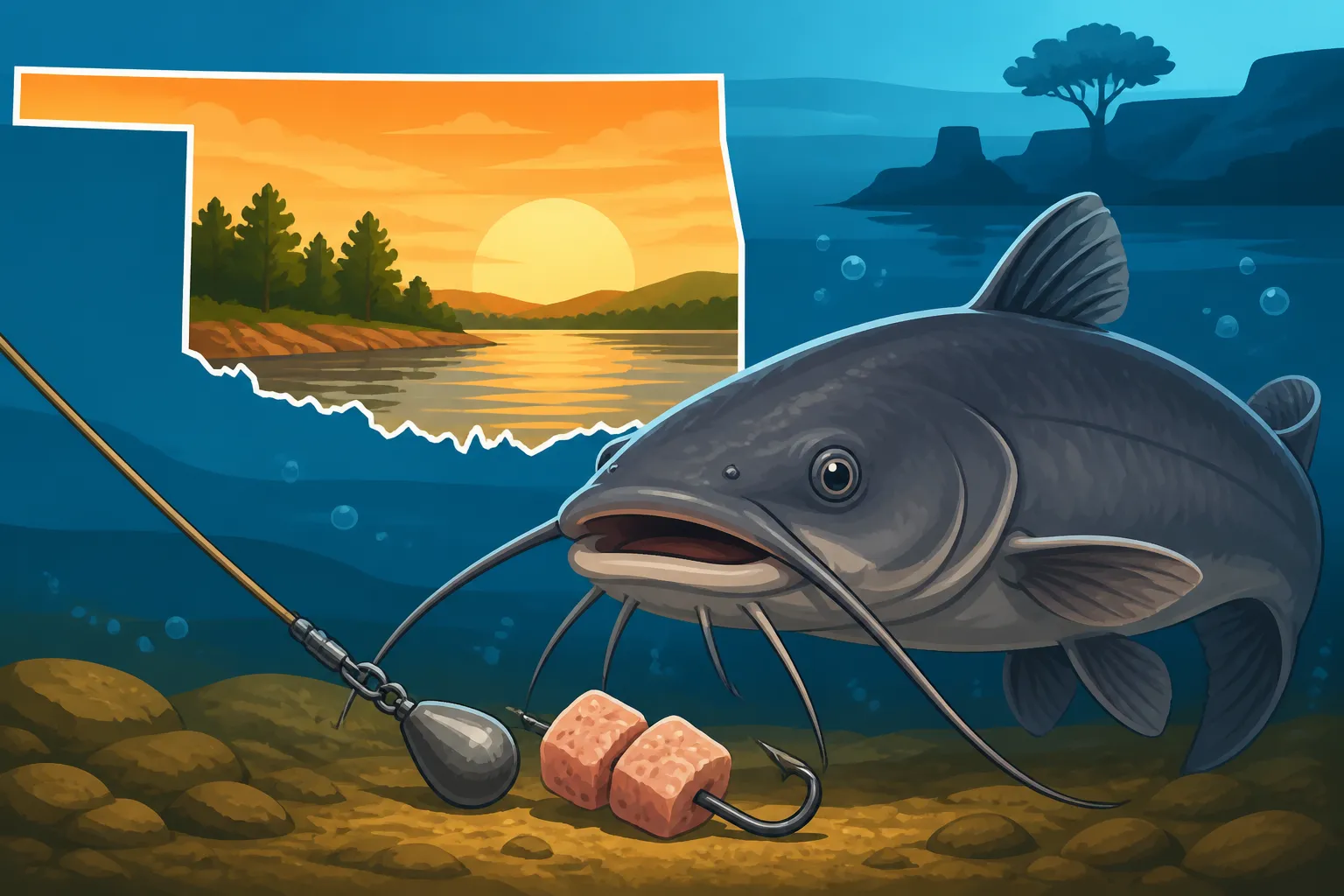
For channel catfish, nothing beats a good stink bait or a prepared bait. These baits are designed to release strong odors that catfish can detect from a distance, even in murky water. Think about those jars of gooey, pungent bait – the smellier, the better! You can find a vast selection of these at local tackle shops or even on Amazon. Dip baits, punch baits, and pre-formed dough balls are all excellent options. To use them, you typically need a specialized bait holder hook or a sponge-style hook that can retain the soft bait. Just make sure to handle them with care, as the smell tends to linger!
Chicken livers are another classic, highly effective bait for channel catfish. They are bloody and soft, releasing a strong scent trail. The downside is they can be difficult to keep on the hook, especially with a strong cast or current. Many anglers use a small piece of nylon stocking or thread to secure them. Remember, for the best results, you want a fresh, bloody liver.
Cut Bait and Live Bait
When you're targeting those larger blue catfish and flathead catfish, especially the behemoths found in lakes like Texoma or Grand Lake O' the Cherokees, cut bait or live bait becomes king. Blue catfish are keen predators, and fresh cut bait, like shad, carp, or even small panfish, is incredibly effective. They love the oily scent and visible blood trail that cut bait provides. The fresher the better! A filet of fresh shad, especially the gut section, can be absolutely deadly.
Flathead catfish, on the other hand, are almost exclusively piscivores, meaning they prefer live bait. A frisky live bluegill, sunfish, or even a small carp, hooked through the back or lips, is often the ticket to landing a trophy flathead. Just be sure to check the local regulations for specific baitfish restrictions and size limits. Knowing the difference between channel catfish vs blue catfish vs flathead catfish in Oklahoma will help you tailor your bait choice. If you’re looking for the Best Catfish Bait for Summer Fishing, live and cut baits are often hard to beat when the water is warm and metabolism is high.
Locating Productive Catfish Hotspots in Oklahoma
You can have the best bait in the world, but if you're not casting it where the fish are, you're just feeding the water. Catfish are creatures of habit and structure, so understanding their preferred hangouts is paramount.
Understanding Structure and Depth
Catfish love structure. This includes creek channels, river bends, submerged timber, rock piles, ledges, and humps. In reservoirs, these areas often offer deeper water where catfish feel secure and can ambush prey. Use your boat's fish finder if you have one, or consult a detailed bathymetric map of the lake to identify these features. When bank fishing, look for points that drop off into deeper water, the mouths of creeks, or areas with visible current breaks.
For rivers, think about current. Catfish will often position themselves just out of the main current, in eddies or behind obstacles, where they can conserve energy but still ambush food as it drifts by. Deep holes, undercut banks, and log jams are prime real estate. Understanding how the river flows and where natural currents create feeding lanes is key to finding the "strike zone."
Seasonal Considerations for Catfish Locations
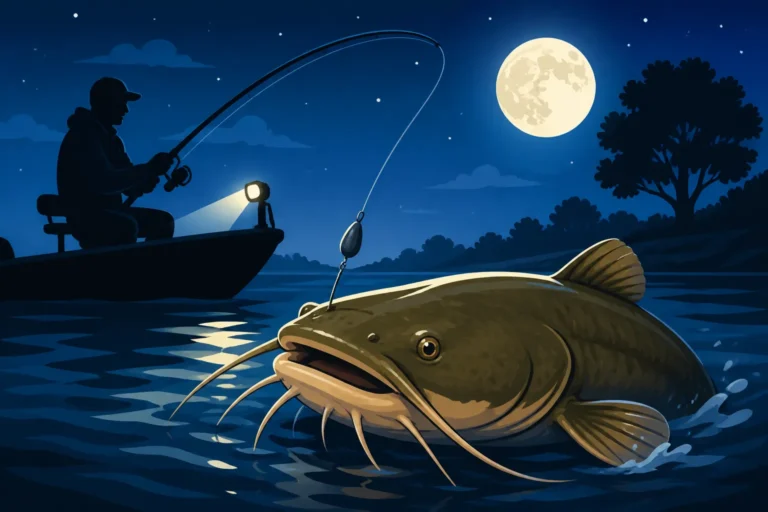
Catfish, like all fish, change their patterns with the seasons. In spring, as water temperatures rise, they'll often move into shallower areas to spawn, and you might find them in coves or flats. During the hot Oklahoma summer, they tend to move deeper, seeking cooler, more oxygenated water, often around main lake points or submerged humps. This is when night fishing for catfish can be particularly productive, as they move shallower to feed under the cover of darkness. As the water cools in the fall, they'll often become more active, feeding heavily to prepare for winter, and can be found transitioning between deep and shallow water. During winter, they often school up in deep holes or channels, sometimes in almost lethargic states. If you're struggling to locate them, remember to adjust your approach based on the time of year, especially for Winter Catfishing Techniques in Oklahoma.
Mastering the Technique: Casting, Waiting, and Hooksetting
You’ve got your gear, you’ve picked your bait, and you know where you’re going. Now comes the actual fishing part – the casting, the waiting, and that all-important moment of the hookset. This isn't just about throwing a line in the water; there's an art to it, honed by countless hours on the water.
The Art of the Cast and Presentation
When bottom fishing, your cast needs to be accurate and controlled. You’re not just flinging bait aimlessly; you're trying to land it on a specific piece of structure or in a precise depth. If you’re casting from the bank, aim for those deeper channels, drop-offs, or visible points. From a boat, you have the advantage of positioning directly over or slightly upcurrent from your target. A smooth, controlled cast will help prevent your bait from flying off the hook (especially with softer baits like chicken livers) and ensure your rig lands cleanly.
Once your rig hits the water, let it sink naturally to the bottom. Avoid reeling in too quickly, as this can drag your bait away from the target zone. Once it settles, retrieve just enough slack so you can feel the weight of your sinker and any subtle bites, but don't pull it off the bottom. If you're in current, let the current work for you. Position your boat or cast your line upstream and let the rig drift naturally into the desired area. This is a common tactic when fishing for channel catfish from the bank in rivers.
Patience is a Virtue: Waiting for the Bite
This is where many beginners struggle. Catfishing is often a game of patience. Unlike some species that hit with aggressive strikes, catfish bites can range from a gentle "tap-tap" to a slow, steady pull. You need to be attentive, but not antsy. Place your rod in a sturdy rod holder, and watch the tip like a hawk. Or, if you prefer to hold your rod, keep a light grip, ready for action.
Don't be surprised if you wait for a while. Catfish are methodical eaters. They might mouth the bait, swim off a short distance, and then truly commit. That's why the sliding sinker rig (Carolina rig) is so effective; it allows them to do this without feeling the heavy resistance of the sinker, giving them confidence. Don't set the hook on every little twitch. Wait for a more sustained pull, or a strong, deliberate bend in your rod tip. Sometimes, especially with larger fish, it feels less like a bite and more like your rod just slowly starts to bend over. This is particularly true if you are aiming for trophy catfish in spots like the Red River or Lake Texoma.
The Critical Hookset and Fight
When you get that definitive bite – that strong, continuous pull or the unmistakable bend in the rod – it's time to set the hook. This is not a gentle affair. With a catfish, you want a firm, upward sweep of the rod, pulling back with purpose. Don't be afraid to put some power into it; those mouths are tough! If you're using circle hooks, a steady reel-in with a firm sweep is often all it takes; the hook is designed to find its way to the corner of the mouth as the fish moves away.
Once the hook is set, the fight is on! Catfish, particularly blue cats and flatheads, are powerful fighters. Keep your rod tip up, use your drag system to tire the fish, and try to steer them away from snags like submerged timber. They'll often make powerful runs, especially when they first feel the hook. Don't horse them in too quickly; let your rod and reel do the work. Remember to pump and reel, gaining line when the fish isn't pulling, and giving line when it is. Bringing in a big catfish, whether you're targeting small channel cats for dinner or a monster blue cat for a photo, is one of the most rewarding experiences in fishing. For techniques on how to catch Channel Catfish from the Bank, the hookset and fight principles remain the same, just adjust for the environment.
Disclaimer
Fishing involves inherent risks, and conditions can change rapidly. Always prioritize safety, wear a U.S. Coast Guard-approved life jacket, and adhere to all local, state, and federal fishing regulations and boating laws. This guide is for informational purposes only and does not constitute professional advice. Consult with local authorities or experts for specific safety concerns or regulatory questions.