Crappie Fishing in Oklahoma: Black and White Crappie
There's nothing quite like the thrill of a crappie bite in Oklahoma, but sometimes it feels like you're playing a guessing game out there. Whether you're chasing the speckled beauty of a black crappie or the streamlined grace of a white crappie, knowing the nuances of each species and where to find them can turn a frustrating day into a fantastic fish fry. This comprehensive guide is dedicated to unlocking the secrets of crappie fishing across Oklahoma, helping you understand, locate, and reel in both black and white crappie with confidence, no matter the season or the water body.
Understanding Oklahoma's Crappie: Black vs. White
When you're out on the water, seeing a crappie hit your bait is exciting. But have you ever paused to really look at it and wonder if it's a black crappie or a white crappie? It might seem like a small detail, but these two species, while similar, have distinct characteristics and often prefer different habitats. Understanding these differences can dramatically improve your fishing success in Oklahoma's diverse waters.
Identifying Black Crappie
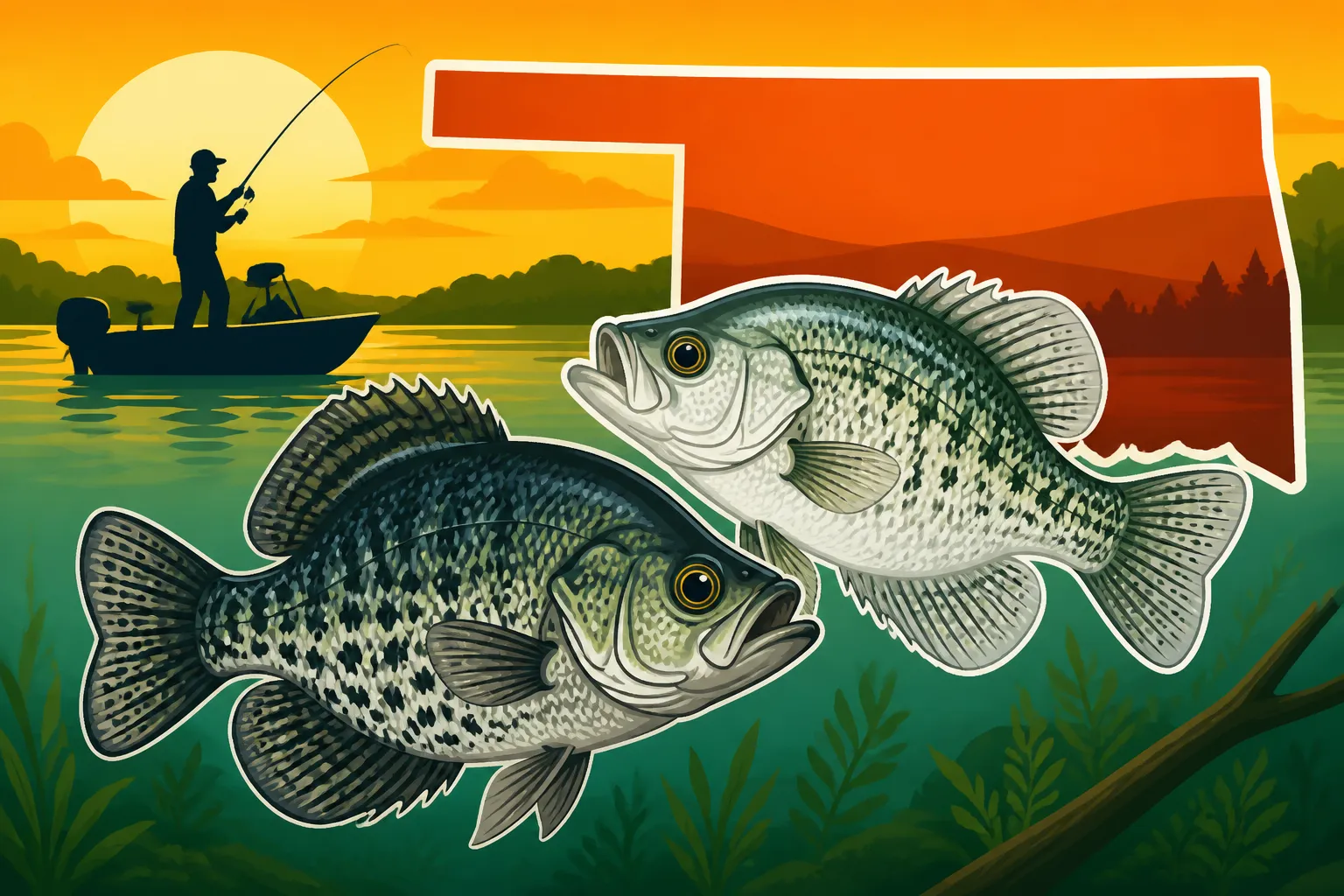
Black crappie, often called "speckled perch" or "calico bass," are truly beautiful fish. Their bodies tend to be deeper and more compressed laterally compared to their white crappie cousins. The most noticeable identifying feature is their coloration: they are typically a silvery-olive with an irregular pattern of dark, almost black, spots and blotches all over their sides. These spots often look like ink splatters, dense and somewhat random.
Another key identifier lies in their dorsal fin. If you count the spines on their dorsal fin, black crappie almost always have 7 or 8 distinct dorsal spines. This is a pretty reliable way to tell them apart, even for a quick glance on the boat. Their mouths are also quite large, extending back under the eye, which helps them ambush smaller baitfish. Anglers often find black crappie in clearer, cooler waters with plenty of vegetation or submerged timber, making them a common sight in many of Oklahoma's deeper, more pristine lakes.
Identifying White Crappie
White crappie, sometimes known as "slab crappie" or "paper mouths," present a slightly different profile. Their bodies are typically more elongated than the black crappie, giving them a more streamlined appearance. Their coloration is generally lighter, a silvery-white or pale green, and instead of irregular blotches, they usually have distinct vertical bars or stripes along their sides. These bars can be quite pronounced, especially when the fish is first pulled from the water, though they may fade slightly over time.
Just like the black crappie, the dorsal fin is a major clue for identification. White crappie will almost always have 5 or 6 dorsal spines, a definitive difference from the black crappie's 7 or 8. Their mouths are also large, but often appear a bit more "forward" than the black crappie. White crappie are often more tolerant of turbid or murky waters and can thrive in systems with less vegetation, preferring stump fields, brush piles, and river channels. This adaptability means they are prevalent in many of Oklahoma's larger, shallower, and more turbid reservoirs.
Habitat and Behavior Differences
The distinctions between black and white crappie go beyond just their looks; their preferred habitats and behaviors can significantly influence where and how you target them. Black crappie generally prefer clearer water with abundant submerged vegetation, brush piles, or standing timber. They are often found suspended around structure, relating closely to cover in depths ranging from shallow to quite deep depending on the season. Because they often inhabit clearer water, they tend to be a bit more sensitive to light and might be found deeper during bright daytime hours.
White crappie, on the other hand, are typically more tolerant of murky or stained water conditions. They often prefer areas with less dense cover, such as stump fields, rocky points, and creek channels, but they will certainly utilize brush piles too. You'll frequently find them relating to main lake points or channel bends, especially when spawning. Their ability to thrive in a wider range of water clarity means they can be more accessible in many of Oklahoma's river-fed reservoirs and warmer, shallower impoundments. Understanding these subtle preferences allows you to tailor your approach, selecting the right spots and techniques for the specific crappie species you're targeting.
Here's a quick comparison of the two main crappie species found in Oklahoma:
| Feature | Black Crappie | White Crappie |
|---|---|---|
| Body Shape | Deeper, more compressed | More elongated, streamlined |
| Coloration | Silvery-olive with irregular dark spots/blotches | Silvery-white with distinct vertical bars |
| Dorsal Spines | 7-8 spines | 5-6 spines |
| Mouth Position | Large, extends under the eye | Large, but often appears more forward |
| Preferred Habitat | Clearer water, abundant vegetation, deeper | More tolerant of murky water, stump fields, channels |
| Water Temp. | Prefers slightly cooler water | More tolerant of warmer water |
| Tolerance to Turbidity | Low | High |
Top Crappie Lakes and Rivers in Oklahoma
Oklahoma is a true crappie paradise, boasting an incredible array of lakes and rivers that offer fantastic fishing opportunities for both black and white crappie. From sprawling reservoirs to more intimate, hidden gems, knowing where to cast your line is half the battle. Each body of water has its own personality, often favoring one crappie species over the other, or providing unique challenges and rewards.
Statewide Hotspots for Consistent Catches
When it comes to consistent crappie action, several Oklahoma lakes stand out year after year. Lake Eufaula, often called the "Gentle Giant," is a perennial favorite, known for its vast expanses of standing timber and numerous creek channels that hold huge numbers of both black and white crappie. Anglers frequently report excellent catches around the Eufaula dam area, in the many coves, and especially within the timbered flats of the North and South Canadian arms. It's a fantastic place for spider rigging, vertical jigging, and even casting small crankbaits.
Another top-tier crappie destination is Grand Lake O' the Cherokees, particularly for its healthy population of black crappie. The clear waters and rocky main lake points, coupled with abundant docks and brush piles, create ideal habitat. Many anglers find success focusing on the hundreds of boat docks and ledges, especially during the spring spawn and fall feed. Lake Texoma, while famous for its striped bass, also offers fantastic crappie fishing, particularly for white crappie in the many shallow coves and around the larger creek mouths. Lake Texoma Fishing Guide for Oklahoma Anglers provides more detail on this diverse fishery. Other notable mentions include Fort Gibson Lake, Fort Gibson Lake's 15-Fish Crappie Limit providing a good opportunity for good numbers, and Kaw Lake, which offers diverse structure and strong crappie populations. These lakes consistently produce good numbers and quality fish, making them reliable choices for any crappie enthusiast.
Lakes with Special Crappie Regulations
While Oklahoma has a generous statewide crappie bag limit, it's crucial to remember that certain lakes have their own unique, often stricter, regulations. These special rules are put in place by the Oklahoma Department of Wildlife Conservation (ODWC) to protect specific fisheries and ensure healthy populations for future generations. Ignoring these rules can lead to hefty fines and a ruined fishing trip. Always check the current regulations before heading out, especially if you're visiting a new lake. You can usually find the most up-to-date information on the ODWC website or by picking up a regulation booklet at a local bait shop. Stricter Crappie Limits at Six Oklahoma Lakes delves into these specific rules.
For example, lakes like Arbuckle and Tenkiller have a 10-inch minimum length limit on crappie. This means any crappie you catch that measures less than 10 inches from the tip of its nose to the end of its tail must be immediately released. Arbuckle Lake Crappie Rules in Oklahoma and Tenkiller Lake's 10-Inch Crappie Minimum are prime examples. Hudson Lake and Lake Wister also fall under this special minimum length rule. Additionally, some lakes might have reduced daily bag limits, like Fort Gibson Lake's 15-fish limit compared to the statewide standard. Understanding these site-specific rules is not just about legality; it's about being a responsible angler and contributing to the health of these fantastic crappie fisheries.
Lesser-Known Gems for Quiet Crappie Fishing
Sometimes, the best crappie fishing isn't found on the most famous, busiest lakes. Oklahoma is dotted with numerous smaller reservoirs and community ponds that can offer incredible crappie action, often with less fishing pressure. These "hidden gems" are perfect for anglers looking for a more peaceful experience or a quick local outing. While they might not produce trophy-sized crappie as consistently as the larger lakes, they can provide abundant catches of pan-sized fish, perfect for a family fish fry.
Consider places like Lake Carl Blackwell near Stillwater, which, despite its smaller size, can hold good numbers of crappie, particularly around its submerged timber and brush piles. Lake McMurtry, also in the Stillwater area, is another excellent choice for bank anglers and those with smaller boats, offering quieter coves and decent crappie populations. Further south, McGee Creek Lake, while known for its bass, also has a healthy crappie population hiding in its deep, clear waters and extensive timber. These smaller lakes often require a slightly different approach, perhaps more emphasis on quiet boat control or bank fishing techniques, but the rewards of solitude and consistent bites are well worth the effort. It's always a good idea to scout these smaller bodies of water using local resources or by simply exploring with a good depth finder.
Essential Gear for Successful Crappie Angling
Crappie fishing isn't overly complicated, but having the right gear can make a world of difference. You don't need to break the bank to get started, but investing in a few key items tailored to crappie's delicate bite and preferred habitats will significantly increase your success rate and enjoyment on the water. From the rod in your hand to the lures in your tackle box, every piece plays a role in transforming those subtle taps into landed fish.
Rods, Reels, and Line for Crappie
For crappie, sensitivity is key. Their bite is often incredibly subtle, feeling more like a slight pressure or a "tick" than a hard strike. This is why a light to ultralight action spinning rod, typically 5 to 7 feet in length, is ideal. The softer tip of these rods allows you to detect those faint bites and absorbs the shock when a crappie, with its delicate mouth, tries to pull away. Look for rods made with graphite blanks, as they transmit vibrations better than fiberglass, giving you that extra edge in feel. Paired with a small spinning reel (size 500 to 1000), spooled with 4 to 6-pound monofilament or fluorocarbon line, you'll have a perfectly balanced setup. Some anglers prefer braided line for its zero stretch and incredible sensitivity, often pairing it with a fluorocarbon leader. You can find excellent options for these setups on Amazon, offering a wide range of brands and price points to suit any budget.
For specialized techniques like spider rigging or dock shooting, longer rods become more advantageous. Spider rigging, where multiple rods are deployed from the front of the boat, often utilizes 10- to 16-foot crappie poles to spread out baits and cover more water. Dock shooting, a technique for skipping jigs under docks, benefits from short, stiff rods (around 4.5 to 5 feet) that allow for precise casting. Regardless of the technique, the goal remains the same: a setup that maximizes sensitivity and allows for delicate presentations, crucial for enticing these finicky eaters.
Baits and Lures That Crappie Can't Resist
Crappie are primarily piscivores, meaning they love to eat small fish, but they're also opportunistic feeders, readily consuming insects and crustaceans. This broad diet means a variety of baits and lures can be effective. Live minnows are, without a doubt, a classic and highly effective bait for crappie. Fished under a bobber or on a tight line, their natural movement is often irresistible. Small jigs, typically 1/16 to 1/8 ounce, are another staple. These can be tipped with soft plastic bodies in various shapes like tubes, grubs, or small minnow imitators. Colors like chartreuse, white, black, and various glitter combinations are popular choices, and it's always good to have a selection to adapt to water clarity and crappie mood. Best Bait for Crappie in Oklahoma provides more in-depth guidance on bait selection.
Tiny crankbaits, especially those that dive to specific depths, can also be very productive, particularly when trolling or targeting active, roaming crappie. These mimic small baitfish and create vibrations that attract fish from a distance. For those looking for something a bit different, small spinnerbaits with light wire frames or even beetle spins can work well in areas with abundant baitfish. The key is often matching the size and profile of the prevalent baitfish in the lake you're fishing. Experimentation with different types, sizes, and colors of baits and lures is often the secret to unlocking a crappie bite on any given day. Don't be afraid to try something new, even if it's just a different jig head color or a slightly larger soft plastic from your Amazon tackle order.
Electronics and Accessories for Crappie Hunters
Modern electronics have revolutionized crappie fishing, making it easier than ever to locate schools of fish and prime fishing structures. A good fish finder is arguably the most valuable accessory for any serious crappie angler. Look for units with down imaging and side imaging capabilities, as these allow you to clearly visualize brush piles, standing timber, submerged creek channels, and even individual crappie schools. Being able to "see" the fish and their habitat before you even drop a line saves immense time and effort. Many portable fish finders are available that can be easily mounted on smaller boats or even kayaks, significantly enhancing your ability to find crappie.
Beyond the fish finder, other accessories can greatly improve your crappie fishing experience. A quality trolling motor, especially one with GPS spot-lock features, is invaluable for maintaining boat position over brush piles or along channel edges, allowing you to focus on fishing rather than constantly steering. Livewells are essential for keeping your catch fresh and healthy, especially if you plan to keep a limit. Lastly, a good crappie measuring board and a digital scale are important for adhering to length limits and tracking your catches. Investing in these tools, even simple ones available on Amazon, can transform your crappie fishing from a random search to a targeted hunt, increasing your efficiency and enjoyment on the water.
Mastering Crappie Fishing Techniques
Once you have the right gear, the next step is to master the techniques that put crappie in the boat. Crappie can be found in a variety of depths and situations, from shallow brush to deep-water humps, and adapting your approach is critical. There's no single magic bullet, but understanding and practicing a few core techniques will equip you for almost any crappie scenario Oklahoma waters throw at you.
Jigging and Vertical Presentation
Vertical jigging is perhaps the most fundamental and effective crappie fishing technique, especially when you've pinpointed a brush pile, standing timber, or a school of crappie on your fish finder. The idea is simple: drop a small jig or a minnow-tipped jig straight down into the strike zone. The key is to present the bait right at the depth where the crappie are holding. This often means slowly lowering your bait until you see a fish or structure on your sonar, then subtly twitching or shaking the rod tip to impart action to the lure.
When vertically jigging, pay close attention to your line. Crappie bites can be incredibly light, sometimes just a slight "thump," a sudden slackening of the line, or simply your line moving sideways when it shouldn't. Using a bright-colored monofilament or braid can help you detect these subtle indicators. Many anglers prefer a "dead stick" approach alongside their active jigging rod, leaving one rod still with a minnow while actively working another jig. This gives the crappie two different presentations to choose from. This technique is particularly effective in tighter cover or when crappie are less aggressive, as it puts the bait directly in front of them without much fuss. Crappie Jigging Techniques offers a detailed breakdown of how to perfect this method.
Trolling and Spider Rigging for Open Water
When crappie are scattered over larger areas or suspended in open water, or when you're simply trying to cover a lot of ground to locate them, trolling and spider rigging become incredibly effective. Trolling involves slowly moving your boat while pulling baits behind it at specific depths. You can use small crankbaits, jigs, or even minnow rigs. The speed is crucial; typically, a very slow idle, sometimes even requiring a trolling motor, is best to keep the baits in the strike zone and allow crappie to catch up.
Spider rigging is a specialized form of trolling where multiple rods (often 6 to 8 or more) are deployed from the front of the boat, fanning out in an arc. Each rod is typically rigged with a jig or a minnow, weighted to run at a specific depth. This setup allows you to present a wide array of baits at different depths and distances from the boat, covering a vast amount of water simultaneously. It's particularly deadly on large, open reservoirs like Eufaula or Texoma, where crappie might be spread out along creek channels or suspended over deep flats. The boat's slow movement keeps the baits constantly moving, attracting curious crappie and making it easier to find active schools.
Bank Fishing and Dock Hopping Strategies
Not every crappie angler has a boat, and that's perfectly fine! Bank fishing and dock hopping offer fantastic opportunities to catch crappie, especially during the spring spawn when these fish move shallow. When bank fishing, look for areas with public access that have natural structure like fallen trees, brush along the shoreline, or rip-rap. These areas provide cover and ambush points for crappie. Small jigs, live minnows under a bobber, or even tiny spinners cast parallel to the bank can be very productive.
Dock hopping is another excellent bank-oriented strategy where you focus on fishing around boat docks and piers. Docks often have submerged brush piles intentionally placed by homeowners, offering prime crappie habitat. The shade provided by docks can also attract crappie, especially on bright, sunny days. Techniques like "dock shooting" (a specialized cast that skips a jig far under a dock) or simply vertical jigging alongside pilings can yield great results. Always be respectful of private property and ensure you have permission or are fishing from public docks. These accessible methods prove that you don't need a fancy boat to enjoy some incredible crappie action in Oklahoma.
Seasonal Strategies for Oklahoma Crappie
Crappie behavior, like that of most fish, is heavily influenced by the seasons. Water temperature, food availability, and spawning instincts dictate where crappie will be, what they'll be eating, and how aggressively they'll bite. To consistently catch crappie throughout the year in Oklahoma, you need to adapt your strategies to the ebb and flow of the seasons.
Spring Spawn: The Prime Time
Spring is, without a doubt, the most anticipated time for crappie anglers in Oklahoma. As water temperatures begin to rise, typically reaching the low to mid-60s Fahrenheit, crappie move into the shallows to spawn. This is when you'll find both black and white crappie congregated in accessible areas, making them relatively easy to locate and catch. The pre-spawn period, when temperatures are in the high 50s, sees crappie staging in slightly deeper water near spawning flats, gorging themselves on baitfish before moving to nest. When Do Crappie Spawn in Oklahoma Lakes? provides more detail on these critical timings.
Once the spawn begins, crappie will be found in very shallow water, often in just 2-5 feet, relating to brush piles, submerged logs, weed beds, or even rip-rap. Focus on protected coves and shallow creek arms that warm up quickly. Small jigs, especially in brighter colors like chartreuse or pink, fished under a bobber or slowly retrieved, are incredibly effective. Live minnows are also a springtime staple. The male crappie are particularly aggressive during this time, guarding nests and readily striking anything that comes too close. While the bite can be fast and furious, remember to practice selective harvesting to ensure future generations of crappie.
Summer Deep Water Tactics and Night Fishing
As Oklahoma's temperatures soar in the summer, crappie tend to move away from the shallow, warm waters and seek refuge in deeper, cooler zones. You'll often find them suspended over creek channels, relating to deep brush piles, humps, ledges, and standing timber in 15-30 feet of water or even deeper. Locating these deep structures with your fish finder is paramount during summer. Once found, vertical jigging with jigs or minnows is the most effective approach. Pay attention to the thermocline if your electronics can detect it, as crappie will often be suspended just above or within this cooler layer of water.
Night fishing for crappie becomes a hugely popular and effective strategy in the summer. Many anglers use submersible lights or lanterns hung over the side of the boat to attract baitfish, which in turn draws in crappie. The cooler night temperatures and the crappie's natural tendency to feed in lower light conditions make for excellent action. You'll find a wide array of night fishing gear, including lights and specialized glow jigs, on Amazon. Drift fishing jigs or minnows around lighted areas or slowly trolling deep-diving crankbaits can produce fantastic results under the cover of darkness.
Fall Feed and Winter Patterns
As autumn arrives and water temperatures begin to drop, crappie enter a "fall feed" period. This is another fantastic time to target them, as they aggressively fatten up for the leaner winter months. They'll often move back to shallower areas, but typically still relate to structure like brush piles, channel bends, and docks, just perhaps a bit deeper than their spring haunts. Look for them in 8-15 feet of water, often near the mouths of creeks or on main lake points. Both vertical jigging and slow trolling with jigs or minnows can be very productive during this time. Fall Crappie Fishing Patterns in Oklahoma further explores this exciting season.
Winter crappie fishing might seem daunting, but it can be incredibly rewarding. Crappie become less active in cold water, often schooling tightly in deep water near main lake channels, humps, and the base of standing timber. They'll generally hold in 20-40 feet, sometimes even deeper, depending on the lake. The key to winter success is a very slow, subtle presentation. Small jigs (1/32 to 1/16 ounce), often tipped with a crappie nibbler or a tiny piece of live bait, fished very slowly directly in the school, are most effective. Patience is crucial, as the bites can be extremely light, but when you find a winter school, you can often fill a cooler quickly.
Navigating Oklahoma's Crappie Regulations and Conservation
Fishing is a privilege, and with that comes the responsibility of understanding and adhering to the rules designed to protect our precious natural resources. Oklahoma's crappie regulations are in place to ensure healthy populations for future generations of anglers. Ignorance of the law is not an excuse, so taking the time to learn the rules before you cast a line is absolutely essential.
Statewide Bag and Length Limits
For most of Oklahoma's waters, the statewide daily bag limit for crappie is 37 fish. This means you can keep up to 37 black and/or white crappie combined in a 24-hour period. It's a generous limit, reflecting the abundance of crappie in many of our lakes. However, there is no statewide minimum length limit for crappie, meaning you can keep fish of any size, as long as you stay within the daily bag limit. Oklahoma Statewide Crappie Bag Limit explains this in more detail.
While the statewide regulations are fairly straightforward, it's the nuances and exceptions that often trip up anglers. The intent behind these rules is always conservation. By managing catch limits, the Oklahoma Department of Wildlife Conservation (ODWC) helps prevent overfishing and ensures that crappie populations remain robust. Always count your fish carefully, and if you're not sure, err on the side of caution. Carrying a small measuring tape and keeping a mental tally throughout the day can prevent any unintentional violations.
Lake-Specific Rules and Exceptions
This is where many anglers can get into trouble if they're not careful. As mentioned earlier, while the statewide crappie regulations are a good baseline, several prominent Oklahoma lakes have special regulations that supersede the statewide rules. These lake-specific rules are tailored to the unique characteristics and management needs of each individual fishery. It’s absolutely critical to know these exceptions before you head out, because the fines for violations can be significant. Crappie Fishing Rules and Limits in Oklahoma is a great resource to check before your trip.
For instance, lakes like Arbuckle, Fort Cobb, Hudson, Lawtonka, Sardis, and Tenkiller Ferry all have a 10-inch minimum length limit on crappie. This means if you catch a crappie under 10 inches at one of these lakes, it must be released immediately, regardless of whether you're under the bag limit. Furthermore, Fort Gibson Lake has a reduced daily bag limit of 15 crappie. Fort Gibson Lake's 15-Fish Crappie Limit illustrates one such exception. These special regulations are often posted at boat ramps and marinas, but it's best to consult the current Oklahoma Fishing Guide or the ODWC website directly. Checking Crappie Rules Before Fishing Grand Lake is another example of a specific lake to research. A quick check of the regulations can save you a headache and potential legal trouble.
Practicing Responsible Crappie Fishing
Beyond just following the letter of the law, practicing responsible crappie fishing is about being a good steward of our natural resources. This includes understanding catch-and-release best practices, knowing when and how to properly release fish, and minimizing your impact on the environment. If you plan to release crappie, handle them as little as possible with wet hands, avoid touching their gills, and support their body weight horizontally.
Another aspect of responsible fishing is being mindful of your impact on the fishing grounds themselves. Avoid leaving trash, tangled line, or discarded bait containers. Take the time to properly dispose of any waste you generate. Consider the future: if you find a brush pile that's holding a lot of crappie, you don't necessarily need to catch every single fish. Leave some for other anglers and for the fish to continue their lifecycle. Participating in brush pile sinking projects or supporting local conservation efforts also contributes positively to crappie habitat and population health. Our collective actions ensure that Oklahoma remains a fantastic crappie fishing destination for generations to come.
Troubleshooting Common Crappie Fishing Challenges
Even the most seasoned crappie anglers have days when the fish just aren't biting, or conditions make fishing tough. It's part of the game! But understanding how to adapt and troubleshoot common challenges can turn a slow, frustrating day into a successful one. Crappie are finicky, and their behavior can change rapidly with shifts in weather, water conditions, and fishing pressure.
Adapting to Weather and Water Conditions
Oklahoma weather can be notoriously unpredictable, and these changes directly impact crappie behavior. A sudden cold front, for instance, can send crappie scurrying from shallow areas to deeper, more stable water, often making them less active. In such scenarios, your best bet is to slow down your presentation, downsize your baits, and focus on vertical jigging right on their noses in deeper cover. Conversely, a prolonged warm spell might draw crappie shallower, even outside of traditional spawning seasons, encouraging a more aggressive bite.
Water clarity is another huge factor. In clear water, crappie are often more skittish and prone to spooking. Lighter lines, natural bait colors (like smoke or pearl), and stealthy approaches are typically more effective. In murky or stained water, crappie rely more on lateral line vibrations and scent. This is where brighter colors (chartreuse, orange), scented baits, and lures that create more vibration (like small bladed jigs) can shine. Don't be afraid to adjust your jig head weight too; a heavier jig can get down quicker in current or wind, while a lighter one offers a slower, more natural fall in calm water. Constantly observing and adapting to these changing conditions is a hallmark of a successful crappie angler.
Finding Crappie in Unfamiliar Waters
Exploring new lakes and rivers in Oklahoma can be exciting, but it also presents the challenge of finding crappie without prior knowledge of the area. The first step is always research. Consult online maps, fishing reports, and the Oklahoma Department of Wildlife Conservation website for general information about the lake's structure and any special crappie regulations. Look for major creek channels, deep points, and large coves.
Once on the water, your fish finder becomes your best friend. Start by idling around suspected crappie holding areas, meticulously scanning for brush piles, standing timber, submerged humps, or schools of baitfish. Don't be afraid to spend time simply "graphing" the bottom and suspended fish before you even drop a line. Pay attention to contour lines on your GPS map (if your unit has one) as these often indicate prime depth changes. If you locate a brush pile with no fish, move on to the next. If you see fish, mark the spot and start fishing methodically. Sometimes, finding one productive brush pile is all it takes to unlock a pattern for the entire lake.
Overcoming a Slow Bite Day
Every angler experiences those days when the crappie just aren't biting, no matter what you try. It can be incredibly frustrating, but a few troubleshooting tactics can often turn the tide. First, slow down. If you're jigging or trolling too fast, crappie in a neutral or negative mood might not chase your bait. Try pausing your jig for longer periods or reducing your trolling speed to a crawl.
Second, downsize your bait. If crappie are being finicky, a smaller jig (1/32 or even 1/64 ounce) or a smaller minnow can often entice a strike when larger offerings are ignored. Experiment with different colors and scent. Sometimes, a subtle change from chartreuse to a natural shad color, or adding a crappie nibbler, makes all the difference. Third, change your depth. Even a foot or two can be the difference between catching nothing and catching a limit. If your fish finder shows crappie at 15 feet, try presenting your bait at 14, 15, and 16 feet until you get a bite. Finally, change locations. If a spot isn't producing after a decent effort, don't be afraid to pick up and move to a different type of structure or a different part of the lake. Persistence, patience, and a willingness to experiment are your best allies on a tough crappie day.
Beyond the Catch: Preparing and Enjoying Your Crappie
So, you've spent the day out on an Oklahoma lake, braved the elements, employed your best techniques, and now you have a cooler full of beautiful crappie. The fishing might be over, but the enjoyment of your catch is just beginning! Crappie are renowned for their delicious, flaky white meat, making them a favorite table fare among anglers. Proper handling and preparation ensure that your hard-earned catch tastes as good as it looks.
Cleaning and Filleting Your Catch
Properly cleaning and filleting your crappie is a crucial step to ensure the best possible eating experience. The sooner you clean your fish after catching them, the better they will taste. Keep your crappie on ice in a cooler to maintain their freshness until you're ready to process them. A sharp fillet knife is your most important tool here; a dull knife will make the job much harder and more dangerous.
The basic filleting process involves making an incision behind the crappie's head down to the backbone, then turning the knife and running it along the backbone towards the tail. After removing the fillet, you can then skin it by placing it skin-side down, holding the tail end firmly, and carefully slicing between the skin and the meat. Some anglers prefer to leave the skin on for certain cooking methods, but removing it often results in a milder flavor and removes any scales. Taking your time to learn the proper technique will result in clean, boneless fillets that are ready for the pan.
Best Ways to Cook Crappie
Crappie's delicate, sweet, and flaky white meat makes it incredibly versatile in the kitchen. While deep-frying is perhaps the most classic and beloved way to prepare crappie, there are many other delicious methods to explore. For deep-frying, a light, seasoned breading or cornmeal mixture works wonderfully, creating a crispy exterior that seals in the moist, tender fish. Serve them with hushpuppies, coleslaw, and a squeeze of lemon, and you have a quintessential Southern meal.
Beyond frying, consider pan-searing your crappie fillets with a bit of butter, garlic, and herbs. This quick method keeps the fish incredibly moist and highlights its natural flavors. Grilling crappie, either whole or in foil packets with vegetables, is another healthy and flavorful option, especially during warm Oklahoma evenings. For a lighter touch, you can bake or broil crappie fillets with a simple lemon-dill sauce. The key with crappie is not to overcook it, as its delicate flesh can dry out quickly. Experiment with different seasonings and cooking methods to find your personal favorite way to enjoy this fantastic game fish.
Sharing the Crappie Fishing Experience
The joy of crappie fishing extends far beyond the catch and the meal. It's about the entire experience, from the anticipation of the bite to the camaraderie shared with fellow anglers, and especially passing on the tradition to younger generations. Taking a child or grandchild out crappie fishing is an unforgettable experience, teaching them patience, respect for nature, and the simple pleasure of spending time outdoors.
Sharing your knowledge, your stories, and even your perfectly fried crappie fillets builds connections and fosters a deeper appreciation for the sport. Whether it's reminiscing about a big slab you caught on Lake Eufaula, teaching a beginner how to tie a crappie jig, or simply enjoying a quiet sunrise on the water with a friend, these moments are what truly enrich the crappie fishing experience. It’s a pastime that brings people together, creates lasting memories, and offers a delicious reward at the end of a fulfilling day.
Disclaimer
This article is for general informational purposes only and does not constitute professional advice. Laws, prices and regulations vary by location and change over time. Consult a qualified professional for guidance on your specific situation.