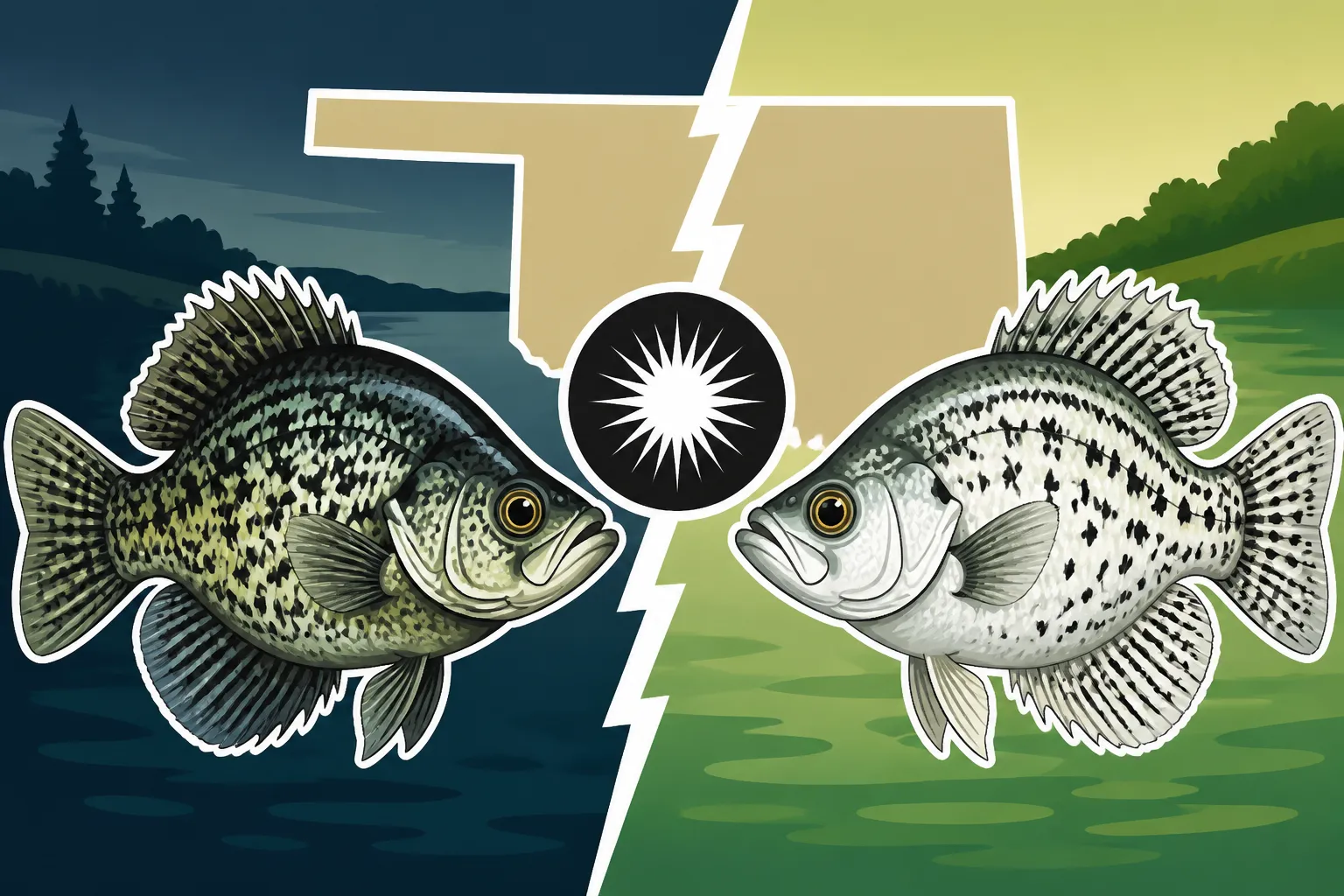
Black Crappie vs White Crappie: How to Tell Them Apart
You're out on an Oklahoma lake, the sun is just starting to dip, and you've pulled in a beautiful slab of crappie. You're feeling good, but then a thought niggles at the back of your mind: "Is this a black crappie or a white crappie?" It’s a common moment of confusion for many anglers, and honestly, it can feel like you need a biology degree just to identify your catch. This guide is going to strip away the mystery, giving you clear, visual cues and other distinguishing features so you can confidently tell the difference every time you land one of these popular panfish.
The Crappie Conundrum: Why Distinguishing Matters
For many anglers, a crappie is a crappie, right? You catch it, you keep it, you cook it. But the truth is, while both black and white crappie are fantastic sportfish and even better table fare, there are subtle differences that can impact how and where you fish for them, and even how you interpret regulations. Oklahoma's waters are home to both species, and knowing which one you're looking at isn't just about showing off your fish identification skills; it can actually make you a more successful and compliant angler.
Sometimes, understanding these nuances helps you zero in on specific fishing techniques or baits. If you know you're in a black crappie hot spot, you might adjust your lure selection or presentation. Conversely, if white crappie are the predominant species in a certain area, you can adapt your approach to match their preferences. It's all part of becoming a more intuitive angler, reading the water and the fish. It’s also important for contributing to accurate catch reports, which helps wildlife agencies better manage our precious fisheries.
Beyond the personal satisfaction of knowing your fish, differentiating between black and white crappie can sometimes have regulatory implications, even if the statewide bag limits are often combined for both species. While individual lake rules often apply to "crappie" generally, understanding the species helps you follow specific guidelines or contribute to data that might inform future, more nuanced regulations. It's about being a responsible steward of our natural resources, ensuring that future generations can enjoy the thrill of catching these speckled beauties just as much as we do.
Decoding the Stripes: White Crappie's Distinctive Markings
When you pull a white crappie out of the water, the first thing that often jumps out at you are its patterns. They tend to have a bit of a "stripes" theme going on, though it's not always as bold as a zebra. These markings are one of the easiest ways to distinguish them from their black crappie cousins.
The Vertical Bar Pattern
White crappie typically sport distinct vertical bars on their sides. These bars can vary in intensity, sometimes appearing as faint, broken lines and other times as quite prominent, dark bands. Imagine several narrow, dark stripes running straight up and down their body, almost like the bars of a cage. These markings are usually more orderly and less scattered than what you'd see on a black crappie. This pattern helps them blend into environments with vertical structure, like standing timber or reeds, even if they prefer more open water.
The overall coloration of a white crappie tends to be lighter, with a silvery-green or silvery-white base color. The vertical bars provide contrast, but the background color often remains quite bright, especially on their belly. This lighter hue can make them stand out in clearer water, but it also reflects light, which can be an advantage in certain conditions. The vibrancy of these bars can also depend on the water clarity and the fish's mood – sometimes they're bold, other times they're subtle.
Think about it like this: if you laid a ruler across the fish, those lines would align fairly straight up and down. They don't usually have the random, almost camouflaged speckles that the black crappie are known for. It's a key visual identifier that, once you learn to spot it, becomes second nature. If you're looking to brush up on your crappie knowledge, you might find some excellent identification charts or books on Amazon that clearly illustrate these markings.
Body Shape and Size Tendencies
Beyond the markings, white crappie often have a more elongated or "taller" body profile compared to black crappie. While both are panfish, the white crappie can appear a bit more streamlined. Their body isn't quite as round or "discoid" as a black crappie. This subtle difference in shape can be noticeable, especially when you're holding both species side-by-side. They tend to grow longer and often, but not always, slightly heavier than black crappie in similar conditions.
Their mouth is also a good indicator. White crappie generally have a larger mouth that extends further back on their head. If you imagine a line dropped from the front of their eye, a white crappie's mouth will typically extend past that line. This might seem like a small detail, but it's a consistent one that can help confirm your identification, especially if the body markings are indistinct. This larger mouth can sometimes influence their feeding habits and the types of baits they prefer.
While both species can grow quite large, the overall impression of a white crappie is one of a slightly leaner, longer fish with those distinctive vertical bars. These characteristics, combined with the number of dorsal fin spines (which we'll get to shortly), create a clear profile for identification. Understanding these subtle differences is part of the fun of fishing in Oklahoma, whether you're targeting Oklahoma Statewide Crappie Bag Limit or exploring Stricter Crappie Limits at Six Oklahoma Lakes.
The Speckled Beauty: Understanding Black Crappie Patterns
Now, let's talk about the black crappie. These fish are absolute stunners, and their markings are just as unique and identifiable as their white crappie counterparts, just in a different way. If the white crappie has stripes, the black crappie definitely has speckles.
The Irregular Speckled Pattern
The most striking feature of a black crappie is its irregular, mottled, or speckled pattern. Instead of neat vertical bars, you'll see a scattering of dark spots and blotches all over their body. These spots are often distributed randomly, giving them a beautiful, almost camouflage-like appearance. Think of it like a leopard print or a spray of ink on a canvas, rather than distinct lines. This pattern helps them blend into areas with varied cover, like brush piles, submerged trees, and aquatic vegetation, which is exactly where they love to hang out.
Black crappie tend to have a darker overall coloration, often appearing more olive green, dark grey, or even golden-brown, especially on their back and sides. This darker hue, combined with the dense speckling, makes them look quite a bit different from the typically lighter white crappie. The contrast between the dark spots and the base color can be quite pronounced, giving them a very distinctive "dirty" or "splotchy" appearance. These spots aren't uniform; some might be larger, others smaller, creating a visually complex pattern.
When you're comparing them side-by-side, the difference is usually quite clear. The black crappie's pattern is less about lines and more about scattered dots and amorphous shapes. It’s a beautiful adaptation that allows them to disappear into the dappled light and shadows of their preferred habitat. Knowing this key visual can help you quickly identify your catch and deepen your appreciation for Crappie Fishing in Oklahoma: Black and White Crappie.
Body Shape and Preference for Cover
Black crappie generally have a more compact, rounder, or "discoid" body shape. They often appear thicker or "chunkier" than white crappie of similar length. Imagine a dinner plate – that's closer to the black crappie's profile than the more oval shape of the white crappie. This stout body can sometimes make them feel like a more substantial catch, even if they don't always reach the same top-end length as white crappie. This compact body is well-suited for maneuvering through dense cover.
Their mouth is typically smaller and more upturned compared to the white crappie. If you drew that imaginary line down from the front of their eye, a black crappie's mouth usually does not extend past it. This subtler mouth size can be another tell-tale sign, especially when other visual cues are ambiguous. It's a consistent anatomical difference that experienced anglers often look for.
Black crappie are also notoriously fond of heavy cover and clearer water. You'll often find them lurking around brush piles, submerged timber, weed beds, and docks. They love structure that offers both ambush points for prey and protection from predators. This habitat preference can also inform your choice of lures and presentation; delicate jigs and quiet approaches are often key to coaxing them out. If you're looking for gear suited for fishing dense cover, exploring options on Amazon can yield some great specialized tackle for these situations.
Other Clues: Fin Spines and Mouth Shapes
While the visual patterns are usually the quickest way to tell the difference between black and white crappie, sometimes you need to get a little more scientific. There are two key anatomical features that provide a definitive way to identify your catch: the number of spines in their dorsal fin and the precise shape of their mouth relative to their eye. These distinctions are consistent and reliable, making them the ultimate tie-breakers when you're unsure.
Counting Dorsal Fin Spines
This is perhaps the most reliable way to differentiate the two species. Both black and white crappie have a dorsal fin (the fin on their back) that's divided into a spiny front part and a softer, rayed back part. The magic lies in counting those stiff, sharp spines.
- White Crappie: Almost invariably, a white crappie will have 6 dorsal fin spines. You can gently press down on the spiny part of the dorsal fin and count them. They are usually quite distinct and easy to count, running along the top of the fish's back.
- Black Crappie: In contrast, a black crappie typically has 7 or 8 dorsal fin spines. Seven is very common, but eight isn't unheard of. This difference of at least one, and often two, extra spines is a hard-and-fast rule that rarely fails.
Counting spines might sound intimidating, but it's really quite simple. Just use your finger to lightly separate them and count them one by one. This method is foolproof and a great skill to develop for accurate fish identification. It's the kind of detail that makes you feel like a true ichthyologist out on the water! This crucial detail is often emphasized in comprehensive guides, which you can easily find on Amazon if you want to dive deeper into fish anatomy.
Mouth and Snout: A Subtle Yet Consistent Indicator
We touched on this briefly, but let's delve a little deeper because it's another consistent identifier, especially useful when spine counting might be tricky (like with a very feisty fish!).
- White Crappie: These fish tend to have a longer, more pointed snout, and their mouth is quite large. When you close their mouth and draw an imaginary vertical line down from the center of their eye, the back edge of the white crappie's mouth will extend beyond this line. Their jawline often has a less steep angle from the tip of the snout to the eye.
- Black Crappie: Black crappie, on the other hand, have a shorter, somewhat dished snout, and their mouth is proportionally smaller. If you draw that same imaginary vertical line down from the center of their eye, the back edge of the black crappie's mouth will typically not extend past this line. Their jaw often appears to angle up more sharply from the snout to the eye, giving their face a slightly more "pug-nosed" or "dished" appearance.
This mouth-to-eye relationship is a fantastic secondary indicator. It's a subtle but reliable distinction that, when combined with fin spine counts and body patterns, leaves no doubt about which species you've caught. Mastering these identification techniques will make your Oklahoma Fishing License Costs and Types feel even more worthwhile!
Here's a quick comparison table to help you keep these distinctions straight:
| Feature | Black Crappie | White Crappie |
|---|---|---|
| Body Pattern | Irregular dark speckles/blotches | 5-9 distinct vertical dark bars |
| Dorsal Spines | 7-8 spines | 6 spines |
| Body Shape | Deeper, more compact, rounder (discoid) | More elongated, "taller" |
| Mouth Position | Mouth does not extend past middle of eye | Mouth extends past middle of eye |
| Overall Color | Darker, often olive-green to bronze, mottled | Lighter, silvery-white to light green, barred |
| Habitat Tend. | Clearer water, heavy cover (brush, weeds) | Murkier water, more open water, standing timber |
Why Identification Matters to Oklahoma Anglers
You might be thinking, "Okay, I can tell them apart, but why does it really matter when I'm fishing?" The truth is, knowing your crappie species isn't just a party trick; it can genuinely inform your fishing strategy and ensure you're compliant with regulations. Oklahoma is a fantastic state for crappie, and being a knowledgeable angler only enhances the experience.
Navigating Bag and Size Limits
While Oklahoma often combines bag and size limits for "crappie" generally, meaning the limits apply to both species taken together, there can be exceptions or specific rules for certain lakes or water bodies. For instance, you’ll find Oklahoma Statewide Crappie Bag Limit clearly outlines the general rules, but you should always check the local regulations for specific lakes like those mentioned in Stricter Crappie Limits at Six Oklahoma Lakes. Knowing whether you're catching primarily black or white crappie can help you understand which rules apply most directly to your fishing spot, or if a specific management strategy is in place for one species over the other.
Sometimes, fisheries managers might implement specific regulations based on the health or population dynamics of one species over another, even if it's not a common occurrence. By being able to identify your catch, you're better prepared to understand and follow any such nuanced rules, should they arise. It’s about being proactive and informed, rather than getting caught off guard. This commitment to understanding regulations is part of responsible angling, something all veteran anglers value.
Furthermore, accurate reporting and identification contribute to better data for the Oklahoma Department of Wildlife Conservation. If anglers can consistently identify their catches, the state gets a clearer picture of population trends for both black and white crappie, leading to more effective conservation efforts and better fishing opportunities for everyone. It's a small act that collectively makes a big difference to the future of Best Crappie Lakes in Oklahoma.
Tailoring Your Fishing Approach
Understanding the distinct habitat preferences of black and white crappie can significantly improve your catch rates. If you know that black crappie prefer clearer water and heavy cover, you'll target brush piles, submerged timber, and dense weed beds with lighter lines and snag-resistant lures. You might use Crappie Jigging Techniques to pick them out of structure. On the other hand, if you're in an area known for white crappie, which often inhabit murkier water and prefer standing timber or more open schooling patterns, you might adjust to different depths or more aggressive presentations.
For example, when casting into open water or trolling, you might be more likely to encounter white crappie. If you’re carefully working a jig through a dense laydown or under a dock, you’re often targeting black crappie. This knowledge allows you to select the Best Bait for Crappie in Oklahoma or the right Best Tackle Setup for Oklahoma Crappie for the specific species you're most likely to encounter in a given spot. This isn't just guesswork; it's applying ecological knowledge directly to your fishing strategy.
Ultimately, being able to confidently distinguish between black and white crappie makes you a more skilled and adaptable angler. It helps you adhere to regulations, contribute to conservation, and most importantly, catch more fish. So next time you're on the water, take a moment to really look at your crappie. Count those spines, check that mouth, and observe the pattern. You'll not only impress your fishing buddies but also deepen your connection to the incredible fisheries Oklahoma has to offer.
Disclaimer
This article is for general informational purposes only and does not constitute professional advice. Laws, prices and regulations vary by location and change over time. Consult a qualified professional for guidance on your specific situation.