Oklahoma Life Jacket and PFD Rules for Boaters
Ah, the open water! There’s nothing quite like a day of fishing on one of Oklahoma’s beautiful lakes, whether you’re chasing bass on Lake Eufaula or crappie on Grand Lake. But before you even think about casting a line, there’s a crucial piece of gear that can often feel like a tangled web of rules: life jackets, or Personal Flotation Devices (PFDs). Many folks find themselves scratching their heads over who needs to wear what, when, and where. This guide is here to clear up all that confusion, making sure your time on the water is both safe and legal.
Why Life Jackets Aren't Just a "Rule," They're a Lifesaver
It’s easy to dismiss life jacket requirements as just another government regulation, but the truth is, these rules are literally designed to save lives. When you're out on the water, especially in Oklahoma's often vast and unpredictable lakes, things can change in an instant. Understanding why PFDs are so important can help you appreciate the regulations, rather than just tolerating them.
The Cold, Hard Truth About Oklahoma Waters
Picture this: you're out on Fort Gibson Lake, the sun is shining, and the water looks inviting. Then, out of nowhere, a rogue wave hits, or your boat snags a hidden stump, and suddenly, you or someone on board is in the water. Even on a warm day, Oklahoma's lake water can be surprisingly cold, leading to cold water shock that can rapidly incapacitate even strong swimmers. Hidden debris, sudden wakes from other boats, or a momentary lapse in judgment can all turn a perfect day into a perilous one. Fishing Regulations You Need to Know in Oklahoma cover many legalities, but none are as immediately impactful as safety gear. Accidents don't send out an invitation, and they certainly don't care how experienced you are. That’s why having a PFD, and knowing when to wear it, is absolutely non-negotiable.
Understanding Personal Flotation Devices (PFDs)
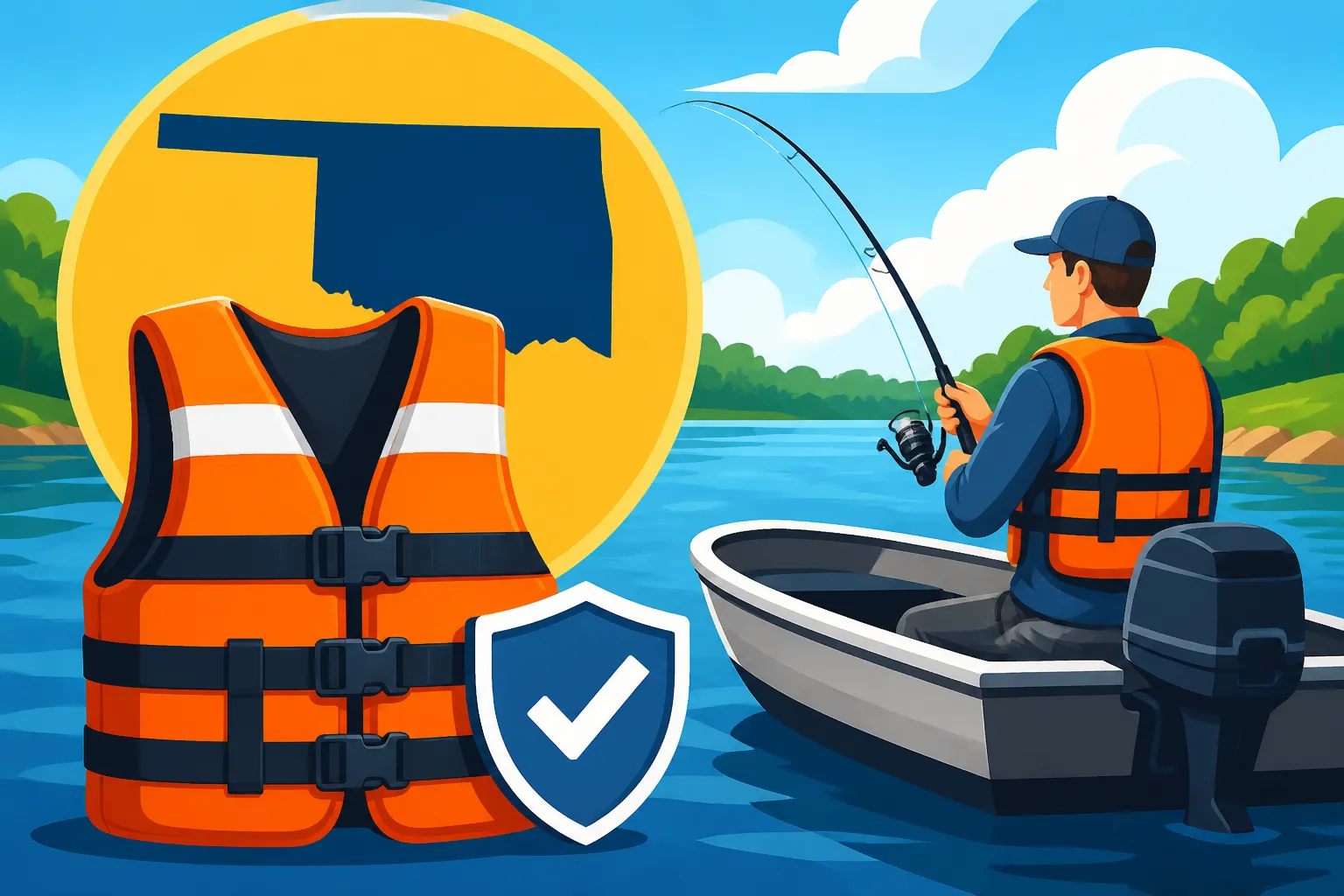
So, what exactly is a PFD? Essentially, it's any device designed to keep a person afloat in water. The key here in Oklahoma, and across the nation, is that it must be "Coast Guard Approved." This isn't just a fancy stamp; it means the device has met rigorous safety standards for buoyancy, construction, and performance. You'll find different types of PFDs, like the familiar Type I (offshore), Type II (near-shore), and Type III (flotation aid) which are all designed to be worn. Then there’s the Type IV (throwable device), which we'll discuss later, and Type V (special use) which covers things like work vests. For most recreational anglers and boaters, Type II and Type III are the most common and comfortable options, offering good buoyancy and range of motion for fishing or general boating. When you’re picking one up, perhaps from Bass Pro Shops or even ordering online from Amazon, always double-check for that Coast Guard approval tag.
Life Jacket Rules for Children in Oklahoma: No Exceptions
If you're boating with kids, this is the rule you absolutely cannot afford to get wrong. Oklahoma is very clear about the safety of its youngest boaters, and for good reason. Children often don't have the same swimming abilities, body fat, or decision-making skills as adults, making them especially vulnerable in a water emergency.
The Under-13 Mandate on Oklahoma Boats
Here’s the golden rule, etched in stone: Any child 12 years of age or younger must wear a Coast Guard approved PFD while on board any vessel that is underway. This applies to all vessels, from a small john boat on a pond to a large cruiser on Lake Texoma. "Underway" means your vessel is not anchored, moored, aground, or tied to a dock. If the engine is running, the sails are up, or you're even just drifting with the current, your child needs to be wearing that life jacket.
Think about it: you're taking your grandkids fishing for bluegill near the shore of Lake Murray. Even if you're puttering along slowly, that child needs their PFD securely fastened. This isn't a suggestion; it's the law. Violating this rule can lead to significant fines, but more importantly, it puts a child's life at unnecessary risk. Want to know more about requirements for the young ones? Check out Do Kids Need a Fishing License in Oklahoma? for additional rules concerning children on the water.
Sizing and Fit for Young Anglers
Getting a child's PFD isn't a "one size fits all" situation. An improperly fitting life jacket can be just as dangerous as not having one at all. Imagine a PFD that’s too big for a small child; it could ride up around their ears, actually hindering their ability to breathe or keep their head above water. Conversely, one that’s too tight will be uncomfortable and they'll resist wearing it.
When selecting a PFD for a child, look for specific weight ranges (e.g., infant, child, youth). Test the fit: it should be snug but comfortable, allowing for movement. Many child PFDs come with a crotch strap that goes between the legs; this is essential to prevent the jacket from riding up when the child is in the water. Always check the Coast Guard approval label for the correct weight and chest size. A good PFD should feel like a hug, not a straitjacket, and it should certainly not slip off when pulled up from the shoulders.
Special Considerations for Kayaks and Canoes with Kids
It’s easy to think that smaller, non-motorized vessels like kayaks and canoes might have different rules, but when it comes to kids, the law is consistent. If you’re paddling a tandem kayak on Broken Bow Lake with a child who is 12 or under, they still need to wear a Coast Guard approved PFD while you are underway. The same applies to a canoe trip down the Illinois River. These smaller crafts can be incredibly stable, but they can also capsize quickly and unexpectedly, especially if you hit a submerged obstacle or another boater creates a large wake.
For kayaks and canoes, low-profile, comfortable PFDs are often preferred, as they allow for a greater range of motion for paddling. Just remember that even if your Do Kayaks Need to Be Registered in Oklahoma? query comes back with a "no" for registration, the safety rules, especially for children, absolutely apply. Safety is paramount, regardless of the vessel's size or whether it has a motor.
Adult Life Jacket Requirements: When You Don't Have to Wear It, But Should
Now for the adults. The rules are a bit different here, which is often where the confusion sets in. While adults don't always have to wear a life jacket, there are crucial times when they do, and a constant requirement to have them available.
The "On Board" Rule for Anglers 13 and Older
For anyone 13 years of age or older on an Oklahoma vessel, the rule generally states that you are not required to wear a Coast Guard approved PFD while underway. However, and this is a huge "however," you must have one readily accessible for each person on board.
What does "readily accessible" truly mean? It means that if an emergency happens, you can grab that life jacket immediately. It shouldn't be stowed away in a locked compartment, buried under a pile of fishing gear, or covered by tarps. Imagine you're jigging for crappie at Tenkiller Ferry Lake, and your buddy accidentally goes overboard. If their life jacket is crammed under the seats, it's not readily accessible. It needs to be out in the open, perhaps hanging from a seat back, or easily reachable from where you are sitting or standing. This distinction is critical and is a common point of violation that game wardens look for.
High-Risk Activities: When Wearing Becomes Mandatory for Adults
While casual boating might not require adults to wear a PFD, there are specific activities where it becomes mandatory for everyone, regardless of age. If you're planning a fun day on the water that involves a little more adrenaline, pay close attention:
- Water Skiing, Wakeboarding, Tubing, or Similar Activities: Anyone being towed behind a vessel must wear a Coast Guard approved PFD. The high speeds, sudden turns, and inevitable tumbles into the water make PFDs absolutely essential here.
- Personal Watercraft (PWCs): If you're operating or riding on a PWC (like a Jet Ski or WaveRunner), you must wear a Coast Guard approved PFD. These craft are inherently fast and agile, making falls into the water common.
These rules are in place because the risk of sudden immersion and potential injury is significantly higher with these activities. It's not about being a good swimmer; it's about the force of impact, the potential for disorientation, and the need for immediate flotation. The rules about wearing life jackets when being towed or on a PWC are strict, and for good reason. For more detailed information, see Why Water Skiers and Tubers Must Wear a Life Jacket in Oklahoma.
Inflatable PFDs for Adults: Pros and Cons
Inflatable PFDs have become quite popular among adult anglers and boaters because they are significantly less bulky and more comfortable than traditional foam vests. They come in two main types: manual (you pull a cord to inflate) and automatic (they inflate upon immersion in water).
The big "pro" is comfort; you might actually forget you're wearing one, which encourages continuous wear. This is a huge advantage for safety. However, there's a critical "con" in the eyes of the law: an inflatable PFD must be worn to count towards the legal requirement of having a readily accessible PFD on board. If it's just lying on the deck, even if it's technically ready for use, it doesn't satisfy the "readily accessible" rule for adults 13 and over. Furthermore, many inflatable PFDs are not approved for non-swimmers, children under a certain weight, or specific high-impact activities. Always read the label carefully! While a great option for comfort, ensure it meets the legal requirements for your specific use.
The "Throwable Device" Rule: For Larger Boats
Beyond the wearable PFDs, there’s another critical piece of safety equipment required for certain vessels in Oklahoma: the throwable device. This isn't something you wear, but something you throw to someone in distress.
Understanding the Type IV Requirement
Oklahoma law mandates that all vessels 16 feet in length or longer must carry at least one Coast Guard approved Type IV throwable personal flotation device. There are some exceptions to this length rule, such as canoes, kayaks, and stand-up paddleboards, regardless of their length. For most fishing boats and pontoon boats that hit that 16-foot mark, a throwable device is a must-have.
A Type IV PFD is typically a boat cushion or a ring buoy. Its purpose is exactly what it sounds like: to be thrown to a person who has fallen overboard. It provides temporary flotation and a target for the person in the water to grab onto, giving you time to maneuver your boat back to them or offer further assistance. It's an indispensable item, especially when fishing a large lake like Grand Lake where currents or wind can quickly carry someone away from your vessel. You can learn more about its specific rules here: Type IV Throwable Device Rules for Boats 16 Feet and Longer.
Placement and Accessibility of Throwable Devices
Just like with wearable PFDs, a throwable device isn't truly effective if it's not accessible. It needs to be "readily accessible," meaning it should be easy to grab and throw quickly in an emergency. This often means having it on the deck, in an open storage compartment, or perhaps under a seat where it can be retrieved instantly.
Imagine this scenario: you're bass fishing on Lake Eufaula, and your friend slips off the bow into the water. Every second counts. If you have to dig through a tackle box, lift a heavy cooler, or unlatch a storage compartment to get to that throwable cushion, you've lost precious time. Keep it out, keep it visible, and make sure everyone on board knows where it is and how to use it. Knowing what a Type IV is and its function is key, as explained in What Is a Type IV Throwable Device for Boating?.
Why a Throwable Isn't a Substitute for a Wearable
It's absolutely crucial to understand that a Type IV throwable device does not count as a substitute for the wearable PFDs required for each person on board. Think of it as an additional layer of safety. Every person on your boat still needs a Coast Guard approved wearable PFD (whether they're wearing it or it's readily accessible, depending on age and activity).
The throwable device serves a different function. It's for active rescue, particularly when someone is in the water unexpectedly and needs immediate flotation without the time or ability to put on a vest. It's also vital for someone who might be disoriented or injured and unable to swim back to the boat. Both wearable PFDs and throwable devices are essential components of a comprehensive safety plan on Oklahoma's waters.
Checking for "Coast Guard Approved" and Proper Maintenance
Having a PFD on board is one thing; having one that actually works and is legally compliant is another. Don't assume that just any old life jacket will do. There are specific standards to meet, and proper care is essential to ensure they remain effective.
Decoding the Approval Label
Every Coast Guard approved PFD will have a label (usually sewn in) that clearly states its approval status. This label includes important information like the PFD type (Type I, II, III, IV, or V), the manufacturer, its size/weight range, and the all-important Coast Guard approval number. It also indicates if there are any restrictions, such as "not for non-swimmers" or "must be worn to be approved."
It's not enough to simply see "Coast Guard Approved" on the tag. You need to ensure the PFD is still serviceable. A PFD that is ripped, torn, waterlogged, has broken buckles or zippers, or has missing straps is no longer considered Coast Guard approved, even if the label is intact. Such a PFD won't legally count toward your requirements and, more importantly, won't keep you or your loved ones safe. Take the time to regularly inspect all your PFDs.
Regular Inspection and Care of Your PFDs
Think of your life jackets like any other critical piece of gear—they need maintenance. After each outing on the lake, especially if they got wet, allow them to air dry completely before storing them. Never store them in direct sunlight for extended periods, as UV rays can degrade the fabric and stitching over time.
Before each trip, give every PFD a quick once-over:
- Check for Tears: Look for any rips or holes in the outer shell. Even small tears can lead to waterlogging over time, reducing buoyancy.
- Inspect Straps and Buckles: Make sure all straps are firmly attached, and buckles snap securely into place. Replace any PFD with broken or corroded hardware.
- Test for Waterlogging: A PFD that feels unusually heavy or spongy when dry might be waterlogged, indicating a loss of buoyancy.
- Examine Inflation Mechanism (for inflatables): For inflatable PFDs, check the CO2 cylinder to ensure it's not expired or deployed, and inspect the outer shell for damage.
Proper care extends the life of your PFDs and ensures they'll perform when you need them most. Whether you purchased your PFDs from a specialty store like Bass Pro Shops or found a good deal on Amazon, this diligence is key.
When to Replace Your Life Jacket
Life jackets don't last forever. Even with the best care, materials degrade, foam loses buoyancy, and stitching weakens. Here are clear signs it's time to replace a PFD:
- Visible Damage: Rips, tears, or holes in the fabric.
- Hardware Failure: Broken zippers, buckles, or missing straps.
- Faded or Degraded Fabric: If the colors are significantly faded or the fabric feels brittle, UV damage has likely compromised its integrity.
- Loss of Buoyancy: The ultimate test. If you wear it in shallow water and it doesn't comfortably keep your head above water, it's time for a new one. (This should be done carefully in controlled conditions).
- Waterlogging: If it absorbs water and feels heavy, its flotation has been compromised.
- Expiration Date: For some specialized PFDs, especially inflatables, there might be an expiration date for certain components.
Don't gamble with safety. A compromised PFD is a false sense of security. Investing in new, reliable PFDs is a small price to pay for peace of mind and, potentially, saving a life.
Penalties for Non-Compliance: What Happens If You Get Caught
Let's face it: no one wants a ticket while enjoying a peaceful day on the water. But Oklahoma's game wardens take boating safety, including PFD compliance, very seriously. Understanding the consequences can be a powerful motivator for ensuring you and your passengers are always within the rules.
Understanding the Legal Consequences
If you are found operating a vessel in Oklahoma and not complying with the PFD rules, you can face legal penalties. This typically means fines. While specific amounts can vary, they are often steep enough to make you wish you had just bought the correct life jacket or ensured your child was wearing theirs. These aren't minor parking tickets; they're citations designed to enforce critical safety laws.
Game wardens are regularly out on popular fishing lakes like Lake Texoma, Grand Lake O' the Cherokees, and Lake Eufaula, checking for everything from fishing licenses to boat registration and, yes, PFD compliance. They're trained to spot violations quickly, especially when it comes to children not wearing their life jackets. You can gain some insight into how seriously enforcement is taken by reading Is Fishing Without a License in Oklahoma Actually Enforced?. The principle applies broadly to all regulations.
Why Game Wardens Prioritize PFD Enforcement
Game wardens aren't out there just to be a nuisance or ruin your fun. Their primary mission is public safety and resource conservation. When it comes to PFDs, they know firsthand the tragic consequences of accidents where life jackets were either absent, damaged, or not worn. They’ve seen situations where a simple vest could have prevented a drowning.
They prioritize PFD enforcement because it's a direct, preventable risk. Unlike some other violations that might require more observation, a child not wearing a PFD while underway is often immediately obvious. So, when a warden pulls up to your boat, expect them to check your PFDs, especially for your younger passengers. It's a quick check that can literally be the difference between life and death.
Boating Safety Courses and PFD Awareness
One of the best ways to ensure you're always compliant and truly understand the "why" behind these rules is to take a boating safety course. Many organizations, including the Oklahoma Department of Wildlife Conservation and various non-profits, offer certified courses. These courses cover everything from navigation rules to emergency procedures and, of course, a deep dive into PFD requirements.
Completing a boating safety course not only equips you with invaluable knowledge but can also instill a greater sense of responsibility on the water. It’s an investment in your safety and the safety of everyone who boats with you. Plus, some states even offer insurance discounts for completing such a course.
Common Misconceptions and Clarifications
Despite the clear rules, some persistent myths and misunderstandings about life jackets float around. Let’s tackle some of the most common ones that I hear from fellow anglers all the time.
"My Kids Are Good Swimmers, They Don't Need One"
This is perhaps the most dangerous misconception out there. Parents often feel a false sense of security because their child is a strong swimmer. However, even Olympic-level swimmers can drown in unexpected boating accidents. Consider these factors:
- Cold Water Shock: The sudden immersion in cold water can cause an involuntary gasp for air, hyperventilation, and disorientation, even in warm weather. This can incapacitate a person within minutes.
- Injury: A fall from a boat, especially at speed, can cause head injuries or incapacitate a limb, making it impossible to swim.
- Disorientation: Being tossed into churning water, especially after a boat capsize or collision, can make it difficult to know which way is up.
- Currents: Strong currents in rivers or even reservoirs can quickly pull a swimmer away from the safety of the boat.
A PFD provides instant flotation and keeps a person's head above water without any conscious effort. It buys critical time for rescue, regardless of swimming ability. Don't ever let "they're a good swimmer" override the legal and ethical requirement to keep children safe.
"I'm Just Crossing the Cove, It'll Be Fine"
Another common excuse for lax PFD habits is the "short trip" fallacy. Whether you're heading across the entire expanse of Lake Texoma or just puttering over to a quiet fishing spot a hundred yards away, the rules for PFDs remain the same. The term "underway" applies. Accidents don't schedule themselves for long trips only; they can happen at any moment, often close to shore, due to unexpected hazards, other boaters, or mechanical failure.
It's a habit to get into: if the boat is moving and kids 12 and under are aboard, they need their PFDs on. For adults, ensure everyone knows where their readily accessible PFD is. Don't take chances on what seems like a quick, harmless jaunt.
"My Old PFD from College is Still Good"
We all love to hold onto things with sentimental value, but a decades-old life jacket probably isn't something to cherish on the water. As we discussed, PFDs degrade over time. The foam inside can break down and lose buoyancy, the fabric can weaken from sun exposure, and stitching can come undone. Even if it looks okay on the outside, its internal components might be compromised.
If your PFD is looking a little rough, faded, or feels heavier than it should, it's time to replace it. Think of it as investing in life insurance for your boating adventures. Modern PFDs are also often more comfortable, lightweight, and better designed than older models, making compliance easier and more pleasant. A quick trip to a sporting goods store or browsing online options can equip you with reliable, current safety gear.
Summary of Oklahoma PFD Rules
To keep things clear, here's a quick reference table outlining the core life jacket and PFD rules for boating in Oklahoma.
| Vessel Type / Passenger Age | PFD Requirement | Notes |
|---|---|---|
| Children 12 & Under | Must Wear Coast Guard Approved PFD | While vessel is underway. |
| Adults 13 & Over | Must Have Coast Guard Approved PFD On Board | One for each person; readily accessible. |
| Water Skiers/Wakeboarders | Must Wear Coast Guard Approved PFD | While engaged in the activity. |
| Personal Watercraft (PWC) | Must Wear Coast Guard Approved PFD | While operating or riding on a PWC. |
| Boats 16 Feet & Longer | Must Have One Type IV Throwable PFD On Board | Readily accessible. (Excludes canoes, kayaks, sailboards, paddleboards, rafts). |
| All PFDs | Must Be Coast Guard Approved & Serviceable | No rips, tears, broken buckles; proper fit; correct weight rating. |
This table provides a quick glance at the main regulations, but remember, the details matter. Always ensure your PFDs are Coast Guard approved and in good, serviceable condition. This isn't just about avoiding a fine; it's about protecting yourself and your loved ones on the water. For a full rundown of everything you should have, check out our Safety Gear Checklist for Oklahoma Boaters.
Disclaimer
This article is for general informational purposes only and does not constitute professional advice. Laws, prices and regulations vary by location and change over time. Consult a qualified professional for guidance on your specific situation.