Oklahoma Boat Safety Equipment Checklist
There’s nothing quite like the feeling of pushing off the dock, the engine humming, and the promise of open water on an Oklahoma lake stretching out before you. But let's be honest, that initial excitement can sometimes be tempered by a nagging voice in the back of your head: "Did I remember everything?" The last thing any of us wants is to be caught off guard by a sudden storm, an unexpected mechanical issue, or worse, a visit from a game warden who finds a crucial safety item missing. This comprehensive guide is here to take the guesswork out of gearing up, ensuring you have every essential piece of safety equipment you need for a worry-free and legal boating experience on Oklahoma's beautiful waters.
Why Boat Safety Gear Is More Than Just a Rulebook Requirement
It's easy to look at a checklist of required boat safety equipment and just see a list of items you have to have to avoid a fine. But truly, that's missing the point entirely. Every single item on that list, and many more you should consider adding, serves a critical purpose in protecting you, your passengers, and even other boaters on the water. It’s not just about what the law demands; it’s about common sense, preparedness, and making sure a fun day doesn't turn into a stressful or even dangerous situation.
The Fine Line Between Legal and Truly Safe
While state and federal regulations provide a baseline for boat safety, they are often the bare minimum. Think of it like this: your car has airbags and seatbelts because the law says it must, but you still check your oil, tire pressure, and bring jumper cables, right? The same goes for your boat. Having the legally required number of life jackets is one thing, but having enough properly fitting life jackets for everyone, including an extra for emergencies, is taking it a step further. We've all seen those older, faded PFDs that barely float – technically on board, but practically useless. Safety isn't just about presence; it's about functionality and foresight.
The Real-World Impact of Missing Gear
Imagine you're out on Lake Eufaula, enjoying a peaceful afternoon. Suddenly, a fast-moving storm rolls in, kicking up waves and reducing visibility. You try to start your engine to head back, and nothing. Panic starts to set in. If you have a marine radio, you can call for help. If you have flares, you can signal your position. If your PFDs are accessible and in good condition, your family is protected. Without them? That peaceful afternoon can quickly become a nightmare. These aren't just hypotheticals; they are real scenarios that Oklahoma anglers and boaters face. Investing in quality safety gear and knowing how to use it is investing in your peace of mind and the well-being of your loved ones.
Personal Flotation Devices PFDs
If there's one piece of safety equipment that should be at the top of every boater's list, it's the personal flotation device, or PFD. Often called life jackets, these essential items are designed to keep you afloat if you unexpectedly end up in the water. In Oklahoma, just like everywhere else, there are very specific rules about who needs to wear one and what types you need to have on board. Ignoring these rules isn't just risking a fine; it's risking lives.
Understanding the Different Types of PFDs
PFDs come in various types, each suited for different situations and activities. Knowing the differences is key to ensuring you have the right ones for your vessel and your crew. You can usually find a good selection at stores like Bass Pro Shops or online platforms like Amazon, but always make sure they are Coast Guard-approved.
- Type I (Off-Shore Life Jackets): These are designed for rough, open water where rescue may be delayed. They're bulky but offer the most buoyancy and are designed to turn an unconscious person face-up in the water. While not typically needed for most inland Oklahoma lakes, they offer maximum protection.
- Type II (Near-Shore Vests): These are common for recreational boating in calmer, inland waters. They're less bulky than Type I but still provide good buoyancy and may turn an unconscious person face-up. Many standard "orange horse collar" PFDs fall into this category.
- Type III (Flotation Aids): These are often vests designed for water sports or general recreational use. They are comfortable and allow for a full range of motion, which makes them popular for activities like kayaking, waterskiing, or tubing. However, they are not designed to turn an unconscious person face-up, so the wearer must be able to help themselves.
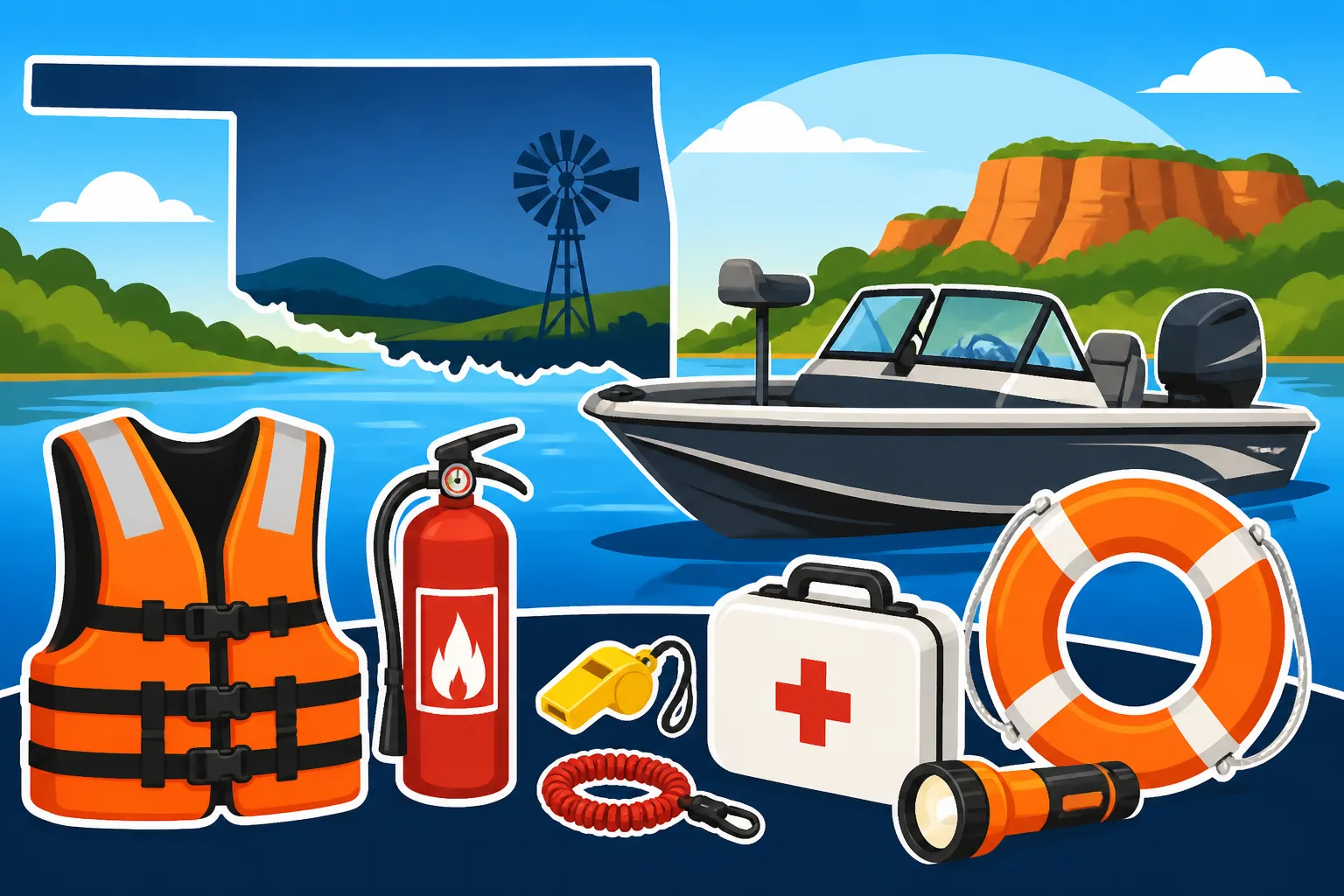
- Type IV (Throwable Devices): These aren't worn but are meant to be thrown to someone in the water. Think life rings or buoyant cushions. While they don't count towards the wearable PFD requirement for everyone on board, boats 16 feet or longer must have at least one Type IV device. These are excellent for quick rescues when someone falls overboard unexpectedly.
- Type V (Special Use Devices): These are specific-use PFDs, like those designed for paddling, sailing, or commercial use. They must be used for their intended purpose to count as a legal PFD. Inflatable PFDs, for example, often fall into this category and require regular inspection and maintenance.
Understanding these types helps you make informed choices. For instance, if you're planning a day of tubing on Lake Murray, you'll want comfortable Type III PFDs for those actively participating, in addition to the other required PFDs on board.
Specific Rules for Kids and Water Sports Participants
Oklahoma has very clear rules about when and who needs to wear a PFD. It's not just a recommendation; it's the law, and it's there to protect the most vulnerable.
- Children 12 Years and Younger: Any child 12 years of age or younger must wear a Coast Guard-approved wearable PFD whenever they are on board a vessel that is underway. This means if the boat is moving, even slowly, those kids need to have their PFD securely fastened. This rule applies regardless of whether the boat is powered or unpowered, and it's a non-negotiable safety measure. As a parent or guardian, ensuring your child's PFD fits correctly is paramount; a PFD that is too loose can slip off and actually be more dangerous. Take the time to try them on and make sure they're snug but comfortable. For more details, you can read Life Jacket Rules for Kids 12 and Under on Oklahoma Boats.
- Water Sports Activities: Anyone being towed behind a vessel, whether water skiing, wakeboarding, or tubing, must wear a Coast Guard-approved PFD. This is critical because the forces involved in these activities, combined with the potential for unexpected falls, make the risk of injury or incapacitation much higher. Even strong swimmers can be disoriented or injured after a hard fall and may not be able to stay afloat without assistance. This rule is in place for a good reason, and it's something game wardens check for diligently. For specific scenarios, you might want to review Why Water Skiers and Tubers Must Wear a Life Jacket in Oklahoma.
- Adults: While adults are not typically required to wear a PFD while underway (unless they are being towed), you must have one readily accessible for every person on board. "Readily accessible" means it's not buried under gear in a locker; it's something you can grab and put on quickly in an emergency. Inflatable PFDs can be a great option for adults as they are less bulky, but they also require proper care and regular checks to ensure they are ready to deploy. However, I always recommend wearing a PFD, especially if you're alone, if the weather is iffy, or if you're not a strong swimmer. An unexpected wave or a sudden turn can put even experienced boaters in the water quickly.
The table below summarizes the key PFD requirements for quick reference:
| PFD Type | Description | Primary Use/Benefit | Oklahoma Requirement |
|---|---|---|---|
| Type I | Off-Shore Life Jacket (most buoyant) | Rough water, remote areas; turns unconscious person face-up | Counts as required wearable PFD; suitable for any vessel. |
| Type II | Near-Shore Vest (less bulky than Type I) | Calmer inland waters; may turn unconscious person face-up | Counts as required wearable PFD. |
| Type III | Flotation Aid (comfortable, full range of motion) | Water sports, general recreation; wearer must assist themselves | Counts as required wearable PFD; popular for active use. |
| Type IV | Throwable Device (cushion, ring) | Thrown to person in water; not worn | Required on boats 16 feet or longer, IN ADDITION to wearable PFDs. Must be readily accessible. |
| Type V | Special Use Device (inflatables, work vests) | Specific activities; must be worn for intended use | Counts as required wearable PFD when worn and used as intended; requires regular inspection. |
Remember, having a PFD is one thing; having one that fits and is in good condition is another. Check for rips, tears, or excessive fading that can compromise buoyancy. Ensure all buckles and zippers work correctly. This small inspection can make all the biggest difference.
Visual Distress Signals and Sound-Producing Devices
When you're out on the vast expanse of Grand Lake or navigating the coves of Keystone, being able to signal for help is absolutely critical. Modern technology has given us cell phones and GPS, but these can fail, lose signal, or run out of battery. That's why traditional visual distress signals and sound-producing devices remain essential safety equipment for any boater. They're your lifeline when all else fails, designed to attract attention and alert others to your distress, whether it's day or night.
Flares, Flags, and Lights: Making Yourself Seen
Visual distress signals (VDS) are your way of saying, "Hey, over here, we need help!" They come in various forms, each suited for different conditions and times of day. While not all vessels are required to carry VDS (for example, manually propelled vessels under 16 feet are often exempt), it’s always a good idea to have some form of visual signal.
- Flares (Pyrotechnic Devices): These are probably what most people think of when they hear "distress signal." There are handheld flares that produce a bright red light for a minute or two, and then there are aerial flares (like meteor or parachute flares) that shoot high into the sky and burn for a longer duration, making them visible from a greater distance. It's crucial to understand that flares have expiration dates, typically three years from the date of manufacture. Make it a habit to check these dates annually and replace expired flares. When you need them, you need them to work. Always handle flares with extreme caution; they are essentially pyrotechnics. You can often find flare kits at marine supply stores or through reputable online retailers.
- Daylight Signal Flag (Orange Distress Flag): This is a non-pyrotechnic signal, meaning it doesn't burn or produce light. It's a square flag, usually international orange, with a black square and circle printed on it. It’s effective during daylight hours and can be flown from your boat's mast or held aloft. It's a simple, reusable device that should be part of your daytime VDS kit.
- Electric Distress Lights (Strobe Lights): These are particularly useful at night. A continuously operating strobe light, specifically certified as a distress signal, can be seen for miles. Unlike flares, they don't expire, making them a long-term investment. They can run for many hours on batteries, providing sustained visibility in dark conditions. Many modern units are incredibly bright and durable, designed to withstand the harsh marine environment.
Remember, the goal is visibility. If you're out on Lake Texoma and fog rolls in, or you break down after dark, having a reliable way to make your boat visible to others can mean the difference between a quick tow and a long, cold night.
Horns, Whistles, and Bells: Making Yourself Heard
Just as important as being seen is being heard. Sound-producing devices are crucial for signaling in situations where visibility is poor (like fog or heavy rain), for alerting other vessels to your presence, or for signaling distress.
- Whistles and Horns: Every boat, regardless of its size or propulsion, should carry some form of sound-producing device. For smaller boats and paddlecraft, a simple mouth-blown whistle is often sufficient. For larger powerboats, a horn (either manually operated air horn or an electrically powered horn) is usually preferred and often required. These are used for navigation signals (e.g., passing signals in narrow channels) and for distress signals (five short blasts).
- Bells: For vessels 39.4 feet (12 meters) or longer, a bell is also required. While less common on recreational fishing boats on Oklahoma lakes, it’s worth noting for those with larger crafts. The bell is used for specific sound signals when anchored or aground in restricted visibility.
When considering sound-producing devices, think about the environment you typically boat in. If you're often on busy lakes or enjoy night fishing, a powerful air horn can cut through ambient noise much more effectively than a small whistle. Always make sure your device is in good working order before you head out, and that everyone on board knows where it is and how to use it. A well-placed, loud signal can prevent a collision or summon aid far faster than yelling.
Fire Safety and Ventilation Requirements
Fire on a boat is one of the most terrifying scenarios a boater can face. Unlike on land, you can't just call the fire department and wait for them to arrive. You are the first, and often only, line of defense. Because boats involve fuel, engines, and electrical systems, the risk of fire, while low with proper maintenance, is ever-present. This is why having appropriate fire extinguishers and understanding ventilation requirements is absolutely non-negotiable for safe boating in Oklahoma.
Fire Extinguishers: Your First Line of Defense
Every boat with an engine (except certain outboard-powered vessels that meet specific criteria) is required to carry a Coast Guard-approved fire extinguisher. These aren't just for show; they can save your boat and your life.
- Types and Placement: Fire extinguishers are classified by type (A, B, C) based on the kind of fire they can put out. For boats, B-I or B-II rated extinguishers are generally required, as they are effective against flammable liquid fires (like fuel or oil) and electrical fires, which are the most common types on vessels. The number and size of extinguishers you need depend on the length of your boat. A small bass boat might only need one B-I extinguisher, while a larger cruiser will need more and/or larger units.
- B-I: Usually around 2.5 lbs of extinguishing agent, suitable for smaller fires.
- B-II: Usually around 10 lbs of extinguishing agent, for larger fires.
Make sure your extinguishers are mounted in an easily accessible location, away from direct sunlight or extreme temperatures, and that everyone on board knows where they are and how to use them. They do have pressure gauges you should check periodically to ensure they are charged and ready. Just like your car's spare tire, you hope you never need it, but you'll be profoundly grateful if you do.
- Maintenance and Inspection: Fire extinguishers are not "set it and forget it" items. They need regular inspection. Check the pressure gauge to ensure it's in the "green" zone. Look for any signs of physical damage, corrosion, or a clogged nozzle. Give the extinguisher a shake to prevent the powder from compacting. If you have older, non-rechargeable extinguishers, they'll need replacement after a certain period, even if they look fine. For rechargeable units, ensure they are serviced according to the manufacturer's recommendations. Don't wait until you smell smoke to realize your extinguisher is faulty!
Proper Ventilation to Prevent Explosions
Gasoline fumes are heavier than air and can accumulate in enclosed spaces within a boat, creating an incredibly dangerous, explosive environment. A single spark – from an engine starting, a switch flipping, or even static electricity – can lead to a catastrophic explosion. This is why proper ventilation is not just a suggestion; it's a critical safety requirement for boats with enclosed engine compartments or fuel tanks.
- Natural Ventilation Systems: Many boats are equipped with natural ventilation systems, which include intake and exhaust ducts designed to circulate air through engine and fuel tank compartments. These ducts usually have flame arrestors to prevent sparks from entering or exiting the compartment. It’s important to keep these vents clear of obstructions (like ropes, gear, or even bird nests). Regular inspection ensures they are functioning as intended.
- Powered Ventilation (Blowers): Boats with enclosed engine compartments (most inboard gasoline engines) are typically required to have a powered ventilation system, often called a "blower." This is an electric fan designed to forcibly remove gasoline fumes from the compartment before the engine is started. The rule is simple: run your blower for at least four minutes before starting your engine if your boat has an enclosed engine or fuel tank compartment. It's also a good practice to run it while fueling and after fueling for a few minutes. This simple action can literally prevent an explosion. If your blower isn't working, fix it before you hit the water. It’s not worth the risk.
Fire safety extends beyond just equipment. It means regular checks of fuel lines for leaks, ensuring electrical wiring is in good condition, and exercising caution when refueling. Never smoke while fueling, and always make sure passengers are off the boat if possible. Being mindful of these details will significantly reduce your risk of a fire incident on your Oklahoma fishing trip.
Navigation Lights and Anchoring Essentials
Whether you're pushing off the dock for a tranquil dawn patrol or staying out late for some prime night fishing for catfish on Lake Eufaula, proper navigation lights are absolutely non-negotiable. They are your way of communicating your presence and direction to other vessels, preventing collisions in low-light conditions. Equally important, and often overlooked until needed, is having a reliable anchoring system.
Illuminating Your Path: Understanding Navigation Lights
Navigation lights serve a singular purpose: to make your boat visible to others and indicate your direction of travel. The type and placement of lights depend on the size and type of your vessel, but the core principles remain the same.
- Red and Green Sidelights: These are probably the most recognizable navigation lights. The red light is on your boat's port (left) side, and the green light is on the starboard (right) side. When you see a boat approaching at night, if you see only a green light, they are crossing from your right. If you see only a red light, they are crossing from your left. If you see both red and green lights, they are heading directly towards you. These lights must be visible from specific angles and distances, ensuring other boaters can properly assess your position.
- White Sternlight: This is a white light located at the stern (rear) of your boat, visible from behind. It completes the triangle of visibility for other vessels, letting them know they are approaching you from the rear.
- Masthead Light/All-Around White Light: For power-driven vessels, you'll also have a white masthead light (on larger boats, forward and higher than the sidelights) or an all-around white light (a single white light visible 360 degrees) for boats under 39.4 feet (12 meters). The all-around white light is often combined with the sternlight function on smaller vessels. This light indicates a power-driven vessel underway.
- Anchor Light: If you are anchored at night or in restricted visibility, you need to display an all-around white light to show you are stationary. This is incredibly important to prevent other moving vessels from colliding with your unlit, unmoving boat.
It’s crucial to understand that these lights aren't just for looking good; they are part of a universal language of the water. Knowing what your lights should look like and what other boats' lights mean is fundamental to safe navigation after sunset or in foggy conditions. Always double-check your navigation lights before heading out after dark. A burnt-out bulb or a loose connection can put you in a dangerous situation very quickly. You can often find replacement bulbs or even entire LED navigation light kits at marine retailers or on Amazon.
Staying Put: The Importance of a Good Anchor
An anchor might seem like a simple piece of gear, but it's much more than just a heavy object on a rope. It's a critical safety device that can hold your boat in place during an engine failure, while waiting out a storm, or simply when you want to stop and enjoy a quiet fishing spot.
- The Right Anchor for the Job: Not all anchors are created equal. The best anchor for you depends on the size of your boat, the type of bottom you'll be anchoring in (mud, sand, rock), and the conditions you expect.
- Fluke (Danforth) Anchors: These are very popular and work well in mud and sand, which are common bottom types in many Oklahoma lakes.
- Plow (Delta/CQR) Anchors: Good for various bottom types and offer excellent holding power, especially for larger boats.
- Claw (Bruce) Anchors: Also versatile and good in different bottom conditions.
- River Anchors: Often heavier, sometimes mushroom-shaped or with flukes designed to dig into river currents, good for moving water.
Having the right anchor means it will dig in effectively and hold your boat securely. Don't skimp on anchor quality; it's literally what keeps you from drifting into danger.
- Anchor Rode (Line and Chain): The anchor itself is only half the equation. You need enough rope (or "rode") and preferably a length of chain between the anchor and the rope. The chain helps the anchor lie flat and dig in, and it also adds weight, creating a better "scope" (the ratio of anchor rode length to water depth). A good rule of thumb for scope is 7:1, meaning for every 10 feet of water depth, you need 70 feet of rode. For example, if you're fishing in 20 feet of water, you'd want at least 140 feet of rode out.
- Proper Anchoring Technique: Don't just throw your anchor over the side. Approach your desired spot against the wind or current, stop your boat, and then lower the anchor (don't throw it) while slowly backing away. This allows the anchor to set properly. Once you've paid out enough scope, slowly test the set by putting a little tension on the line. When you're ready to leave, pull the boat directly over the anchor, reeling in the slack, and then slowly lift it out. Knowing how to anchor properly is a skill that comes with practice and can dramatically increase your safety and enjoyment on the water. You can find more tips in How to Anchor a Boat for Better Fishing.
Additional Safety Gear for Peace of Mind
Beyond the legally mandated items, there's a whole host of additional gear that can significantly enhance your safety and comfort on the water. These aren't just "nice-to-haves"; they are items that can turn a minor inconvenience into a manageable situation or, in some cases, prevent a serious incident altogether. Think of them as your personal "what-if" solutions, preparing you for the unexpected.
First Aid Kits and Emergency Tools
Even on the calmest day, accidents can happen. A slipped hook, a cut finger, a bee sting, or even seasickness can require immediate attention. A well-stocked first aid kit is an absolute must-have on any boat.
- Comprehensive First Aid Kit: Don't just grab a basic band-aid kit. Your boat's first aid kit should be waterproof and include essentials like bandages (various sizes), antiseptic wipes, gauze, medical tape, pain relievers, motion sickness medication, sting relief, sunscreen, and any personal medications you or your regular crew might need. Consider adding a pair of medical shears to cut clothing or fishing line, and a small CPR mask. It’s a good idea to periodically check and replenish your kit, especially after each boating season. You can purchase pre-made marine first aid kits from Bass Pro Shops or build your own customized kit to your specific needs.
- Basic Tool Kit: A simple set of tools can be a lifesaver for minor mechanical issues. Think a multi-tool from Amazon, a few wrenches, screwdrivers, pliers, electrical tape, zip ties, and a spare fuse assortment for your boat's electrical system. Many minor engine issues can be resolved with a few basic tools if you know what you're looking at. A loose battery terminal, a fouled spark plug, or a kinked fuel line might be easily fixable with the right gear.
- Duct Tape and Zip Ties: Seriously, these aren't just for household repairs. They can patch a small leak, secure a flapping cover, or temporarily fix a broken item until you can get back to shore. Their versatility on a boat is unmatched.
- Spare Parts: Depending on your boat, consider carrying spare spark plugs, a spare propeller and wrench, extra fuel filters, and spare fuses. These small items can often get you back to the dock without needing a tow.
Having these items readily available and knowing how to use them can prevent a small problem from escalating into a major headache, especially if you're in a remote cove on Broken Bow Lake.
Navigation Aids and Communication Devices
While we love the feeling of being "off the grid," complete isolation isn't always safe on the water. Modern navigation and communication tools enhance both your enjoyment and your safety.
- Charts and GPS: Even if you think you know your local lake like the back of your hand, a paper chart (especially waterproof ones) of the area is an excellent backup to your electronic GPS. Electronics can fail due to battery drain, water damage, or signal loss. A chart, combined with a compass, can help you navigate home if your primary systems go down. For your primary navigation, a reliable GPS chartplotter is invaluable, helping you avoid shallow spots, find fishing hot spots, and get back to the ramp even in the dark. Many of these units also integrate with fish finders, providing a wealth of information at your fingertips.
- Marine Radio (VHF): While a cell phone is handy, a VHF marine radio is specifically designed for communication on the water. It operates independently of cell towers, allowing you to hail other boats, call for emergency assistance (Channel 16), or check weather forecasts. For larger lakes like Texoma or Grand Lake, a fixed-mount VHF radio with a good antenna is highly recommended. For smaller boats or kayaks, a handheld waterproof VHF radio can be a great option. Knowing how to use it and having it charged and ready is crucial.
- Whistle or Air Horn: As mentioned earlier, a sound-producing device is required, but a powerful air horn can be heard over greater distances and in more challenging conditions than a simple whistle. It’s an essential tool for signaling distress or avoiding collisions.
- Throwable Flotation Device: Remember the Type IV throwable devices? Having one on board is required for boats 16 feet and over, but it's a smart addition for any vessel. A buoyant cushion or a life ring can be quickly deployed to assist someone who has fallen overboard, providing them with immediate flotation while you maneuver to pick them up. Make sure it's not tucked away; it needs to be immediately accessible.
Think about the worst-case scenario: a dense fog rolls in, your phone battery dies, and you're far from shore. These pieces of gear become your most valuable assets, helping you navigate safely back or call for help.
Understanding Oklahoma's Specific Boating Laws
Navigating Oklahoma's waters safely and legally isn't just about having the right gear; it's also about understanding the rules of the road – or, in this case, the water. Many aspects of boating safety are dictated by state law, and ignorance of these laws is no excuse. From registration requirements to speed limits and right-of-way rules, being informed is a crucial part of being a responsible boater.
Registration, Titling, and Operator Requirements
Before you even think about putting your boat in the water, you need to make sure it's properly registered and, if applicable, titled in Oklahoma.
- Boat Registration: Almost all motorized vessels, as well as sailboats over a certain length, must be registered with the Oklahoma Tax Commission. This involves an annual fee and ensures your boat has a unique registration number displayed on its bow. This number is how law enforcement identifies your vessel. Failing to register your boat, or letting its registration expire, can lead to fines and other penalties. There are specific rules for new boats, used boats, and boats brought in from other states. For more information, you can read Oklahoma Boat Registration and Titling Rules Explained.
- Boat Titling: In addition to registration, most motorized boats and sailboats over 16 feet must also be titled in Oklahoma. The title is proof of ownership, much like a car title. This is a separate process from registration and is typically a one-time fee. Ensure you have the proper paperwork when buying or selling a boat to transfer the title correctly.
- Boating Education Requirements: Oklahoma has specific boating education requirements, particularly for younger operators. If you're 12 to 16 years of age, you must complete a boating safety course and carry your certification card to operate any vessel over 10 horsepower. While not legally required for adults over 16, taking a boating safety course is highly recommended for all operators. These courses cover everything from navigation rules to emergency procedures and can significantly improve your boating skills and awareness.
Understanding these administrative requirements upfront saves you headaches down the line. It's frustrating to plan a fishing trip, only to be turned away at the ramp or ticketed on the water because your paperwork isn't in order.
Navigation Rules and Right-of-Way
Just like on the highway, there are "rules of the road" on the water to prevent collisions. These are often called the Rules of the Road or Inland Navigation Rules.
- Give-Way vs. Stand-On Vessels: Knowing who has the right-of-way is fundamental. Generally, less maneuverable vessels (like large commercial barges) have the right-of-way over more agile ones. Powerboats usually give way to sailboats, and all vessels give way to vessels engaged in commercial fishing or dredging. When two powerboats are approaching each other, there are specific rules:
- Head-on: Both vessels should alter course to starboard (right) to pass port-to-port.
- Crossing: The vessel on the right (the "stand-on" vessel) has the right-of-way; the vessel on the left (the "give-way" vessel) must take early and substantial action to keep clear.
- Overtaking: The vessel being overtaken (passed) is the stand-on vessel, and the overtaking vessel must keep clear.
- Speed and Safe Distance: Always operate your boat at a safe speed, especially in crowded areas, low visibility, or hazardous conditions. "Safe speed" means you can stop or turn to avoid a collision. It's not just about posted speed limits; it's about conditions. Also, maintain a safe distance from other vessels, swimmers, and shorelines. There are often "no-wake" zones near docks, swimming areas, and narrow channels. Understanding and respecting these zones is crucial for safety and courtesy.
- Alcohol and Drugs: Operating a boat under the influence of alcohol or drugs (Boating Under the Influence or BUI) is illegal and incredibly dangerous, carrying penalties similar to DUI. Alcohol impairs judgment, slows reaction time, and magnifies the risks associated with boating. Always designate a sober operator if you plan to consume alcohol on the water.
Beyond the regulations, it's about being a considerate and responsible boater. A simple wave, slowing down in a crowded cove, or offering assistance to a fellow boater can go a long way in making Oklahoma's waterways enjoyable and safe for everyone. Stay informed about the rules; ignorance won't hold up in court if you're cited for Fines for Boating Safety Violations in Oklahoma.
Pre-Trip Checklists and Maintenance for Ongoing Safety
Having all the right gear is fantastic, but it's only truly effective if it's in good working order and you remember to bring it with you! This is where a consistent pre-trip checklist and regular maintenance schedule come into play. Many boating incidents could be avoided with a few minutes of diligent checking before hitting the water. Think of it as your captain's duty to ensure everything is shipshape.
The Essential Pre-Trip Safety Checklist
Before your boat ever touches the water, run through a quick, but thorough, checklist. This isn't just for long trips; even a short afternoon cruise benefits from these checks.
- Fuel and Oil Levels: Always check your fuel level, especially if you're heading to a large body of water like Grand Lake. It's easy to misjudge how much fuel you'll burn. Also, check your engine oil, especially for four-stroke outboards and inboards. Running out of either can quickly turn a fun day into a costly tow.
- Battery Condition: Ensure your battery is fully charged and that the terminals are clean and tight. A dead battery is a very common reason for being stranded.
- Drain Plug: This seems basic, but it's a classic mistake! Make sure your drain plug is in securely before launching. Forgetting it will lead to a very wet and potentially dangerous situation.
- Lights and Horn: Test all navigation lights, anchor light, and your horn to ensure they are working properly. If you plan to be out after dark, this is especially critical.
- Safety Gear Inventory: Quickly verify that all required PFDs are on board and in good condition, along with your fire extinguisher (check pressure gauge!), visual distress signals (check expiration dates!), and sound-producing device. Don't forget your throwable device if your boat requires one. Having a designated storage spot for each item helps you quickly verify its presence. For a more detailed guide, see Safety Gear Checklist for Oklahoma Boaters.
- Engine and Bilge: Do a quick visual inspection of your engine for any obvious leaks (fuel, oil, coolant). Make sure your bilge pump is working by testing it. A functioning bilge pump can save your boat if you take on unexpected water.
- Dock Lines and Fenders: Ensure you have adequate dock lines (at least two) and fenders (bumpers) for securing your boat at the dock or rafting up with other vessels.
Developing a routine for this checklist can prevent countless frustrations and potentially dangerous situations. It takes only a few minutes, but those minutes are invaluable.
Routine Maintenance for Longevity and Safety
Beyond the pre-trip checks, regular maintenance throughout the season and proper winterization are key to keeping your boat safe and reliable.
- Engine Servicing: Follow your engine manufacturer's recommended service schedule. This typically includes oil changes, filter replacements (fuel and oil), spark plug inspections/replacements, and general engine tune-ups. A well-maintained engine is less likely to break down unexpectedly. If you're not comfortable doing this yourself, take it to a qualified marine mechanic.
- Electrical System Inspection: Periodically check all electrical wiring for fraying, corrosion, or loose connections. Secure any loose wires. Ensure all fuses are the correct amperage for their circuits. Faulty wiring is a common cause of electrical fires on boats.
- Hull and Propeller Inspection: Before and after each trip, especially if you've been in shallow water, visually inspect your hull for any damage, cracks, or leaks. Check your propeller for dings, bends, or fishing line wrapped around the prop shaft. Even minor damage to the prop can cause vibrations that can damage your engine over time. Consider having a spare propeller on board, especially if you venture into less-traveled areas.
- Trailer Maintenance: If you trailer your boat, don't forget the trailer itself! Check tire pressure, lug nuts, wheel bearings (especially if they get submerged), trailer lights, and brake fluid (if applicable) before each trip. A breakdown on the highway is almost as frustrating as a breakdown on the water. For more information, check out Boat Ramp and Trailer Tips for Oklahoma's Big Lakes.
- Winterization: If you live in an area of Oklahoma that experiences freezing temperatures, proper winterization is crucial to protect your boat from damage. This typically involves stabilizing the fuel, draining water from the engine and plumbing systems, adding antifreeze, and disconnecting batteries. Neglecting winterization can lead to costly repairs in the spring.
By integrating these checks and maintenance tasks into your boating routine, you'll not only extend the life of your vessel but, more importantly, ensure every outing on Oklahoma's beautiful waters is as safe and enjoyable as possible. Happy and safe boating, fellow anglers!
Disclaimer
This article is for general informational purposes only and does not constitute professional advice. Laws, prices and regulations vary by location and change over time. Consult a qualified professional for guidance on your specific situation.