Why Paddlefish Snagging Needs a Heavy Rod and Treble Hooks
You've probably heard stories of anglers battling monstrous paddlefish on Oklahoma's Grand Lake, and if you're picturing your regular bass rod and a worm, you're in for a rude awakening. Paddlefish snagging isn't your average fishing trip; it's an intense workout that demands specialized gear, specifically a heavy-duty rod and robust treble hooks. This guide will dive into why these specific tools are non-negotiable for a successful and safe paddlefish snagging experience in Oklahoma, helping you understand the physics and power behind this unique form of angling.
The Unique Challenge of Oklahoma Paddlefish Snagging
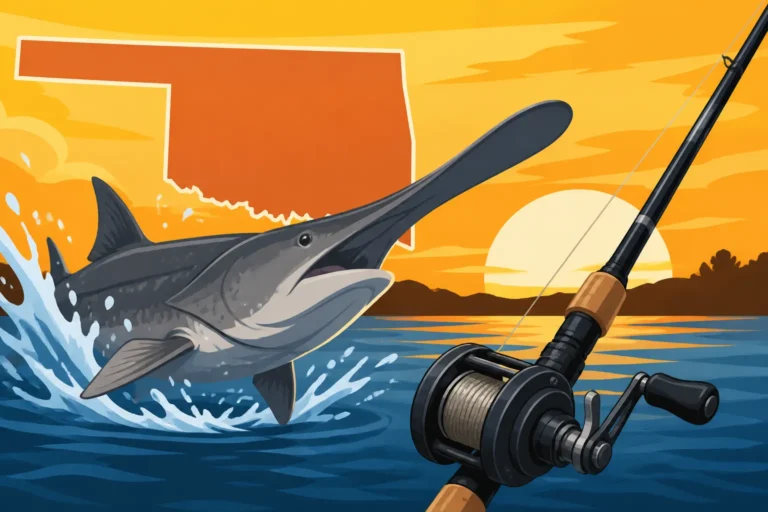
Paddlefish are truly one-of-a-kind. They're ancient, filter-feeding fish, sometimes called "spoonbill" due to their distinctive, elongated snout. Unlike most game fish, they don't strike at bait with their mouths; they swim with their mouths open, filtering plankton from the water. This fundamental difference in feeding behavior is precisely why traditional angling methods don't work and why snagging with specialized gear is the approved, legal method for harvesting them in Oklahoma.
What Makes Paddlefish Different
Imagine trying to catch a fish that isn't interested in your lure or bait. That's the paddlefish dilemma. These prehistoric giants can grow incredibly large, with some reaching over 100 pounds and more than six feet in length in Oklahoma waters. Their sheer size, strength, and unique anatomy mean you're not trying to fool them into biting; you're attempting to literally snag them as they swim past. This isn't a delicate dance; it's a brute force engagement that requires equipment capable of handling immense pressure. The soft tissues around their mouths and gill plates are not designed for conventional hook sets, making the job even more challenging.
When you're out on the water, perhaps at a prime spot on Grand Lake O' the Cherokees, and you see a sonar screen lit up with paddlefish, the excitement is palpable. However, that excitement quickly turns to frustration if you're under-gunned. A paddlefish, once snagged, fights with an incredible, sustained power that can quickly overwhelm inadequate tackle. They make long, powerful runs and can turn on a dime, often heading directly for structure or diving deep, putting extreme stress on every component of your setup. Their broad, muscular bodies act like sails in the water, giving them leverage against your line and rod.
The Mechanics of Snagging, Not Biting
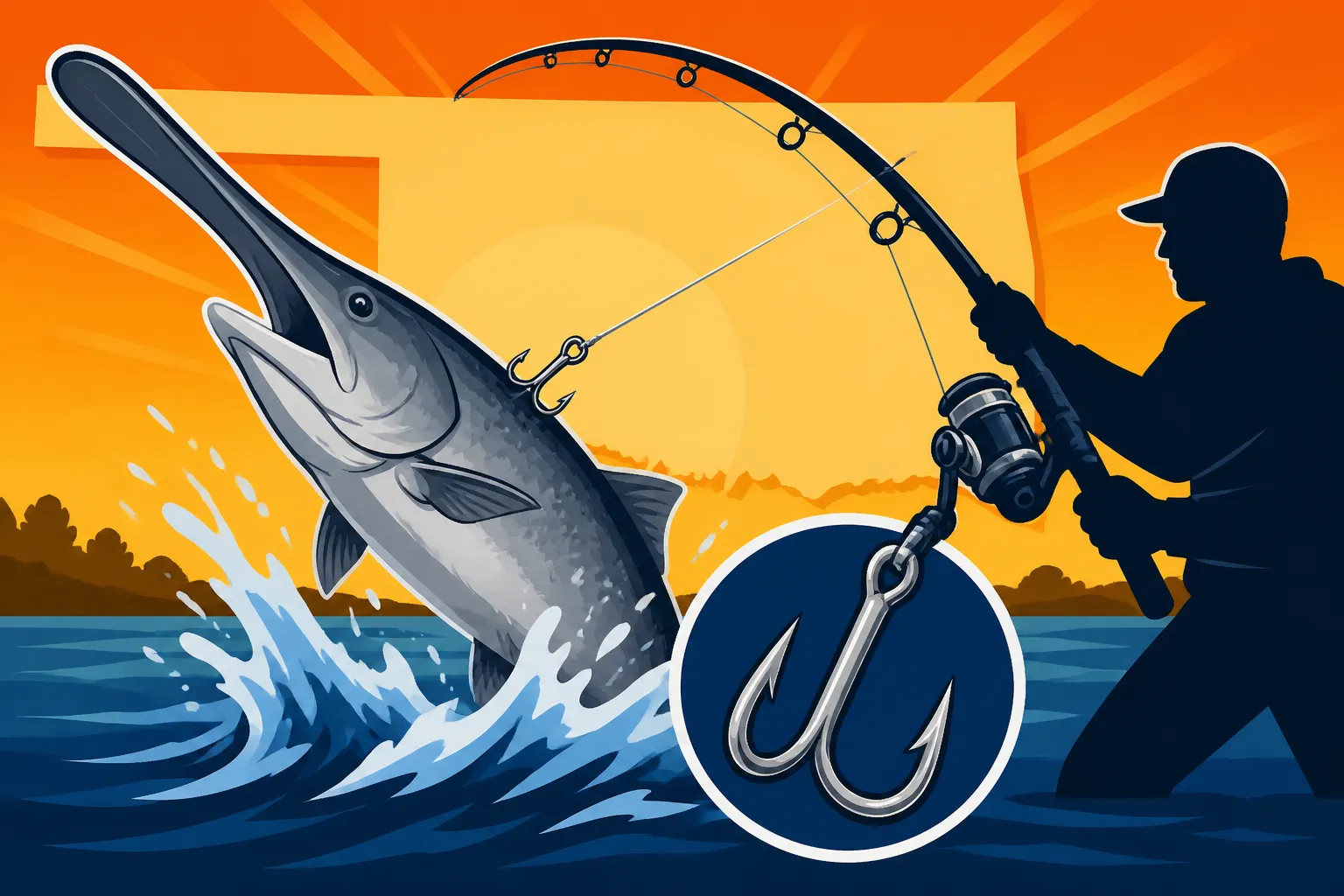
Snagging paddlefish involves casting a heavy lure, typically equipped with a large treble hook, and then rapidly retrieving it through the water column where paddlefish are known to congregate. The goal is to "snag" the fish somewhere on its body, often near the head or flank. This isn't about precise aim; it's about covering a lot of water and feeling for that distinctive "thump" or sudden resistance that signals a hook-up.
Because you're not targeting a specific bite, the effectiveness relies heavily on the design of the hook and the power of the rod. A small, single hook designed for a bass's mouth simply won't have the surface area or strength to consistently embed itself into a paddlefish's thick hide and hold fast through a prolonged fight. You're essentially casting a grappling hook into a dense school of fast-moving, powerful fish. This action requires a rod that can propel that heavy weight a considerable distance and then withstand the instantaneous shock of a snagged, thrashing fish. How Paddlefish Snagging Works in Oklahoma provides a great overview of the technique itself.
The process of casting, retrieving, and then setting the hook into a paddlefish is physically demanding. You're often making hundreds of casts in a day, repeatedly pulling a heavy lure through the water, sometimes against strong currents. When a fish is finally snagged, the force transmitted through the line to your rod is immense. It's not uncommon for anglers to break rods, snap lines, or bend hooks if their gear isn't up to snuff. That's why investing in the right equipment isn't just about success; it's about preventing disappointment and ensuring your gear can endure the rigorous demands of the sport.
The Indispensable Heavy Rod: Power and Durability
Let's be clear: when we talk about a "heavy rod" for paddlefish snagging, we're not talking about your everyday catfish rod. We're talking about a specialized piece of equipment designed for extreme stress.
Why Standard Rods Don't Stand a Chance
Imagine trying to lift a 70-pound sack of concrete off the ground using a broom handle. That's a bit of an exaggeration, but it illustrates the point of using a standard, medium-action bass or crappie rod for paddlefish snagging. Lighter rods simply lack the backbone and power to handle the heavy weights required for snagging lures, which can be several ounces, sometimes even over a pound. They also don't have the strength to absorb the shock of a sudden hook-up with a large, fast-moving fish.
A typical medium or medium-heavy fishing rod, while perfectly adequate for bass or even some catfish, will quickly be overwhelmed. At best, it will bend to the point of breaking, or the reel seat will give way. At worst, it will snap cleanly in two on the initial snag or during the first powerful run of a large paddlefish. This isn't just about losing a fish; it's about ruining your fishing day, potentially injuring yourself, and needing to replace expensive equipment. The goal is to bring the fish in, not to test your tackle to its breaking point.
Key Rod Features for Snagging Success
So, what exactly defines a "heavy rod" in the context of paddlefish snagging? It boils down to a few critical characteristics:
- Power: This is often labeled as "heavy" or "extra-heavy" on the rod blank. It refers to the rod's ability to lift weight and handle heavy line. For paddlefish, you need maximum power to cast heavy weights, drive the treble hooks home, and then muscle a large fish in.
- Action: While power refers to how much a rod can lift, action describes where the rod bends. A "moderate fast" or "fast" action is typically preferred. This means the rod bends primarily in the top third, allowing for powerful casts and quick, decisive hook sets. You need a fast tip to feel the subtle resistance of a snag, but a strong backbone to provide leverage against a heavy fish.
- Length: Most paddlefish snagging rods are on the longer side, typically between 8 to 10 feet. This extra length provides increased casting distance for heavy lures, crucial for covering broad areas where paddlefish might be cruising. It also offers better leverage during the fight, helping you turn a large fish and steer it away from obstacles.
- Durability: The materials and construction of the rod are paramount. Look for rods made from strong, high-quality graphite composites or fiberglass that are built to withstand abuse. Components like reel seats, guides, and handles also need to be heavy-duty to prevent failure under extreme pressure.
Many dedicated paddlefish anglers opt for specialized rods that you might find at tackle shops or online retailers like Bass Pro Shops. These rods are often specifically marketed for species like paddlefish or large saltwater game fish, precisely because they meet these demanding criteria. Remember, What Gear Do You Need for Paddlefish Snagging goes into detail about the full setup.
Matching Your Rod to the Fight
Think of your rod as an extension of your arm, but one that can absorb and transfer immense force. When you're jigging or retrieving a heavy treble hook, the rod needs to load up smoothly to propel the lure. Then, the moment you feel that "thump" of a paddlefish, you need to execute a powerful, sweeping hookset. This isn't a gentle wrist flick; it's a full-body motion, often with both hands, to drive those large hooks into the fish's tough exterior.
Once hooked, the battle begins. A well-designed heavy rod acts as a shock absorber, distributing the paddlefish's powerful surges and allowing you to maintain control. It provides the leverage needed to turn a large fish away from cover, preventing it from breaking your line on submerged trees or rocks. Without a heavy-duty rod, even if you manage to snag a fish, the chances of actually landing it are significantly diminished. The rod needs to handle the sustained strain of a heavy fish fighting for its life, often for 10-20 minutes or more, depending on its size and the angler's skill. Best Rod for Paddlefish Snagging on Grand Lake offers specific recommendations.
Here's a quick look at why rod power matters:
| Rod Power | Typical Use | Paddlefish Snagging Suitability | Why it Matters |
|---|---|---|---|
| Ultra-Light | Panfish, small trout | Not Suitable | Breaks easily, no casting power for heavy lures, cannot handle fish weight. |
| Medium | Bass, medium catifsh | Not Suitable | Prone to breaking, insufficient power for heavy lures, struggles with fish over 20 lbs. |
| Medium-Heavy | Large bass, smaller catfish | Not Recommended | May cast light snagging lures, but likely to break on larger fish or during heavy hook sets. |
| Heavy | Large catfish, muskie, light saltwater | Minimum Requirement | Can handle heavy lures and provide enough backbone for average-sized paddlefish (30-60 lbs). |
| Extra-Heavy | Trophy catfish, tarpon, heavy saltwater | Ideal Choice | Designed for extreme loads, casts heaviest lures, provides maximum control over large paddlefish (60+ lbs). |
Treble Hooks: The Only Option for Effective Snagging
Just as crucial as a heavy rod are the hooks you choose for paddlefish snagging. This isn't the time for finesse; it's the time for strong, multi-pointed hooks.
Why Single Hooks Just Won't Work
Imagine trying to nail a large, slippery, fast-moving target with a single nail. Now imagine doing it with a grappling hook. That's the difference between a single hook and a treble hook for paddlefish snagging. A single hook, while excellent for mouth-hooking fish, presents a minuscule target area when you're trying to snag a fish anywhere on its body. The chances of that single point catching and embedding effectively are incredibly low.
Furthermore, even if a single hook does manage to catch, the leverage applied by a thrashing paddlefish against a single hook point is often enough to tear it free, bend the hook, or simply not achieve a deep enough penetration for a secure hold. The tough, leathery skin and dense muscle of a paddlefish require multiple points of contact to gain a strong, reliable purchase. Losing a massive paddlefish after a long fight because of an inadequate hook is one of the most disheartening experiences an angler can have.
Choosing the Right Treble Hook Size and Strength
For paddlefish snagging, you'll typically be looking for large, heavy-duty treble hooks, often in sizes ranging from 8/0 to 12/0, sometimes even larger. But size isn't the only factor; strength is paramount. These hooks need to be constructed from thick, high-carbon steel to prevent them from straightening out under the immense pressure of a struggling paddlefish.
When selecting hooks, consider:
- Gauge (Wire Diameter): The thicker the wire, the stronger the hook. Look for hooks labeled "heavy duty" or "extra strong." Flimsy hooks will simply bend open.
- Points: Treble hooks, by definition, have three points, significantly increasing the chances of snagging and securing the fish. These points need to be needle-sharp right out of the package, and you should regularly check and sharpen them.
- Barb Size: A good barb helps keep the hook embedded. While some anglers might consider de-barbing for easier release, for a target like a paddlefish where a secure hook-up is already challenging, a strong barb is typically preferred.
- Corrosion Resistance: While not as critical for a single day, if you keep hooks in your tackle box, ensure they have good corrosion resistance, especially if you're fishing in slightly brackish water or not drying them properly.
You can often find these specialized hooks at reputable sporting goods stores or online. Checking out options on Amazon or at your local Bass Pro Shops for "heavy-duty treble hooks" will give you a good idea of what's available. Remember, a cheap, weak hook is a false economy when dealing with a fish of this magnitude. Best Treble Hook Size for Paddlefish Snagging provides more detailed guidance.
Hooking and Landing: The Treble Hook's Role
The primary role of the treble hook is to provide multiple points of contact to physically embed into the paddlefish's body. During the retrieve, as the lure sweeps through the water, the multiple points of a treble hook dramatically increase the probability of one or more points catching on the fish. Once contact is made, the sheer force of the hookset (assisted by your heavy rod!) drives those points deep.
A treble hook's design helps distribute the stress across multiple points, making it much harder for the fish to shake the hook loose compared to a single hook. Even if one point doesn't fully penetrate, the other two can still provide enough grip to hold the fish. This is critical for landing a fish that's not hooked in the mouth, as the fight can be unpredictable and violent. A secure hook-up means less chance of the fish escaping and a higher probability of bringing it to the boat or shore.
When a paddlefish is finally brought alongside, the treble hook's secure grip also aids in handling. While care must always be taken, a deeply embedded treble hook is less likely to accidentally pull free as you maneuver the fish for weighing, pictures, or release. The combination of a powerful rod and a strong treble hook is truly the backbone of successful and ethical paddlefish snagging.
Assembling Your Paddlefish Snagging Arsenal
Beyond the rod and hooks, a complete paddlefish snagging setup involves a few other critical components. Preparing your full arsenal is key to a productive day on the water.
Beyond Rods and Hooks: Reels and Line
A heavy rod and robust treble hooks are only part of the equation. You need a reel and line that can match their performance.
- Reel: Opt for a heavy-duty baitcasting reel or a large, powerful spinning reel. Line capacity is crucial, as paddlefish make long runs. Look for reels with strong, smooth drag systems that can withstand sustained pressure. A reel with a high gear ratio can also be beneficial for quickly retrieving slack line after a cast or a sudden change in a fish's direction. Your reel should be built like a tank, capable of handling hundreds of yards of heavy line and delivering consistent cranking power.
- Line: This is not the place to skimp. You need very strong monofilament or braided line. Many anglers prefer braided line for its zero stretch, which provides incredible sensitivity to feel those subtle snags and maximum power for hook sets. Lines in the 80 to 100-pound test range are common. The sheer pulling power needed to bring in a large paddlefish, coupled with the abrasion resistance required for potentially rough underwater structure, necessitates heavy line. Frayed or weak line is a guaranteed way to lose a trophy fish.
When putting together your setup, think of it as a complete system where every component is designed to handle extreme stress. A weak link, whether it's the rod, reel, line, or hooks, will be exposed by the raw power of a paddlefish. For more on the entire setup, take a look at Paddlefish Snagging Gear Checklist for Grand Lake.
Safety and Ethical Considerations in Snagging
Paddlefish snagging is a thrilling experience, but it also comes with a responsibility to prioritize safety and ethical angling. Because of the heavy gear and powerful fish, injuries can occur if you're not careful. Always wear appropriate personal flotation devices (PFDs) if boating, especially when fighting a large fish that could pull you off balance. Be mindful of casting heavy weights, especially around other anglers.
Ethically, it's important to understand and adhere to all Fishing Regulations You Need to Know in Oklahoma, including specific limits for paddlefish. If you're not planning to keep a fish, handle it with care to ensure its best chance of survival upon release. This means minimizing its time out of water and handling it gently. For fish you intend to keep, dispatch them quickly and humanely. Remember that these are often very old fish, sometimes decades old, and treating them with respect is part of the sport.
Preparing for Your Grand Lake Adventure
Once you have your heavy rod, robust treble hooks, and the rest of your heavy-duty tackle, you're ready to hit the water. Paddlefish Snagging Season in Oklahoma dictates when you can legally pursue these fish, and destinations like Grand Lake O' the Cherokees are renowned for their paddlefish populations.
Before you go, make sure all your knots are strong and securely tied. Check your drag settings to ensure they are smooth but firm enough to fight a large fish. Pack plenty of water and snacks, as snagging can be physically exhausting. And most importantly, go with an open mind and a willingness to put in the work. Paddlefish snagging isn't a passive activity; it's an active, engaging form of fishing that, with the right gear and attitude, can lead to some of the most memorable angling experiences Oklahoma has to offer. Remember, Do You Need Special Gear for Paddlefish Snagging in Oklahoma? The answer, unequivocally, is yes.
Disclaimer
This article is for general informational purposes only and does not constitute professional advice. Laws, prices and regulations vary by location and change over time. Consult a qualified professional for guidance on your specific situation.