Where to Catch Crappie on Skiatook Lake
Trying to figure out where the crappie are hiding on a lake as sprawling and varied as Skiatook Lake can feel like searching for a needle in a haystack. Many anglers spend countless hours crisscrossing the water, casting into what they hope are productive spots, only to come up short. It's frustrating when you know the crappie are there, but you just can't seem to pin them down. This comprehensive guide is here to cut through that frustration, providing you with detailed, actionable insights into exactly where and how to target crappie on Skiatook Lake, helping you fill your livewell with these delicious panfish.
Understanding Skiatook Lake's Crappie Population
Skiatook Lake, nestled in Osage County, Oklahoma, is a beautiful, clear-water reservoir known for its deep rocky points, abundant timber, and significant fluctuations in water level. This unique environment shapes where crappie live and how they behave throughout the year. While it might not always get the same crappie spotlight as say, Grand Lake O' the Cherokees or Lake Eufaula, Skiatook boasts a healthy population of both black and white crappie, offering fantastic fishing opportunities if you know where to look.
The Layout of Skiatook Lake for Crappie Anglers
Skiatook is a fairly large lake, covering over 10,000 acres with nearly 160 miles of shoreline. Its deep, clear water distinguishes it from many other Oklahoma lakes. Crappie here tend to relate heavily to structure – whether that's natural rock formations, standing timber, or man-made brush piles. The main lake body has numerous deep channels and pronounced creek arms, such as Cross Timbers Creek, Hominy Creek, and Flat Rock Creek, which are crucial pathways and habitats for crappie as they move seasonally. Understanding these features is the first step to unlocking Skiatook's crappie potential.
The clarity of Skiatook's water often means crappie will hold deeper than you might expect, especially during brighter daylight hours or in the colder months. They use the available cover and depth to ambush baitfish and seek refuge from predators. Knowing the general contours and depths of these major creek arms and the main lake basin will give you a significant advantage, helping you narrow down your search even before you launch your boat. Many experienced anglers utilize detailed lake maps or GPS units to pinpoint these submerged structures and depth changes.
Types of Crappie You'll Find Here
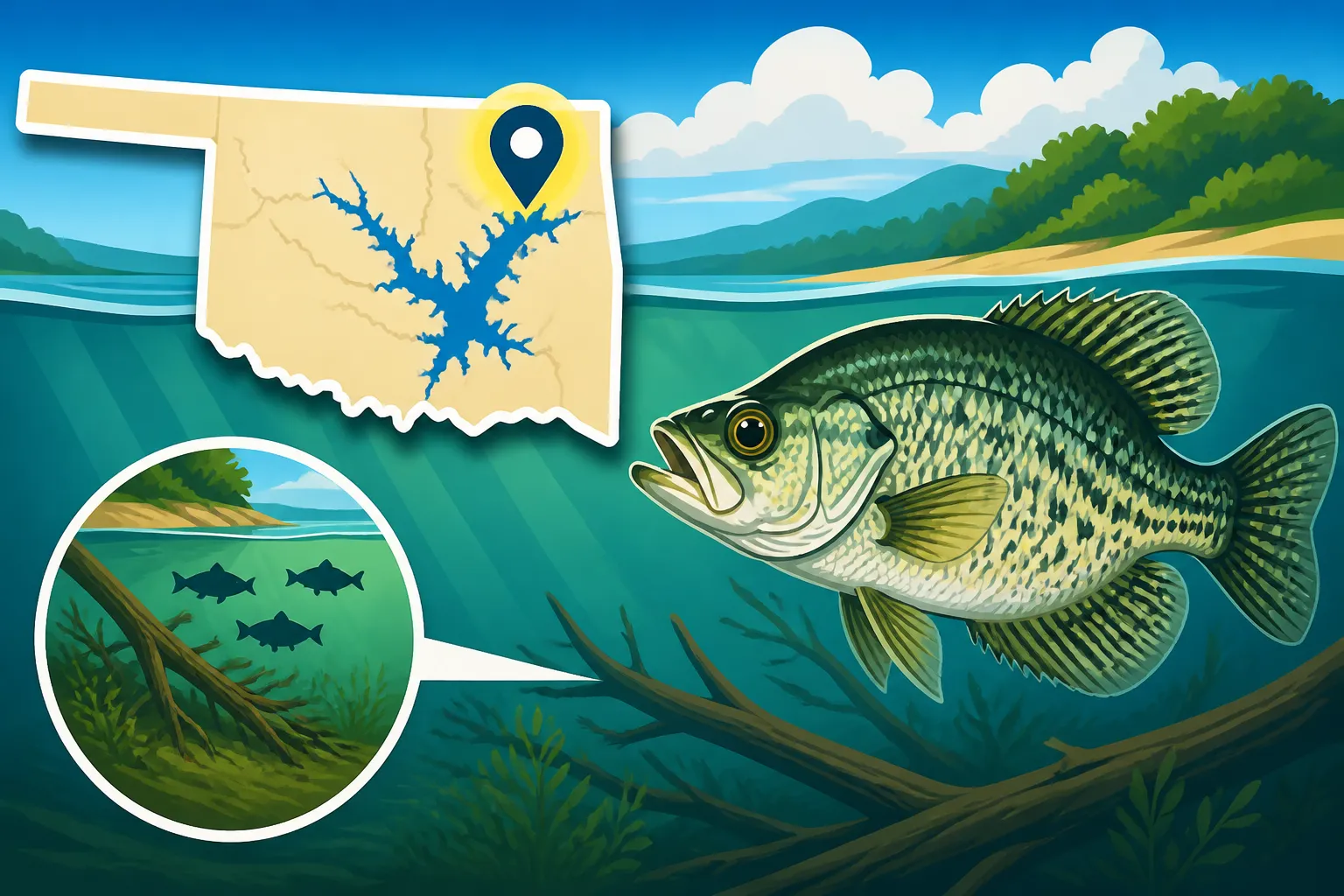
On Skiatook Lake, you'll primarily be targeting both black crappie and white crappie. While they share many similarities in behavior and diet, there are some subtle differences that can impact your fishing strategy. Black crappie typically prefer clearer water and tend to be found more often around vegetation and hard, woody cover. Their coloration is usually darker with irregular speckling.
White crappie, on the other hand, are a bit more tolerant of murkier water and often relate to open water structures like ledges, points, and humps, particularly when baitfish are schooling. They have more distinct vertical bars on their sides. Both species grow to respectable sizes in Skiatook, often reaching lengths of 10-14 inches, with larger slabs certainly possible. Knowing the subtle differences in their preferred habitats can help you fine-tune your approach once you've located a school of fish. Generally, Black Crappie vs White Crappie: Key Differences for Oklahoma Anglers outlines these distinctions well.
Prime Crappie Locations on Skiatook Lake
Locating crappie on Skiatook Lake largely boils down to finding structure and baitfish. This lake offers a diverse range of habitats, from submerged timber to rocky points and deep creek channels, all of which can hold crappie at different times of the year. Being able to adapt your approach to these varying environments is key to consistent success.
Main Lake Structure and Deep Water Haunts
During the colder months and the heat of summer, crappie often retreat to the deeper confines of the main lake body. Here, they'll congregate around prominent underwater structures like deep ledges, submerged roadbeds, and steep drop-offs. The clarity of Skiatook's water means crappie feel more exposed in shallower areas during these times, pushing them down to depths of 20 to 40 feet, or even deeper, especially near the dam area and the junction of the main creek channels.
Key areas to investigate include the main channel of Hominy Creek where it enters the main lake, and the deep water around Skiatook Point. Look for pronounced changes in depth, especially where a flat drops sharply into a channel. Crappie will suspend at various depths over these deeper areas, often relating to schools of baitfish. Using your electronics to mark both baitfish and individual crappie is absolutely crucial when targeting these deep-water haunts.
Creek Arms and Coves for Seasonal Crappie
As the water temperatures begin to change, particularly in spring and fall, crappie make significant movements into the lake's numerous creek arms and shallower coves. These areas warm up faster in the spring, signaling the start of the spawn, and offer abundant food sources as baitfish move in. Hominy Creek, Cross Timbers Creek, and Flat Rock Creek are prime examples of these crappie magnets. In spring, crappie will push all the way into the very backs of these creeks, seeking out shallow, brushy areas to lay their eggs.
During the fall, these same creek arms become excellent feeding grounds as crappie actively pursue baitfish that are fattening up for winter. Look for creek channels winding through flats, especially those with standing timber or brush. The mouths of these creeks, where they meet the main lake, also act as transition zones that can hold crappie as they move between deep and shallow water. These seasonal migrations are a predictable pattern that anglers can capitalize on.
Brush Piles and Man-Made Structures
One of the most consistent ways to find crappie on Skiatook Lake is by targeting brush piles and other man-made fish attractors. The Oklahoma Department of Wildlife Conservation (ODWC) has placed numerous brush piles throughout the lake, and local anglers have added countless more over the years. These submerged structures provide essential cover, ambush points, and foraging areas for crappie, making them highly productive year-round. You can often find maps or GPS coordinates of publicly placed brush piles through the ODWC, and many seasoned local anglers will also mark their private spots (though they might be tight-lipped about sharing!).
These brush piles are essentially crappie condominiums, holding fish in various depths depending on the season and time of day. In spring, crappie will move shallower around these structures, while in summer and winter, they'll often hold tight to the deepest parts of the brush. When fishing these areas, approach quietly and use a sensitive rod to feel for the subtle taps of crappie bites. It's not uncommon to pull multiple fish from a single well-placed brush pile, making them one of the most reliable crappie spots on Skiatook.
Seasonal Strategies for Skiatook Crappie
Crappie fishing on Skiatook Lake is a year-round pursuit, but your most effective strategies will shift dramatically with the seasons. Understanding how water temperature influences crappie behavior is paramount to consistent success, allowing you to anticipate their movements and adjust your tactics accordingly.
Spring Spawning Frenzy
Spring is arguably the most popular time to chase crappie on Skiatook. As water temperatures climb into the 50s and low 60s, crappie abandon their deep-water winter haunts and make a grand migration into shallower water for the spawn. This is when you'll find them concentrating in the backs of major creek arms like Hominy Creek, Cross Timbers Creek, and the numerous smaller coves. Look for areas with submerged brush, standing timber, or even rocky banks in depths ranging from 3 to 10 feet.
During this period, male crappie move in first to prepare nests, followed by the females. They become very aggressive and are relatively easy to catch. Small jigs (1/16 to 1/8 ounce) in chartreuse, white, or black/chartreuse are deadly, as are live minnows fished under a bobber. Focus your efforts on the north-facing banks first, as these receive more direct sunlight and warm up faster. As the spawn progresses, fish will move to other areas. Many anglers rely on specific spots they've marked over the years, and finding a local FishingBooker guide could reveal some of these honey holes. For a deeper dive, check out Spring Crappie Fishing Patterns in Oklahoma.
Summer Deep Water Tactics and Night Fishing
Once the heat of summer sets in and water temperatures soar into the 80s, Skiatook's crappie scatter and seek refuge in deeper, cooler water. This means moving away from the shallow spawning grounds and back towards the main lake body and the deeper sections of the creek channels. They'll often suspend over structure, like old roadbeds, humps, and brush piles, in depths of 15 to 30 feet, sometimes even deeper during the brightest part of the day. They might also relate to submerged timber fields that offer shade and cover.
Summer is prime time for spider rigging, a technique where multiple rods are deployed from the front of the boat, presenting baits at various depths. Small jigs tipped with minnows or soft plastics are excellent choices. Another highly effective summer tactic on Skiatook is night fishing. Crappie are attracted to lights suspended over the water, which draw in plankton and baitfish. Anglers will anchor over deep brush piles or channel swings, drop submersible lights, and fish vertically with small jigs or minnows. This offers a cooler, quieter experience with often fantastic results. For more details on this, you might find Summer Night Fishing Techniques in Oklahoma helpful.
Fall Feeding Patterns
As autumn arrives and the water temperatures begin to cool, Skiatook's crappie undergo another significant behavioral shift. This is a transition period, often considered one of the best times for crappie fishing as they become incredibly active, feeding aggressively to build up fat reserves for the upcoming winter. They'll move back into the creek arms and coves, following baitfish that are also moving shallower.
Look for crappie on the edges of creek channels, around standing timber, and in brush piles at depths of 8 to 20 feet. Trolling with small crankbaits or jigs can be very effective as crappie are spread out and actively chasing bait. Vertical jigging over marked schools of fish or brush piles is also a proven method. The key is to be mobile and cover water until you find a concentration of feeding fish. The fall bite can be explosive and offer some of the largest crappie of the year. Consider consulting Fall Crappie Fishing Patterns in Oklahoma for more tips on this productive season.
Winter Slow Bites
Winter fishing for crappie on Skiatook Lake can be challenging, but it can also be incredibly rewarding for patient anglers. Crappie move to their deepest haunts during this time, often holding tight to main lake channels, deep ledges, and very deep brush piles in depths of 25 to 45 feet, sometimes even deeper depending on the cold. Their metabolism slows down, so their bites will be subtle and often feel like nothing more than added weight on your line.
Precision and patience are key. Use your electronics to locate schools of crappie or individual fish tight to structure. Vertical jigging with tiny jigs (1/32 or 1/64 ounce) or dead-sticking live minnows directly above their heads is the most effective approach. The bite window can be short, often mid-day when the sun has had a chance to slightly warm the upper water column. Don't be surprised if you catch only a few fish, but they are often of excellent quality.
Essential Techniques and Gear for Skiatook Crappie
Having the right techniques and gear makes all the difference when targeting crappie on Skiatook Lake. The diverse nature of the lake and the changing seasonal patterns mean that a versatile approach will lead to the most success.
Baits and Lures That Get Bites
Crappie on Skiatook, like most places, are opportunistic feeders, but they do have preferences. Live minnows are, without a doubt, a classic crappie killer, especially when fished under a bobber in shallow water or on a drop shot rig in deeper water. They are particularly effective during the spring spawn and winter's slow bite.
When it comes to artificials, small jigs are king. A variety of soft plastic crappie jigs, ranging from 1/32 to 1/8 ounce, are highly effective. Popular colors include chartreuse, white, black and chartreuse, and various shad imitations. Tipping these jigs with a small piece of crappie nibbler or a minnow can often entice finicky fish. Tiny crankbaits, especially those designed for trolling, can also be productive during the fall when crappie are actively chasing baitfish. Don't forget that Best Bait for Crappie in Oklahoma Reservoirs can provide even more tailored advice.
Fishing Methods for Different Depths
Skiatook Lake demands a range of fishing methods depending on the depth and season. For shallow-water crappie during the spring, a simple slip bobber rig with a minnow or a small jig is hard to beat. This allows you to present your bait at a precise depth above cover. Casting small jigs and retrieving them slowly around visible timber or brush is also effective.
In deeper water, especially during summer and winter, vertical jigging, tightlining, or spider rigging are essential. Vertical jigging involves dropping a jig or minnow straight down to the depth where fish are marked on your electronics, then gently lifting and dropping your rod tip to impart action. How to Tightline for Crappie details this technique, which can be done with one or multiple rods. Spider rigging allows you to cover more area with multiple lines, presenting different baits at different depths until you find what the fish prefer. For those with advanced setups, How to Spider Rig for Crappie offers an excellent overview.
Electronics and Boat Control for Success
Modern electronics are not just a luxury but a necessity for consistently catching crappie on Skiatook Lake, especially when targeting deep-water fish or hidden brush piles. A good fish finder with down imaging and side imaging capabilities will allow you to scan large areas, pinpoint submerged structure, and even identify schools of crappie and baitfish. Mark these spots as waypoints on your GPS!
Effective boat control is equally vital. A reliable trolling motor, preferably one with GPS anchoring capabilities (like a Minn Kota Terrova or Humminbird Ultrex), allows you to hold your position precisely over brush piles or along deep contours, even in windy conditions. This precision fishing is paramount for vertical presentations or slow trolling. Whether you're navigating to a specific spot or carefully working an area, having control over your boat's movement can significantly increase your catch rate. Consider utilizing resources like Best Fish Finder Features That Matter Most on Oklahoma Reservoirs to optimize your setup.
Planning Your Skiatook Crappie Adventure
A successful crappie trip to Skiatook Lake involves more than just knowing where the fish are; it also includes understanding the practical aspects of accessing the lake and adhering to local regulations.
| Season | Preferred Depth | Primary Locations | Recommended Baits/Lures | Key Techniques |
|---|---|---|---|---|
| Spring | 3-10 feet | Creek arms, shallow coves, brushy banks | Live minnows, small jigs (chartreuse, white) | Slip bobber, casting, slow retrieve |
| Summer | 15-30+ feet | Deep ledges, main lake channels, humps, deep brush piles | Live minnows, soft plastic jigs, small crankbaits | Vertical jigging, spider rigging, night fishing under lights |
| Fall | 8-20 feet | Creek arm channels, standing timber, brush pile edges | Live minnows, jigs, small crankbaits | Trolling, vertical jigging, casting & retrieving |
| Winter | 25-45+ feet | Main lake channels, deep ledges, deepest brush piles | Live minnows, tiny jigs (1/32 oz) | Vertical jigging (dead-sticking), slow presentations |
Navigating Access Points and Amenities
Skiatook Lake offers several excellent public boat ramps and access points, making it relatively easy to get on the water. Popular options include Cross Timbers Marina, Tall Chief Cove, and Black Dog Park, which all provide good facilities and ample parking. Depending on which part of the lake you plan to fish, choosing the most convenient ramp can save you valuable travel time. For those without a boat, there are also some limited bank fishing opportunities, though the most productive crappie spots often require boat access.
If you're planning an extended trip or just looking for a convenient stay, there are lodging options nearby, from cabins at the lake to hotels in nearby Skiatook or Tulsa. You can also find bait and tackle shops in the area to stock up on essentials. If you're coming from out of state or unfamiliar with the lake, consider booking a trip through a service like FishingBooker to connect with local guides who specialize in Skiatook crappie. They can provide invaluable insights and put you on fish quickly. Before heading out, you should always check the Best Boat Ramps on Skiatook Lake, Oklahoma for the most current information on accessibility.
Safety and Regulations on Skiatook Lake
Before you hit the water, it's essential to be familiar with Oklahoma's fishing regulations, particularly for crappie. The statewide daily bag limit for crappie in Oklahoma is 37 fish, and there is no minimum size limit on Skiatook Lake, meaning you can keep any legal-sized crappie you catch up to that limit. While this is the general rule, it's always smart to double-check the latest regulations from the Oklahoma Department of Wildlife Conservation, as rules can occasionally change or be localized to specific bodies of water. Remember, ignorance of the law is no excuse! You can find a more general overview in Oklahoma's Statewide Crappie Bag Limit.
Safety on the water is also paramount. Skiatook is a large lake and can get choppy, especially on windy days. Always ensure you have enough life jackets for everyone on board, and check that your boat's safety equipment is up to snuff. Be mindful of other boaters, especially in busy areas or around ramps. A little common sense and preparedness will ensure a safe and enjoyable crappie fishing adventure on Skiatook Lake.
Disclaimer
Always verify current fishing regulations and license requirements with the Oklahoma Department of Wildlife Conservation (ODWC) before heading out. Fishing conditions can change rapidly based on weather, water levels, and seasonal patterns.