Best Bass Lures for Fall Fishing
One of the biggest frustrations for many Oklahoma anglers is feeling like their go-to summer bass lures suddenly stop producing once the leaves start to turn. The fall transition can be tricky, making you scratch your head wondering where the bass went or what they want to eat. This guide will walk you through the very best bass lures for fall fishing in Oklahoma, helping you understand bass behavior and adapt your tackle to keep those bites coming right up until winter.
Understanding Fall Bass Behavior in Oklahoma Waters
As summer's heat gives way to cooler autumn temperatures, everything in a bass's world begins to change. The consistent patterns you relied on for months often shift dramatically, leading to some of the most exciting – and sometimes frustrating – fishing of the year. To consistently catch bass in the fall, you first need to understand what's driving their behavior.
The Fall Turnover and Its Impact on Bass
One of the most significant environmental shifts in Oklahoma lakes during autumn is the "fall turnover." As surface water cools, it becomes denser and sinks, displacing the warmer, oxygen-depleted water from the bottom, which rises to the surface. This process essentially mixes the entire water column. For bass, this means their comfortable summer haunts might suddenly be less appealing. Oxygen levels become more uniform throughout the lake, and baitfish can disperse more widely instead of being confined to specific thermal layers. It often takes a few weeks for the lake to stabilize after a full turnover, and during this period, bass can be scattered and harder to pinpoint. Once the lake stabilizes, though, oxygen is abundant everywhere, and bass are free to roam.
Following the Baitfish Migration and Aggression
With cooling water, baitfish like shad, sunfish, and small crappie start to feel the urge to school up more tightly and move toward shallower, often warmer, water. These massive schools of baitfish become the primary focus for hungry bass. Think of it like a grocery store moving its best deals to the front of the store – the bass are going to follow! This migration is crucial to successful fall bass fishing. Finding these schools of baitfish, whether on your electronics or visually, is often the quickest way to locate active bass. They'll be feeding aggressively, trying to pack on weight before the lean winter months set in. This heightened aggression means lures that mimic fleeing baitfish or crawfish can be incredibly effective.
The Autumn Feeding Frenzy Before Winter
Unlike the sluggishness of mid-summer heat or the pre-spawn fickleness, fall offers a unique "feeding frenzy" phase for bass. They know winter is coming, and consistent food sources will become scarcer. This instinct drives them to eat as much as possible, as often as possible. This means you can often find large groups of bass actively hunting and competing for food. They become less particular about what they strike, as long as it looks like an easy meal. This is when you can really capitalize on fast-moving, reaction baits. However, this frenzy isn't constant. Cold fronts can shut down the bite fast, and understanding how bass react to changing weather is key to autumn success. For a broader look at how bass behavior changes through the seasons, check out our guide on Oklahoma Bass Fishing: Techniques by Season.
Top Bass Lures for Oklahoma's Autumn Waters
Now that we understand why bass do what they do in the fall, let's talk about the specific tools you'll want in your tackle box. Oklahoma offers a diverse range of lakes, from clear-water impoundments like Broken Bow Lake to more stained reservoirs like Lake Eufaula, and the right lure choice can make all the difference.
Crankbaits: Covering Water and Mimicking Forage
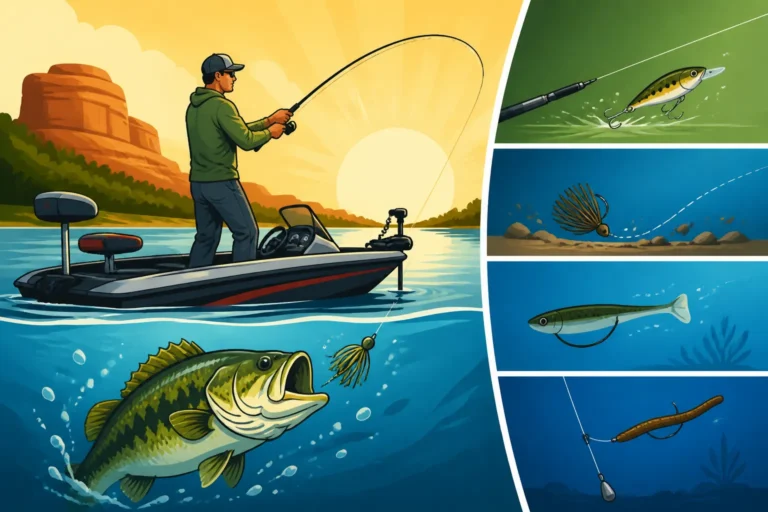
Crankbaits are absolutely essential for fall bass fishing. They allow you to cover vast amounts of water quickly, mimicking fleeing baitfish or bottom-dwelling crawfish, both prime targets for fall bass.
Lipless Crankbaits for Aggressive Schooling Bass
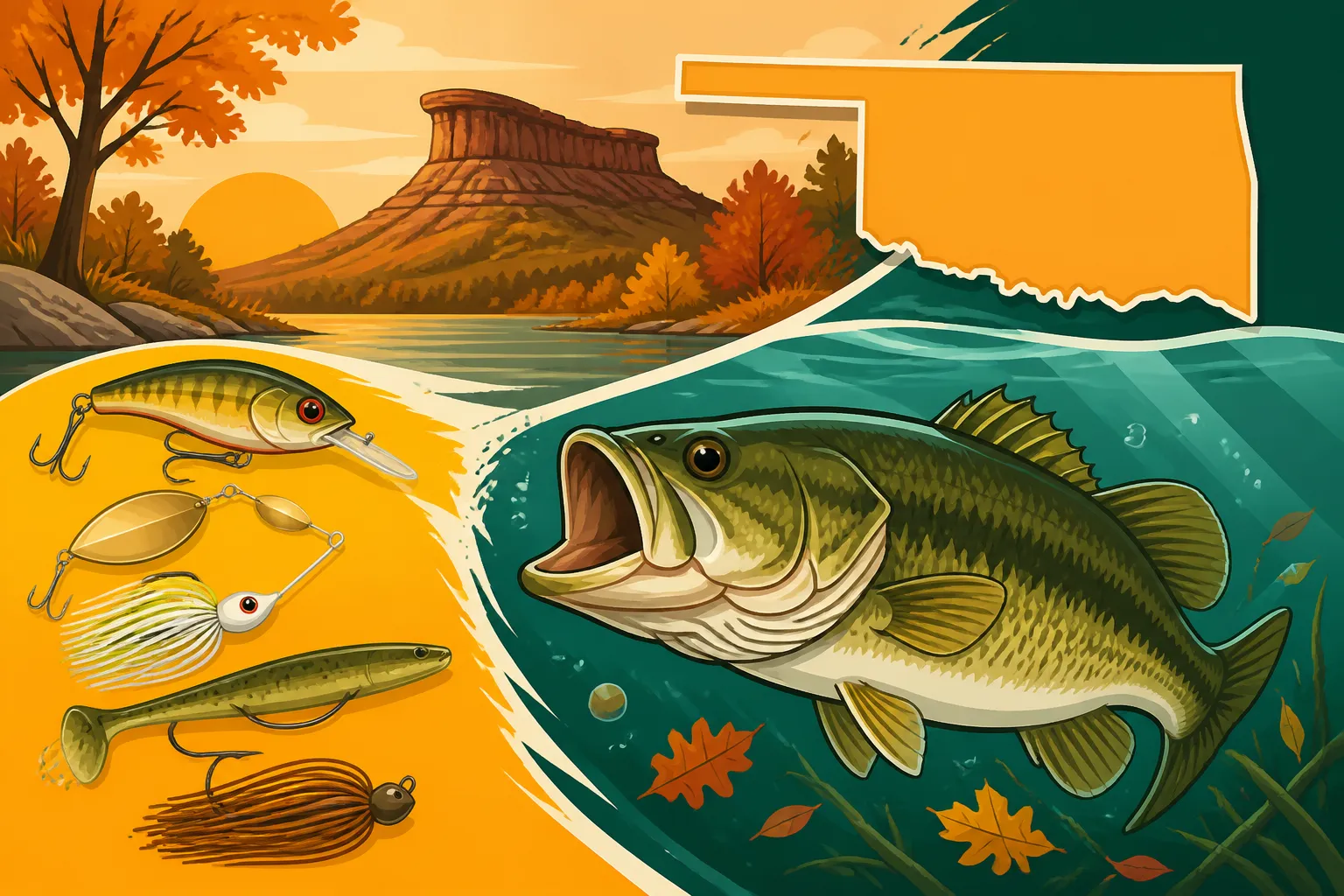
When you find schooling bass, especially those chasing shad in open water or over submerged grass beds, a lipless crankbait is your best friend. Lures like the Bill Lewis Rat-L-Trap or the Strike King Redeye Shad are phenomenal. They cast a mile, sink quickly, and produce an incredible vibration and rattle that bass simply can't ignore. Think about shad busting on the surface or moving quickly through the water column – that's the action you're trying to imitate. A fast, steady retrieve is often all it takes to trigger vicious strikes. For a great selection of lipless crankbaits in various colors and sizes, you can find them readily available on Amazon.
Diving Crankbaits for Structure and Depth
As bass relate more to structure like rock piles, ledges, or timber, diving crankbaits become critical. Medium-diving crankbaits (6-12 feet) are excellent for fishing points and channel swings, while deep-divers (15+ feet) are perfect for targeting offshore humps or deep creek channels where baitfish might be congregating. Colors should largely mimic the local forage: shad patterns (chrome/blue, ghost minnow) for open water, and crawfish patterns (red, brown, orange) for rocky bottoms. Experiment with retrieve speed; sometimes a faster, erratic retrieve triggers strikes, while other times a slower, grinding retrieve that bumps the bottom is more effective.
Spinnerbaits and Chatterbaits for Reaction Strikes
When bass are aggressive but perhaps not actively busting on the surface, or when the water has a bit of stain, spinnerbaits and chatterbaits shine. These lures combine flash, vibration, and a realistic profile to create an irresistible meal.
Spinnerbaits for Flash and Vibration
Spinnerbaits are fantastic for working around sparse cover, across flats, or along channel edges where bass might be ambushing bait. The flashing blades (Colorado, willowleaf, or a combination) and pulsing skirt create a strong visual and sonic appeal. In clearer water, a tandem willowleaf blade setup offers more flash. In stained or muddy water, a single large Colorado blade creates maximum thumping vibration. Colors typically follow the baitfish theme: white, chartreuse, or a combination. Don't be afraid to experiment with retrieve speeds – a slow-rolled spinnerbait can be deadly on lethargic bass, while a faster, shallower retrieve can draw reaction strikes from active fish.
Chatterbaits (Bladed Jigs) for Unique Action
Chatterbaits, or bladed jigs, are another fall powerhouse. The hexagonal blade attached to the jig head creates an erratic, vibrating action that is incredibly lifelike and unique. Bass often react violently to this unpredictable movement. They're excellent for fishing through grass, around docks, or along riprap. Pair them with a soft plastic trailer that mimics a shad or a small crawfish for added bulk and appeal. Colors like white, chartreuse, or black and blue are popular fall choices. A good chatterbait is a staple, and you'll find plenty of high-quality options, even from brands like Z-Man, on Amazon.
Jigs and Soft Plastics for Finesse and Deeper Water
While fall often calls for aggressive, fast-moving baits, there are definitely times when a more subtle approach with jigs or soft plastics is necessary, especially after a cold front or in late fall when water temperatures dip further.
Football and Casting Jigs for Structure
Jigs excel at targeting specific structure where bass might be hunkering down. Football jigs are ideal for rocky bottoms, allowing you to drag them over rocks and ledges without getting hung up easily. Casting jigs with a brush guard are perfect for wood cover like laydowns and brush piles. Always add a soft plastic crawfish or chunk trailer to give the jig a more lifelike profile and added bulk. Colors in fall often lean towards natural crawfish shades like greens, browns, and oranges. The key is to work them slowly, feeling for subtle bites. For tips on specific rigging, check out How to Fish a Texas Rig for Bass.
Finesse Worms and Senkos for Tough Bites
Sometimes, even in the fall, bass can be finicky. This is when finesse soft plastics come into play. A wacky-rigged Senko or a small finesse worm on a drop shot or shaky head can entice bites when nothing else will. These baits offer a natural, subtle presentation that's hard for even the wariest bass to resist. Focus on areas where bass might be staging before moving deeper, or on specific isolated cover. Natural colors like green pumpkin, watermelon, or black and blue are excellent choices. Many anglers stock up on these versatile plastics, and they're always available on Amazon.
Topwater Lures for Early Fall and Warmer Days
Don't put away your topwater baits just yet! Early fall, especially on warmer, calm mornings or evenings, can offer some absolutely explosive topwater action. As long as water temperatures are still above 60 degrees Fahrenheit, bass will often come up for a surface meal.
Walking Baits and Poppers
Walking baits like the Heddon Super Spook or a Zoom Horny Toad are fantastic for covering water over submerged grass or along shallow flats. Their side-to-side "walking the dog" action is incredibly enticing to active bass. Poppers create more commotion, perfect for targeting specific cover like boat docks, fallen trees, or lily pads. The splash and gurgle imitate a struggling baitfish, drawing bass from considerable distances. Early morning and late evening are prime times for topwater, but don't rule out cloudy, windy days either.
Adapting Lures to Oklahoma's Shifting Fall Conditions
Oklahoma's fall isn't a single, static season. It progresses through distinct phases, and successful anglers understand how to shift their lure choices and techniques as the water cools and bass patterns evolve.
Early Autumn: Still Chasing Summer Patterns
When fall first hits Oklahoma, usually late September to mid-October, water temperatures might still be in the upper 60s or even low 70s. Bass often haven't fully committed to their aggressive fall patterns yet. You might still find some fish relating to deeper summer haunts, but others will start to push shallower, especially during overcast days.
Transition Tactics and Aggressive Presentations
During early fall, it's a great time to experiment with both summer and fall tactics. Don't be afraid to throw topwater lures early in the morning, especially if you see any signs of schooling activity. Shallow-running crankbaits, spinnerbaits, and even buzzbaits can be incredibly effective when bass are chasing bait in the upper water column or along shallow points. As the day progresses, if the bite slows, transition to working Texas-rigged plastics or jigs around deeper brush piles or channel swings. This is a great time to learn about Spring vs Fall Fishing Patterns on Oklahoma Reservoirs to see how behaviors differ.
Mid-Autumn: The Prime Time Bite
Mid-fall, typically from mid-October through November, is often considered the absolute prime time for bass fishing in Oklahoma. Water temperatures usually settle into the 50s and low 60s, and the fall turnover has likely completed, making bass more predictable. This is when the true "feeding frenzy" kicks in.
Maximizing the Baitfish Migration
Bass will be actively gorging themselves, often in relation to large schools of shad. Focus your efforts on areas where baitfish are abundant: large flats, major creek arms, and main lake points. Lipless crankbaits, fast-moving diving crankbaits, and bladed jigs are exceptionally potent now. Also consider a jerkbait, which can be devastating when bass are suspended around baitfish. The erratic darting action followed by a long pause often triggers reaction strikes from even cautious fish. This is the period when you can often catch some of the biggest bass of the year in Oklahoma lakes.
Late Autumn: Slowing Down for the Cold
As November transitions into early December, and sometimes even into January in milder years, water temperatures can drop into the low 50s and even into the 40s. The aggressive feeding frenzy slows down, and bass become more lethargic, conserving energy for the winter.
Finesse and Deep Water Tactics
This is the time to really slow down your presentations. Bass will often move to deeper water, seeking out thermal stability on main lake ledges, deep points, and steep drops. Jigs with craw trailers, slow-rolled spinnerbaits, and finesse presentations like a shaky head or drop shot rig become your most effective tools. The key is patience and meticulous attention to detail. Work your lures slowly, paying close attention to any subtle taps or changes in line tension. Bass might not smash your lure; they might just "tick" it or add a little weight. Targeting deep structure, as detailed in How to Fish Deep Structure for Bass in Summer, can be adapted for late fall.
The Impact of Cold Fronts and Water Clarity
No discussion of fall fishing would be complete without talking about cold fronts. A sharp drop in temperature, especially when accompanied by high pressure and clear skies, can shut down an otherwise hot bite almost instantly.
Adjusting to Post-Front Conditions
After a cold front, bass often become sluggish and move tighter to cover or deeper water. Their feeding windows shrink, and they become much pickier. When this happens, ditch the fast-moving reaction baits and switch to slower, more subtle presentations. Jigs, finesse worms, and even very slow-rolled spinnerbaits can still coax bites. Focus on the sunny side of cover or structure, as these areas might warm up slightly. Light line and a more natural color presentation are often key. For more in-depth advice, read our article on How Cold Fronts Change Fishing Patterns on Oklahoma Lakes. Similarly, water clarity dictates lure color; brighter, more contrasting colors for stained water, and natural, translucent colors for clear water.
Here's a quick guide to help you choose:
| Fall Phase | Water Temperature | Dominant Bass Behavior | Top Lure Categories | Recommended Lure Examples |
|---|---|---|---|---|
| Early Fall | 65-75°F | Transitioning, some aggressive, some still deep | Topwater, Shallow Cranks, Spinnerbaits, Jigs | Poppers, Walking Baits, Squarebill Cranks, Willowleaf Spinnerbaits, Flipping Jigs |
| Mid-Fall | 55-65°F | Aggressive feeding, chasing baitfish, schooling | Lipless Cranks, Diving Cranks, Chatterbaits, Jerkbaits | Rat-L-Trap, Strike King Redeye Shad, Medium/Deep Divers, Z-Man Chatterbait, suspending Jerkbaits |
| Late Fall | 45-55°F | Slowing down, seeking stable deep water, more finicky | Jigs, Finesse Plastics, Slow-Rolled Spinnerbaits | Football Jigs, Shaky Heads, Drop Shot Rigs, Finesse Worms, Grub-style Spinnerbaits |
| Post-Cold Front | Varies, often drops | Sluggish, tight to cover, reluctant to chase | Jigs, Finesse Plastics, Very Slow Retrieves | Casting Jigs, Ned Rigs, Small Paddle Tail Swimbaits on light jigheads |
Presenting Your Lures for Maximum Fall Success
Having the right lures is only half the battle. Knowing how to present them effectively, matching your retrieve to the bass's mood and the prevailing conditions, is what truly separates successful anglers from those who go home empty-handed.
Retrieve Speeds and Pauses: The Key to Triggering Bites
The speed and cadence of your retrieve are absolutely critical in the fall. During the aggressive mid-fall feeding frenzy, a fast, erratic retrieve for crankbaits, spinnerbaits, and lipless baits often triggers reaction strikes. Bass are competitive and will hit a fast-moving bait so another fish doesn't get to it first. However, during early fall transition or after a cold front, slowing down and incorporating pauses can be much more effective.
Slowing Down for Finicky Fish
For jigs and soft plastics, a slow drag-and-pause, or a subtle twitch-and-hop, is usually best. Allow the bait to sit on the bottom for several seconds before moving it again. For jerkbaits, long pauses (5-10 seconds, sometimes even longer in colder water) are often what draw strikes. These pauses give hesitant bass time to inspect the lure and then commit. The key is to let the fish tell you what they want. Start fast, and if you're not getting bites, gradually slow down until you find the winning retrieve. For more on what to throw and when, check out Seasonal Bait Selection for Bass.
Locating Fall Bass: Following the Food Chain
Finding the bass is often simpler in the fall because they are so closely tied to their food source. If you find the baitfish, you'll find the bass.
Shallow Flats and Creek Channels
Look for large shallow flats adjacent to deeper water, especially in the backs of major creek arms. These areas often warm up quickly and attract huge schools of baitfish. Bass will push these schools onto the flats, creating prime feeding opportunities. Main lake points and channel swings are also excellent spots, particularly as bass move from deeper summer haunts to shallower feeding areas. Use your electronics to find bait balls and isolated cover. A good fish finder can make a huge difference in locating these schools. Our guide on Best Fish Finder Features That Matter Most on Oklahoma Reservoirs can help you pick one out.
Visual Cues and Surface Activity
Keep an eye on the surface! Blowing baitfish, gulls diving, or even subtle ripples can indicate schooling bass. This is particularly common on lakes like Texoma or Eufaula. When you see this activity, cast a lipless crankbait or a topwater lure into the commotion and hold on! Remember, bass are often mixed in with other aggressive species like white bass or striped bass during these feeding frenesies.
Gear Considerations: Matching Rods, Reels, and Line
Having the right gear makes a difference in presenting your lures effectively and landing those fall giants.
Rod and Reel Setups
For fast-moving baits like crankbaits and spinnerbaits, a medium-heavy to heavy casting rod (6'10" to 7'6") with a moderate-fast action is ideal. This action helps load the rod properly for casting and provides enough backbone to drive hooks home. Pair this with a high-speed baitcasting reel (7.1:1 or higher) for quick retrieves and taking up slack. For jigs and soft plastics, a sensitive medium-heavy to heavy rod with a fast action is preferred. This allows you to feel subtle bites. A medium-speed reel (6.4:1) is generally sufficient for these slower presentations. If you're wondering what makes a good bass rod, dive into Best Rods for Oklahoma Largemouth Bass.
Line Selection
Monofilament line is often favored for crankbaits due to its stretch, which helps prevent hooks from tearing out when a bass suddenly thrashes. Fluorocarbon is excellent for jigs and soft plastics because of its low visibility and sensitivity. Braided line is a good choice for spinnerbaits and chatterbaits in heavy cover, offering strength and no stretch for solid hooksets. Match your line weight to the lure and the cover you're fishing – typically 12-20 lb test for casting setups, and lighter for finesse.
Understanding fall bass behavior and adapting your lure selection and presentation accordingly will dramatically increase your success on the water. Oklahoma's autumn offers some of the best fishing of the year, so get out there and enjoy it!
Disclaimer
Fishing conditions and regulations can change, and it's always the angler's responsibility to check the most current rules and requirements set by the Oklahoma Department of Wildlife Conservation before heading out. This guide is for informational purposes only and should not replace official regulations.