How to Tightline for Crappie
It’s a scenario many of us crappie anglers know all too well: you’re out on the water, marking fish on your sonar, but those subtle bites just aren’t translating into fish in the livewell. It’s incredibly frustrating when you know the fish are there but they simply refuse to commit to your offering. This comprehensive guide is dedicated to teaching you the art of tightlining for crappie, a highly effective and often overlooked technique that will help you detect even the lightest nibbles and dramatically improve your catch rate on Oklahoma’s incredible fisheries.
Understanding the Essence of Tightlining for Crappie
Tightlining, at its core, is a technique centered around maintaining a constant, direct connection to your bait. Unlike some methods where a gentle bow in the line is acceptable or even preferred, tightlining demands that you feel everything happening at the business end of your rod. It’s all about immediate feedback, allowing you to react to the most minuscule of changes. This isn't just a niche tactic; it's a fundamental approach that can unlock crappie fishing success in challenging conditions.
The Philosophy Behind the "Tight Line"
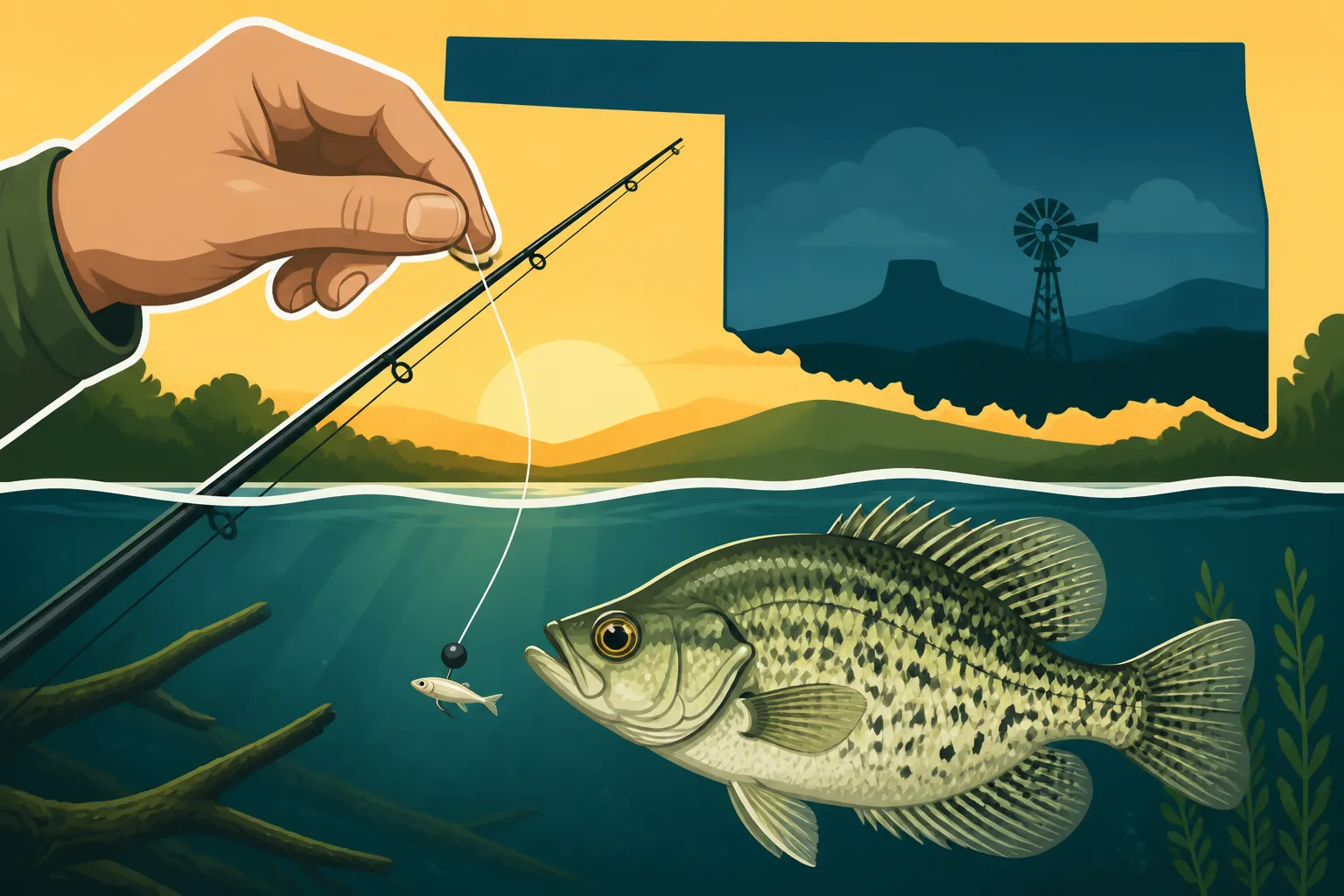
The very name "tightlining" gives away its secret: keeping your fishing line as taut as possible, from your rod tip all the way down to your bait. This isn't about brute force or pulling the fish in. Instead, it's about eliminating slack, which is often the biggest enemy of sensitive bite detection. When your line has slack, a crappie can mouth your bait, taste it, and spit it out before the slack line even begins to move your rod tip. With a tight line, even the slightest hesitation or change in pressure—what we call a "tick"—is instantly transmitted up the line to your rod tip and, crucially, directly into your hand.
Think of it like this: imagine trying to feel a feather landing on a long, loose rope versus a short, taut string. On the rope, you might never feel it. On the string, you'd know instantly. That's the difference a tight line makes. This direct connection also gives you a better sense of bottom structure, allowing you to "feel" your way over submerged brush piles, ledges, or rocks where crappie often hide. It’s a sensory experience that connects you intimately with the underwater world, turning every slight tap or change in current into valuable information.
Advantages of Tightlining in Oklahoma Waters
Oklahoma's lakes and rivers present a diverse range of crappie habitats, from vast open waters to intricate submerged timber and brush piles. Tightlining shines in these varied environments. One of its primary advantages is the precision it offers in presenting your bait. When you're fishing a specific brush pile or a submerged tree, being able to drop your bait exactly where you want it and keep it there, feeling every branch it touches, is incredibly powerful. This method allows you to probe every nook and cranny of a structure, increasing your chances of finding those elusive slab crappie.
Moreover, tightlining is remarkably effective when crappie are less aggressive or "finicky." When the water is cold, or after a significant weather front, crappie might only barely mouth a bait. If you're using a technique with slack line, you'll miss these subtle bites entirely. Tightlining gives you the edge by making you aware of every little bump or shift. It's also versatile, working equally well with live minnows or artificial crappie jigs. This adaptability makes it a year-round technique for Oklahoma anglers, whether you're targeting fish in shallow spawning flats in spring or deep timber in the dead of winter. If you're just starting, you might also want to explore some of the general Crappie Fishing Techniques and Seasonal Patterns in Oklahoma to see how tightlining fits into the bigger picture.
Essential Gear for Successful Oklahoma Tightlining
Having the right equipment is paramount for successful tightlining. It's not about having the most expensive gear, but rather gear that is properly matched to the technique and conditions. The goal is sensitivity and control, allowing you to feel those delicate bites and maintain your tight line effectively. A trip to a local tackle shop or even browsing online retailers like Amazon can help you find suitable options for each component.
Rods, Reels, and Line Choices
When it comes to tightlining, your rod is your primary communication tool with the fish. You'll typically want a long, sensitive crappie rod, often in the 10-foot to 14-foot range. Some anglers even use specialized "spider rigging" rods that are longer. These rods are usually constructed from graphite or a graphite composite, which provides the necessary sensitivity to detect light bites while still having enough backbone to fight a decent crappie. The extra length isn't just for reaching; it helps you spread your lines if you're fishing multiple rods, and critically, it allows you to easily guide your bait directly over structure without spooking fish with your boat. The tip should be light and flexible, capable of telegraphing even the most subtle tap.
For reels, small, lightweight spinning reels (typically in the 500 to 1000 series) are ideal. They need a smooth drag system, as you'll often be using very light line, and a crappie can make a surprising run when hooked. The main goal here is a reel that balances well with your long rod and allows for effortless line management.
Your choice of fishing line is critical for tightlining. Most anglers opt for a monofilament or fluorocarbon line in the 4- to 6-pound test range.
- Monofilament is popular because it's easy to handle, offers good knot strength, and has a slight stretch that can act as a shock absorber. It's also generally more visible above the water, which can help in keeping track of your lines.
- Fluorocarbon, while a bit more expensive, is nearly invisible underwater, has less stretch (which enhances sensitivity), and sinks faster. Both have their merits, but the key is to ensure it's fresh and free of nicks that could compromise its strength when you're setting the hook on a big crappie. For a deeper dive into equipping yourself, check out our guide on Best Rods and Reels for Oklahoma Fishing.
Hooks, Sinkers, and Bait Rigging
The terminal tackle for tightlining needs to be light and effective.
- Hooks: When fishing with live minnows, small Aberdeen hooks in sizes #2 to #6 are excellent. Their light wire construction allows them to bend out if snagged, often saving your line and sinker, and their long shanks make it easier to remove them from a crappie's mouth. If you're using artificial jigs, you'll want jig heads ranging from 1/32 to 1/8 ounce, matching the size of your plastic crappie baits. The weight of the jig head will depend on the depth you're fishing and the current.
- Sinkers: The sinker's job is to get your bait down to the desired depth and keep your line taut. Small split shots or tiny bell sinkers are commonly used. The placement of your sinker is important: you want it far enough above your hook (usually 6-12 inches) to allow your bait some natural movement, but close enough to ensure that connection with the bottom or structure. For example, when using a minnow, you might place one or two small split shots just above the swivel that connects your main line to your leader.
- Bait Rigging: When using live minnows, you have a couple of primary rigging options. You can hook the minnow lightly through both lips, which allows it to swim naturally and keeps it alive longer. Alternatively, you can hook it just behind the dorsal fin, making it swim downwards, which can be effective when crappie are holding slightly off the bottom. Choosing the right bait is critical, and we've got a whole breakdown on Best Bait for Crappie in Oklahoma that can further refine your choices.
Electronics and Boat Control Aids
In modern crappie fishing, especially with a technique like tightlining that often targets specific submerged structures, electronics are no longer a luxury—they’re a necessity.
- Fish Finders: A good fish finder with down imaging and/or side imaging capabilities is invaluable. These units allow you to literally "see" the underwater world, identifying brush piles, submerged trees, rock piles, ledges, and even schools of crappie holding tight to structure. Brands like Humminbird and Lowrance offer excellent options that provide clear, detailed views of the bottom and fish. By marking these key structures as waypoints, you can return to them precisely again and again. You can often find great deals on these units on Amazon.
- Trolling Motors: An electric trolling motor, particularly one with GPS capabilities like a Minn Kota Ulterra or a Garmin Force, is essential for maintaining precise boat control. These motors allow you to move slowly and silently, crucial for approaching crappie without spooking them. Features like "Spot-Lock" are game-changers, enabling you to hold your boat precisely over a marked brush pile or school of fish, even in windy conditions, freeing you up to focus on your tightlining technique. This precision is vital for effective tightlining, as it allows you to keep your bait in the strike zone for longer periods.
| Gear Item | Recommended Specs | Why It's Important for Tightlining |
|---|---|---|
| Rod | 10-14 ft, light/medium action, fast/sensitive tip | Provides reach, leverage, and superior bite detection |
| Reel | Small spinning reel (500-1000 size) | Lightweight, smooth drag, handles light line well |
| Line | 4-6 lb test monofilament or fluorocarbon | Optimal balance of strength, sensitivity, and stealth for crappie |
| Hooks | #2-#6 Aberdeen (minnows), 1/32-1/8 oz jig heads | Appropriate size for crappie, allows natural bait movement, prevents snags |
| Sinkers | Small split shot, tiny bell sinkers | Gets bait to depth, maintains tight line, minimal resistance to bites |
| Fish Finder | Down/Side Imaging with GPS | Locates structure, identifies fish, marks waypoints for precision |
| Trolling Motor | GPS-enabled (e.g., Spot-Lock) | Allows silent, precise boat positioning and hands-free control |
Mastering the Art of Tightlining Technique
Once you have the right gear, the real magic of tightlining comes down to your technique on the water. It’s a blend of boat handling, bait presentation, and keen observation. This isn't just about dropping a line; it's about actively "feeling" your way to success.
Boat Positioning and Structure Finding
Successful tightlining begins before your bait even hits the water. Your ability to accurately locate and then position your boat over key crappie structure is paramount. This is where your fish finder truly shines. Spend time idling over likely areas—creek channels, old roadbeds, standing timber, brush piles, or ledges—to scan for structures and fish. Mark every productive spot as a waypoint on your GPS. These aren't just random marks; they are your personal crappie hotspots, waiting to be revisited.
Once you’ve identified a promising piece of structure or a school of fish, the next step is a careful approach. Use your electric trolling motor to move slowly and silently into position. Avoid roaring up to a spot with your outboard, as this can easily spook a school of crappie. The goal is to position your boat directly over or just slightly upwind/upcurrent from the structure. If you have a trolling motor with a Spot-Lock feature, engage it to hold your boat steady. This allows you to focus 100% on your fishing without constantly adjusting your boat’s position, giving you the stability needed to maintain that critical tight line. Remember, every angler knows that stealth and precision are key to a good day on the water.
Bait Presentation and Depth Control
With your boat perfectly positioned, it’s time for bait presentation. With tightlining, the presentation is almost always vertical. You want to drop your bait straight down, directly into the heart of the structure or the school of fish you’ve located. Use the long length of your crappie rod to your advantage, extending it out to cover a wider area around your boat without having to move the boat itself. This allows you to systematically probe the edges and center of a brush pile, for instance, without constantly changing your boat's position.
Depth control is critical. Crappie often suspend at specific depths, and even a foot or two can make all the difference. Pay close attention to your fish finder to see where the fish are holding relative to the bottom or structure. Drop your bait slowly, allowing it to free-fall, feeling for any interruptions. Once it reaches the desired depth, hold it as still as possible, or impart a very subtle, almost imperceptible jigging motion by gently twitching your rod tip. The idea is to entice, not to spook. Experiment with slight variations in depth until you find the "strike zone"—the exact depth where the crappie are most active. Summer tightlining often means locating fish in their deeper haunts, so understanding How to Find Crappie in Deep Water in Summer will be invaluable.
Recognizing and Reacting to Bites
This is where the "tight line" truly pays off. Crappie bites can be incredibly subtle. Sometimes it's a distinct "tick" or "thump" that you feel directly in your hand. Other times, it's just a slight increase or decrease in pressure on your line, almost like your bait just stopped falling or became heavier. You might also notice your rod tip simply loads up a little, or perhaps twitches down slightly more than the natural motion of the water.
The key is to pay constant attention. Your eyes should be on your rod tip, watching for any unnatural movement, and your hand should be constantly attuned to the feel of the line. Don't be afraid to set the hook on anything that feels "different." It’s better to miss a few phantom bites than to miss a real fish. When you do feel that tell-tale sign, react quickly but smoothly. A sharp, upward sweep of the rod tip is usually all it takes. Because you're using light line, a gentle but firm hookset is better than a violent jerk, which can tear the hook out or break your line. It takes practice to distinguish between a bite and bumping structure, but the more you tightline, the more intuitive it becomes.
When and Where to Tightline for Crappie in Oklahoma
Knowing the "how-to" is only half the battle; knowing "when and where" to apply tightlining techniques in Oklahoma will maximize your success. Oklahoma's diverse waterways offer crappie fishing opportunities year-round, but understanding seasonal patterns and prime locations is key.
Seasonal Strategies for Oklahoma Crappie
Crappie behavior is heavily influenced by water temperature and seasonal changes, and your tightlining strategy should adapt accordingly.
- Spring: This is prime time! As water temperatures climb into the 50s and 60s Fahrenheit, crappie move shallower for their pre-spawn and spawning rituals. They'll congregate around shallow cover like submerged brush, docks, lily pads, and timber in coves and pockets. Tightlining is highly effective here, as you can precisely drop your bait into these shallow structures. Keep an eye on the weather; stable, warming trends are best. While minnows are a classic, don't underestimate the power of jigs. You can learn more about specific presentations in our guide on How to Jig for Crappie in Spring.
- Summer: As water heats up, crappie retreat to deeper, cooler waters. Look for them concentrated around deep brush piles, submerged creek channels, bridge pilings, and timber lines at depths of 15-30 feet or more. They often suspend at specific depths within these structures, making your fish finder indispensable. Tightlining here involves slowly moving over these deeper structures, keeping your bait right in the fish’s face. Night fishing under lights can also be incredibly productive in summer, as crappie are drawn to the light.
- Fall: As water temperatures begin to cool, crappie become highly active, feeding heavily to prepare for winter. They often transition from deep summer haunts to mid-depth ranges, congregating around points, secondary creek channels, and standing timber. This can be a fantastic time for tightlining, as fish are often grouped up and eager to bite. They're often chasing baitfish, so a lively minnow or a jig that imitates a shad can be particularly effective.
- Winter: Don't put away your rods! Crappie can still be caught in winter, though they become more lethargic. They'll typically hold tight to deep, dense cover, often in the deepest parts of the lake or reservoir, sometimes suspended in open water over deep channels. The bites will be even more subtle, making the sensitivity of tightlining absolutely crucial. Fish slowly, be patient, and remember that those delicate taps are often the biggest slabs.
Prime Oklahoma Fishing Spots and Conditions
Oklahoma boasts an incredible array of crappie fisheries. While tightlining is effective almost anywhere crappie swim, some lakes are renowned for their crappie populations and excellent structure.
- Lake Eufaula: Often called "Oklahoma's Gentle Giant," Eufaula is known for its vast expanses of standing timber and numerous creek channels, providing endless tightlining opportunities.
- Lake Texoma: While famous for stripers, Texoma also holds a healthy crappie population, particularly around its many bridge pilings, flooded timber, and rocky ledges.
- Grand Lake O' the Cherokees: In Northeast Oklahoma, Grand Lake has extensive brush piles, docks, and submerged timber, making it a crappie angler's paradise.
- Fort Gibson Lake: Another fantastic option with plenty of standing timber and creek channel structure that crappie love.
- Lake Arbuckle, Lake Tenkiller, Hudson Lake: These are also excellent choices, with Arbuckle, Tenkiller, and Hudson being among the six Oklahoma lakes with Stricter Crappie Limits at Six Oklahoma Lakes, so be sure to check those specific regulations.
When it comes to conditions, stable weather is generally preferred. Overcast days, early mornings, and late evenings often provide the best bite, as these lower light conditions make crappie more active. However, with tightlining, you can still coax bites even on bright, sunny days if you can locate fish holding tight to deep cover. Always remember to check the current fishing reports and, most importantly, be aware of the Crappie Fishing Rules and Limits in Oklahoma and the Oklahoma Statewide Crappie Bag Limit before heading out. Consider checking the local bait shops for current reports, or even looking for specific crappie gear on Amazon before heading out.
Disclaimer
Fishing involves inherent risks. Always prioritize safety, wear appropriate personal flotation devices, and be aware of weather conditions and local regulations. This guide is for informational purposes only and does not guarantee fishing success or safety. Always consult official Oklahoma Department of Wildlife Conservation resources for the most up-to-date fishing regulations and licensing requirements.