How to Rig a Slip Sinker for Catfish
One of the most frustrating things as a catfish angler, especially when you're trying to fish those big Oklahoma reservoirs or even a swift river, is feeling a bite that doesn't quite commit, or worse, having your bait constantly swept away by the current. It's easy to get discouraged when you know the fish are there, but your rig just isn't performing. This guide is here to walk you through the simple, yet incredibly effective, technique of rigging a slip sinker for catfish, ensuring your bait stays put and those bites turn into solid hooksets.
Understanding the Catfish's Bite and Why a Slip Sinker Helps
Catfish, whether you're after big blue cats on Lake Texoma or channel cats in a local pond, are often bottom feeders. They're also known for their sometimes subtle, sometimes aggressive, but often distinct bite. Unlike a bass that might strike and run, a catfish often 'mouths' the bait, testing it before fully committing. This is where a traditional fixed-sinker rig can really hinder your success.
The Natural Presentation Advantage
Imagine a piece of bait, like a shad or a chunk of hot dog, sitting on the bottom. If it's tied to a fixed sinker, any little tug from a curious catfish will immediately transmit that resistance back up your line. This resistance can feel unnatural to the fish, causing them to drop the bait before you even have a chance to set the hook. It's like trying to eat a piece of steak that's tied to a brick – you'd probably give up too!
A slip sinker rig, however, allows your line to "slip" freely through the sinker. When a catfish takes the bait, it feels very little resistance from the weight. The sinker stays put on the bottom, holding your bait in the strike zone, while the fish swims off a short distance with the bait and your hook. This natural presentation gives the fish confidence to fully swallow the bait, leading to a much better hookup ratio. You'll often feel a much more solid pull rather than those frustrating taps.
Dealing with Different Currents and Bottoms
Oklahoma has a fantastic variety of fishing waters, from the deep, vast expanse of Lake Eufaula to the moving currents of the Arkansas River. Each presents its own challenges for keeping your bait where you want it. A slip sinker rig is incredibly versatile for this reason.
In strong currents, the weight of a slip sinker keeps your bait anchored, preventing it from tumbling downstream and out of the strike zone. You simply choose a heavier sinker. On a rocky bottom, a fixed sinker can easily snag, but a slip sinker, especially certain shapes, can sometimes navigate better, or if it does snag, the fish still has a chance to pull the line free from the sinker itself. For those times you're fishing a relatively calm pond or a slow-moving river, a lighter slip sinker can still offer that subtle presentation without much current to fight. It's all about adapting your weight to the conditions, a flexibility that fixed rigs often lack. Understanding How to Bottom Fish for Catfish is key to maximizing this advantage.
Essential Gear for Your Slip Sinker Rig
Before you can rig up, you need the right tools for the job. You don't need to break the bank, but having appropriate gear will make a world of difference in your catfish pursuit. When it comes to finding dependable fishing gear, checking online retailers like Amazon can be a great way to compare options and read reviews from other anglers.
Rod, Reel, and Line Considerations
For serious catfish angling, especially in larger waters, you'll want a rod with some backbone. A medium-heavy to heavy action rod, typically 7 to 9 feet long, will give you the power to cast heavy sinkers and pull in big fish. You don't want a flimsy rod bending in half just trying to cast a 2-ounce weight. As for reels, baitcasting reels are often preferred for their strength and casting distance with heavier weights, though a robust spinning reel can also work, particularly for smaller channel catfish.
Line choice is critical. Monofilament line in the 15-30 lb test range is a popular choice for its stretch, which can act as a shock absorber against powerful runs, and its abrasion resistance against underwater obstacles. Braided line, while having no stretch and incredible sensitivity, might be too visible in clear water, and its lack of stretch can sometimes lead to hooks pulling out if you're not careful. Consider a fluorocarbon leader if you're worried about line visibility, especially in clearer lakes like Broken Bow. For a deeper dive into the setup, check out guides on selecting the Best Rod for Catfish Fishing From a Boat or from the bank.
Selecting the Right Sinker and Hook
This is where the "slip" in slip sinker comes in. You'll need sinkers designed to allow your line to pass through them. The most common types are egg sinkers, which are oval-shaped with a hole through the middle, and flat-sided pyramid or no-roll sinkers, which are excellent for holding bottom in current. The weight you choose depends entirely on the current and depth you're fishing. Start with a 1-ounce sinker in calm water, and go up from there. It's not uncommon to use 3-6 ounce sinkers when fishing big rivers or windy reservoirs.
For hooks, circle hooks are almost universally recommended for catfish, especially when using a slip sinker rig. Their design means the fish almost always hooks itself in the corner of the mouth, leading to fewer gut hooks and easier releases if you're practicing catch-and-release. Sizes can vary from 2/0 to 8/0, depending on the size of your bait and the catfish you're targeting. A good rule of thumb is to use a hook large enough that the point and barb are exposed when threaded through your bait.
Your Bait Choices for Oklahoma Catfish
Catfish are opportunistic feeders, and Oklahoma waters offer a smorgasbord of options. For blue and channel catfish, smelly baits are often king. Cut bait, like shad, perch, or carp, is incredibly effective. Just cut it into chunks or strips. You can also use prepared stink baits, chicken livers, hot dogs, or even shrimp. When targeting flatheads, however, live bait is almost always preferred – small sunfish, perch, or goldfish are excellent choices.
The type of bait you use can also influence your hook size and leader length. If you're using a large chunk of cut bait for trophy blues, you'll need a bigger hook and might want a longer leader to allow the bait to waft more naturally. For more insights on this, you might find the article on Best Catfish Bait for Summer Fishing quite helpful. Remember, catfish have an incredible sense of smell, so freshness and potency of your bait are important!
Step-by-Step Guide to Rigging Your Slip Sinker
Rigging a slip sinker is fairly straightforward, but getting the details right makes all the difference. It's a technique that many veteran anglers swear by, and once you master it, you'll wonder why you ever fished any other way for these whiskered wonders.
The Basic Slip Sinker Setup
Here’s how to put it all together:
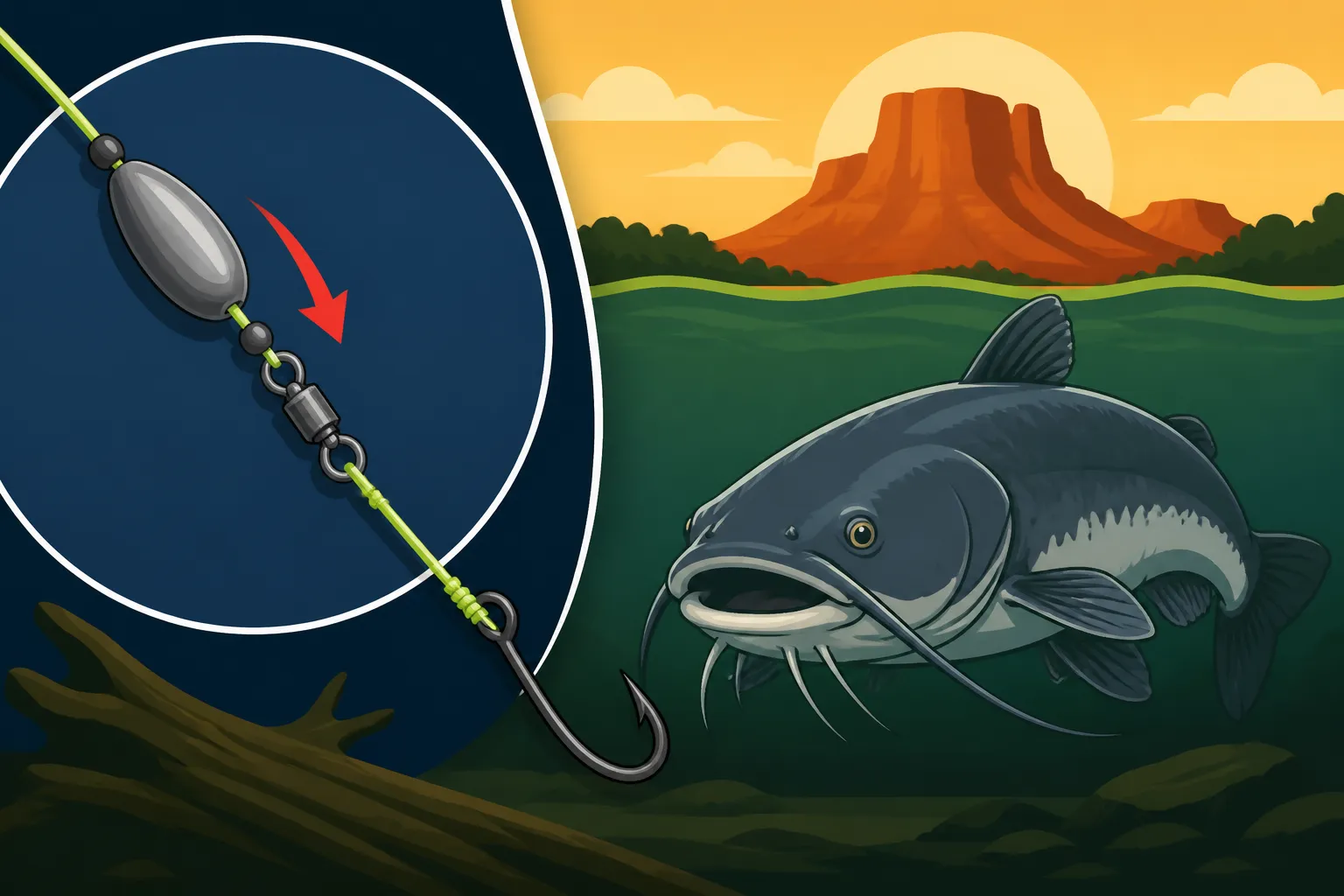
- Thread Your Main Line Through the Sinker: Take your main fishing line (the line coming from your reel) and pass it through the hole in your slip sinker. Make sure it slides freely. This is the "slip" part!
- Add a Bead (Crucial Step!): After the sinker, slide a small plastic or glass bead onto your main line. This bead acts as a buffer between your slip sinker and your knot. Without it, the sinker would constantly bash against your knot, weakening it over time and potentially causing it to fail when you hook into a big fish. You can find these beads easily on Amazon or at any local tackle shop.
- Tie on a Swivel: Now, tie your main line to one end of a barrel swivel. A good strong knot, like a Palomar knot or an improved clinch knot, is essential here. The swivel serves two purposes: it prevents line twist (especially important if your bait spins in the current) and it acts as a stopper for your slip sinker and bead, preventing them from sliding down to your hook.
- Attach Your Leader: To the other end of the swivel, tie on your leader line. Your leader should typically be 12-24 inches long, but this can vary. Use a similar or slightly lighter test line than your main line, and always use a strong knot. For trophy fish, some anglers might even use a braided leader for extra strength, even if their main line is mono.
- Tie on Your Hook: Finally, tie your chosen circle hook to the end of your leader. Again, a strong, reliable knot is key.
You now have a complete slip sinker rig! When a fish bites, it pulls the line through the sinker, feeling minimal resistance. The sinker stays on the bottom, keeping your bait in the feeding zone, until you feel the weight of the fish and set the hook. This rig is particularly effective when you're fishing lakes like Grand Lake O' the Cherokees or Keystone Lake, where currents can be a factor.
Advanced Tips for Different Scenarios
While the basic rig works wonders, there are a few tweaks you can make to optimize your slip sinker setup for specific conditions.
- Leader Length Adjustments: Experiment with your leader length. In areas with strong currents, a shorter leader (6-12 inches) might keep your bait closer to the bottom and less likely to be swept away. In calmer waters, or if you want your bait to waft more naturally, a longer leader (24-36 inches) can be more appealing to cautious catfish. Sometimes, if the bottom is very silty or mucky, a longer leader can lift your bait just above the crud.
- Double Hook Rigs: For those targeting multiple species or wanting to increase their odds, a double hook slip sinker rig can be effective. Simply add a second leader and hook to the swivel, usually a few inches above the first one. This allows you to present two different baits or two sizes of the same bait. However, be mindful of local regulations, as some areas may have limits on the number of hooks per line.
- Carolina Rig vs. Slip Sinker: Many anglers confuse a slip sinker rig with a Carolina rig. While similar, a true Carolina rig often uses a bullet-shaped sinker and is more commonly associated with bass fishing for soft plastics. For catfish, the egg sinker or no-roll sinker with a bead and swivel combination is the standard and most effective slip sinker setup. The principles are similar – minimal resistance for the fish – but the components are tailored for different species and presentations. If you're looking into other methods, you might explore Trotline Fishing for Catfish or Jug Fishing for Catfish for different approaches.
Common Mistakes to Avoid When Using a Slip Sinker
Even with a simple rig like the slip sinker, there are a few common pitfalls that new anglers (and even some seasoned ones!) can fall into. Avoiding these will help you have more successful days on the water.
Wrong Sinker Weight Woes
Choosing the wrong sinker weight is perhaps the most frequent mistake. Too light, and your bait won't stay put, especially in current. It'll drift away from the prime feeding zones, making it harder for catfish to find. You'll also struggle to cast accurately, and you won't feel subtle bites as effectively.
On the flip side, using a sinker that's too heavy for the conditions can also be detrimental. While it will hold bottom, a heavier sinker can make your cast less graceful and increase the chances of snagging. It also requires a heavier rod, which might not be ideal for feeling those lighter "taps" from smaller fish. The key is to find the sweet spot: the lightest sinker that will still hold your bait in place where you want it. This might mean having a range of egg or pyramid sinkers in your tackle box. Always consider the conditions—current strength, wind, and depth—before tying on your weight. This adaptability is crucial for successful catfishing, especially when you're targeting various species like those covered in Blue and Channel Catfish Counted Together in Oklahoma.
Overlooking the Proper Leader Length
Another common oversight is not paying attention to your leader length. As discussed, your leader is the section of line between your swivel and your hook. If it's too short (say, only a few inches), your bait might be too close to the heavy sinker, making it look unnatural. Fish, especially cautious ones, might shy away from a bait that's practically glued to a large piece of lead.
Conversely, a leader that's excessively long can also cause problems. While it might offer a super natural presentation, it can also lead to tangles, especially during casting or in current. A long leader can also make it harder to detect bites, as there's more slack for the fish to pull before you feel anything. The ideal leader length allows your bait to move freely and naturally with the current, a short distance away from the main weight, but not so far that it creates a tangled mess or makes bite detection difficult. This sweet spot is usually between 12 to 24 inches for most catfish scenarios, but don't be afraid to experiment to find what works best on a given day in a specific location.
| Sinker Type | Shape | Primary Use | Pros | Cons |
|---|---|---|---|---|
| Egg Sinker | Oval | General purpose, moderate to strong current | Slides easily, less prone to snagging on smooth bottoms | Can roll in strong current |
| Pyramid Sinker | Pyramid | Strong current, soft or sandy bottoms | Excellent bottom-holding power, digs into soft bottom | More prone to snagging on rocky bottoms |
| No-Roll Sinker | Flat, Tear-drop | Moderate to strong current, flat bottoms | Resists rolling, good for precise bait placement | Can be bulkier, less versatile in varying currents |
| Bank Sinker | Bell-shaped | Moderate current, rocky or uneven bottoms | Good balance of holding power and snag resistance | Can still snag in very rocky areas |
Remember, the goal is to make your bait as appealing and easy for the catfish to find and eat as possible. A properly rigged slip sinker can greatly increase your chances of success, turning those frustrating taps into solid, rod-bending hookups. So next time you're heading out, don't forget to rig up with confidence! For more tips on maximizing your catch, you might be interested in Catfish Fishing Techniques for Oklahoma Anglers.
Disclaimer
This article is for general informational purposes only and does not constitute professional advice. Laws, prices and regulations vary by location and change over time. Consult a qualified professional for guidance on your specific situation.