Redear Sunfish vs Bluegill: Key Differences
It’s a scenario every Oklahoma angler has faced: you pull a beautiful panfish out of the water, it’s got that classic sunfish shape, but then you pause. Is it a bluegill? Or is it one of those sneaky redear sunfish, often called a shellcracker? The truth is, these two popular panfish are commonly confused, and it’s a perfectly normal mix-up! They both inhabit many of the same waters across our great state and offer fantastic fishing opportunities. This guide is here to clear up the confusion, helping you confidently identify your catch and even improve your fishing strategies for each species.
The Basics: What Even Are These Fish?
Before we dive into the nitty-gritty of telling them apart, let's get a foundational understanding of both the bluegill and the redear sunfish. Both are part of the broader sunfish family (Centrarchidae), which includes other beloved Oklahoma species like bass and crappie. They share many familial traits: a somewhat compressed, disc-like body, a spiny dorsal fin, and a relatively small mouth. But don't let their shared family tree fool you; they have distinct personalities and preferences that make them unique. Understanding these basics is the first step to becoming a panfish pro.
Meet the Bluegill: Oklahoma's Ubiquitous Panfish
Ah, the bluegill! For many of us, this was our very first fish, the one that sparked a lifelong love affair with angling. These little fighters are arguably the most common and widespread sunfish in Oklahoma, thriving in nearly every pond, lake, and slow-moving stream you can imagine. From farm ponds in rural areas to major reservoirs like Lake Eufaula and Grand Lake, bluegill are practically everywhere.
They are known for their feisty spirit on light tackle, making them an absolute blast for anglers of all ages and skill levels. Think back to those lazy summer afternoons by a quiet pond, a bobber dancing on the surface, and then – plop! – it disappears. That exhilarating tug on the line? More often than not, it was a bluegill. They reproduce prolifically, providing an endless supply of fun and food for predators and anglers alike. Their diet is diverse, ranging from insects and insect larvae to small crustaceans, and they aren't particularly picky, which is why they fall for everything from a tiny piece of worm to artificial micro-jigs. If you're wondering what makes them so popular, it's their sheer accessibility and the consistent action they provide. It's truly a species that embodies the joy of fishing, especially for newcomers. Bluegill Fishing for Beginners often starts right here.
Introducing the Redear Sunfish: The Shellcracker
Now, let's talk about the redear sunfish, affectionately known as the "shellcracker" by many seasoned anglers. This nickname isn't just a cute moniker; it speaks directly to their unique dietary habits. Redears have specialized grinding teeth in their throats, a pharyngeal plate, that allows them to crush the shells of snails, clams, and other mollusks. This makes them crucial for controlling snail populations in aquatic ecosystems, which can otherwise harbor parasites.
While not as universally abundant as bluegill, redears are still quite common in many of Oklahoma's clear, weed-rich lakes and ponds. You'll often find them in places like Lake Arbuckle or Tenkiller Ferry Lake, where they have access to their preferred mollusk buffet. They tend to grow larger than bluegill on average, offering a more substantial fight and a heftier fillet. Many anglers specifically target redears for this reason, appreciating their size and the slightly more nuanced approach required to catch them. They're often considered a "trophy" panfish by those in the know. They prefer clean, clear water with plenty of submerged vegetation, especially areas with hard bottoms where snails and other invertebrates thrive. Learning to differentiate between these two fish can significantly enhance your fishing experience, allowing you to fine-tune your approach for maximum success. Redear Sunfish: Where to Find Them in Oklahoma is a common question, and their diet plays a big role in the answer.
Spotting the Differences: Identification Marks
So, you've got a panfish in your hand. How do you definitively tell if it's a bluegill or a redear? It's all about observing those key distinguishing features. While they share a similar overall body shape, a closer look at a few specific areas will reveal their true identity. Anglers who consistently fill their livewells know that paying attention to these small details can lead to a much more productive day on the water. It’s like being a detective, looking for clues that unlock the mystery of your catch.
The Tell-Tale Ear Flap
This is, hands down, the easiest and most reliable way to tell a bluegill from a redear sunfish. Both fish have a gill flap (operculum) that extends backward, creating a dark, somewhat rigid "ear." The color and pattern on this flap are your primary indicators.
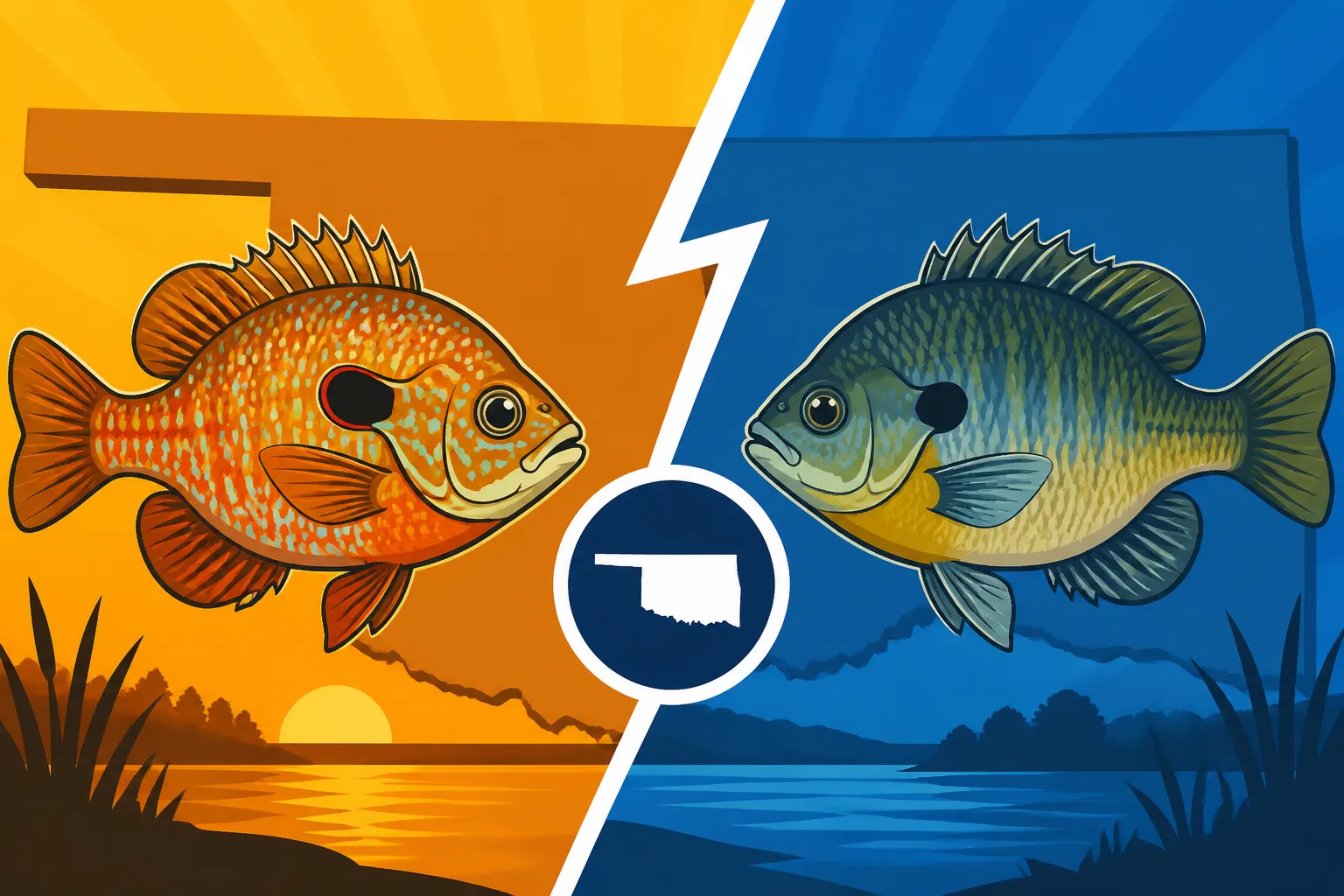
For a bluegill, this "ear flap" will be entirely black or a very dark blue/purple. It will usually be soft and flexible. There might be a very subtle light trim around the edge, but the main body of the flap is solid dark. Imagine a uniform dark blotch behind its eye – that’s your bluegill. This feature is so consistent that once you've seen a few, you'll be able to identify them instantly. You can even read more about specific sunfish ear flaps in Bluegill's Blue-Black Ear Flap vs the Green Sunfish's Olive Body, which helps differentiate them from other similar panfish too.
The redear sunfish, however, gets its name from this very feature. Its gill flap will have a distinct red or orange margin around the black spot. It often looks like a crescent moon of color on the posterior edge of the flap, especially noticeable on males during spawning season when the colors become more vibrant. This red "ear" is the most prominent feature and is almost always present, though its intensity might vary slightly. Sometimes, if the fish is stressed or in certain water conditions, the red might appear faded, but it's usually still there upon closer inspection. This subtle splash of color is the dead giveaway you're looking for.
Body Shape and Coloration
Beyond the ear flap, there are other, albeit subtler, differences in their overall appearance. These can be helpful supporting clues once you've got the ear flap down.
Bluegill tend to have a deeper, more compressed body shape, often appearing almost circular or disc-like. Their coloration can vary wildly depending on water clarity, diet, and habitat, but they typically have an olive-green back that fades into lighter sides, often with several vertical bars or blotches, particularly in younger fish. The belly is usually yellowish to orange, sometimes bright orange on spawning males. You might also notice a dark spot at the base of their dorsal fin. The males, especially when breeding, will display incredibly vibrant blue-purple hues on their operculum and sometimes a bright orange throat and belly. They really put on a show!
Redear sunfish generally have a slightly less compressed, more elongated body compared to the bluegill. While still a panfish, they often appear a bit "thicker" or more torpedo-shaped. Their backs are usually a dark olive or brownish-green, fading to silvery-white sides. They usually lack the distinct vertical bars seen on bluegill, appearing more uniform in color, though they might have small dark spots scattered across their sides. Their bellies are typically white or yellowish. Because they often grow larger, they might give off a more robust, "beefy" impression than your average bluegill. When you're comparing a mature specimen of each side-by-side, the redear often looks like the older, burlier cousin.
Mouths and Meal Preferences
This is a fascinating distinction that speaks volumes about how these fish live and what they eat. While you might not always get a clear look at their mouths in the water, knowing this difference helps understand why certain baits and techniques work better for one than the other.
Bluegill have a relatively small, upward-pointing mouth. Their diet primarily consists of insects, insect larvae, small crustaceans, and even some aquatic vegetation. They are masters at plucking tiny morsels off surfaces, from submerged weeds, or from the water column. They're opportunistic feeders, which is why they're so eager to snap up a worm, crickets, or a small jig. Their mouth is perfectly adapted for these small, soft-bodied prey items. This is why Best Bait for Bluegill in Oklahoma Ponds often includes things like worms and crickets – easy for their small mouths to engulf.
Redear sunfish, true to their "shellcracker" name, have a slightly different mouth structure. While still a small mouth, it tends to be more downturned, and if you were to look inside, you'd find those specialized pharyngeal teeth in their throat. Their primary diet consists of snails, clams, and other hard-shelled invertebrates that they vacuum up from the bottom. They effectively "hoover" up their prey and then crush the shells before consuming the soft bodies. Because they're looking for these bottom-dwelling snacks, their feeding approach is often less aggressive and more methodical than a bluegill. They're not usually chasing down fast-moving prey in the same way. This distinction in feeding habits means that what works for bluegill might not always be the best choice for redear, though there is certainly overlap.
Here's a quick comparison table to summarize the key differences:
| Feature | Bluegill | Redear Sunfish (Shellcracker) |
|---|---|---|
| Ear Flap | Solid black or dark blue/purple | Dark spot with distinct red/orange margin |
| Body Shape | Deeper, more compressed, disc-like | Slightly more elongated, often "thicker" |
| Coloration | Olive-green back, lighter sides, vertical bars often present; yellowish to orange belly | Dark olive/brown back, silvery-white sides, usually no vertical bars; white/yellowish belly |
| Mouth | Small, upward-pointing | Slightly downturned, specialized pharyngeal teeth |
| Primary Diet | Insects, larvae, small crustaceans, vegetation | Snails, clams, hard-shelled invertebrates |
| Average Size | Smaller (6-10 inches common) | Larger (8-12+ inches common) |
Where and How to Catch Them in Oklahoma
Knowing the differences between bluegill and redear sunfish isn't just for bragging rights; it's a huge advantage when you're actually out on the water. Understanding their preferred habitats and feeding tendencies allows you to tailor your approach, making you a more effective and successful angler. In Oklahoma, both fish offer incredible opportunities, but a slight tweak in your strategy can make all the difference.
Bluegill's Go-Anywhere Nature
If you're looking for consistent action and a high chance of success, bluegill are your best bet. They are incredibly adaptable and can be found almost everywhere in Oklahoma. From shallow farm ponds to the vast expanses of Lake Texoma, bluegill thrive. They love structure, whether it's submerged brush piles, weed beds, docks, fallen trees, or even simply the shade cast by overhanging banks. They're often found in relatively shallow water, especially during the spring and early summer when they move to beds for spawning.
For tackle, simplicity is key. A light spinning rod with 4-6 pound test line, a small bobber, a few split shot weights, and a small hook (size 8-12) is all you really need. Live bait is king for bluegill. Worms, crickets, grasshoppers, and even small bits of hot dog are practically irresistible. Just hook a small piece of bait, cast it near some cover or structure, and wait for that bobber to dive. Artificial lures like tiny jigs (1/32 to 1/16 ounce) tipped with a small plastic grub or tube, or even small spinners, can also be incredibly effective, especially when they're actively feeding.
Bluegill are often the go-to species for family fishing trips because they provide constant entertainment, making them Best Fish Species for a Family Fishing Trip in Oklahoma. They're not finicky, they bite readily, and catching them is a fantastic way to introduce kids to the joys of fishing. Many anglers will tell you that the easiest fish to catch in Oklahoma, hands down, is a bluegill. Just remember to check your local regulations for specific bag and length limits, as even these plentiful panfish have rules designed to maintain healthy populations.
Seeking Out the Shellcrackers
Targeting redear sunfish, or shellcrackers, requires a slightly more refined approach than bluegill, but the reward of a larger, stronger panfish is well worth the effort. Since redears specialize in eating snails and other bottom-dwelling invertebrates, you'll need to focus your efforts on areas where these food sources are abundant. Look for clear water with firm, sandy, or gravelly bottoms, especially near submerged weed beds, lily pads, or mussel beds. Areas with gradual slopes leading into deeper water are often productive, as are rocky points and humps. They don't typically hang out directly on top of thick vegetation like bluegill sometimes do, but rather along the edges where they can still access their food.
For bait, worms are still a top choice, especially red wigglers or nightcrawlers. The key is to present the bait directly on or very near the bottom, as this mimics their natural feeding behavior. Many anglers will use a small split shot or a sliding sinker rig to keep the bait down. Some experienced shellcracker anglers even swear by small pieces of clam or mussel meat, which makes perfect sense given their diet! Small jigs (1/16 to 1/8 ounce) tipped with a small plastic bait can also work, again, fished close to the bottom. Unlike bluegill, which will often rise to take a suspended bait, redears are more likely to be found rooting around on the bottom.
If you're using a boat, a good fish finder can help you locate those subtle humps and hard spots on the bottom that might hold a concentration of snails and, by extension, redears. For bank anglers, look for those clear-water sections with firm bottoms, casting out a bit further than you might for bluegill. Patience is often a virtue when targeting shellcrackers; their bites can be more subtle, a gentle tug rather than an aggressive yank. But when you hook into one, prepare for a stout fight for a panfish! Is Redear Sunfish Good to Eat? is a question often followed by a resounding "Yes!" from those who have savored their sweet, firm fillets.
Angler Appeal: Why We Love Both
It's easy to get caught up in the details of identification and technique, but at the end of the day, both bluegill and redear sunfish hold a special place in the hearts of Oklahoma anglers. They offer different experiences, cater to different skill levels, and collectively enrich our fishing culture. Each species provides unique rewards, proving that sometimes, the simplest pleasures in fishing are the most profound.
The Bluegill for Everyone
The bluegill is truly the democratic fish of Oklahoma. It's accessible, plentiful, and unfailingly eager to bite. This makes it an ideal target for literally everyone, from the smallest child holding their first rod to the seasoned angler just looking for a relaxing day of consistent action. Bluegill are often the unsung heroes of a multi-species fishing trip, filling in the gaps when other, more finicky fish aren't cooperating. You can often catch dozens in a single outing, providing ample opportunity for practice, fun, and a delicious meal.
For parents or grandparents introducing kids to fishing, bluegill are a godsend. Their willingness to bite keeps children engaged and excited, helping to foster that critical early connection to nature and the outdoors. There's nothing quite like the squeal of delight from a child catching their first fish, and more often than not, that fish is a bluegill. You can find simple, effective bluegill fishing kits on platforms like Amazon, making it easy to get started without a huge investment. They’re also a fantastic source of protein for larger predatory fish, forming a vital part of the food chain in many Oklahoma lakes and ponds.
The Redear's Rewarding Challenge
While bluegill offer quantity and accessibility, the redear sunfish provides a slightly different kind of satisfaction: the thrill of the hunt and the reward of a more substantial catch. Because they're often larger and sometimes require a bit more precision in targeting, landing a nice stringer of shellcrackers feels like a true accomplishment. They put up a surprisingly strong fight for their size, bending light rods and testing the angler's skill. Many panfish enthusiasts specifically seek out redears for this very reason – they're a "trophy" panfish.
The satisfaction of figuring out their patterns, finding those snail beds, and then feeling that distinct tug of a redear is incredibly gratifying. It's a testament to patience and observation. Plus, their larger size means a more generous fillet, making them a prized catch for the dinner table. If you're looking to elevate your panfishing game and experience a slightly different challenge, the redear sunfish is definitely a species to pursue. You might find specialized redear baits or ultralight gear perfect for them on Amazon, designed for subtle bites and strong fights. Whether you prefer the immediate gratification of a bluegill or the rewarding pursuit of a redear, Oklahoma's waters offer endless opportunities for panfish enjoyment.
Disclaimer
This article is for general informational purposes only and does not constitute professional advice. Laws, prices and regulations vary by location and change over time. Consult a qualified professional for guidance on your specific situation.