Channel Catfish vs Blue Catfish: How to Tell Them Apart
It's a common scenario on Oklahoma's waters: you reel in a beautiful catfish, heavy and fighting, and as it breaks the surface, you immediately wonder, "Is that a channel cat or a blue cat?" For many anglers, especially those new to the nuances of catfish species, distinguishing between these two popular forked-tail catfish can be surprisingly tricky, yet it's absolutely vital for adhering to regulations and maximizing your fishing success. This guide is here to help you confidently tell them apart, ensuring you're always in the know on the water.
The Catfish Conundrum: Why Identification Matters
Oklahoma's lakes and rivers are teeming with fantastic fishing opportunities, and catfish are often at the top of an angler's target list. But here's the kicker: while they might seem similar at a glance, especially younger fish, channel catfish and blue catfish have distinct characteristics, growth potentials, and, importantly, different regulations, particularly when it comes to trophy-sized fish. Mistaking one for the other isn't just a matter of bragging rights; it can sometimes lead to issues with bag limits or even an unintended citation if you're not careful. Knowing the precise identification cues means you're a more responsible, informed, and ultimately, a more successful angler.
Understanding Oklahoma's Catfish Rules
The Oklahoma Department of Wildlife Conservation (ODWC) sets specific rules for different species to maintain healthy fish populations. For instance, while both channel and blue catfish fall under the "forked-tail catfish" umbrella, there's a very particular regulation about larger blue catfish that doesn't apply to channel cats. You'll want to be intimately familiar with Oklahoma Forked-Tail Catfish Bag Limit and how it applies. This single rule alone makes accurate identification crucial for anyone targeting larger catfish in Oklahoma. Without this knowledge, you might inadvertently keep a fish that's outside the legal slot limit, or worse, release a fish that was perfectly legal to keep because you weren't sure what you had.
The Thrill of the Catch and Species Recognition
There's a special satisfaction that comes with not only catching a fish but knowing exactly what you've landed. It elevates your understanding of the aquatic ecosystem and makes you a more discerning angler. Imagine the difference between saying, "I caught a big cat!" and "I landed a gorgeous 40-pound blue cat from the main channel!" The latter shows a deeper connection to the sport and the fish itself. Plus, if you're ever participating in local tournaments or just sharing stories with fellow anglers, precise identification is part of the shared language of fishing. It's about respecting the fish, the regulations, and the craft. You'll find a deeper dive into the broader catfish family in Channel Catfish vs Blue Catfish vs Flathead Catfish in Oklahoma.
Spotting the Differences: Key Physical Traits
Alright, let's get down to brass tacks. You've got a catfish in hand, and you need to know if it's a channel cat or a blue cat. While there are some overlapping traits, paying close attention to a few key physical characteristics will help you make a confident identification every time. Think of these as your personal field guide markers.
Body Shape and Coloration
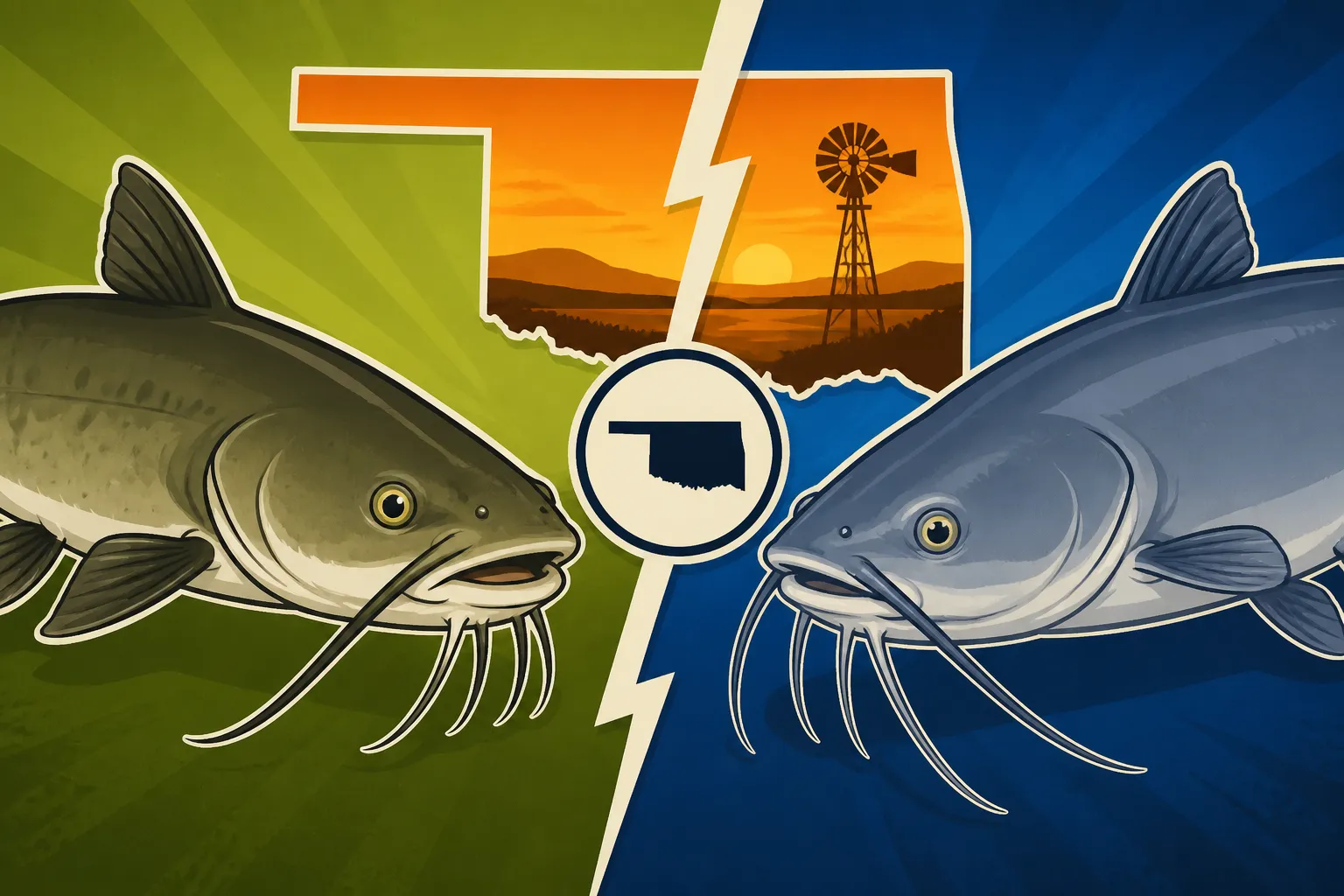
One of the first things you might notice, especially with younger fish, is the overall body shape and coloration. Channel catfish tend to have a more slender, often torpedo-shaped body. Their coloration can vary quite a bit depending on their habitat, but they typically range from olive-green to gray on their backs, fading to silvery sides and a white belly. A tell-tale sign, particularly on younger channel cats, are the distinct dark spots scattered randomly across their sides. These spots often fade or disappear entirely as the fish gets older and larger, which can make identification a bit trickier for mature specimens.
Blue catfish, on the other hand, generally have a more robust, heavier-bodied appearance. Their backs are usually a slate blue or gray, transitioning to silvery-white on their sides and belly, but they notably lack the dark spots that often characterize channel cats. Even large blue catfish retain this uniform coloration. If you're holding a hefty cat without any spots, you're likely looking at a blue. This heavier build also makes them formidable fighters, often growing to much larger sizes than channel cats. Looking at guides, perhaps even one you can find on Amazon, specifically focusing on Oklahoma's fish species, can help reinforce these visual cues.
Fin Shape and Ray Count
Now, let's get a bit more scientific and look at the fins, specifically the anal fin. This is arguably the most reliable identifier between the two species. The anal fin is the single fin located on the underside of the fish, behind the anus. For a channel catfish, its anal fin will typically have a rounded, somewhat convex margin when fully extended, and you'll count between 24 to 29 rays within it. The rays are those thin, bony structures that support the fin membrane.
Conversely, a blue catfish will have a much straighter, often concave (or notched) margin on its anal fin. More importantly, the blue catfish's anal fin will have a higher ray count, typically between 30 to 35 rays. This difference in ray count is a biological characteristic that remains consistent regardless of the fish's age or size. If you're really unsure, gently spreading the anal fin and counting the rays is a foolproof method. It's a quick and easy check once you get the hang of it, and a great way to avoid any mix-ups when fishing for The 30-Inch Blue Catfish Rule in Oklahoma.
Tail Shape and Mouth Features
Both channel and blue catfish are known as "forked-tail catfish," meaning their tail fins have a distinct V-shape. However, there can be subtle differences. The fork on a channel catfish's tail is often deeper and more pronounced, giving it a more angular appearance. The caudal fin lobes (the two parts of the V) might appear somewhat pointed.
The blue catfish also has a forked tail, but it can sometimes appear less deeply forked, or the lobes might be a bit more rounded. This isn't always as clear-cut as the anal fin ray count, but it's another piece of the puzzle. When it comes to the mouth, the blue catfish tends to have a slightly larger, more prominent head and a somewhat downward-pointing mouth, which is adapted for bottom feeding in strong currents. Channel catfish have a more terminal (forward-facing) mouth, generally proportional to their head. These nuanced details, when combined with other features, help build a complete picture for identification.
Here's a quick comparison table to keep handy:
| Feature | Channel Catfish | Blue Catfish |
|---|---|---|
| Body Shape | More slender, torpedo-shaped | More robust, heavier-bodied |
| Coloration | Olive-green to gray, silvery sides, often dark spots (especially younger fish) | Slate blue to gray back, silvery-white sides, no spots |
| Anal Fin Margin | Rounded, convex | Straight or concave (notched) |
| Anal Fin Rays | 24-29 rays | 30-35 rays |
| Tail Fork | Often deeper, more pronounced | Can be slightly less deep, sometimes more rounded lobes |
| Head/Mouth | Proportionate head, terminal mouth | Slightly larger head, often sub-terminal/downward mouth |
Beyond the Basics: Other Clues and Habitat
While physical identification is paramount, understanding the typical habitats and behaviors of channel and blue catfish can provide additional clues to confirm your catch. Fish species often prefer specific environments, and knowing these tendencies can help you narrow down your identification even before you get a good look at the fish.
Habitat Preferences
Channel catfish are incredibly adaptable and can be found in a wide variety of Oklahoma waters. They thrive in streams, rivers, ponds, and reservoirs, showing a preference for warmer, slower-moving waters with some cover like submerged logs, brush piles, or undercut banks. You might catch them near shore, in shallower coves, or in the main lake body. They're often abundant in farm ponds and smaller lakes, making them a common catch for many anglers. If you're fishing a smaller, more stagnant pond, chances are good you're primarily encountering channel cats. You can find Best Rivers and Streams for Channel Catfish to narrow down locations.
Blue catfish, on the other hand, prefer larger, deeper river channels and reservoirs with strong currents and expansive open water. They are often found in the main lake basins, especially around channel swings, ledges, and deep holes. They're more pelagic, meaning they roam open waters, and are known to school up in these deeper areas. Lakes like Lake Texoma, Lake Eufaula, and the Arkansas River are prime blue catfish territory in Oklahoma, where they can reach truly massive sizes. If you're fishing large, open water with a lot of current, especially targeting deep structure, you're increasingly likely to encounter blue catfish. Looking for Trophy Catfish Spots in Oklahoma often points to these blue cat strongholds.
Size and Growth Potential
This is another significant differentiator. While channel catfish can grow to respectable sizes, with individuals in the 10-20 pound range being considered quite large, blue catfish have a much greater growth potential. It's not uncommon for blue catfish in Oklahoma's major reservoirs to reach 30, 40, 50 pounds, and even much larger. The state record blue cat is a testament to their incredible size potential.
If you've landed a truly massive catfish, pushing past the 20-pound mark, there's a very high probability you're dealing with a blue catfish. Smaller fish, say under 5-10 pounds, could easily be either species, which is where those physical identification markers become absolutely critical. You might be interested in How Big Do Blue Catfish Get in Oklahoma for more on their impressive growth.
Diet and Feeding Habits
Both species are omnivorous scavengers, but their typical diets can differ slightly based on their habitat and size. Channel catfish are opportunistic feeders, consuming a wide variety of items including insects, crustaceans, smaller fish, and even plant matter. They're well-known for biting on prepared baits, chicken liver, worms, and stink baits. This varied diet and adaptable feeding strategy contribute to their widespread distribution. For specific tips on baits, check out Best Bait for Channel Catfish After a Rainstorm.
Blue catfish, especially larger ones, tend to be more piscivorous (fish-eating). While they'll still scavenge, they actively hunt and consume other fish like shad, carp, and even smaller game fish. Their preference for deeper, open water also means they often feed on schools of baitfish. This makes them a prime target for anglers using live bait or large cut bait in deeper water, and you can learn more about that in Best Bait for Blue Catfish in Deep Water. The choice of bait can sometimes hint at which species you're more likely to catch, though it's never a definitive identification.
Why Knowing Your Catfish Matters Beyond the Catch
Beyond simply being able to tell your fish apart, a deeper understanding of channel and blue catfish has significant implications for conservation, regulations, and your overall fishing strategy. It empowers you to be a more effective and responsible angler. Remember, while there's a specific rule regarding large blue catfish, Blue and Channel Catfish Counted Together in Oklahoma for your daily creel limit for forked-tail species, so accurate identification of each fish is still key.
Regulatory Compliance and Responsible Angling
The most immediate and practical reason to distinguish between these two species is regulatory compliance. Oklahoma has a special regulation specifically for blue catfish: anglers are only allowed to keep one blue catfish over 30 inches per day. There is no such length restriction on channel catfish. This means if you catch a 32-inch catfish, knowing whether it's a blue or a channel dictates whether you can legally put another trophy-sized fish in your cooler that day. Violating this rule, even unintentionally, can lead to fines and a less-than-pleasant encounter with a game warden.
Responsible angling isn't just about following the rules; it's about contributing to the health of the fishery. By accurately identifying your catch, you can make informed decisions about catch and release, especially for those larger blue catfish that are vital to maintaining a trophy fishery. Taking the time to properly identify and understand your fish is a mark of a truly dedicated and ethical angler.
Tailoring Your Fishing Strategy
Knowing the distinct characteristics and habitats of channel and blue catfish allows you to fine-tune your fishing strategy. If you're specifically targeting trophy blue catfish, you'll focus on larger, deeper reservoirs, use bigger baits, and fish main lake channels and ledges. You'd likely be using heavier gear, perhaps even looking at options on Amazon for robust rods and reels that can handle a battle with a monster blue. Conversely, if you're out for a relaxing day of catching abundant eating-sized channel cats, you might opt for smaller ponds or slower river sections, using classic baits like worms or chicken liver.
This strategic approach saves you time, increases your chances of success, and ensures you're fishing efficiently for your desired species. Instead of just "fishing for catfish," you'll be "fishing for channel cats" or "fishing for blue cats," with specific techniques and locations in mind. This level of specialization makes fishing more rewarding and dramatically improves your odds of bringing home the fish you're really after. For a more general overview of regulations, you'll want to review Fishing Regulations You Need to Know in Oklahoma.
Appreciating Oklahoma's Diverse Fisheries
Finally, understanding the differences between channel and blue catfish simply deepens your appreciation for Oklahoma's diverse aquatic ecosystems. Each species plays a unique role, has its own preferences, and presents its own set of challenges and rewards for the angler. As you gain experience, you'll start to recognize not just the individual fish, but the patterns of where they live, what they eat, and how they behave. This connection to the natural world is what makes fishing so much more than just catching fish; it's an ongoing education and a lifelong passion. The next time you're on the water, armed with this knowledge, you won't just be catching catfish, you'll be catching channel catfish or blue catfish, and that's a world of difference.
Disclaimer
This article is for general informational purposes only and does not constitute professional advice. Laws, prices and regulations vary by location and change over time. Consult a qualified professional for guidance on your specific situation.