Fish Finder Features That Matter Most on Oklahoma Reservoirs
Stepping onto any of Oklahoma's magnificent reservoirs, whether it's the vast expanse of Lake Texoma or the winding coves of Lake Eufaula, can feel like staring at a blank canvas when you're trying to find fish. It’s frustrating to know there are trophy bass, crappie, or catfish lurking below, but you just can’t pinpoint them. This guide is here to cut through the confusion and help you understand the essential fish finder features that truly matter for successful angling on our diverse Oklahoma waters.
Why a Good Fish Finder Matters on Oklahoma Reservoirs
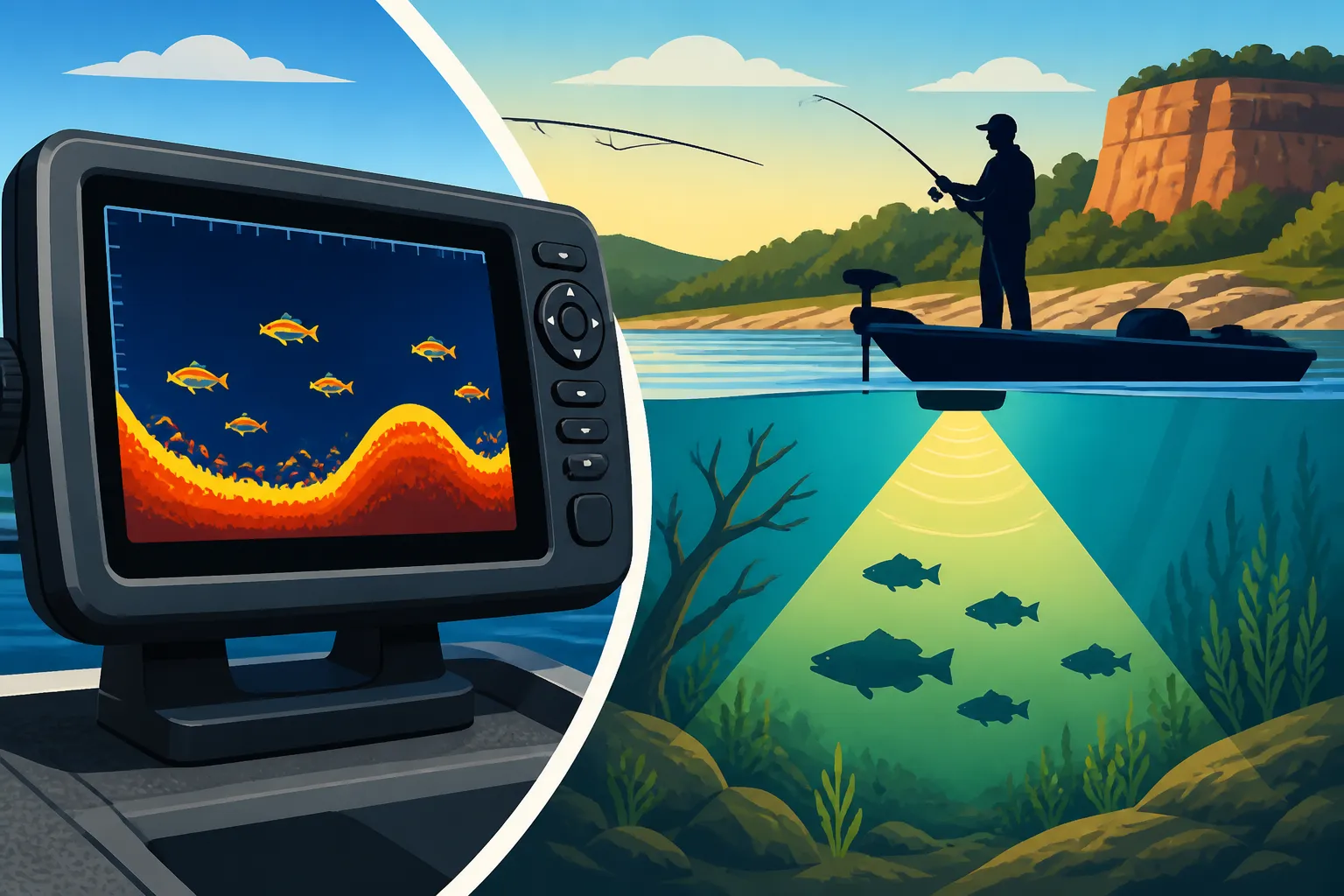
Let's be honest, fishing without a quality fish finder on a big, unfamiliar reservoir can feel a lot like throwing darts blindfolded. You might get lucky, but consistent success often eludes you. Our Oklahoma lakes are full of incredible structure, from submerged timber and rock piles to deep channels and abrupt ledges, and without a way to "see" what's below, you're missing out on vital information. A good fish finder isn't just a gadget; it's a window into the underwater world, transforming your approach from guesswork to a strategic hunt.
The Frustration of Blind Fishing
I remember countless days out on Grand Lake O' the Cherokees, just casting aimlessly, hoping to hit a productive spot. The frustration was real, especially when I knew my buddy in another boat, equipped with a fancy new unit, was pulling in fish after fish. It wasn't that I was a bad angler, or that my bait wasn't right; it was that I simply couldn't locate the fish. Large bodies of water like Keystone Lake or Fort Gibson Lake hide so much potential below their surface, and without a reliable way to map out those hidden havens, you're constantly fighting against the unknown. You can spend hours covering unproductive water, burning gas and precious fishing time, all because you can't "see" the story unfolding beneath your boat. This feeling of being out of sync with the lake is exactly what a modern fish finder aims to solve.
Imagine knowing exactly where that brush pile is, or seeing a school of baitfish being ambushed by a lurking striper. That kind of insight changes everything. It turns a day of hopeful casting into a day of targeted, confident fishing. This isn't just about finding fish; it's about understanding their habitat, their movements, and their reactions, which is a game-changer for any serious angler. This technology truly levels the playing field, making even vast and complicated reservoirs feel more approachable and conquerable.
Maximizing Your Time on the Water
Our time on the water is precious, whether it's a quick evening trip after work or a dedicated weekend adventure. Nobody wants to waste those valuable hours. A well-chosen fish finder helps you make the most of every minute by rapidly identifying productive areas and confirming the presence of fish. Instead of randomly exploring, you can quickly scan an area for submerged cover, observe depth changes, and even spot individual fish or schools, telling you precisely where to drop your line.
Think about the time saved. Instead of slowly idling over acres of barren bottom, a quick pass with a capable fish finder can show you a hard bottom break, a subtle channel, or a cluster of standing timber where fish are actively holding. This efficiency is especially critical when you're on a larger body of water or trying to follow seasonal patterns, like locating White Bass Spring Runs in Oklahoma or pinpointing deep-water crappie in the summer. It allows you to eliminate unproductive water quickly and focus your efforts where they'll truly pay off, transforming your outing from a leisurely cruise into a strategic and rewarding fishing expedition.
Essential Fish Finder Technologies to Understand
When you start looking into fish finders, the sheer number of acronyms and proprietary names can feel like learning a new language. But at its core, these technologies are all about painting a clearer picture of what's beneath your boat. Understanding the differences is key to choosing a unit that truly serves your needs on Oklahoma's diverse fishing grounds.
Traditional Sonar and CHIRP Technology
Traditional 2D sonar has been the backbone of fish finding for decades, sending out a single frequency sound wave and displaying echoes as arches (fish) and lines (structure). It's dependable and great for showing depth, general bottom contours, and schools of fish. However, its resolution can sometimes be limited, especially when trying to differentiate between closely grouped fish or subtle structure in deeper water. Many entry-level units still rely on traditional sonar, and for many anglers targeting panfish in shallower coves, it's perfectly adequate.
Then came CHIRP sonar, which revolutionized the game. Instead of a single frequency, CHIRP (Compressed High-Intensity Radiated Pulse) sends out a continuous sweep of frequencies, from low to high. When these broadband signals return, the processor analyzes them, resulting in significantly clearer and more detailed images. This means better target separation – you can often distinguish individual fish in a tight school of crappie or see a bass clearly against a submerged log. CHIRP also penetrates deeper with less noise, making it incredibly effective for revealing fish and structure in the deep channels of lakes like Texoma or the vast open waters of Lake Eufaula. The difference is like comparing an old analog television to a modern high-definition display; the clarity and detail are vastly superior, allowing you to interpret the underwater world with much greater precision.
Down Imaging and Side Imaging for Detailed Views
Moving beyond traditional 2D, Down Imaging and Side Imaging technologies offer photographic-like views of what's directly below and to the sides of your boat. These technologies use higher frequency, fan-shaped beams to create incredibly detailed snapshots of the bottom and structure. Down Imaging provides a literal "downward look," showing brush piles, submerged trees, and rock formations with almost photographic clarity directly beneath your transducer. This is fantastic for identifying the exact orientation of a fallen tree or seeing how a school of fish relates to a deep brush pile.
Side Imaging, often called Side Scan by some manufacturers, takes this a step further by scanning out to the sides of your boat, often up to hundreds of feet in either direction. This is a monumental time-saver on big reservoirs. Instead of driving directly over every piece of potential structure, you can idle down a channel or along a contour line and scan vast areas for submerged roadbeds, bridge pilings, or offshore humps. Imagine quickly locating multiple crappie brush piles on Lake Tenkiller or finding an entire school of bass relating to a specific channel swing on Lake Skiatook, all without having to drive directly over them. This panoramic view allows you to cover water much more efficiently and pinpoint productive areas that traditional sonar might miss entirely. When you're trying to locate hidden gems or follow subtle contour lines, Side Imaging provides an unparalleled advantage, effectively expanding your underwater field of vision exponentially.
The Latest in Real-Time and Forward-Facing Sonar
The newest frontier in fish finder technology is real-time, forward-facing sonar, often marketed with names like Garmin LiveScope or Lowrance ActiveTarget, or Humminbird MEGA Live. This technology literally lets you see what's happening in front and around your boat in real time, not just what you've passed over. It's like having an underwater camera, showing fish swimming, reacting to your bait, and moving around structure. This is perhaps the most significant advancement for sight-fishing and targeting specific fish.
For instance, if you're targeting a big bass sitting near a dock piling or a school of stripers cruising just under the surface, you can cast directly to them and watch their reaction. You can see your jig falling, see a fish approach it, and even watch the bite! This technology dramatically reduces wasted casts and increases your hook-up ratio, especially for species that might be suspended or relating to isolated cover. While these systems represent a significant investment, they offer an unprecedented level of interaction with the underwater environment, turning fishing into a truly dynamic visual experience. When you're trying to pick apart a specific piece of cover for Oklahoma's Bass Fishing Rules and Limits, or stalk individual fish, these real-time views provide an almost unfair advantage.
Display and Usability Features
Even the most advanced sonar technology is useless if you can't see or easily interpret the information on the screen. The display and how you interact with the unit are just as crucial as the underlying sonar capabilities. On the often bright and sunny Oklahoma lakes, screen visibility, size, and user-friendliness become paramount.
Screen Size and Resolution
The size and resolution of your fish finder's screen directly impact how much information you can see and how clearly you can interpret it. Generally, bigger is better. A larger screen allows you to split the display into multiple windows—say, 2D sonar on one side, Side Imaging on the other, and your GPS map in a corner—without making any single view too small to be useful. On the expansive waters of Lake Murray or Lake Hefner, having a larger screen means you don't have to squint to differentiate between a fish arch and a piece of debris, or strain to see those subtle contour lines on your map.
Resolution, measured in pixels, determines the sharpness and detail of the image. A high-resolution screen will render fish arches, bottom contours, and structure with greater clarity and less pixilation, making it easier to identify what you're looking at. For example, a high-resolution display will show the individual branches of a submerged tree with distinct detail, rather than just a fuzzy blob. While larger screens with higher resolutions typically come at a higher cost, the ability to clearly discern crucial details on a sunny day can be the difference between a successful trip and a frustrating one. You wouldn't watch a blurry movie, so why settle for a blurry view of the underwater world?
User Interface and Controls
A powerful fish finder needs an intuitive user interface. No one wants to spend precious fishing time fumbling through complex menus or struggling with unresponsive buttons. Look for units that offer easy-to-understand menus, clearly labeled buttons, and responsive touchscreens if that's your preference. Many units now incorporate a combination of physical buttons and touchscreen controls, which can be ideal for different situations. Buttons are great when your hands are wet or covered in bait, while a touchscreen offers quick navigation and zooming capabilities.
Consider how easily you can adjust settings like sensitivity, range, and frequency. Some units feature customizable shortcut buttons or user-defined profiles that allow you to quickly switch between settings tailored for bass fishing, crappie jigging, or even deep-water catfishing. For instance, when you're jumping from the shallow flats of Lake Eufaula to the deep channels of the Arkansas River below Keystone Dam, being able to quickly adjust your sonar settings without a lengthy pause is invaluable. A user-friendly interface minimizes frustration and keeps your focus on what truly matters: catching fish. You can often try out different models at a place like Bass Pro Shops to get a feel for their interfaces before committing.
Portability and Mounting Options
Your fishing style and boat setup will dictate the ideal portability and mounting options. For anglers with smaller boats, kayaks, or those who frequently fish from rental boats or bank fish, a portable fish finder is a fantastic solution. These units often come with a small transducer that can be clamped to the transom or a trolling motor, and a self-contained battery and screen. This makes it easy to take your fish finder with you wherever you go, ensuring you always have an edge. Kayak Fishing Gear Guide for Oklahoma Lakes often highlights portable options.
For larger boats, permanent mounting is usually the way to go. Transducers can be transom-mounted, through-hull, or shoot-through-hull, each with its own advantages depending on your boat's construction and your speed requirements. The screen itself can be flush-mounted into the dash or mounted on a swivel bracket, allowing for optimal viewing angles from different positions in the boat. Think about how many screens you need and where you'll place them to get the best view, whether it's at the console for running or at the bow for casting. Some anglers even prefer a dual-unit setup for maximum screen real estate and dedicated views for different sonar types.
Mapping and Navigation Capabilities
While finding fish is paramount, knowing where you are and where you've been on a vast Oklahoma reservoir is equally important. Advanced mapping and GPS features not only help you navigate safely but also provide critical context for your fishing strategy, allowing you to return to productive spots with precision.
Built-in GPS and Base Maps
Almost every modern fish finder comes equipped with a built-in GPS receiver and a basic pre-loaded map. This fundamental feature allows you to see your boat's position on the lake, track your movement, and navigate back to the boat ramp or a favorite fishing hole. The base maps typically show major waterways, general shorelines, and sometimes basic depth contours. For casual anglers or those who stick to well-known areas, this might be sufficient. Knowing your precise location on a large, complex body of water like Lake Texoma, especially if you're exploring new areas, provides a sense of security and direction.
However, the real power of GPS in a fish finder comes from its integration with your sonar data. As you move across the water, the GPS accurately plots your path, allowing you to mark waypoints on specific pieces of structure, schools of fish, or productive depth zones you've identified with your sonar. This combination is what truly elevates a fish finder from a simple depth sounder to a comprehensive fishing tool. It’s like leaving a trail of breadcrumbs for your next trip, ensuring you can revisit those hotspots with pinpoint accuracy, rather than trying to remember that one specific tree line or rock pile you found last time.
Advanced Lake Mapping and Charting Options
For serious anglers targeting Best Bass Fishing Lakes Across Oklahoma or Best Crappie Lakes in Oklahoma, basic maps often aren't enough. This is where advanced lake mapping and charting come into play. Companies offer detailed map cards or downloads that provide incredibly rich data, including high-definition contours (often in 1-foot increments), navigation aids, marked submerged structure, river channels, and even vegetation maps. These high-detail maps allow you to study the topography of a lake before you even launch your boat, identifying potential hotspots like creek channels, humps, ledges, and breaks that fish are likely to use.
Some advanced systems even allow for live mapping, where you can create your own custom high-definition contour maps in real-time as you drive your boat. This is an incredible feature for exploring undocumented areas or for gaining a deeper understanding of specific spots. Imagine idling over an unknown hump and watching a 1-foot contour map form on your screen, revealing its exact shape and structure. This capability is invaluable for uncovering hidden gems that other anglers might overlook. Services like Navionics or C-MAP offer these detailed charts, and many fish finder brands seamlessly integrate with them, giving you a competitive edge.
Waypoint Management and Trail Tracking
Effective waypoint management is a critical feature for any angler who wants to replicate success. A good fish finder allows you to easily mark, name, and categorize waypoints for brush piles, humps, drops, or even specific fish catches. Imagine finding a productive spot where you're catching Oklahoma's Catfish Fishing Rules and Limits, marking it instantly, and then being able to come back to it next week, or even next year, with the tap of a button. Many units also allow you to save tracks, which are the paths your boat has taken, helping you retrace productive routes or avoid unproductive ones.
The ability to store numerous waypoints and organize them into groups (e.g., "Crappie Spots," "Bass Ledges," "Winter Holes") makes your fishing more strategic and efficient. You can also upload and download waypoints, sharing them with fishing buddies or backing them up for safekeeping. This functionality transforms your fish finder into a digital fishing diary, building a historical record of your successful spots and patterns. This is particularly useful when analyzing Oklahoma Fishing Seasons: A Month-by-Month Guide and trying to correlate fish behavior with specific locations at different times of the year. For serious tournament anglers or those who want to continuously build their knowledge of a lake, robust waypoint and trail management is non-negotiable.
| Feature Type | Basic Fish Finder | Mid-Range Fish Finder | High-End Fish Finder |
|---|---|---|---|
| Sonar Technology | Traditional 2D Sonar | CHIRP (2D, Down, Side) | CHIRP (2D, Down, Side, Forward-Facing) |
| Target Separation | Good (Arches) | Very Good (Distinct Fish) | Excellent (Individual Fish, Real-Time Movement) |
| Screen Size (Typical) | 5-7 inches | 7-9 inches | 9-16+ inches |
| Resolution | Standard Definition | High Definition | Full HD / Ultra HD |
| Mapping | Basic GPS & Base Map | Detailed Charting (add-on) | Live Mapping, Advanced Charts |
| Waypoint/Track Storage | Limited | Moderate | Extensive |
| User Interface | Button-driven | Button/Touch Combo | Intuitive Touchscreen + Buttons |
| Networking | Standalone | Limited (Transducer only) | Full Network (Radar, Motor, Multiple Displays) |
| Best for | Casual, shallow | Diverse angling, good detail | Tournament, deep water, precision |
Considering Your Fishing Style and Budget
Choosing a fish finder isn't just about the technology; it's about matching the features to your specific needs, how you fish, and what you're willing to invest. Our Oklahoma lakes offer so many different fishing opportunities, and the right fish finder for a crappie angler on Tenkiller might be different from what a bass pro needs on Lake Eufaula.
Tailoring Features to Your Target Species and Technique
Your preferred fishing style and target species should heavily influence your fish finder choice. If you're a bank angler or primarily fish from a smaller jon boat for panfish in shallower farm ponds, a basic 2D sonar unit with a portable transducer might be all you need. It will show you depth, basic structure, and enough to identify schools of bluegill. However, if you're a dedicated crappie angler, especially on lakes like Arbuckle or Hudson with their specific length limits, Stricter Crappie Limits at Six Oklahoma Lakes means precision is key. Side Imaging becomes incredibly valuable for locating those suspended schools or brush piles where crappie congregate.
For bass anglers, especially those chasing big largemouth or smallmouth in timber-filled reservoirs, Down Imaging and Side Imaging are crucial for dissecting cover. Adding forward-facing sonar can be a game-changer for sight fishing or working individual pieces of structure. Catfish anglers targeting huge blues in deep river channels might prioritize powerful 2D sonar for deep penetration and good bottom detection, coupled with robust GPS mapping to follow channel breaks. Consider your most common techniques—trolling, jigging, casting to structure—and match the sonar type that excels in those applications. You can often find specialized rods and reels for specific species too, which you might research after selecting your fish finder, perhaps at a big box retailer or on Amazon.
Balancing Performance with Price Points
Let's be real: fish finders can range from a couple of hundred dollars to several thousand, and that's before you even get to installation. It’s a significant investment for many anglers. The key is to find the sweet spot between the features you genuinely need and what your budget allows. Don't feel pressured to buy the most expensive unit if you're only going to use a fraction of its capabilities. On the other hand, don't skimp if you know you'll quickly outgrow a basic unit and wish you had invested more.
Entry-level models often provide reliable 2D sonar and basic GPS, perfect for getting started without breaking the bank. Mid-range units typically introduce CHIRP, Down Imaging, and often Side Imaging, offering a fantastic balance of performance and value for a wide variety of anglers. These are often the workhorses you see on many boats on Top Fishing Lakes in Oklahoma. The high-end units are where you find the largest screens, ultra-high resolution, advanced networking, and the cutting-edge real-time sonar. These are primarily for tournament anglers or those who spend a tremendous amount of time on the water and demand every possible advantage. Researching different brands and models, reading reviews, and checking out what's available at places like Bass Pro Shops or online through Amazon can help you find the best bang for your buck.
Future-Proofing Your Investment
Technology moves fast, and fish finders are no exception. While you can't predict every future innovation, there are ways to "future-proof" your investment to a certain extent. Look for units that are capable of software updates, as manufacturers often release improvements and new features that can be downloaded and installed. Consider models that offer expandability, such as networking capabilities that allow you to add a second display, a more powerful transducer, or even integrate with your trolling motor in the future.
Investing in a unit that supports multiple sonar technologies (CHIRP 2D, Down Imaging, Side Imaging) right out of the box means you're covered for most situations, even if you don't use all the features immediately. This flexibility allows you to adapt as your fishing skills evolve or as you explore new techniques and waters. For instance, you might start primarily with crappie, but later decide to get into serious bass tournaments, and a versatile unit can grow with you. Think of it as buying a good foundation that you can build upon, ensuring your fish finder remains a valuable tool for many seasons on the great waters of Oklahoma.
Disclaimer
This article is for general informational purposes only and does not constitute professional advice. Laws, prices and regulations vary by location and change over time. Consult a qualified professional for guidance on your specific situation.