Why Kayak Anglers Skip Oklahoma’s Boat Registration Process
It's a common scene in Oklahoma: you pull up to your favorite fishing spot, and there's a fellow angler already out on the water, paddling silently in their kayak, casting lines with ease. You might find yourself wondering, as many do, about boat registration. Do they have their kayak registered? How did they manage that? Or perhaps, why did they not bother? This guide is going to peel back the layers of Oklahoma's boat registration laws to explain why many kayak anglers can, and often do, skip the registration process entirely, giving you a clearer picture of what the rules actually mean for your own paddling adventures.
Understanding Oklahoma's Boat Registration Basics
Before we dive into the specifics of kayaks, it's really helpful to understand the general landscape of boat registration in our great state. Most boats in Oklahoma, especially those with motors, whether they're big bass boats or small jon boats with a trolling motor, absolutely need to be registered and titled with the Oklahoma Tax Commission. This isn't just a suggestion; it's a legal requirement that helps ensure accountability, track ownership, and fund waterway maintenance and safety programs.
What Generally Requires Registration
The general rule of thumb in Oklahoma is that if it has a motor, it needs to be registered. This includes gasoline outboards, electric trolling motors, and even permanently installed inboard engines. The type of boat doesn't matter as much as the presence of propulsion beyond human power. So, if you've got a sleek fiberglass bass boat designed for speed, or even a modest aluminum boat you use for crappie fishing with a small electric motor, you're going to be going through the registration and titling process. It involves paperwork, fees, and getting those distinctive registration numbers applied to the hull. Ignoring these requirements can lead to some pretty hefty Penalties for Fishing Without a License in Oklahoma, and potentially fines for unregistered vessels too.
The Role of Boat Titling
Beyond registration, many boats also require titling. A title is essentially the proof of ownership for a boat, much like a car title. This document is crucial when buying or selling a boat, proving you're the rightful owner. It helps prevent fraud and ensures a clean chain of ownership. While registration is about legal operation on the water, titling is about who legally owns the vessel. In Oklahoma, the boat's value and how it's acquired can influence the titling process, but generally, if a boat requires registration, it will also require a title. There are specific rules regarding Oklahoma Boat Titling Fee and Application Cost that new boat owners should be aware of.
Kayaks: The Fine Print of Oklahoma Registration Exemptions
Now, this is where it gets interesting for kayak anglers. While Oklahoma is pretty strict about motorized vessels, it makes some very specific exceptions for certain types of boats, and kayaks often fall squarely into one of these categories. This is the primary reason why you see so many paddlers out on the water enjoying a peaceful day without a numbered hull.
Non-Motorized Vessels Under 16 Feet
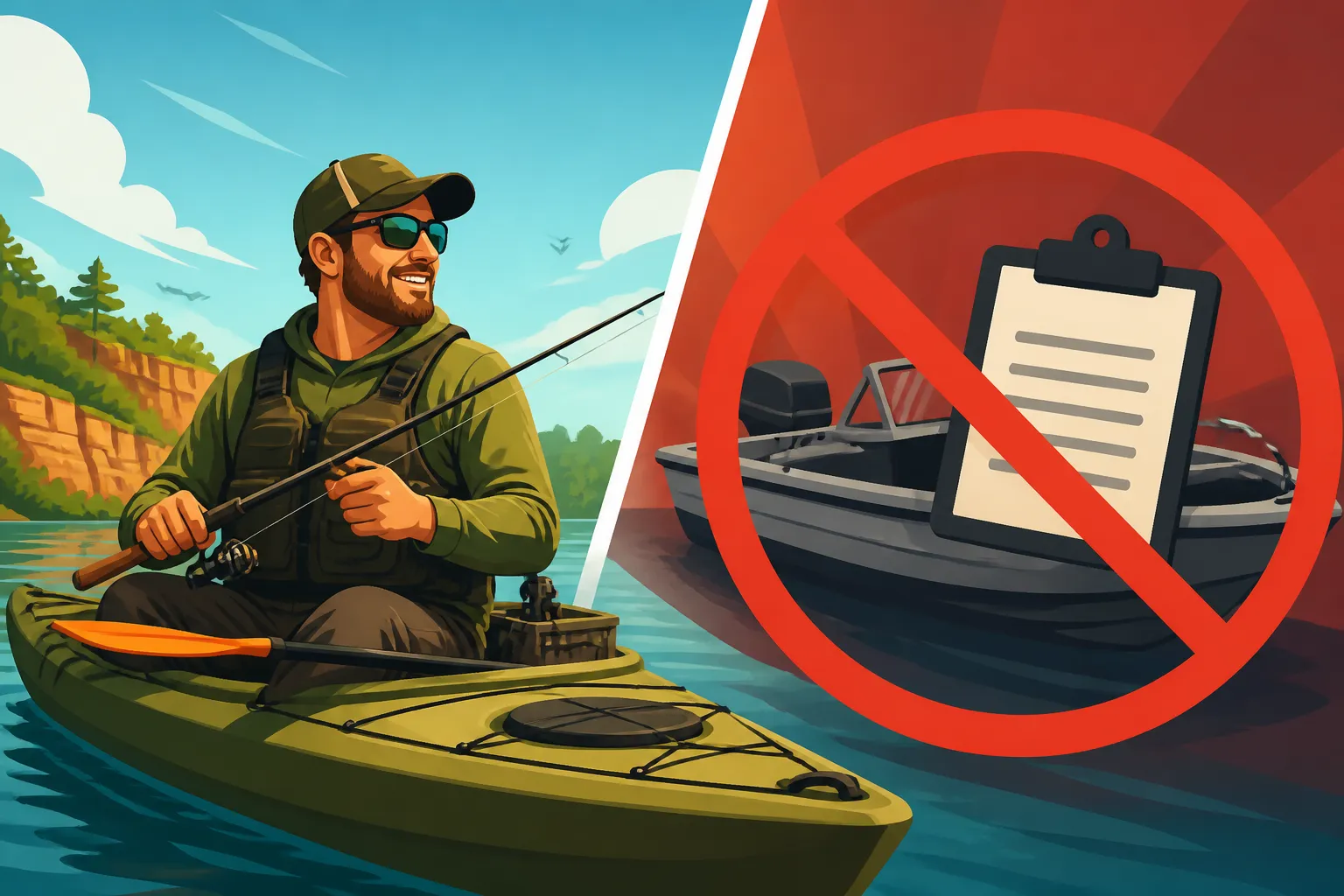
The golden rule for kayaks in Oklahoma is this: if your kayak is non-motorized and less than 16 feet in length, it is generally exempt from registration. That's a huge deal for the vast majority of recreational and fishing kayaks out there. Think about your average sit-on-top fishing kayak or your touring kayak for exploring quiet coves – most of these are designed to be propelled by a paddle, and many fall under that 16-foot mark. This exemption is a deliberate choice by the state to encourage human-powered recreation and reduce administrative burden for smaller, environmentally friendly vessels. It's why many kayak anglers simply don't have to worry about getting those stickers or numbers on their boat. When considering Are Kayaks Exempt From Registration in Oklahoma?, this length and propulsion detail is absolutely key.
| Vessel Type | Motorized? | Length Consideration | Registration Required? |
|---|---|---|---|
| Bass Boat | Yes | Any | Yes |
| Jon Boat (w/ motor) | Yes | Any | Yes |
| Kayak (non-motorized) | No | Under 16 feet | No (Exempt) |
| Kayak (non-motorized) | No | 16 feet or over | Yes |
| Kayak (with motor) | Yes | Any | Yes |
| Canoe (non-motorized) | No | Under 16 feet | No (Exempt) |
| Canoe (with motor) | Yes | Any | Yes |
| Paddleboard | No | Any | No (Exempt) |
When a Kayak Does Need to Be Registered
It’s crucial to understand that not all kayaks are exempt. There are specific scenarios where your beloved fishing kayak will, indeed, need to go through the registration process, just like any other powerboat. Misunderstanding these exceptions can lead to unexpected encounters with game wardens and potential fines.
First and foremost, if you decide to equip your kayak with a motor, whether it's a small electric trolling motor or a tiny outboard, it instantly becomes a "motorized vessel" in the eyes of the law. This means it's no longer exempt, regardless of its length. Many kayak anglers love the idea of a little extra thrust, especially on larger lakes like Lake Texoma or Grand Lake O' the Cherokees, where covering long distances can be exhausting. If you’re adding an electric motor, even a tiny one, you’ll need to register your kayak. The convenience of a motor comes with the responsibility of compliance.
Secondly, the length matters for non-motorized kayaks. While most recreational kayaks are under 16 feet, there are some larger tandem kayaks or specialized fishing kayaks designed for multiple anglers or serious gear hauling that exceed this length. If your non-motorized kayak measures 16 feet or longer, then Oklahoma law requires it to be registered. It's not a common situation for a single-person kayak, but it's definitely something to be mindful of if you're looking at a larger model from a retailer like Bass Pro Shops or browsing options on Amazon. Always check the specifications before you buy if you're trying to stay exempt. So, while many might think "all kayaks are exempt," it's really about the specific characteristics of your kayak that determine its registration status. This is why it's so important to really understand Do Kayaks Need to Be Registered in Oklahoma?.
Practical Reasons Kayak Anglers Choose Not to Register (When Exempt)
Even if a kayak angler technically could register their exempt kayak, many choose not to. And frankly, who can blame them? There are several practical considerations that often make the decision for them.
Avoiding Administrative Hassle
Let's be real: nobody enjoys paperwork and dealing with government agencies if they don't have to. The registration process, even for a simple boat, involves filling out forms, providing proof of ownership, potentially having your boat inspected, and then waiting for your stickers and numbers to arrive. For a boat that's essentially a giant paddle, the thought of going through all that hassle just doesn't sit right with many anglers, especially when they know they're legally exempt. It feels like an unnecessary step for a craft that has minimal impact on waterways and doesn't require fuel or extensive maintenance common to powerboats. It's about preserving the simplicity of kayak fishing, which is a big draw for many. The idea of navigating the rules around Oklahoma's 30-Day Boat Registration Deadline Explained just doesn't apply to a non-motorized, under-16-foot kayak, and that's a relief.
Saving on Costs and Fees
While the individual fees for boat registration might not seem astronomical, they do add up. There's the registration fee itself, potentially a titling fee, and then the recurring cost of renewing that registration every year or every few years. For someone who might have spent a few hundred dollars on their kayak, adding annual fees on top of that can feel like an unnecessary burden. Kayak fishing is often chosen for its accessibility and lower entry cost compared to traditional powerboating. Avoiding these fees allows anglers to put that money towards better gear, more bait, or simply enjoying their time on the water without worrying about another bill. While the registration fee calculation is specific for powerboats, you can see how Oklahoma New Boat Registration Fee Cost might give an idea of what other boaters face.
Perception of Enforcement and Risk
Another factor is the perception of enforcement. Game wardens are primarily focused on safety and compliance from motorized vessels, which have a greater potential for high speeds, larger wakes, and more complex safety requirements. While they certainly can and do check kayaks for things like life jackets, the likelihood of a warden pulling over a purely human-powered kayak under 16 feet specifically to check for registration is incredibly low, because they know most are exempt. This isn't to say rules should be ignored, but it's an honest assessment of priorities. Anglers understand that the main focus is on powerboats, making the registration of an exempt kayak seem even more superfluous. However, it's always wise to be aware of Fines for Boating Safety Violations in Oklahoma, even for smaller crafts, as safety rules like wearing a life jacket are still paramount.
Staying Legal and Safe on the Water (Even When Exempt)
Just because your kayak might be exempt from registration doesn't mean you're free from all regulations or that safety should take a backseat. Quite the opposite! Responsible kayak angling means understanding all the rules that do apply and prioritizing your safety and the safety of others.
Essential Safety Gear for Kayaks
Even a small, non-motorized kayak needs critical safety gear. The absolute most important piece of equipment is a Coast Guard-approved personal flotation device (PFD), or life jacket. In Oklahoma, anyone 12 years old and younger must wear a life jacket while on a vessel. For adults, you must at least have one readily accessible on board. Trust me, even the calmest lake can become treacherous unexpectedly, and a life jacket is non-negotiable. I always recommend wearing it, even if you’re an experienced swimmer.
Beyond a life jacket, other essentials include a whistle or other sound-producing device to alert other boaters, especially in low visibility. If you're going to be out during twilight hours or at night, navigation lights are crucial. A white light visible from 360 degrees is typically required. A headlamp isn't enough; you need a proper stern light or a light mounted high enough to be seen from all directions. Check out gear options at Bass Pro Shops or Amazon for reliable Kayak Fishing Gear Every Oklahoma Angler Needs. A first-aid kit, extra paddle, and a way to bail water are also smart additions.
Navigating Waterway Rules
Even without registration, kayaks are still vessels on the water and must adhere to navigation rules. This means understanding right-of-way, staying clear of navigation channels where larger boats operate, and being aware of speed zones. While a kayak can't go very fast, it's still part of the traffic. Always assume larger vessels may not see you, and make yourself as visible as possible. When fishing busy spots like Lake Murray or Keystone Lake, it’s critical to be alert.
Also, remember that fishing licenses are a separate requirement entirely. No matter what kind of vessel you're in, or even if you're bank fishing, if you're over the age of majority and not on a Free Fishing Days in Oklahoma event, you'll need an Oklahoma Fishing License Requirements in Oklahoma. Don't confuse boat registration exemptions with fishing license exemptions! Do Kids Need a Fishing License in Oklahoma? is a good read to clarify requirements for younger anglers.
Respecting Fisheries Regulations
Lastly, all the bag limits, size restrictions, and specific lake regulations apply to kayak anglers just as they do to powerboaters. If you're out chasing bass, you still need to know Oklahoma's Bass Fishing Rules and Limits. The same goes for Crappie Fishing Rules and Limits in Oklahoma and Oklahoma's Catfish Fishing Rules and Limits. Just because your kayak doesn't need registration doesn't mean you get a pass on adhering to these vital conservation rules. Protecting our fish populations is everyone's responsibility.
By understanding these nuances, kayak anglers can continue to enjoy the peace and freedom of the water without unnecessary bureaucratic hurdles, while still being responsible and safe participants in Oklahoma's vibrant fishing community.
Disclaimer
This article is for general informational purposes only and does not constitute professional advice. Laws, prices and regulations vary by location and change over time. Consult a qualified professional for guidance on your specific situation.