How to Catch Crappie at Night Under Lights
Have you ever spent a hot Oklahoma summer day out on the lake, baking in the sun, fighting boat traffic, and wondering why the crappie just weren't biting? It's a common frustration, especially when those elusive slabs seem to disappear as soon as the sun gets high. Well, what if I told you the best crappie fishing often happens when the sun goes down and the lights come on? This guide is all about diving deep into the rewarding world of night crappie fishing under lights, helping you turn those frustrating daytime trips into productive, peaceful nocturnal adventures.
Why Night Fishing for Crappie Under Lights is a Game-Changer
There’s something magical about being on an Oklahoma lake after dark. The hustle and bustle of daytime traffic fades, replaced by the gentle hum of crickets and the ripple of water. But it’s not just the peace and quiet that makes night fishing so appealing; it’s incredibly effective for crappie. When you combine the natural nocturnal habits of crappie with a strategically placed light, you're setting yourself up for some serious action.
The Science Behind the Light
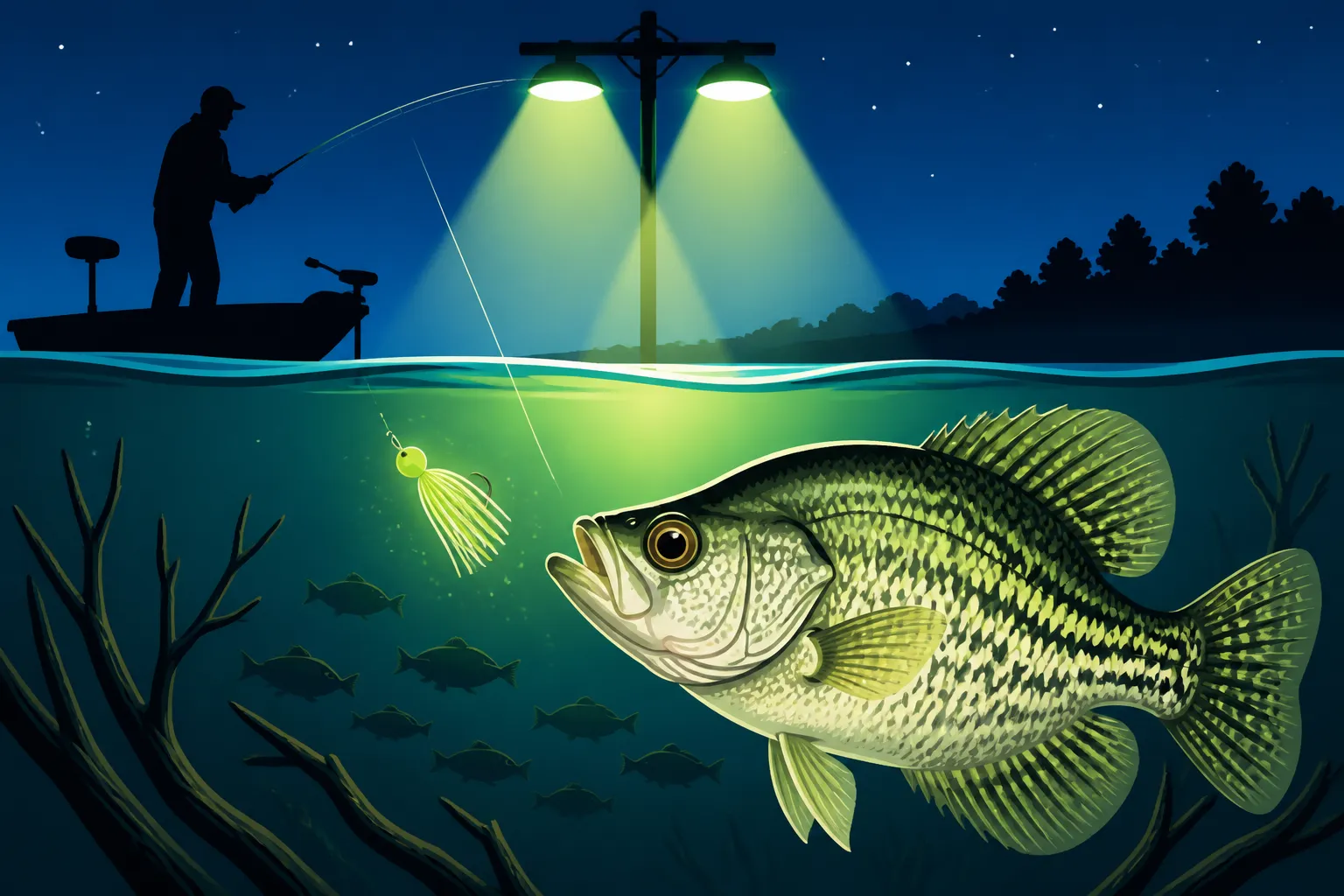
It might seem counterintuitive to shine a bright light into the water when fish are supposed to be shy, but there’s a whole ecosystem at play that makes it work perfectly for crappie. The process starts with phytoplankton and zooplankton – tiny, microscopic organisms that are the very bottom of the aquatic food chain. These organisms, much like moths to a flame, are drawn to the artificial light source. As they congregate, they attract smaller baitfish, like shad and minnows, which are their primary predators.
And guess what loves to eat those small baitfish? That’s right, crappie! They position themselves on the edges of the illuminated area, using the cover of darkness to ambush the baitfish that are mesmerized by the light. It's a chain reaction, creating a localized feeding frenzy that can last for hours. The light essentially creates a perfectly stocked pantry for the crappie, making them much easier to locate and entice. Different water clarities will affect how far the light penetrates and thus how wide your "pantry" extends, so keep that in mind when choosing your light and location.
Beating the Heat and the Crowds
Let’s be honest, Oklahoma summers can be brutal. Spending hours under the scorching sun isn’t everyone’s idea of a relaxing day, and it certainly doesn't make the fish any happier either. Crappie, like most fish, become less active in extremely hot surface waters during the day, often retreating to deeper, cooler sanctuaries. Night fishing entirely bypasses this problem. The cooler air temperatures make for a much more comfortable experience for anglers, and the water temperatures can sometimes bring crappie up from the depths as well.
Beyond comfort, the lack of boat traffic is a huge bonus. Lakes like Lake Eufaula or Grand Lake O' the Cherokees can be veritable highways during peak daylight hours, with recreational boaters, jet skiers, and other anglers creating constant noise and waves. At night, most of that activity disappears. You’ll have vast stretches of water to yourself, allowing for a more focused and peaceful fishing experience. Less disturbance means fish are more likely to be active and less wary, giving you a distinct advantage. If you're tired of fighting for space, night fishing offers a serene escape. You can also gain an edge by understanding when the fish are most active, and often that means during times of less disturbance, which is frequently at night or during the low light hours of dawn and dusk, as covered in a post about the Best Time of Day to Catch Crappie.
Essential Gear for Your Night Crappie Adventure
Getting set up for night crappie fishing under lights doesn't require a complete overhaul of your tackle box, but there are a few specialized items and considerations that will significantly increase your success and comfort. Think of it as building a little nighttime oasis for both you and the crappie.
Lighting the Way: Types of Fishing Lights
The cornerstone of night crappie fishing is, of course, the light. There are several options, each with its own advantages, depending on your setup and fishing style. You can find a wide variety of these options available for purchase through retailers like Amazon.
- Floating Lights: These lights sit on the surface of the water, often tethered to your boat or a stake if you're bank fishing. They're generally easy to deploy and retrieve. Many modern floating lights are LED, making them energy-efficient and bright, powered by a 12V battery. They illuminate a cone of light directly beneath them, and you'll often see the plankton and baitfish gathering directly under and around them. They're excellent for shallower water or when you want to attract fish closer to the surface.
- Submersible Lights: These are often considered the most effective for drawing fish from deeper water. Submersible lights are weighted and designed to be dropped directly into the water, sometimes suspended at various depths. They reduce surface glare and penetrate the water more effectively, drawing fish from a wider area and often to the depth where crappie are actually holding. Green lights are particularly popular for crappie, as the wavelength of green light is thought to penetrate water best and be most attractive to the aquatic food chain. White lights are also effective. You can typically find various submersible lights on Amazon that run off 12V batteries, providing hours of illumination.
- Rigging: No matter which type you choose, placement is key. For boat fishing, try to position your lights off the side of your boat, away from the engine or any noisy equipment. This keeps the light (and the fish) at a comfortable distance while still allowing you to cast and fish effectively into the illuminated zone. If you're fishing near structure like brush piles or docks, deploy your light close to these areas to draw fish out of cover and into your strike zone.
Rods, Reels, and Line for Night Crappie
When the lights are on and the crappie are feeding, their bites can be incredibly subtle, especially at night when your visual cues are limited. This makes sensitive gear absolutely crucial.
- Rods: Opt for an ultralight or light action spinning rod, typically in the 6-foot to 7-foot range. A fast or extra-fast tip is preferable, as it will help you detect those faint taps and bites. Graphite rods are excellent for sensitivity. You're not casting heavy lures, so a delicate touch is more important than raw power.
- Reels: Pair your sensitive rod with a small, lightweight spinning reel. The key here is a smooth drag system, as even a small crappie can put up a good fight on light line, and you don't want any jerky movements that could break your line.
- Line: Light line is non-negotiable for crappie, especially at night. Spool your reel with 4-pound or 6-pound test monofilament or fluorocarbon. Monofilament offers a little stretch, which can be forgiving with aggressive crappie, while fluorocarbon is virtually invisible underwater and offers increased sensitivity. Some anglers prefer high-visibility line for easier bite detection against the dark background, but often the crappie are less line-shy at night than during the day.
Baits and Lures That Shine in the Dark
Crappie can be picky, but at night under lights, they often become more aggressive. Having a few go-to baits and lures can make all the difference. For more detailed insights into what crappie prefer, check out our guide on the Best Bait for Crappie in Oklahoma.
- Live Minnows: The classic, and often the most effective. Crappie absolutely love live minnows. Rig them through the lips or just behind the dorsal fin on a small hook (size 4 or 6) under a slip bobber or directly below a tiny jighead. The natural movement of a live minnow is irresistible to crappie feeding on baitfish.
- Jigs: Small jigs are fantastic. Think 1/32 ounce to 1/16 ounce. Colors like chartreuse, white, black, or combinations thereof are highly visible in the artificial light. Many anglers swear by glow-in-the-dark jigs for night fishing. You can tip these jigs with a small minnow for added attraction or with a crappie nibbler. Slow, subtle jigging motions are usually best, mimicking a wounded baitfish. Our guide on Crappie Jigging Techniques offers great advice on how to present these effectively.
- Jigging Spoons/Blade Baits: If you're targeting crappie suspended deeper under the lights or if they're particularly active, a small jigging spoon or blade bait can be deadly. These lures flash and vibrate, attracting attention from a distance. A quick lift and fall presentation can often trigger a strike from aggressive crappie.
Essential Comfort and Safety Gear
Night fishing is a blast, but safety and comfort are paramount when you're out on the water after dark.
- Headlamps and Flashlights: These are absolute necessities. A good headlamp keeps your hands free for rigging, baiting, and landing fish. Look for one with a red light option; red light helps preserve your night vision, which is crucial for safety and spotting subtle bites. A powerful handheld flashlight is also good for scanning the water for hazards or helping with navigation.
- Bug Spray: Trust me, you'll want it. Mosquitoes and other biting insects are often more active at night, especially near the water.
- Snacks and Drinks: Keep your energy up! A cooler with refreshments and some easy-to-eat snacks makes the long night much more enjoyable.
- Proper Boat Safety Equipment: This is non-negotiable. Ensure you have all the necessary safety gear on board, including Coast Guard-approved life jackets for everyone, a throwable flotation device, a whistle or horn, and navigation lights. This is especially critical at night when visibility is limited. Reviewing the Oklahoma Life Jacket and PFD Rules for Boaters is a must before any nighttime outing, and remember that our guide on the Oklahoma Boat Safety Equipment Checklist can help you double-check everything. You can find excellent options for bug spray and even marine-grade first aid kits on Amazon.
Mastering the Art of Night Crappie Fishing Under Lights
Once you have your gear ready, the real fun begins: putting it all into action. Night fishing for crappie under lights is less about casting long distances and more about strategic placement and subtle presentation.
Setting Up Your Crappie Hotspot
Choosing the right location and properly deploying your lights are the first crucial steps to creating your night crappie hotspot.
- Location, Location, Location: Crappie love structure. Look for brush piles, submerged timber, old creek channels, dock pilings, or bridge structures. These are places crappie naturally congregate during the day, and they'll often return to them at night. On big lakes like Grand Lake O' the Cherokees, Keystone Lake, or Lake Eufaula, bridge pilings and deep docks can be fantastic. You're essentially using your light to draw them out from their daytime hideouts. For general guidance on where to find these fish, consult our list of the Best Crappie Lakes in Oklahoma.
- Anchoring Effectively: Secure your boat firmly. You don't want to be drifting away from your light source or bumping into structure. Use two anchors if necessary, one off the bow and one off the stern, to keep your boat perfectly positioned. This also helps with subtle bite detection, as boat movement can mask those light taps.
- Deploying Lights and Waiting: Once anchored, deploy your lights. If using submersible lights, lower them to different depths to see where the baitfish gather. If using floating lights, position them where they best illuminate your fishing zone. Now, the most important part: patience. It takes time for the plankton to gather, then the baitfish, and finally the crappie. Give it at least 30 minutes to an hour before you expect consistent action. Think of it as inviting guests to a dinner party – they won't all show up at once! You're essentially letting the ecosystem build itself, a process which is detailed in our broader advice on Summer Night Fishing Tips for Oklahoma Reservoirs.
Techniques for Tempting the Crappie
With your hotspot established, it’s time to focus on presentation. Crappie bites at night can be incredibly light, so finesse is the name of the game.
- Vertical Jigging Under the Lights: This is perhaps the most common and effective technique. Drop your small jig (tipped with a minnow or crappie nibbler) directly under or very close to the light source. Allow it to sink slowly, watching your line carefully for any twitch or pause. Crappie often hit on the fall. Once it reaches a certain depth, begin a slow, subtle retrieve, gently lifting and dropping the rod tip. Experiment with different depths until you find where the crappie are holding. They might be right under the surface, or 10-15 feet down. Our Crappie Jigging Techniques article can provide even more specialized advice on this method.
- Casting and Retrieving Around the Edges: Sometimes the crappie are shy and prefer to stay just outside the brightest part of the light cone, ambushing baitfish that venture too close. Cast your jig or minnow rig to the darker edges of the illuminated area and retrieve it slowly into the light. This often fools larger, more cautious crappie.
- Slip Bobber Rigs: These are excellent for suspending a live minnow or a jig at a precise depth. Set your bobber stop to the depth where you’re seeing baitfish or getting bites, then cast it out and let it sit. The bobber acts as a visual indicator for strikes, which can be invaluable at night. This method is similar to what's often called tightlining, which is further explained in our guide on Crappie Tightlining Techniques.
Reading the Bites and Adapting
Nighttime crappie bites can be so subtle they feel like nothing more than extra weight on your line, or a slight twitch. It takes practice and keen observation to master.
- Watch Your Line: In the low light, your line is often your best indicator. Any unnatural movement, a slight twitch, a sudden slackening, or a subtle pull, could be a bite. Keep your line taut enough to feel, but not so tight that it prevents the fish from taking the bait naturally.
- Feel for Taps and Resistance: With sensitive gear, you'll learn to feel those faint "thumps" or "ticks." If anything feels different, set the hook! It’s better to set the hook on a snag than miss a fish.
- Adjusting and Experimenting: Don't be afraid to change things up if you're not getting bites. Try different depths – crappie might move up or down throughout the night. Experiment with different colors of jigs or retrieve speeds. Sometimes, a change from a steady retrieve to a stop-and-go action can be the trick. If you're not finding them shallow, remember that knowing How to Find Crappie in Deep Water in Summer can pay off, even at night. The crappie that are attracted to your lights might be holding deeper than the baitfish they are feeding on.
Here’s a quick overview of some common night crappie setups:
| Light Type | Recommended Depth for Light | Primary Bait Type | Best Conditions / Notes |
|---|---|---|---|
| Floating LED Light | Surface to 5-10 ft | Minnows, Small Jigs | Good for shallower water, minimal boat traffic, easy setup |
| Submersible Green LED | 5-20+ ft | Minnows, Jigs, Spoons | Excellent for deeper water, less surface glare, attracts from wider area |
| Submersible White LED | 5-20+ ft | Minnows, Jigs, Spoons | Similar to green, sometimes preferred in clearer water |
| Headlamp/Flashlight | N/A (for angler use only) | N/A | Essential for rigging, safety, and spotting line |
Rules, Regulations, and Responsible Night Fishing
While the atmosphere of night fishing is relaxed, the rules and regulations are just as serious as during the day. It's vital to be informed and practice responsible angling.
Understanding Oklahoma's Night Fishing Regulations
Just because the sun is down doesn't mean the rules go away. All standard Oklahoma fishing regulations apply to night fishing.
- Fishing License: You absolutely need a valid Oklahoma fishing license. There are no exemptions for night fishing. Make sure you understand the Oklahoma Fishing License Requirements in Oklahoma before you head out.
- Bag and Size Limits: The daily bag and size limits for crappie remain in effect. For example, the statewide crappie bag limit is 37 fish per day, but certain lakes have stricter limits, like Fort Gibson Lake's 15-fish limit or Tenkiller Ferry Lake's 10-inch minimum size. Always consult the current Oklahoma Fishing Guide for specific rules on the body of water you're fishing. Our guide to Crappie Fishing Rules and Limits in Oklahoma provides more detail on these important regulations. Game wardens do patrol at night, so being compliant is key.
- Local Regulations: Always be aware that some lakes or areas might have specific rules regarding night fishing or curfews. This is less common for general fishing but can apply to certain parks or designated areas. A quick check with the Oklahoma Department of Wildlife Conservation (ODWC) website or local signage is always a good idea.
Environmental Responsibility and Safety Tips
Part of enjoying the peace of night fishing is ensuring you leave the environment as pristine as you found it and stay safe while doing so.
- Pack It In, Pack It Out: This is the golden rule of outdoor recreation. Any trash you bring onto the water – empty bait containers, food wrappers, old fishing line – must come off with you. Littering is not only illegal but also harms the environment and detracts from everyone's experience. A simple mesh trash bag from Amazon can make this easy.
- Noise Awareness: While many people enjoy the quiet of night fishing, remember that you might be near residential areas or other campers. Keep noise levels down, especially when running generators for lights or moving your boat.
- Safe Boating Practices: Nighttime boating carries inherent risks due to reduced visibility. Always have your navigation lights on, go slow, and stay aware of your surroundings. Avoid alcohol. If you're moving your boat after dark, always have a sober, attentive operator and ideally a spotter. Make sure all your Oklahoma Boat Safety Equipment Checklist items are not just present, but functional. Always be extra cautious when operating any vessel in the dark.
By following these guidelines and tips, you'll be well on your way to enjoying some of the most productive and peaceful crappie fishing Oklahoma has to offer, long after the sun has set.
Disclaimer
Please be aware that fishing regulations, license requirements, and local rules can change. Always consult the official Oklahoma Department of Wildlife Conservation (ODWC) website or their current fishing regulations guide for the most up-to-date and accurate information before planning your fishing trip. This guide is for informational purposes only and should not be considered a substitute for official sources.