Pros and Cons of Bank Fishing vs Boat Fishing
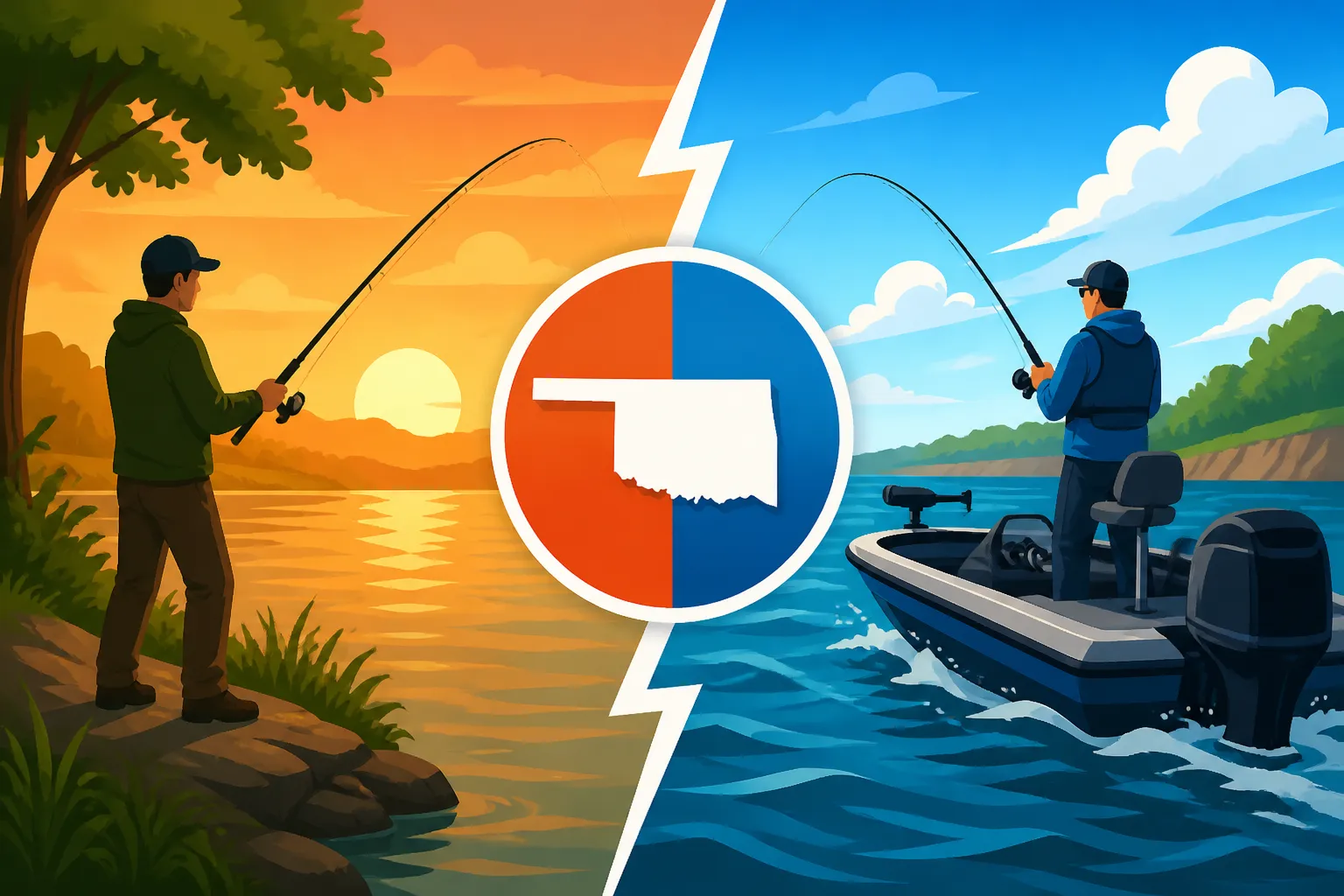
One of the biggest questions an angler faces, especially when exploring the vast and diverse waters of Oklahoma, is whether to cast from the bank or venture out onto the water in a boat. It's a classic dilemma that pits convenience and simplicity against freedom and expansive access, each with its own set of challenges and rewards. This guide will walk you through the distinct advantages and drawbacks of both bank fishing and boat fishing, helping you decide which approach best suits your angling style, budget, and local Oklahoma fishing adventures.
The Allure of Bank Fishing in Oklahoma: Pros and Cons
Bank fishing is often where many of us first fall in love with angling. It's accessible, straightforward, and doesn't require a significant upfront investment, making it incredibly popular across Oklahoma's countless ponds, lakes, and rivers. But while it offers a tranquil way to connect with nature, it also comes with certain limitations that serious anglers eventually encounter.
Bank Fishing Pros: Accessibility and Simplicity
The beauty of bank fishing really lies in its low barrier to entry. You don't need a massive budget or specialized equipment to get started, which is fantastic for beginners, families, or anyone looking for a spontaneous fishing trip. Just grab a rod, a small tackle box, and head to your nearest public access point, state park, or even a local farm pond if you have permission. You’ll find plenty of spots around major reservoirs like Lake Eufaula or Grand Lake that have designated bank access, fishing piers, or even just cleared shorelines that are perfect for setting up camp for the day. This freedom from elaborate planning means you can often decide on a whim to go fishing, which is a huge bonus in a busy life.
Another big advantage is the sheer simplicity of the gear involved. A reliable spinning rod and reel, some basic terminal tackle like hooks, weights, and bobbers, and a selection of common baits or lures are often all you need. You can find excellent starter kits or individual components on platforms like Amazon that won't break the bank. This minimalist approach means less to pack, less to maintain, and less to worry about. You're focused solely on the act of fishing, observing the water, and enjoying the surroundings. For those who enjoy a more relaxed pace or want to introduce children to fishing, the ease of bank fishing is truly unmatched. You don't have to worry about boat ramp etiquette, engine maintenance, or expensive electronics; it’s just you, your line, and the water. You can learn more about getting started with Bank Fishing Tips for Beginners.
Bank Fishing Cons: Limitations and Crowds
While bank fishing is undeniably convenient, it does come with some significant drawbacks. The most prominent is the limited access to prime fishing spots. Fish, especially larger, more wary species, often hold to deeper structures, submerged cover, or offshore humps that are simply unreachable from the bank. You’re typically confined to casting distance from shore, which means you’re often fishing the same, pressured water as everyone else who’s banking it. This can lead to slower fishing, smaller catches, or simply less diverse opportunities. Imagine trying to target schooling striped bass in the middle of Lake Texoma from the bank – it’s just not going to happen effectively.
Furthermore, popular bank fishing spots, particularly around urban areas or well-known state parks, can get incredibly crowded. This can detract from the peaceful, solitary experience many anglers seek. You might find yourself elbow-to-elbow with other fishermen, tangled lines, or dealing with noise and distractions that take away from the natural serenity of the outing. Finding secluded, productive bank fishing can be a challenge, often requiring extensive scouting or local knowledge. And let's not forget mobility: once you've set up, moving to a different spot means packing up all your gear and relocating, which can be cumbersome and time-consuming, especially if you're trying to cover a lot of ground. While it’s certainly the cheapest way to get started, the trade-off is often a compromise on flexibility and potential.
Diving into Boat Fishing in Oklahoma: Advantages and Drawbacks
Boat fishing opens up a whole new world for anglers in Oklahoma, allowing them to explore vast stretches of water, target specific structures, and access areas that bank anglers can only dream of. From small john boats on a quiet river to powerful bass boats on a major reservoir, the options are as varied as the fish species themselves. However, this enhanced capability comes with its own set of responsibilities, costs, and learning curves.
Boat Fishing Pros: Freedom and Reach
The primary advantage of fishing from a boat is the unparalleled access it provides. You can navigate to remote coves, explore miles of shoreline, fish deep channels, or hover over submerged brush piles that hold trophy fish. This freedom to roam allows you to escape crowded bank areas and discover untouched waters, significantly increasing your chances of finding actively feeding fish. Whether you're chasing crappie in brush piles on Lake Eufaula, trolling for striped bass on Lake Texoma, or hunting for largemouth bass tucked into hydrilla beds, a boat puts you right on top of the action. This versatility also allows for a wider range of techniques, from deep jigging to slow trolling, expanding your angling repertoire.
Beyond access, a boat also provides a platform for carrying more gear, offering amenities like livewells to keep your catch fresh, and even protection from the elements with canopies or cabins. You can bring multiple rods rigged for different presentations, a wider array of baits and lures, and comfort items like coolers and chairs. For serious anglers, a fish finder becomes an invaluable tool, allowing you to locate schools of fish, identify underwater structure, and understand depth contours, turning fishing into a much more strategic pursuit. This level of control and exploration profoundly enhances the fishing experience, often leading to more consistent success and bigger catches. Learning Boat Fishing Techniques for Beginners can really unlock your potential.
Boat Fishing Cons: Cost and Complexity
The biggest hurdle for most aspiring boat anglers is the significant financial investment. Owning a boat, even a small one, comes with a myriad of costs: the initial purchase price, a trailer, registration and titling fees, insurance, maintenance, fuel, and storage. These expenses can quickly add up, turning a simple hobby into a substantial financial commitment. Oklahoma Boat Registration and Titling Rules Explained covers some of these initial costs. Furthermore, specialized boating gear like a reliable trolling motor, quality fish finders, and a full complement of safety equipment can run into the hundreds or even thousands of dollars. You can find some good deals on marine electronics and accessories on Amazon, but it's still a considerable outlay.
Beyond the monetary aspect, boat fishing introduces a layer of complexity that bank fishing simply doesn't have. You need to learn how to launch and retrieve your boat, navigate safely on the water, understand maritime rules and regulations, and perform routine maintenance. Breaking down on the water can be a serious and costly predicament. Factor in the need for life jackets for everyone on board, including specific rules for children Life Jacket Rules for Kids 12 and Under on Oklahoma Boats, and the responsibility grows. Inclement weather, strong winds, or rough water conditions can quickly turn a pleasant day into a dangerous situation, requiring judgment and experience to manage. Even a simple day out involves more planning and effort compared to just grabbing a rod and walking to the nearest bank.
Making the Choice: Which Fishing Style Suits You?
Deciding between bank fishing and boat fishing really boils down to your personal priorities, resources, and what you hope to get out of your time on the water. There's no single "better" option; only the one that aligns best with your individual circumstances and angling aspirations.
Budget and Time Investment
Your budget is likely the most significant factor. If you're looking for an inexpensive hobby that you can pick up whenever the mood strikes, bank fishing is unequivocally the way to go. You can have a fully functional setup for well under a hundred dollars, and your ongoing costs are minimal—mostly bait and maybe a new line now and then. This makes it perfect for students, those on a fixed income, or anyone who can't justify the expense of a boat. It's also ideal if your fishing opportunities are sporadic, as you won't feel pressured to use an expensive boat regularly to justify its cost.
Boat fishing, conversely, is a much larger investment of both money and time. Beyond the initial purchase and ongoing expenses, there's the time spent on maintenance, cleaning, trailering, and fueling. If you only get to fish a few times a year, the cost per trip can become astronomical. However, if you're an avid angler who plans to spend dozens of days on the water annually, the investment might be well worth it, as the added access and opportunities can dramatically improve your success and enjoyment. Consider how often you realistically plan to fish before diving into boat ownership.
Target Species and Location Access
What kind of fish do you dream of catching, and where are you planning to fish in Oklahoma? If your passion is catching panfish like bluegill and crappie in farm ponds, or channel catfish in accessible river bends, then bank fishing will serve you perfectly. Many public fishing areas, especially within Oklahoma City or Tulsa's urban fishing program, are specifically designed for bank anglers targeting these common species. Best Bank Fishing Spots Setup Tips can help you maximize your success from shore.
However, if you're obsessed with trophy largemouth bass hiding in offshore timber, giant blue catfish in deep river channels, or chasing the thrilling runs of striped bass in the main lake basins of Texoma or Keystone, a boat becomes almost essential. These species often require you to reach specific structures or open water areas that are simply out of casting range from the shore. Similarly, if you plan to explore multiple large reservoirs across the state, a boat gives you the mobility to do so efficiently. For niche angling, like Paddlefish Snagging Season in Oklahoma on Grand Lake, a boat is generally a requirement to access the best snagging grounds.
Skill Level and Comfort
For beginners or those introducing youngsters to the sport, bank fishing offers a gentler learning curve. You can focus on casting, knot tying, and fish handling without the added stress of boat operation, navigation, or docking. It’s a safe, controlled environment where the primary challenge is enticing a bite. Many families find bank fishing at a local pond or reservoir to be a fantastic, low-stress way to spend quality time outdoors.
Boat fishing requires a higher level of skill and confidence. Beyond fishing techniques, you'll need to develop proficiency in boat handling, reading the water, understanding weather patterns, and potentially using advanced electronics. There's also the element of personal comfort with open water and potentially adverse conditions. If you're prone to seasickness or simply prefer solid ground, then bank fishing will always be more enjoyable. Consider taking a boating safety course if you're new to operating a vessel; it can dramatically improve your confidence and safety on the water.
Here’s a quick overview to help you weigh your options:
| Feature | Bank Fishing | Boat Fishing |
|---|---|---|
| Accessibility | High (walk-up, public piers) | Moderate to Low (boat ramps, parking, launching) |
| Cost | Very Low (rod, reel, basic tackle) | High (boat, trailer, motor, fuel, maintenance, insurance, registration) |
| Reach | Limited (casting distance from shore) | Extensive (anywhere on the water body) |
| Gear Required | Minimal, portable (backpack, small tackle box) | Extensive, specialized (multiple rods, electronics, safety gear, livewell) |
| Learning Curve | Low (focus on fishing basics) | High (fishing + boat operation, navigation, safety) |
| Flexibility | Low (difficult to move spots) | High (can move anywhere at will) |
| Crowd Impact | High (popular spots can be very crowded) | Low (can escape crowds to open water/remote areas) |
| Safety | Generally low risk | Higher risk (weather, navigation, mechanical issues) |
| Comfort | Depends on spot (standing, sitting on ground) | High (chairs, shelter, amenities) |
Ultimately, both bank fishing and boat fishing offer incredible experiences on Oklahoma's beautiful waters. The "best" choice is the one that allows you to enjoy your passion, stay within your means, and feel comfortable and confident in your pursuit of that next big catch. Many anglers even embrace both, depending on the day, the target species, or the company they keep.
Essential Gear Considerations for Both Styles
Regardless of whether you choose to fish from the bank or a boat, having the right gear can make a world of difference in your success and enjoyment. The essentials might overlap, but the quantity and specialization often vary significantly.
Key Gear for Bank Anglers
For the bank angler, portability and versatility are paramount. You’re often carrying your gear a fair distance, so you want to be efficient. A sturdy backpack or tackle bag is a must, allowing you to comfortably carry your essentials. Inside, you’ll want a small, organized tackle box with a selection of hooks (various sizes for different baits), sinkers (split shot and a few egg sinkers), bobbers, swivels, and perhaps a few go-to lures like small jigs, spinners, or soft plastic worms. You can find excellent, compact tackle bags on Amazon that come pre-stocked or are easy to customize. A pair of pliers for hook removal and line cutting, a small stringer or cooler for your catch, and a comfortable folding chair or bucket to sit on will complete your setup.
Choosing your rod and reel is critical. A medium-light to medium power spinning rod, typically 6 to 7 feet long, paired with a matching spinning reel spooled with 6-10 lb test monofilament or fluorocarbon line, is a fantastic all-around setup for bank fishing. This combination is versatile enough to handle everything from panfish to decent-sized bass and catfish you might encounter from shore. Remember to check local regulations for specific areas, as some urban fishing ponds might have special rules regarding bait or tackle. For instance, in areas with a lot of heavy cover, you might opt for a slightly heavier line or a more powerful rod to help pull fish out.
Essential Gear for Boat Anglers
Boat anglers have the luxury of carrying more gear, allowing for greater specialization and preparedness. Beyond multiple rod and reel setups tailored for different techniques (e.g., a heavy action rod for bottom fishing catfish, a medium action rod for throwing bass lures, or a sensitive crappie jigging rod), you’ll need a larger tackle box or storage system. This should include a broader range of lures, baits, and terminal tackle to match the diverse opportunities that boat fishing provides. Having a good Best Tackle Box Setup for a Day on the Water makes all the difference.
Safety equipment is non-negotiable for boat anglers. This includes Coast Guard-approved life jackets for every person on board, a throwable personal flotation device (PFD) if your boat is 16 feet or longer, a fire extinguisher, signaling devices (like a whistle or horn), navigation lights if you'll be out at dusk or dawn, and a first-aid kit. Electronic tools like a reliable fish finder with GPS capabilities can be a game-changer for locating structure and navigating safely, especially on Oklahoma's expansive reservoirs. Don't forget an anchor, a fully charged battery for your trolling motor (if you have one), and a plan for communication in case of emergency. Even the small details like having a good pair of polarized sunglasses to cut glare can significantly enhance your experience when out on the open water.
Disclaimer
This article is for general informational purposes only and does not constitute professional advice. Laws, prices and regulations vary by location and change over time. Consult a qualified professional for guidance on your specific situation.