Best Time of Year to Catch Crappie in Spring and Fall
If you've ever stood on the bank of an Oklahoma lake, wondering why the crappie bite seems to be on fire one week and completely dead the next, you're not alone. Crappie can be finicky, and pinning down their patterns can feel like trying to solve a complex puzzle, especially when it comes to the prime times of spring and fall. This guide is here to untangle those seasonal mysteries, giving you the insights and strategies you need to consistently catch crappie when they're most active.
Understanding Crappie Movement: Why Spring and Fall are Peak Seasons
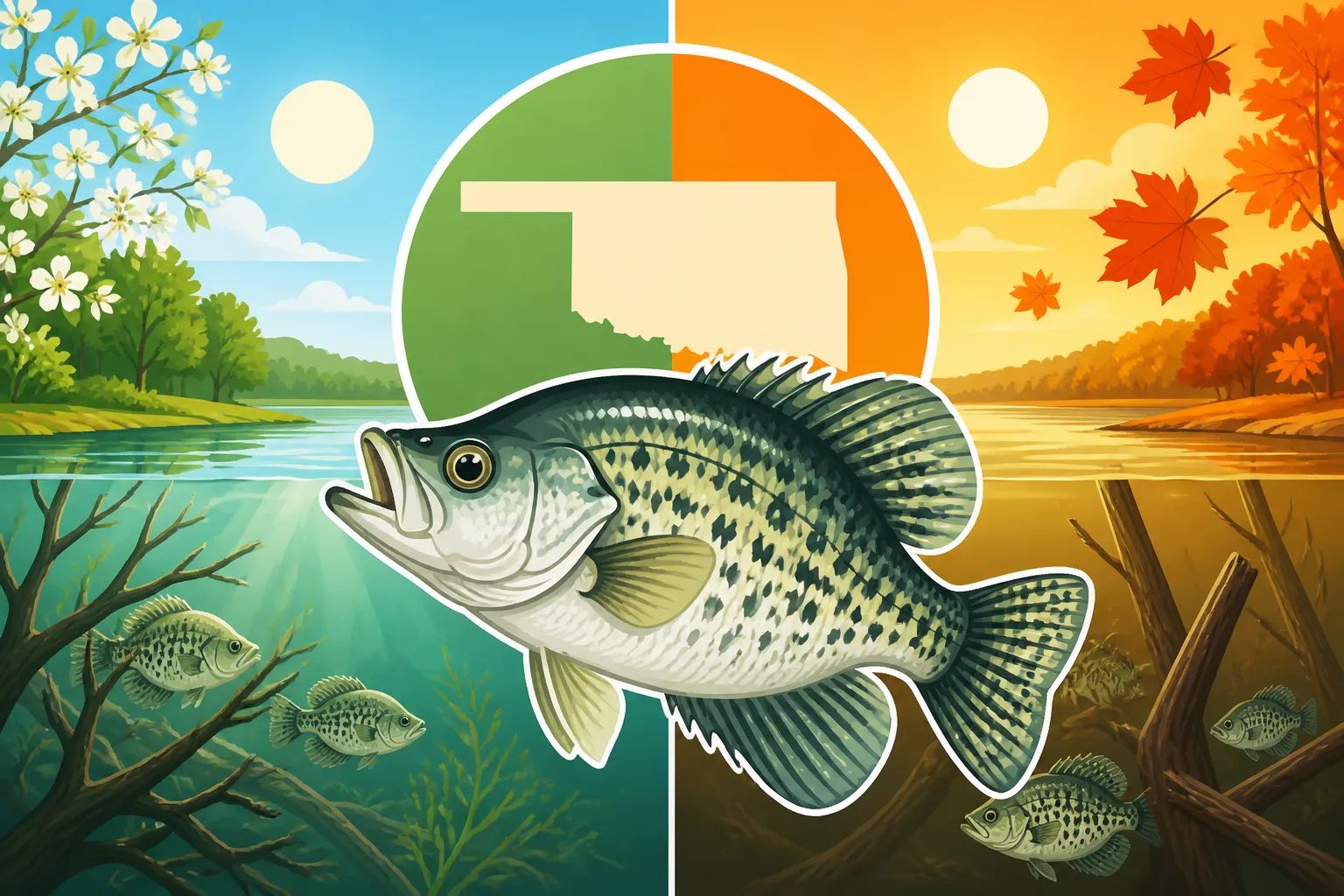
Crappie, whether you're chasing black or white varieties, are profoundly influenced by water temperature and their instinctual need to feed and reproduce. While you can certainly catch crappie year-round in Oklahoma, spring and fall stand out as the absolute best times because these seasons align perfectly with their most predictable and aggressive behaviors. It’s all about comfort and survival for these fish.
The Crappie Comfort Zone: Temperature is Key
Think of crappie as having a preferred "comfort zone" for water temperature, much like we have a favorite temperature for our homes. For crappie, this zone typically falls between the upper 50s and low 70s Fahrenheit. In Oklahoma, spring and fall offer these ideal conditions, triggering specific activities that make them easier for anglers to target. When the water is too cold in winter or too hot in summer, crappie tend to become lethargic and scatter to deeper, more stable environments, making them harder to locate and tempt.
During spring, as the water slowly warms up from its winter chill, crappie begin to move from deep wintering holes into shallower areas to stage for the spawn. They're driven by the urge to reproduce, and this movement brings them within much closer reach of anglers, both from boats and the bank. It's a period of high activity as they feed aggressively to build energy for the strenuous spawning process. The same can be said in reverse for fall. As the scorching summer heat gives way to cooler temperatures, the water cools down, invigorating crappie and pushing them into shallower feeding zones to bulk up before winter. They're aware that colder, leaner times are ahead, so they feed with gusto.
Instinctive Behaviors: Spawning and Pre-Winter Feeding
These two peak seasons are defined by distinct, powerful instincts. In spring, the spawning urge is paramount. Crappie will migrate from deeper main lake channels or creek bends into shallower coves, protected bays, and along brushy banks. They'll seek out submerged cover like brush piles, laydowns, or even dock pilings where they can build nests and lay eggs. This congregating behavior makes them incredibly vulnerable to anglers who know where to look. You'll often find multiple crappie holding on or near a single piece of cover.
Come fall, the instinct shifts to feeding. After the stresses of summer and the post-spawn recovery, crappie are looking for an easy meal to pack on weight for the lean winter months. They'll often school up and actively pursue baitfish in shallower to mid-depth areas. This can lead to explosive fishing as entire schools of crappie move into an area, attacking jigs and minnows with abandon. It's a race against the clock for them, and a fantastic opportunity for anglers. Understanding these underlying biological drivers helps explain why Crappie Fishing Techniques and Seasonal Patterns in Oklahoma often emphasize these two seasons.
Mastering the Spring Crappie Run in Oklahoma
Spring crappie fishing in Oklahoma is an angler's dream, largely due to the predictable patterns driven by the spawn. The transition from winter's cold to spring's warmth is a magical time when crappie become highly concentrated and aggressive, making them a prime target.
Timing the Spring Crappie Spawn
The exact timing of the crappie spawn in Oklahoma can vary slightly from year to year and even from lake to lake, but it generally kicks off when water temperatures consistently climb into the upper 50s Fahrenheit. This usually translates to late March through May in most parts of the state. Knowing When Do Crappie Spawn in Oklahoma Lakes? is critical. For instance, smaller, shallower lakes or the shallower arms of larger reservoirs will warm up faster than deeper, main lake bodies. This means you might find crappie actively spawning in a shallow northern cove of Lake Eufaula while the deeper, main lake areas are still a week or two away.
The first push of crappie you'll encounter are often the larger males, moving into the shallowest cover, cleaning off nesting sites, and preparing for the females. The females will follow shortly after, lingering just outside the spawning pockets in slightly deeper water before moving in. A consistent warm spell, especially several sunny days in a row, can really kick things into high gear, pushing water temps up rapidly. Conversely, a sudden cold front can temporarily halt the spawn, sending crappie retreating to deeper water until conditions stabilize. Patience and monitoring water temperatures are key indicators for success.
Spring Hotspots and Techniques
When crappie move shallow for the spawn, they're looking for cover and protection. This means focusing your efforts on brush piles, submerged timber, dock pilings, laydowns, and any natural or man-made structure in 2 to 10 feet of water. Pay close attention to protected coves and creeks, especially those with muddy or stained water, as these areas often warm up fastest. Good examples of prime spring crappie locations can be found when researching Best Oklahoma Lakes for a Spring Crappie Run.
For techniques, versatility is your friend. Crappie Jigging Techniques are incredibly effective, especially when paired with a small jig (1/16 to 1/8 ounce) under a slip bobber or tightlined. Colors like chartreuse, white, and clear with glitter are often spring favorites. Tipping your jig with a small minnow can be irresistible to crappie. Another popular method is Crappie Tightlining Techniques, where you vertically jig over or through cover with a minnow or small jig, feeling for those subtle taps. Spider rigging multiple rods with minnows or jigs at different depths can also be very productive, allowing you to cover more water and quickly find the crappie's preferred depth. Remember to present your bait slowly and methodically, as spawning crappie might be less aggressive biters than actively feeding fish.
| Spring Crappie Conditions & Techniques |
|---|
| Water Temperature |
| Key Behavior |
| Primary Locations |
| Effective Baits |
| Recommended Colors |
| Common Techniques |
| Aggression Level |
| Best Time of Day |
Unlocking Fall Crappie Hotspots and Strategies
Just like spring, fall brings another fantastic window of opportunity for crappie anglers in Oklahoma. As the summer heat fades and water temperatures begin to drop, crappie transition from their deeper, lethargic summer patterns back into shallower, more accessible feeding zones. This pre-winter feeding frenzy makes them a prime target for those looking to fill a cooler.
Reading Fall Patterns: Cooling Water and Schooling Behavior
After the long, hot days of summer, the gradual cooling of the water in fall invigorates crappie. As we discussed in How to Read Water Temperature for Better Fishing in Oklahoma, once surface temperatures begin to consistently drop into the low 70s and 60s Fahrenheit, crappie really start to get active. This typically happens from September through November across Oklahoma. Unlike the spring spawn, which sees crappie spread out to individual nesting sites, fall often finds crappie schooling up tightly. They are on the hunt for baitfish, trying to consume as many calories as possible before the lean winter months set in.
This schooling behavior is a significant advantage for anglers. When you find one crappie in the fall, chances are there are many more nearby. These schools will often follow baitfish, moving between different depths and structures throughout the day. A good fish finder can be an absolute game-changer for locating these roving schools, especially on large reservoirs. You might see them suspended over deeper creek channels one moment, and then chasing shad into a shallow cove the next. Pay attention to bird activity, too; diving birds often indicate baitfish pushed to the surface, and crappie won't be far behind.
Fall Lures, Baits, and Tactics
In the fall, crappie are often more aggressive than their spring counterparts because they're purely in a feeding mode. This means you can often get away with slightly larger baits or more active presentations. Minnows, as always, are a staple, and they become even more effective when schools of baitfish are present. However, jigs are equally, if not more, popular during this time. Think about matching the hatch – if you see small shad flickering on the surface, use a jig that mimics their size and color. Silver, white, gray, and blue are excellent choices. Many anglers stock up on a variety of jig types on Amazon to be prepared for changing conditions.
Vertical jigging over submerged brush piles, timber, or along deep creek channel ledges is a classic fall technique. If you have a boat, slowly trolling jigs or minnows at different depths until you hit a productive depth can also be highly effective, especially when crappie are suspended. For bank anglers, casting jigs and slowly retrieving them near brush or drop-offs can yield excellent results. Don't be afraid to experiment with retrieve speeds and jigging motions until you find what the crappie prefer on any given day. Remember, Best Crappie Bait for Oklahoma Reservoirs might vary by location, so bringing a variety is smart.
When it comes to Fall Crappie Fishing Patterns in Oklahoma, many anglers find success focusing on the mouths of major creeks and secondary points that lead into main lake areas. Crappie will use these routes to move shallower to feed. Also, look for deep-water access nearby, as crappie will often move to deeper sanctuaries during cold fronts or overnight.
Key Factors Influencing Spring and Fall Crappie Success
While spring and fall are undeniably the best seasons for crappie fishing in Oklahoma, simply knowing the general season isn't enough. There are several dynamic factors that can significantly influence your success on any given day. Understanding these nuances will help you fine-tune your approach and increase your catch rate.
Weather Fronts and Barometric Pressure
Weather plays an enormous role in crappie behavior. During both spring and fall, cold fronts can be particularly challenging. When a strong cold front passes through, the sudden drop in air temperature and, more importantly, the rising barometric pressure, can make crappie shut down almost completely. They might move deeper, become very lethargic, and refuse to bite anything. If you're planning a trip, try to hit the water before a cold front arrives, during the stable or falling barometric pressure, when fish tend to be more active. After a front, you might need to wait a day or two for the fish to readjust and become active again, or switch to extremely subtle presentations and slower retrieves.
Conversely, stable, cloudy conditions, especially in spring, can lead to some fantastic crappie fishing. The clouds diffuse the light, making crappie less wary of shallow water, and stable weather allows them to maintain their feeding and spawning patterns. In fall, a series of warm, sunny days followed by mild nights often keeps water temperatures ideal, keeping crappie in their active feeding mode. Always check the weather forecast before heading out and try to anticipate how it might affect the fish.
Water Clarity and Current
Water clarity is another crucial factor. In spring, after heavy rains, the water can become very muddy, especially in the upper arms of reservoirs or in creeks. While crappie can tolerate stained water, extremely muddy conditions can make it difficult for them to see your bait and can also push them to clearer areas. In such situations, bright, contrasting jig colors (like chartreuse and orange) or baits with scent can be more effective. Vibrations from a spinner bait or a jig with a paddle tail can also help fish locate your offering in murky water. Many anglers swear by specific colors for specific water conditions, often stocking a range from clear to dark on platforms like Amazon to be prepared.
Current, particularly in tailrace fisheries below dams or in river systems, can also impact crappie. Crappie often position themselves in eddies or behind structure to conserve energy while waiting for food to be swept by. Fishing the seams where faster current meets slower water can be very productive. However, strong, sustained currents can make vertical jigging challenging and may require heavier weights to keep your bait in the strike zone. Pay attention to how the water is moving and adjust your presentation accordingly.
Lake-Specific Regulations and Hotspots
Oklahoma is blessed with an abundance of fantastic crappie lakes, but it’s vital to remember that not all lakes are created equal when it comes to crappie regulations. While the Oklahoma's Statewide Crappie Bag Limit sets a general guideline, several lakes have more restrictive length or creel limits to protect their crappie populations. For example, some lakes might have a 10-inch minimum length limit or a reduced daily bag limit. This means that Does Every Oklahoma Lake Follow the Same Crappie Limit? is a resounding "no." Always check the current Oklahoma Fishing Guide for the specific lake you plan to fish before you head out. Fishing without knowing the local rules can quickly turn a fun day into a costly one.
Furthermore, different lakes, or even different parts of the same large lake, can have their own unique hotspots and productive patterns. A lake known for its abundant standing timber, like Lake Eufaula, might require different techniques than a rocky, clear-water reservoir such as Tenkiller. Exploring Best Fishing Spots in Oklahoma will give you a broader understanding, but talking to local bait shop owners, reading local fishing reports, and even joining online forums can provide invaluable, up-to-the-minute insights into what's working where. Don't be afraid to try new spots or adapt your strategy based on local knowledge. For instance, How to Catch Crappie During the Spring Spawn at Lake Eufaula, Oklahoma could offer very different advice than fishing a smaller, more pressured lake.
Disclaimer
This article is for general informational purposes only and does not constitute professional advice. Laws, prices and regulations vary by location and change over time. Consult a qualified professional for guidance on your specific situation.