How to Catch Bass Through Every Season
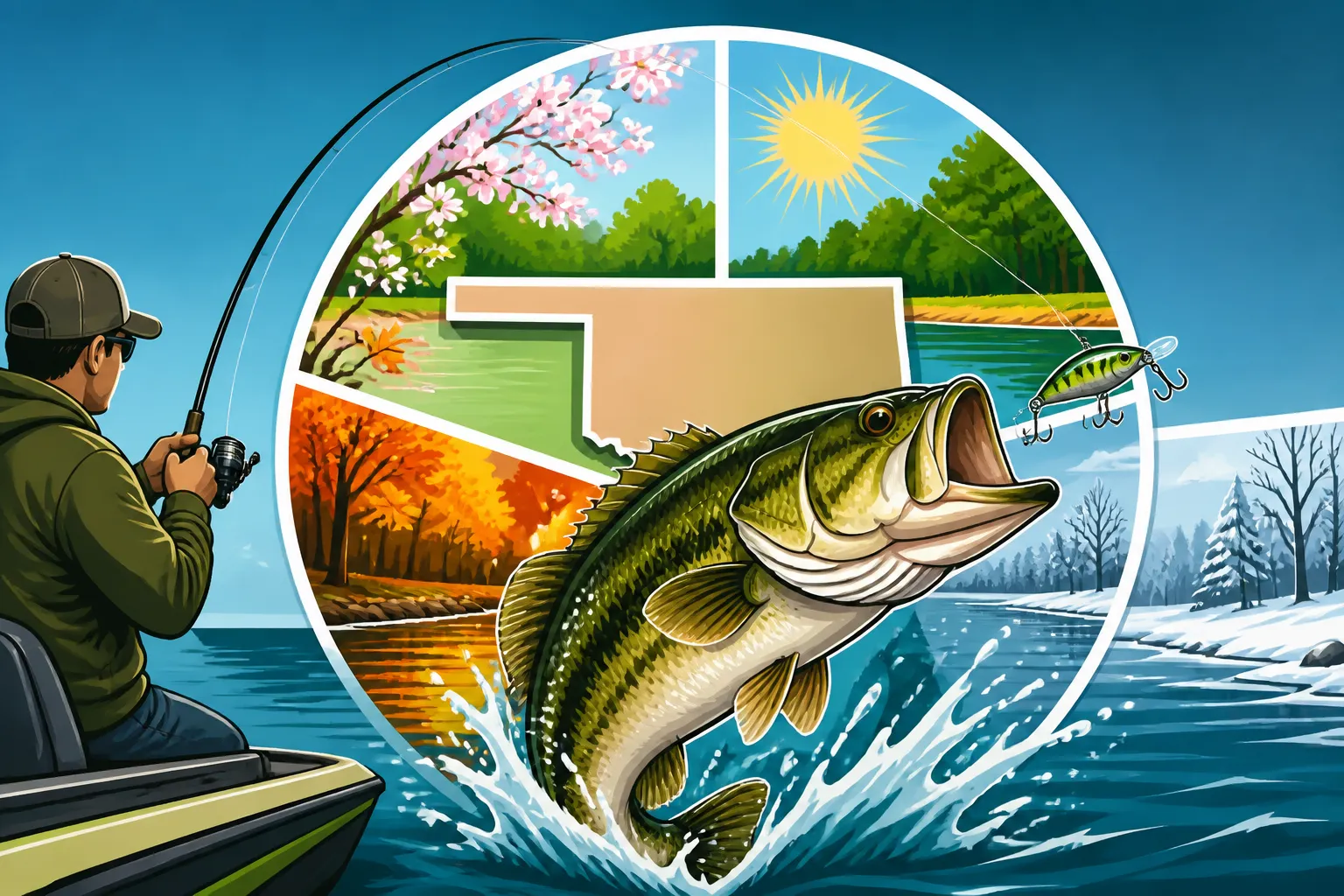
There's nothing quite as frustrating as heading out to your favorite Oklahoma lake, ready to hook into some big bass, only to find the fish have completely vanished. What worked like a charm last month might leave you empty-handed today, and that's because bass behavior changes dramatically with the seasons. This comprehensive guide will walk you through how to catch bass effectively through every single season in Oklahoma, helping you crack the code on these elusive fish no matter the time of year.
Understanding Oklahoma Bass: Species and Habitats
Before we dive into seasonal tactics, it's really important to know what kind of bass you're actually targeting in Oklahoma. We've got a fantastic variety here, and each species, while sharing some common traits, has its own quirks and preferred hangouts. Knowing your target will make a huge difference in your approach.
The Big Three: Largemouth, Smallmouth, and Spotted Bass
Oklahoma is home to three main species of black bass: largemouth, smallmouth, and spotted bass. While all three are fantastic sport fish, they tend to occupy different niches and respond to different presentations.
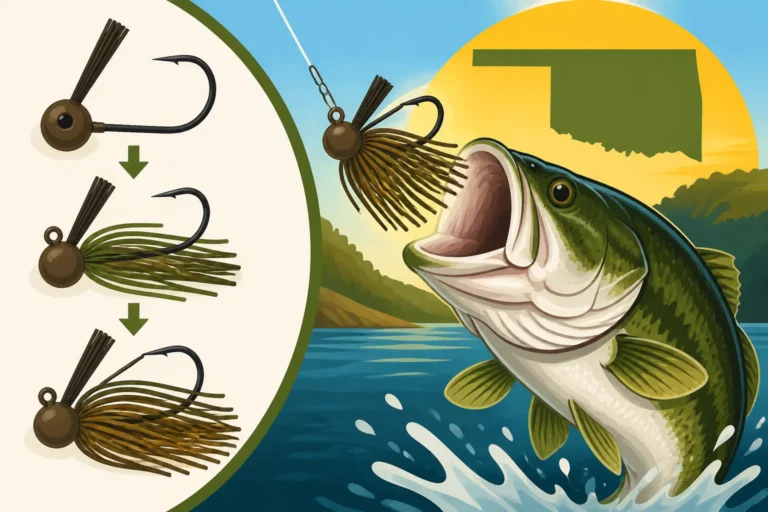
The largemouth bass is undoubtedly the king in most Oklahoma waters. You'll recognize them by that distinct jawline that extends beyond their eye when their mouth is closed. These chunky, aggressive fish absolutely love cover – think thick lily pads, submerged timber, brush piles, and shallow weeds. They're often found in warmer, shallower, and murkier waters, making them a staple in most of our larger reservoirs and farm ponds. They're the poster child for power fishing with big baits. For a deeper dive, check out our guide on Largemouth Bass Fishing in Oklahoma: The Complete Guide.
Smallmouth bass, on the other hand, are the rugged, hard-fighting cousins. Their jaw usually doesn't extend past the middle of their eye, and they often have distinct vertical bars or stripes on their sides. These guys thrive in cooler, clearer waters with rocky bottoms, gravel, and ledges. You'll find them more commonly in the upper reaches of some reservoirs, clear streams, and rivers. Lakes like Tenkiller, Broken Bow, and the upper portions of Grand Lake are known for their smallmouth populations. They're real fighters on light tackle!
Then there are the spotted bass, often mistaken for largemouths due to their similar appearance. The key difference is a small patch of teeth on their tongue, and their jaw typically doesn't extend beyond the eye. They're often called "spots" for the rows of dark spots along their lower side. Spotted bass are a fantastic blend of both worlds – they can tolerate slightly warmer, murkier water than smallmouths but prefer rock and timber over thick weeds. They're notorious for schooling up and can be caught in large numbers, often deeper than largemouths. Many Oklahoma lakes, including Grand Lake, Eufaula, and Fort Gibson, have strong spotted bass populations.
General Behavior and Preferred Habitats
Regardless of the species, bass are ambush predators. This means they're always looking for cover or structure that allows them to hide and surprise their prey. The "where" changes with the seasons, but the principle remains the same.
In general, bass relate to structure and cover. Structure refers to changes in the lake or river bottom itself – humps, drop-offs, points, ledges, creek channels, and old roadbeds. Cover is anything on top of that structure that offers a hiding place – rocks, brush piles, standing timber, docks, boat houses, and aquatic vegetation like hydrilla or lily pads. Understanding how bass use these elements in different seasons is your ticket to consistent success. For example, during colder months, they might hug deep rock piles, while in spring, they'll push into flooded timber or shallow weed beds to spawn. The same piece of structure might hold fish in spring, but they'll be in different areas of it compared to summer or winter. It's like they're moving into different rooms of the same house throughout the year!
Spring Bass Fishing in Oklahoma: The Pre-Spawn to Post-Spawn Frenzy
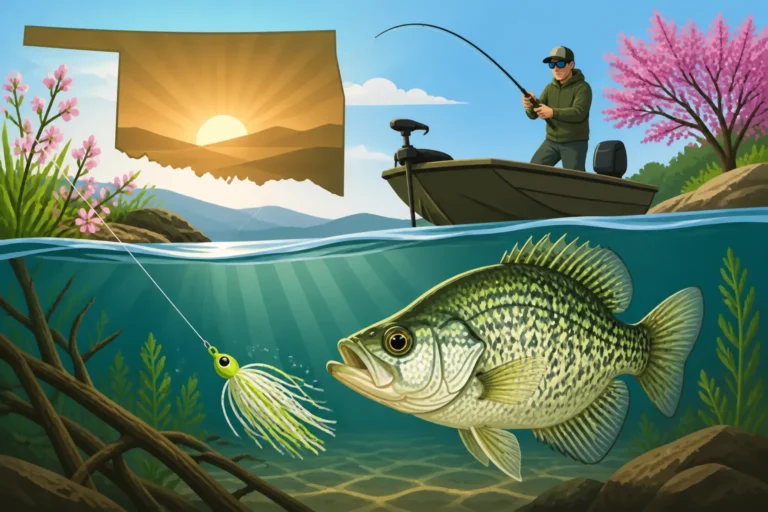
Spring is arguably the most exciting time for bass fishing in Oklahoma. After a long, cold winter, bass become incredibly active, driven by the urge to feed up and reproduce. This season is a dynamic period, transitioning from the pre-spawn feeding binge to the spawn itself, and then the post-spawn recovery. Each phase requires a slightly different approach.
Pre-Spawn: The Feeding Binge
As water temperatures begin to climb into the 50s Fahrenheit, bass shake off their winter lethargy and start to move from their deep wintering holes towards shallower spawning flats. This is the "pre-spawn" phase, and it's characterized by an intense feeding binge. Bass are packing on calories for the arduous spawning process ahead. They are aggressive, hungry, and often grouped up, making them a prime target.
You'll typically find them cruising along creek channels, points, and secondary points that lead into those shallower spawning coves. Look for any kind of transition area – where deep water meets shallow, or where hard bottom meets soft mud. These fish aren't quite on the beds yet, but they're staging, meaning they're waiting in nearby deeper water before making their final move. This is an excellent time to cover water. Lipless crankbaits, like a Rat-L-Trap or a Strike King Red Eye Shad, are fantastic for ripping through grass and banging off cover. Jerkbaits, like a Lucky Craft Pointer or a Megabass Vision 110, are also deadly, especially on slightly cooler days when bass might be a bit more sluggish but still willing to strike. And don't forget spinnerbaits – big blades in chartreuse and white can be irresistible to hungry bass. For more on this phase, dive into Pre-Spawn Bass Fishing Techniques Explained.
The Spawn: Nesting and Protection
Once water temperatures consistently hit the high 50s to low 60s, the bass move onto the flats and begin to build their nests. This is the "spawn," and while it can be frustrating to catch them, it's also when you might spot those giant females on their beds. Remember, Oklahoma's Bass Fishing Rules and Limits are in effect, so always be mindful of regulations.
Bass on beds are not typically feeding for hunger; they're guarding their nests against intruders. This means you need to annoy them into biting. Sight fishing becomes a popular tactic in clear water, where you can actually see the bass on their circular beds. Lures like soft plastic lizards, creature baits, or even a simple Texas-rigged Senko pitched directly onto the bed can trigger a protective strike. You want something that looks like a critter trying to eat their eggs or fry. Be patient, let the bait sit, and twitch it subtly. On cloudier days or in stained water where you can't see the beds, focus on sheltered, shallow coves, pockets, and flats with cover like stumps or sparse grass. A Texas Rig or Carolina Rig worked slowly through these areas can often find fish, even if you can't see them. Understanding How Water Temperature Affects Bass Spawning in Oklahoma is crucial here.
Post-Spawn: Recovering and Scattered Action
After the spawn, as water temperatures climb into the mid-60s to low 70s, bass enter the "post-spawn" phase. This can be a challenging period. The males remain on the beds for a while, guarding the fry, while the females, exhausted from spawning, retreat to recuperate. They often suspend near deeper cover, or move to main lake points and humps.
During this time, bass are often scattered and less aggressive. You'll want to target points, humps, and the edges of creek channels that are close to spawning flats but offer deeper water access. Female bass will be recovering, so presentations might need to be a bit more subtle. Topwater lures can be effective during low-light conditions, as bass will often look up for an easy meal as they recover. Soft plastics like finesse worms, shaky heads, and weightless Senkos fished slowly around cover can entice bites. Don't overlook jigs pitched to isolated cover or brush piles. While the action can be hit-or-miss, locating these recovering fish can lead to some excellent catches. For more detailed strategies, consult Post-Spawn Bass Fishing Techniques Explained.
Summer Bass Fishing in Oklahoma: Beating the Heat and Finding Deep Water
Oklahoma summers are hot, and so is the water! Bass behavior shifts dramatically to cope with the rising temperatures. They'll seek refuge in cooler, deeper water and often become more active during low-light periods. This is when understanding the lake's topography and using your electronics really pays off.
Early Summer: Transitioning to Deeper Structure
As water temperatures push into the 70s and beyond, bass begin to establish their summer patterns. The post-spawn recovery is largely over, and the fish start transitioning from shallower staging areas to deeper, more consistent haunts. This usually means main lake points, submerged humps, offshore ledges, and creek channel bends. They'll still use cover, but it'll be deeper cover – think submerged brush piles, standing timber in deeper water, and rock veins.
This is a great time for power fishing deep. Big crankbaits that dive to 15-20 feet, like a Strike King 6XD or a Norman Deep Little N, can be deadly for covering large areas of offshore structure. Carolina Rigs with creature baits or lizards are also fantastic for working deeper points and ledges, allowing you to present a bait right in the strike zone. Don't shy away from football jigs, especially around rocky transitions and offshore humps. Look for baitfish schools on your electronics – if you find the bait, you'll often find the bass not far behind, typically just below them.
Mid-Summer: The Deep-Water Grind and Night Fishing
When the brutal mid-summer heat sets in, and water temperatures climb into the high 80s, bass often become lethargic during the day. They'll move to the deepest, coolest, and most oxygenated parts of the lake. This might be deep creek channels, thermoclines (the layer where water temperature changes rapidly), or brush piles and standing timber at significant depths. This is often referred to as the "deep-water grind."
During the day, vertical presentations are key. Drop-shot rigs with small worms or finesse baits are incredibly effective for targeting suspended bass or those hugging tight to deep cover. Heavy jigs, particularly those with a bulky skirt, can also entice sluggish bass in deep timber. Another highly effective strategy in Oklahoma during mid-summer is night fishing. As the sun sets, water temperatures cool slightly, and bass move shallower to feed under the cover of darkness. Topwater lures, spinnerbaits, and dark-colored jigs and worms become incredibly effective. Look for lighted boat docks or areas where streetlights spill onto the water, as these attract baitfish and, in turn, bass. Many anglers find that Summer Night Fishing Techniques in Oklahoma are some of the most productive.
Late Summer: Dawn, Dusk, and Thermoclines
As summer begins its slow transition into fall, typically in August, you'll still be dealing with high water temperatures, but sometimes you'll see a slight cooling overnight. Bass remain in their deep summer patterns, but you might find them venturing shallower during dawn and dusk. The thermocline continues to be a critical factor – bass will often suspend right above or within this layer, where oxygen levels are optimal and baitfish congregate.
Focus your efforts during the cooler parts of the day. Early mornings and late evenings offer excellent opportunities for topwater action, especially over submerged grass beds or around main lake points. Zara Spooks, Pop-Rs, and Whopper Ploppers can trigger explosive strikes. During the brighter, hotter parts of the day, revert to deep-water tactics: football jigs, Carolina Rigs, and deep-diving crankbaits along ledges and humps. Keep an eye on your fish finder for schools of baitfish and suspended bass. If you're struggling to locate fish, often they're just holding tight to a subtle contour change or a small brush pile that isn't showing up prominently on your mapping. Patience and meticulous searching are crucial. You can find some great options for deep-diving baits on sites like Amazon, ready to ship to your door.
Fall Bass Fishing in Oklahoma: Feeding Frenzies and Migration
Fall is another fantastic season for bass fishing, often rivaling spring in terms of action and fish size. As water temperatures begin to cool, bass embark on another major feeding binge, trying to bulk up for the upcoming winter. This is a time of migration, as baitfish move from deep water into shallower creeks and coves, and the bass follow them.
Early Fall: Following the Baitfish
As late summer transitions into early fall, and water temperatures dip into the 70s and then 60s, bass become incredibly active. This is often characterized by the "fall turnover" on some lakes, where the water layers mix, spreading oxygen throughout the water column. Baitfish, like shad, will start to move out of the main lake basins and into the backs of creeks and coves, looking for warmer water and food. The bass are right on their tails.
This is a prime time for aggressive, reaction strikes. Topwater lures can still be very effective, especially at dawn and dusk, or on cloudy days, as bass chase baitfish to the surface. Spinnerbaits, chatterbaits, and swimbaits are excellent for imitating fleeing shad in these shallower creek arms. Look for schooling activity on the surface – if you see shad jumping, bass are likely below them. Crankbaits that mimic shad, in chrome, white, or shad patterns, are also incredibly effective. Target points, creek channel swings, and any defined cover in the backs of these migration routes. This is when bass can be caught in large numbers, often stacked up on structure.
Mid-Fall: The Last Big Push
As water temperatures continue to drop into the low 60s and 50s, the fall bite often intensifies. Bass are in full-on feeding mode, trying to consume as much as possible before winter truly sets in. This is often considered the peak of the fall fishing season. The baitfish are usually well into the creeks by now, congregating in the upper arms and shallow flats.
Squarebill crankbaits become a go-to lure, especially for bumping off rocks and stumps in shallow to mid-depth water. Jerkbaits are also incredibly effective now, particularly if you have clearer water. Don't be afraid to experiment with different retrieve speeds and pauses. Jigs, especially casting jigs, are excellent for working around isolated cover like laydowns, brush piles, and rock outcroppings. The bass might not be as active or chase as far as they did in early fall, so slower presentations around specific cover can pay off big time. Keep an eye on the weather; a warming trend after a cold snap can really turn the fish on, while a harsh cold front can send them deeper.
Late Fall: Deeper, Slower Presentations
As late fall arrives, and water temperatures drop into the low 50s and even high 40s, bass begin their transition to winter haunts. While they're still feeding, their metabolism slows down considerably, and they become less willing to chase fast-moving baits. The baitfish, too, will start moving back out of the shallow creeks and into deeper water on the main lake.
This is when finesse presentations really shine. Jigging spoons can be excellent for targeting bass that are suspended over deep structure or schooled up on creek channel bends. Blade baits, like a Silver Buddy, are also very effective, as their vibration can draw strikes from reluctant bass. Tail spinners and small swimbaits can also work well. Look for steeper banks, bluff walls, and deep points near creek channel swings. Bass will often hold tight to vertical structure, so pitching a jig or a Texas-rigged worm right against these features can be very productive. Remember, slower is better. Let your bait soak, and subtle twitches are usually more effective than aggressive retrieves.
Winter Bass Fishing in Oklahoma: Slow and Steady Wins the Race
Winter bass fishing in Oklahoma often gets a bad rap, but don't let the cold deter you! While the bite can be tougher and slower, it can also produce some of the biggest bass of the year. The key is understanding that bass behavior is drastically different, and patience is your most valuable asset.
Locating Winter Haunts
In winter, when water temperatures plummet into the 40s and even high 30s, bass seek stable, often deeper, water. They're looking for areas that offer thermal refuge and access to baitfish without expending too much energy. This typically means main lake points, deep creek channel bends, bluff walls, and large rock piles. Any structure that provides vertical relief is a prime candidate, as bass can easily move up or down the water column with minimal effort.
Often, bass will school up tightly in these deeper areas. This is where quality electronics, especially side-imaging and down-imaging, become absolutely invaluable. You're not just looking for "fish," you're looking for tightly packed schools of fish or baitfish. If you find one, there are likely more. Don't overlook marinas or boat docks that offer deep-water access and a bit of protection from the elements. These areas can hold surprisingly large numbers of wintering bass. When fishing for bass in these conditions, sometimes it's literally just a few feet that separate fish from no fish, so precise boat positioning and casting are crucial.
Finesse Tactics for Cold Water
Bass metabolism slows dramatically in cold water, meaning they're not going to chase a fast-moving bait very far. Your presentations need to be slow, subtle, and right in their face. This is the realm of finesse fishing.
Jigs, particularly small football jigs or finesse jigs with chunk-style trailers, are a winter staple. Work them incredibly slowly, crawling them over rocks and through brush piles. Shaky heads with small finesse worms are also deadly, offering a subtle quiver that can trigger a strike. Another classic winter technique is the suspending jerkbait. Cast it out, twitch it a few times, and then let it sit motionless for 10, 20, or even 30 seconds. That long pause can be the key to getting a reluctant bass to commit. Blade baits, jigging spoons, and small swimbaits are also excellent for vertical jigging over deep structure once you've located schools of fish. Sometimes the bite is so light it feels like simply "weight" on your line – set the hook! When you're searching for these specialized winter baits, remember that many options are available from retailers like Amazon.
Dealing with Cold Fronts and Water Clarity
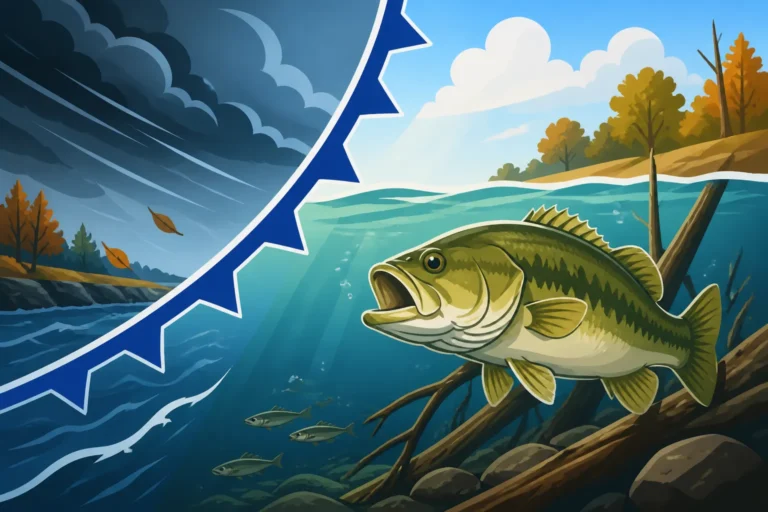
Winter in Oklahoma often brings with it unpredictable weather, including cold fronts. A sharp drop in air temperature, especially after a warm spell, can really shut down the bite. Bass will often become even more sluggish and hug even tighter to cover. After a cold front, concentrate your efforts on the deepest, most stable water you can find, and slow your retrieve down to an absolute crawl. You might need to make dozens of casts to the same spot before getting a single bite.
Water clarity also plays a big role in winter. In clearer lakes, bass might suspend or hold slightly off structure, making them targetable with suspending jerkbaits or vertical jigging. In stained or slightly murky water, they might hug tighter to cover, and a jig or a Texas-rigged plastic worked slowly through the cover is often more effective. Heavy rain can also stir up shallow water, pushing bass deeper or into sheltered pockets. Understanding How Cold Fronts Change Fishing Patterns on Oklahoma Lakes will certainly improve your winter success.
Essential Gear for Year-Round Oklahoma Bass Fishing
Having the right tools for the job is crucial, no matter the season. While you don't need every gadget on the market, a well-rounded setup will allow you to adapt to the changing conditions and presentations required for year-round bass fishing in Oklahoma.
Rods, Reels, and Line: Matching the Season and Technique
You'll ideally want a few different rod and reel combos to cover the range of techniques. For power fishing – cranking, spinnerbaits, jigs – a medium-heavy to heavy action baitcasting rod (6'8" to 7'6") with a fast retrieve baitcasting reel (6.8:1 to 7.5:1 gear ratio) is excellent. Pair this with 15-20 lb fluorocarbon or 30-50 lb braided line, depending on the cover and technique. Fluorocarbon is fantastic for sensitivity and invisibility in clearer water, while braid excels in heavy cover due to its strength and lack of stretch. For a good starter, consider checking out the St. Croix Bass X series rods available on Amazon.
For finesse fishing – shaky heads, drop shots, weightless worms – a medium-light to medium action spinning rod (6'6" to 7'2") with a sensitive tip is perfect. A good quality spinning reel in the 2500-3000 size range, spooled with 8-12 lb fluorocarbon or 10-15 lb braid with a fluorocarbon leader, will give you the sensitivity and casting distance needed for lighter baits. Having a dedicated jerkbait rod (medium action, moderate-fast taper) can also make a huge difference, as it's designed to cast and work these lures optimally. For specific recommendations, check out our guide on Best Rods for Oklahoma Largemouth Bass.
Lures and Baits: A Versatile Tackle Box
Your tackle box should evolve with the seasons, but having a core selection of versatile lures is key. Here's a quick rundown of essential categories:
- Crankbaits: Squarebills for shallow cover, medium-divers for points and humps, and deep-divers for offshore structure. Don't forget lipless crankbaits for grass and staging areas.
- Jigs: Flipping/pitching jigs for heavy cover, football jigs for deep rocky structure, and finesse jigs for more subtle presentations.
- Soft Plastics: Creature baits (lizards, craws) for pitching and Texas Rigs, worms (straight tail, curly tail, finesse worms) for shaky heads and Carolina Rigs, and stick baits (Senkos) for versatile, weightless presentations.
- Spinnerbaits & Chatterbaits: Excellent for covering water and triggering reaction strikes in stained water or around sparse cover.
- Topwater Lures: Frogs for matted vegetation, poppers and walking baits (Zara Spooks) for open water and schooling fish.
- Jerkbaits: Suspending models are crucial for cold water and attracting inactive fish.
- Swimbaits: Paddle tail and boot tail models for imitating baitfish.
Remember, colors are important! Have a selection of natural baitfish colors (shad, perch) for clear water, and brighter, more aggressive colors (chartreuse, reds, blues) for stained or muddy water. For a comprehensive overview, read our guide on Seasonal Bait Selection for Bass.
Electronics and Other Useful Tools
Modern electronics are game-changers, especially for deep-water and offshore fishing. A good fish finder with down-imaging and side-imaging capabilities will help you locate structure, cover, and baitfish schools that you'd otherwise never find. GPS mapping is also crucial for navigating and marking waypoints on large reservoirs.
Beyond that, consider:
- High-quality polarized sunglasses: Essential for spotting fish and structure, especially during the spawn or in clear water.
- Landing net: To safely land bigger fish and prevent them from throwing the hook at the boat.
- Pliers/hook removers: For quickly and safely unhooking fish.
- Culling system: If you're tournament fishing, this helps manage your livewell and keep your fish healthy.
- Scale and measuring board: For accurate weights and lengths.
Here's a quick reference table for seasonal lure considerations:
| Season | Primary Water Temp Range (F) | Key Locations | Recommended Lures/Baits | Typical Retrieve Speed |
|---|---|---|---|---|
| Spring | 50-65 | Shallow spawning flats, creek channels, points | Lipless Crankbaits, Jerkbaits, Spinnerbaits, Jigs, Soft Plastics (Lizards, Senkos) | Moderate to Fast |
| Summer | 70-85+ | Deep humps, ledges, creek channels, offshore brush, shaded docks | Deep-Diving Crankbaits, Carolina Rigs, Drop Shots, Jigs, Topwater (dawn/dusk) | Slow to Moderate |
| Fall | 60-75 | Backs of creeks, main lake points, schooling areas | Spinnerbaits, Chatterbaits, Squarebills, Jerkbaits, Topwater, Swimbaits | Fast to Moderate |
| Winter | 35-50 | Deep points, bluff walls, creek channel bends, rock piles | Jigs, Shaky Heads, Suspending Jerkbaits, Jigging Spoons, Blade Baits | Very Slow |
Adapting to Weather and Water Conditions
Oklahoma weather can be notoriously fickle, and bass are highly sensitive to changes in their environment. Being able to read the conditions and adjust your tactics accordingly will set you apart from the average angler.
Reading Water Temperature and Clarity
Water temperature is arguably the most critical factor influencing bass behavior. We've discussed it throughout the seasonal breakdown, but it bears repeating: carry a good thermometer or rely on your fish finder's temperature gauge. Even a few degrees can make a difference. For example, bass might be reluctant to move onto spawning beds if a cold snap drops the water temperature below their preferred range. Understanding How Water Temperature Affects Bass Spawning in Oklahoma is vital.
Water clarity also plays a huge role.
- Clear Water: In clear lakes like Broken Bow or Tenkiller, bass rely heavily on sight. Lures that look realistic and presentations that are subtle (finesse jigs, natural-colored worms, suspending jerkbaits) often work best. You might need lighter line and longer casts to avoid spooking fish.
- Stained Water: This is a fantastic middle ground where bass aren't as spooky but still have decent visibility. Spinnerbaits, chatterbaits, and medium-diving crankbaits in brighter colors (chartreuse, orange) can be very effective.
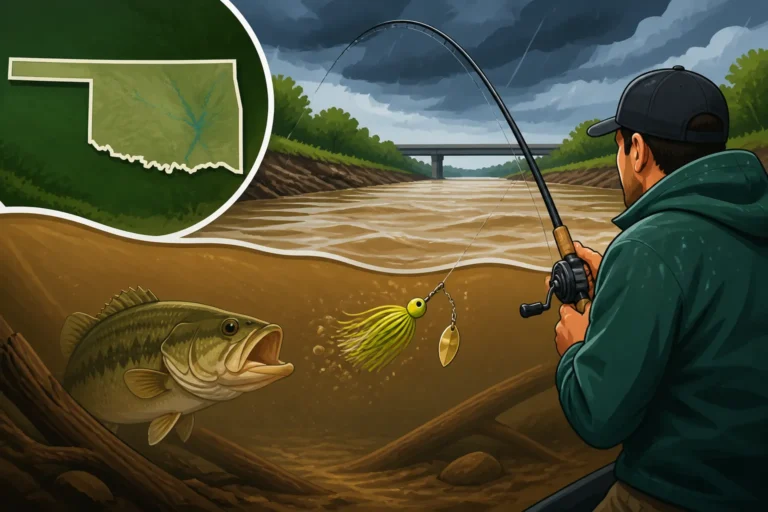
- Muddy Water: After heavy rains, lakes can get churned up. Bass in muddy water rely more on vibration and profile. Dark-colored jigs, big-bladed spinnerbaits, and loud, rattling crankbaits can help fish locate your bait. Slower retrieves are often necessary.
Fishing During Fronts and After Rain
Weather fronts, particularly cold fronts, can be tough. Prior to a cold front, as atmospheric pressure drops, bass often go on a feeding spree. This is a great time for aggressive power fishing. However, after the front passes and high pressure settles in, the bite can shut down. Fish will often retreat to deeper water, hug tight to cover, and become much less active. This is when finesse tactics and slower retrieves are essential.
Rain can be a mixed bag. Light, warm rain can actually improve fishing, especially in summer, as it cools the surface water and washes bait into the lake. However, heavy rains can muddy up the water, lower water temperatures (especially cold rain), and cause current, which can disorient bass. After heavy rain, focus on transition areas where muddy water meets cleaner water, or look for current breaks where bass can ambush prey without fighting the flow. Creek mouths can be good, but if the water is chocolate milk, bass will likely pull back to cleaner water further out. For more details on this, see How Cold Fronts Change Fishing Patterns on Oklahoma Lakes.
Understanding Barometric Pressure and Wind
Barometric pressure often goes hand-in-hand with weather fronts. High, stable pressure usually means clear skies and often a slower bite, especially after a cold front. Falling pressure, indicative of an approaching storm, can often trigger an aggressive feeding window. Paying attention to these subtle changes in the atmosphere can give you a significant advantage.
Wind is another major factor. A light chop on the water can actually be beneficial, as it breaks up the surface, making it harder for bass to see you and making your lures look more natural. It also pushes baitfish into certain areas. However, high winds can make boat control difficult and make fishing less enjoyable. On windy days, try to find sheltered pockets or coves, or target the "wind-blown bank" where baitfish might be concentrated. Be aware that too much wind can also create currents that bass will avoid.
Common Mistakes and How to Avoid Them
Even experienced anglers fall into common traps. Recognizing these pitfalls can help you stay on track and increase your success rate for catching bass year-round in Oklahoma.
Failing to Adapt to Seasonal Changes
This is probably the biggest mistake anglers make. What worked in April likely won't work in August, and definitely not in December. Many anglers get stuck in a rut, relying on one or two "go-to" techniques, even when the conditions demand something entirely different.
How to Avoid: Be a student of the lake. Continuously observe water temperature, clarity, and baitfish activity. Don't be afraid to try different lures and presentations, even if they're outside your comfort zone. Start each season with a fresh mindset, and be willing to experiment. If the bite is tough, make a change – deeper, shallower, faster, slower, different color, different size. The bass will tell you what they want if you're paying attention. Keep an eye on local fishing reports, too; they often provide valuable insights into current patterns.
Overlooking Finesse or Power Fishing Opportunities
Some anglers are strictly power fishermen, always throwing big cranks and jigs. Others are finesse gurus, rarely straying from shaky heads and drop shots. The truth is, both approaches have their time and place, often within the same day!
How to Avoid: Be versatile. In the spring, you might power fish with a spinnerbait in the morning, then transition to finesse plastics on beds later in the day. In summer, you might deep-crank offshore during the heat, then switch to a topwater frog in the evening shadows. Carry a range of rods and reels rigged for different techniques. Don't assume that just because fish are aggressive that they won't bite a finesse bait, or vice versa. Sometimes a finesse bait is needed to trigger a power fish, and sometimes a power bait will trigger a finesse fish. Learning Fishing Techniques for Bank Anglers vs Boat Anglers also helps you adapt.
Ignoring the "Little Things"
Often, the difference between a great day and a frustrating one comes down to seemingly minor details that get overlooked. This could be anything from a dull hook to a noisy boat.
How to Avoid: Pay attention to the details.
- Sharp Hooks: Always check your hooks. Even brand-new lures can have dull hooks. A sharp hook means more fish landed. You can find quality hook sharpeners on Amazon.
- Line Check: Regularly inspect your line for nicks, fraying, or twists. Re-tie often, especially after catching a fish or getting snagged.
- Silence: Be mindful of noise in the boat. Dropping weights, banging tackle boxes, or loud conversations can spook fish, especially in clear, shallow water.
- Boat Positioning: Think about your casting angles and how your boat position affects your lure presentation. Sometimes just a slight move of the boat can put your bait in the strike zone longer.
- Observe Nature: Watch for birds diving (often indicating baitfish), listen for fish busting the surface, and notice changes in the water. These are all clues.
- Trust Your Gut (and Your Electronics): If a spot "looks fishy," give it a few casts. But also trust your electronics. If you're seeing nothing on the screen, move until you do.
By continually refining your approach, being adaptable, and paying attention to the nuanced world beneath the surface, you'll find that catching bass year-round in Oklahoma isn't just possible—it's incredibly rewarding.
Disclaimer
Fishing conditions and regulations in Oklahoma can change frequently. Always consult the latest Oklahoma Department of Wildlife Conservation (ODWC) regulations before heading out to fish. The information provided in this guide is for general informational purposes only and should not be considered legal advice.