Bass Fishing Techniques by Season
There's nothing quite like the thrill of a bass striking your lure, but let's be honest, finding those elusive green and brown fish can feel like a guessing game sometimes, especially as the seasons change in Oklahoma. You might be hitting your favorite spot in the spring only to come up empty, or struggling to get a bite in the summer heat. This comprehensive guide is here to demystify bass fishing through the year, giving you the techniques and insights to adapt your approach and consistently catch bass, no matter what Mother Nature throws your way.
Understanding Oklahoma's Bass Species
Before we dive into seasonal techniques, it’s really helpful to get a handle on the main bass species we’re talking about here in Oklahoma. Each one has its own quirks, preferred habitats, and even subtle differences in how they respond to changing conditions. Knowing who you're targeting can make all the difference.
Largemouth, Smallmouth, and Spotted Bass in Oklahoma
In Oklahoma, when we talk about "bass," we're generally referring to three distinct species: largemouth, smallmouth, and spotted bass. The largemouth bass is probably the most iconic, thriving in warmer, murkier waters with plenty of cover like hydrilla, timber, and lily pads. These are the fish you'll often find lurking in shallow coves or along weed lines at lakes like Eufaula or Grand Lake O' the Cherokees. They're ambush predators, and their behavior is heavily influenced by their immediate surroundings and the availability of baitfish. For a deeper dive, check out our guide on Largemouth Bass Fishing in Oklahoma: The Complete Guide.
Smallmouth bass, on the other hand, are often found in clearer, cooler, and rockier waters, preferring deeper sections of reservoirs, current breaks in rivers, or vast expanses of riprap and chunk rock. Think of places like Tenkiller Ferry Lake or the deeper, rockier areas of Lake Texoma for these hard-fighting bronzebacks. Their behavior is less about dense cover and more about structural elements and subtle current changes. Spotted bass, or "spots," are a bit of a hybrid in their preferences. They tend to overlap with both largemouth and smallmouth habitats, often found around bluff ends, submerged timber, and deep points in reservoirs like Broken Bow or Lake Murray. They share some characteristics with smallmouth in their love for clearer water and rock, but they can also tolerate more turbidity and will use cover similar to largemouth. Each species reacts to seasonal changes, temperature swings, and forage availability in slightly different ways, so knowing which bass you're primarily targeting helps tailor your approach.
The Impact of Water Temperature on Bass Behavior
Water temperature is, without a doubt, the single most critical factor dictating bass behavior throughout the year. It's not just a number on your fish finder; it's the fundamental driver of their metabolism, activity levels, and feeding patterns. When the water is cold, a bass's metabolism slows way down. They become lethargic, need less food, and move much slower, often congregating in deep, stable areas where temperatures fluctuate the least. They won't chase a fast-moving bait in frigid water because it expends too much energy.
Conversely, as water temperatures rise, their metabolism kicks into high gear. They become more active, need to feed more frequently, and are willing to chase down a faster, more aggressive presentation. There are optimal temperature ranges for different bass activities – for example, bass typically spawn when water temperatures are in the mid-60s Fahrenheit. Understanding these temperature thresholds and how they influence the fish is key to unlocking seasonal patterns. It helps you anticipate where they'll be, what they'll be eating, and how aggressively they'll bite. Even small temperature changes, like those caused by a passing cold front or a few days of warm sunshine, can dramatically shift their behavior, demanding an immediate adjustment in your techniques.
Spring Bass Fishing Techniques
Spring in Oklahoma is a time of incredible transition for bass, often bringing some of the most exciting fishing of the year. It's when the fish wake up from their winter sluggishness and start thinking about love and food, moving from their deep-water haunts towards shallower spawning grounds.
Pre-Spawn Aggression and Early Spring Strategies
As winter's chill slowly retreats and water temperatures begin to climb into the upper 40s and 50s, bass enter what we call the pre-spawn phase. This is arguably one of the best times to catch truly big bass. The fish are hungry, agitated, and loading up on calories before the exhausting spawning process. They'll start moving from deep staging areas – like channel swings, bluff ends, and deep points – towards shallower flats and coves where they'll eventually spawn. During this time, aggressive power fishing techniques can be incredibly effective.
Think about reaching for lures that cover a lot of water and mimic struggling baitfish or crawfish. Medium-diving crankbaits in crawfish patterns or shad colors, lipless crankbaits ripped through grass beds, and jerkbaits twitched tantalizingly are all fantastic choices. Fish these lures around transition areas, like the lips of creek channels or secondary points leading into spawning coves. Remember, these fish are feeding up, so a good meal will be hard for them to resist. If you're struggling to find them, consider covering water quickly with these baits until you get a bite. Our article on Pre-Spawn Bass Fishing Techniques Explained offers more in-depth tips for this exciting period.
The Spawning Season: Bed Fishing and Protection
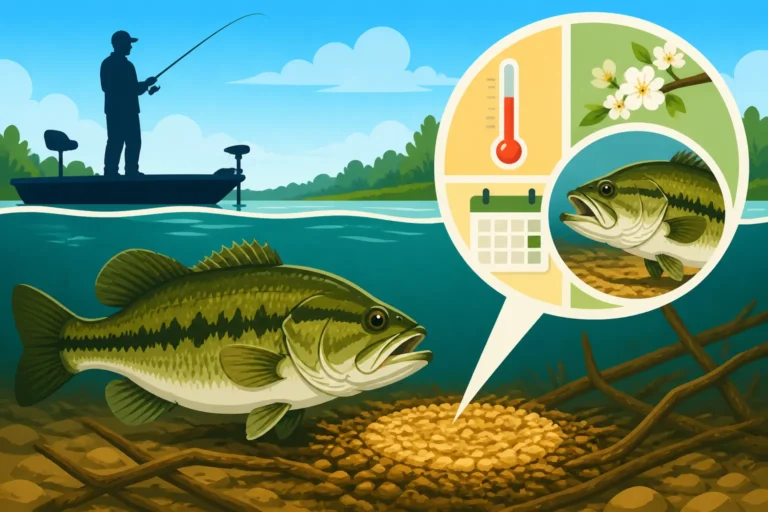
Once water temperatures consistently hit the low to mid-60s, typically from late March through May in Oklahoma, bass move onto the shallower flats, pockets, and protected coves to begin their annual spawn. Male bass fan out circular nests, or "beds," usually around hard bottom, roots, or rocks, while the females move in to lay their eggs. This period can be incredibly rewarding, especially for sight fishing for aggressive, territorial bass. You'll often find bass on beds in surprisingly shallow water, from just a few inches to a few feet deep, especially in clearer lakes like Broken Bow.
Soft plastics are king during the spawn. Texas-rigged creature baits, senkos, or jigs pitched directly onto a bed can infuriate a bedding bass into striking. The key is to make repeated, gentle presentations, letting the bait sit on or near the bed. Often, the male will mouth the bait to move it, and that's your cue to set the hook. While bed fishing can be effective, it’s important to remember that these fish are at their most vulnerable. Many anglers practice catch-and-release during the spawn to help protect the fishery. If you're targeting bedding fish, try to release them quickly and gently to allow them to return to their nest and protect their future offspring. Understanding How to Tell When Bass Are Spawning in Oklahoma Lakes can greatly improve your success.
Post-Spawn Recovery and Transition Tactics
Right after the spawn, usually when water temperatures reach the mid to upper 70s, bass enter the post-spawn phase. This can be one of the more challenging times to locate and catch fish. Both male and female bass are exhausted and often scattered. Females, having expended massive amounts of energy, will typically retreat to deeper, cooler water to recover and feed on larger, easy meals. Males, after guarding the beds, will often hang around nearby shallow cover for a short period, still somewhat protective, but also looking to refuel.
During this recovery period, bass can be finicky. Instead of aggressive reaction strikes, you might need to lean into more subtle presentations. Weightless flukes, slow-rolled spinnerbaits, or topwater lures like poppers and walking baits, worked over grass flats or around sparse cover, can entice strikes from weary bass. As they recover, they'll gradually move towards deeper summer patterns, often staging on secondary points, channel swings, and deeper brush piles. Look for shade and structure where they can ambush prey without expending too much energy. Don't be afraid to experiment with different depths and retrieves until you find what triggers them. Our article on Post-Spawn Bass Fishing Techniques Explained provides more insight into this transitional phase.
Summer Bass Fishing Techniques
Summer in Oklahoma is hot, plain and simple. And just like us, bass seek refuge from the scorching sun and soaring water temperatures. This means a significant shift in their location and feeding habits, often pushing them to deeper water during the day.
Deep Water Dominance and Structure Fishing
Once the blazing Oklahoma summer truly sets in and surface water temperatures consistently hit the 80s, bass will overwhelmingly retreat to deeper, cooler, and more oxygenated water. They're trying to conserve energy and escape the direct sunlight. This means focusing your efforts on offshore structure becomes paramount. Look for submerged ledges, deep points, humps, brush piles, roadbeds, and creek channel swings. These are the highways and neighborhoods where bass will congregate, often schooling up in significant numbers.
Techniques like deep cranking with large, wide-wobbling crankbaits that dive 15-25 feet, or even deeper, are incredibly effective. Lipless crankbaits can also be effective when fish are suspended over structure. Heavy jigs, particularly football jigs, crawled slowly along the bottom of ledges or through brush, can entice strikes from sluggish bass. The Carolina rig, with its ability to present a soft plastic worm or creature bait subtly through deep cover, is another summer staple. The key here is patience and precision. Use your fish finder, like those readily available on Amazon, to locate these underwater structures and identify schools of fish before making a cast. Remember, even a slight change in depth or contour can hold a concentration of fish. Learn more about effective deep water strategies in How to Fish Deep Structure for Bass in Summer.
Early Morning and Late Evening Topwater Bites
Even during the dog days of summer, bass still need to feed. And during the low-light periods of dawn and dusk, they will often venture into shallower waters to ambush baitfish. These brief windows offer some of the most exciting fishing experiences, with explosive topwater blowups that get your heart pounding. As the sun barely peeks over the horizon or dips below it, the water's surface provides enough shade and a sense of security for bass to hunt actively.
Target areas with shallow cover: lily pads, grass lines, fallen timber, and even riprap near deeper water access. Frogs, walked slowly over matted vegetation, are incredibly effective, mimicking a real frog or rodent trying to cross the surface. Buzzbaits, fished quickly across open water or parallel to cover, create a commotion that calls bass up from below. Walking baits like a Heddon Super Spook or poppers chugged rhythmically can also draw violent strikes. The key is to be on the water as early as possible or stay as late as you can. These bites can be short-lived, sometimes only lasting for an hour, but they are often worth losing a little sleep over. Don't waste your precious morning or evening topwater window by sleeping in!
Night Fishing for Summer Bass
When the summer sun beats down mercilessly, many anglers pack up their gear, but savvy Oklahoma bass anglers know that the night offers a whole new world of opportunity. Night fishing for bass in the summer can be incredibly productive, as bass move out of their deep-water sanctuaries and into shallower feeding grounds under the cover of darkness. The cooler water temperatures and reduced light make them feel safer and more comfortable hunting in areas they might avoid during the day.
Your approach to night fishing should be deliberate and methodical. Stealth is crucial, so minimize noise and light. Black or dark-colored lures are often preferred because they create a strong silhouette against the moonlit sky or artificial lights. Large spinnerbaits with thumping blades, deep-diving crankbaits that crash into submerged structure, and oversized worms or jigs dragged slowly along the bottom are excellent choices. Concentrate your efforts around main lake points, boat docks with lights, and humps where bass might move up to feed. Investing in a good headlamp with a red-light option (to preserve your night vision) is a must, and a quality tackle box like those you can find on Amazon will keep your gear organized in the dark. If you're tired of the midday heat, embrace the cool tranquility and explosive bites of summer night fishing. For more specific advice, check out Summer Night Fishing Tips for Oklahoma Reservoirs.
Fall Bass Fishing Techniques
As summer's heat gives way to cooler temperatures and shorter days, Oklahoma's bass fisheries undergo another dramatic transformation. Fall can be an incredible time to fish, often considered by many to be second only to spring in terms of productivity, as bass enter a feeding frenzy.
The Fall Feed: Baitfish Migration and Reaction Baits
Autumn signals a crucial period for bass: the "fall feed." As water temperatures begin to drop from the upper 70s into the 60s and 50s, baitfish like shad, sunfish, and small crappie start to migrate from their summer offshore haunts into shallower creek arms and coves in search of plankton and warmer water. Bass, instinctively knowing winter is coming, follow these massive schools of baitfish, aggressively feeding to pack on weight. This creates incredible opportunities for anglers.
During this period, reaction baits that mimic fleeing or struggling baitfish are incredibly effective. Spinnerbaits, particularly those with willow leaf blades for speed and flash, can be deadly when retrieved quickly through schools of bait or along migration routes. Bladed jigs, often called ChatterBaits, offer a unique vibration and flash that can provoke violent strikes. Lipless crankbaits, ripped through submerged grass or yo-yoed around points, perfectly imitate dying shad. Pay close attention to bird activity, especially diving seagulls and herons, as they often indicate the presence of large baitfish schools, and by extension, hungry bass below. Our guide to Fall Fishing Patterns on Oklahoma's Major Reservoirs has more fantastic insights.
Locating Bass in Transition: Drains and Points
The transition from summer to fall means bass are constantly on the move, making location a bit of a moving target. They’re leaving their deep summer hangouts and following those baitfish into shallower, but still somewhat defined, areas. You'll find them using traditional "transition" structures: creek channel bends, the backs of major creek arms, and main lake points that extend into deeper water. These areas act like funnel points or staging grounds for both the bait and the bass.
Focus on areas where a creek channel sweeps close to a shallow flat, or where a main lake point tapers off into deeper water. Bass will stage on the deeper side of these structures, moving up to feed on the shallower side when conditions are right. They might be suspended off the bottom, just waiting for a school of shad to pass by, or they could be tight to cover. Look for isolated cover like stumps, brush piles, or rock piles that offer an ambush point. Fan casting these areas with moving baits is a great way to locate active fish. Once you get a bite, slow down and thoroughly work the area, as bass often school up during this feeding spree.
The Impact of Cold Fronts
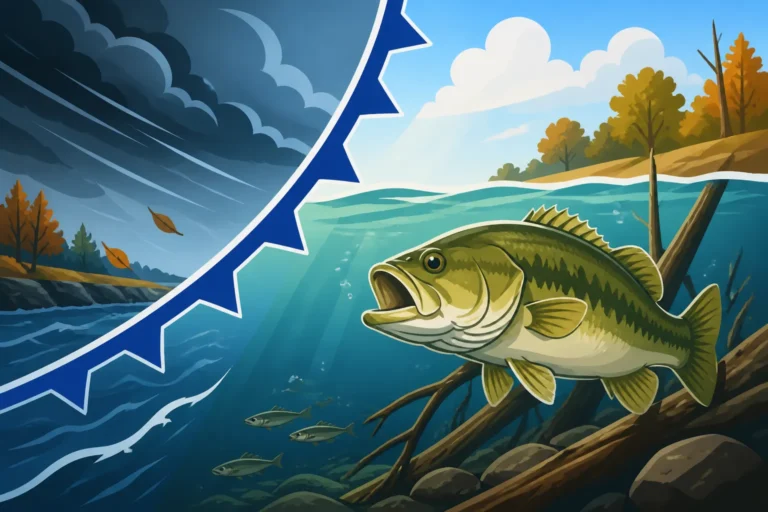
While fall offers incredible fishing, it's also a season prone to drastic weather shifts, especially the dreaded cold front. A sharp drop in air temperature, often accompanied by strong winds and clear skies, can dramatically shut down the bite. Bass, being cold-blooded, are highly sensitive to sudden temperature changes, and a cold front will often send them scattering or pushing them deeper, making them far less aggressive. They become lethargic and less willing to chase.
When a cold front hits, you need to adjust your techniques accordingly. Put away the fast-moving reaction baits and reach for slower, more subtle presentations. Jigs, fished painstakingly slowly along the bottom, can entice strikes from inactive bass. Shaky head worms, drop shots, and even Texas-rigged plastics crawled through cover are effective. You'll need to work your baits slower, almost dead-sticking them, allowing the bass plenty of time to inspect and commit. Focus on areas that offer immediate deeper water access, as bass will often retreat to the nearest deep cover. Patience becomes your most valuable asset during these challenging post-front conditions. Understanding How Cold Fronts Change Fishing Patterns on Oklahoma Lakes is essential for fall success.
Winter Bass Fishing Techniques
Winter bass fishing in Oklahoma often gets a bad rap, but don't let the cold deter you! While the bite certainly slows down, it offers a unique challenge and can still yield some truly impressive catches, especially if you understand how bass behave in frigid water.
Slow and Steady: Finesse Tactics in Cold Water
When Oklahoma's lakes turn truly cold, with water temperatures dropping into the 40s and even upper 30s, bass become incredibly lethargic. Their metabolism is at its slowest, and they're not going to expend much energy chasing down a meal. This is the prime time for finesse fishing. Forget the fast retrieves and flashy baits; winter bass demand a subtle, slow, and precise presentation.
Think about downsizing your baits and slowing everything way down. Football jigs in dark colors (black and blue, green pumpkin), crawled painstakingly slowly along rocky bottoms, are a winter staple. The drop shot rig, with its ability to keep a small plastic worm or minnow imitation suspended precisely in the strike zone, is another deadly finesse technique. Suspending jerkbaits, twitched and then paused for extended periods (sometimes 10-20 seconds!), can be incredibly effective at drawing strikes from suspended bass. The key here is patience. Don't be afraid to let your bait sit still for what feels like an eternity. Often, the strike will be barely perceptible, just a slight tick or spongy feeling on your line.
Targeting Deep Water and Vertical Presentations
In the coldest parts of winter, bass will typically congregate in very specific deep-water areas where the temperature is most stable. They're looking for thermal refuge and often school up tightly around deep structure and baitfish. This makes finding them a challenge, but once you do, you can often catch multiple fish from the same spot. Look for deep main lake points, channel swings, bluff ends, and the deepest brush piles or standing timber you can find.
Vertical presentations become incredibly effective during this time. Rather than casting and retrieving, you'll want to position your boat directly over the fish you see on your fish finder and drop your bait straight down. Jigging spoons, worked with short, sharp lifts and long pauses, can be deadly on suspended schools of bass and baitfish. Small, heavy jigs or blade baits can also be worked vertically. The goal is to imitate a dying or stunned baitfish with minimal movement. This method conserves energy for the bass, making them more likely to strike what appears to be an easy meal. While focused on a different species, some principles from Winter Catfishing Techniques in Oklahoma regarding cold water behavior can be adapted here.
Warmer Winter Days and Brief Feeding Windows
Even in the dead of winter, Oklahoma can experience sudden warm spells – a few days of sunshine and milder temperatures. These brief windows can sometimes trigger short but intense feeding periods for bass. A slight bump in water temperature, especially in shallower, darker bottom areas that absorb more heat, can momentarily increase their metabolism and push them to feed more actively.
During these warmer winter days, you might be able to incorporate slightly more aggressive baits into your arsenal. A slow-rolled spinnerbait or a medium-diving crankbait fished along a warming rock bank or the sunny side of a main lake point could entice a bite. However, it's crucial not to overdo it. The retrieve should still be slower than in warmer seasons, and you should always have a finesse backup ready. These warming trends are often fleeting, so be prepared to switch back to deep, slow presentations if conditions revert to typical winter cold. Always be opportunistic, but never abandon the fundamental principle of "slow and steady wins the race" when winter fishing.
Essential Gear and Strategy Adjustments
Having the right techniques is vital, but so is having the right tools for the job. Your fishing gear should complement your approach, allowing you to effectively present your chosen lures and land those hard-fighting Oklahoma bass.
Rod, Reel, and Line for Seasonal Bass Fishing
The notion of a "one-size-fits-all" rod and reel combo for bass fishing throughout the year is largely a myth, especially if you want to maximize your success. Each season and technique often benefits from a specialized setup. In spring, when you're throwing heavier crankbaits or punching through matted vegetation, a longer, stout medium-heavy to heavy-action casting rod with a fast retrieve baitcasting reel (7.1:1 or higher) spooled with 15-20 lb fluorocarbon or even braided line will give you the power and control you need. This allows for long casts and strong hooksets, crucial for bigger bass in heavy cover. A great option for power fishing would be a Dobyns Rods Fury Series rod, which offers excellent sensitivity and backbone without breaking the bank. For specific recommendations, refer to Best Rod for Largemouth Bass Fishing.
For finesse techniques in winter or during a tough post-spawn bite, a lighter medium-light to medium-action spinning rod with a sensitive tip is ideal. Pair this with a smaller spinning reel (2500-3000 series) and lighter line, such as 6-10 lb fluorocarbon or even braided line with a fluorocarbon leader. This setup allows for subtle presentations, detecting light bites, and making accurate casts with smaller, lighter baits. Having a versatile lineup of rods and reels on your boat or in your truck, perhaps purchased from a wide selection on Amazon, will allow you to quickly adapt to changing conditions and techniques, ensuring you're always rigged appropriately for the situation at hand.
The Importance of Bait and Lure Selection
Just as your rod and reel setup changes, so should your bait and lure choices across the seasons. Bass are opportunistic predators, but their preferences shift based on what's available and how active they are. In the vibrant pre-spawn and fall periods, when bass are aggressively feeding, you'll want to use reaction baits that imitate abundant forage. Crankbaits in shad or crawfish patterns, spinnerbaits with flash, and bladed jigs are fantastic for these times. Colors should often be natural – whites, silvers, and chartreuse for shad; browns, greens, and oranges for crawfish.
As water temperatures cool down in winter, bass become less willing to chase. This is when smaller, more subtle presentations excel. Dark-colored jigs, small creature baits on a Texas rig or shaky head, or drop shot worms in natural colors like green pumpkin or watermelon red, become the go-to choices. Even the action of your lure matters: a slow, methodical crawl is better than a frantic retrieve. In summer, when bass are deeper, large deep-diving crankbaits or heavy jigs are key. And during those magical low-light hours, topwater frogs, buzzbaits, or walking baits can be irresistible. A well-stocked tackle box should include a variety of lure types, sizes, and colors, allowing you to "match the hatch" or provoke a reaction strike. You can find an immense selection of everything from Strike King crankbaits to Zoom worms on Amazon, making it easy to stock up for any season. For general guidance, our article on Seasonal Bait Selection for Bass offers excellent insights.
Mastering Your Electronics and Reading the Water
In modern bass fishing, your electronics are no longer just a luxury; they're an absolute necessity, particularly for offshore and deep-water techniques. A good fish finder with sonar, side imaging, and down imaging capabilities can be the difference between a slow day and a banner day. These tools allow you to quickly identify submerged structure, differentiate between rock piles, brush, or timber, and most importantly, locate schools of baitfish and the bass feeding on them. During the summer, for instance, finding those deep ledges and humps that hold fish is almost impossible without reliable electronics. You'll literally be able to see the contours of the lake bottom and the fish clinging to them.
Beyond technology, "reading the water" is an art form developed through years of experience. This involves paying attention to subtle clues like water clarity, current, wind direction, and even the presence of birds or baitfish jumping. Is the water stained after a recent rain, pushing bass tighter to cover? Is there a strong wind blowing baitfish into a shallow cove? Are seagulls diving, indicating a shad boil? All these visual cues provide vital information about where the bass might be and what they might be doing. Combining keen observation with advanced electronics, many of which can be found and purchased on Amazon, empowers you to make informed decisions, adapt your strategy on the fly, and drastically increase your chances of finding and catching bass throughout the year. For more about using your gear, consider reading about Fish Finder Features That Matter Most on Oklahoma Reservoirs.
Seasonal Bass Fishing Techniques Quick Reference
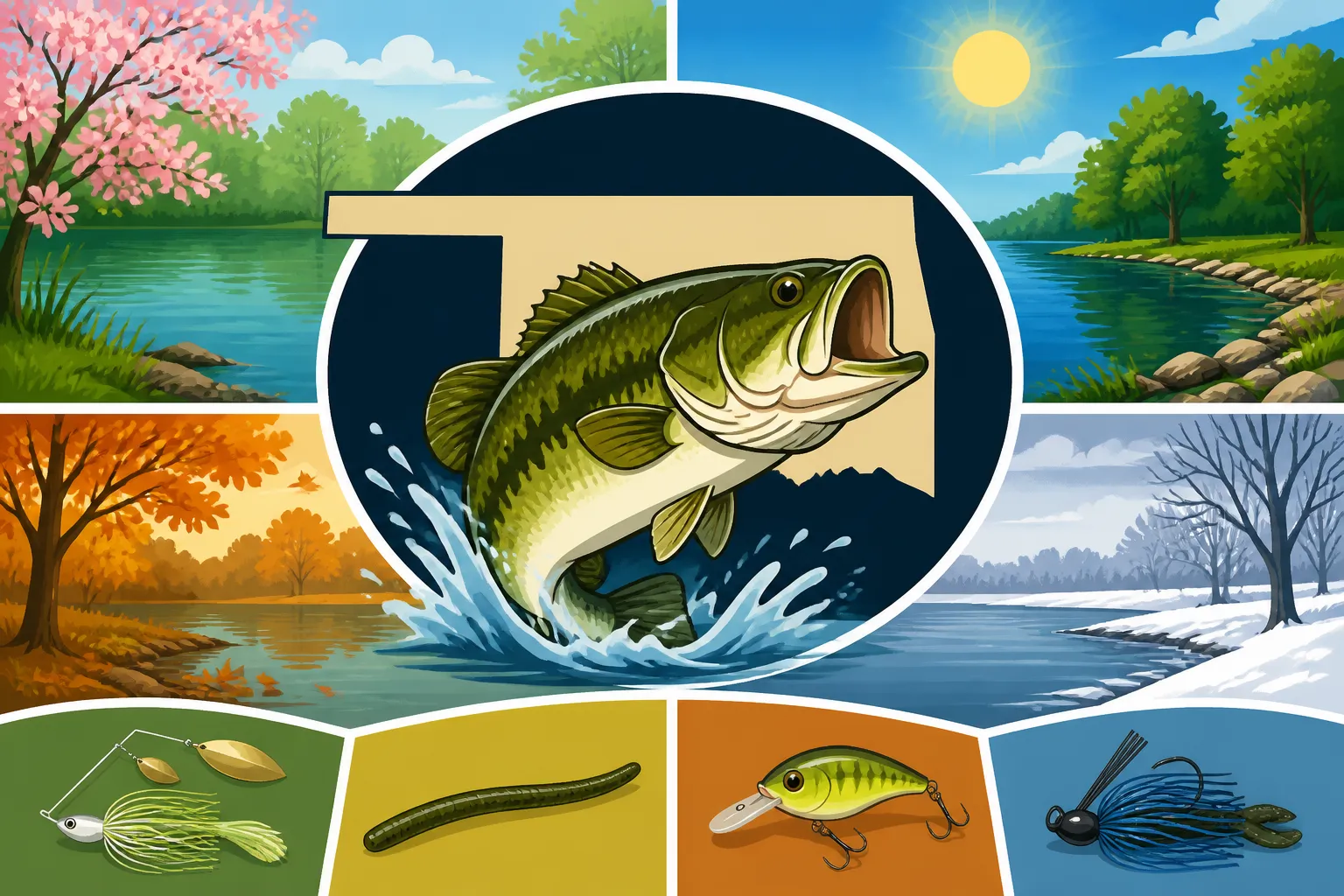
To help you quickly visualize the shifts in techniques, here's a handy table outlining general approaches for each season. Remember, these are guidelines, and conditions can always vary!
| Season | Typical Water Temp Range | Primary Bass Behavior | Key Locations to Target | Go-To Lure Types | Retrieve Speed | Preferred Line |
|---|---|---|---|---|---|---|
| Spring | 45-70°F | Pre-spawn feeding, spawning, post-spawn recovery | Creek channels, points, spawning coves, shallow flats | Crankbaits, Jerkbaits, Jigs, Soft Plastics, Spinnerbaits | Moderate to Slow | Fluoro/Braid |
| Summer | 75-90°F+ | Deep water refuge, low-light feeding | Offshore ledges, humps, deep brush, boat docks | Deep Crankbaits, Jigs, Carolina Rigs, Topwater (dawn/dusk) | Slow to Moderate | Fluoro/Braid |
| Fall | 70-50°F | Aggressive feeding (fall feed), baitfish migration | Creek arms, main lake points, coves, grass lines | Spinnerbaits, Bladed Jigs, Lipless Crankbaits, Shallow Crankbaits | Fast to Moderate | Braid/Fluoro |
| Winter | 50-35°F | Deep water lethargy, slow metabolism | Deep main lake points, channel swings, bluff ends, standing timber | Jigs, Drop Shots, Suspending Jerkbaits, Jigging Spoons | Very Slow | Fluoro |
Disclaimer
Please remember that fishing regulations, including size and bag limits, can change. Always consult the latest Oklahoma Department of Wildlife Conservation (ODWC) regulations before heading out on the water. This guide is for informational purposes only and does not supersede official state fishing laws.