How Water Temperature Affects Fish Feeding Habits
There's nothing quite as frustrating as heading out to your favorite Oklahoma fishing spot, with perfect weather overhead, only to find the fish just aren't biting. You might have the right bait, the perfect lure, and years of experience, but if you're not paying attention to one critical, often invisible factor – water temperature – you could be missing the key to a successful day. This comprehensive guide will dive deep into how water temperature affects fish feeding habits, helping you understand the unseen forces that dictate where fish are, what they're doing, and how eagerly they're looking for a meal.
The Fundamental Link Between Water Temperature and Fish Behavior
Think of water temperature as the thermostat for fish life. Just like we have our comfort zones, fish have specific temperature ranges where they thrive, feed, and reproduce. Step outside those zones, and their entire world changes. It's not just about comfort; temperature directly influences their biology and, consequently, their willingness to bite your line.
Metabolism and Activity Levels
Every fish is a cold-blooded creature, meaning its body temperature mirrors the water around it. This is a crucial concept because it means their metabolism – the chemical processes that keep them alive, help them digest food, and provide energy – is entirely regulated by the water temperature.
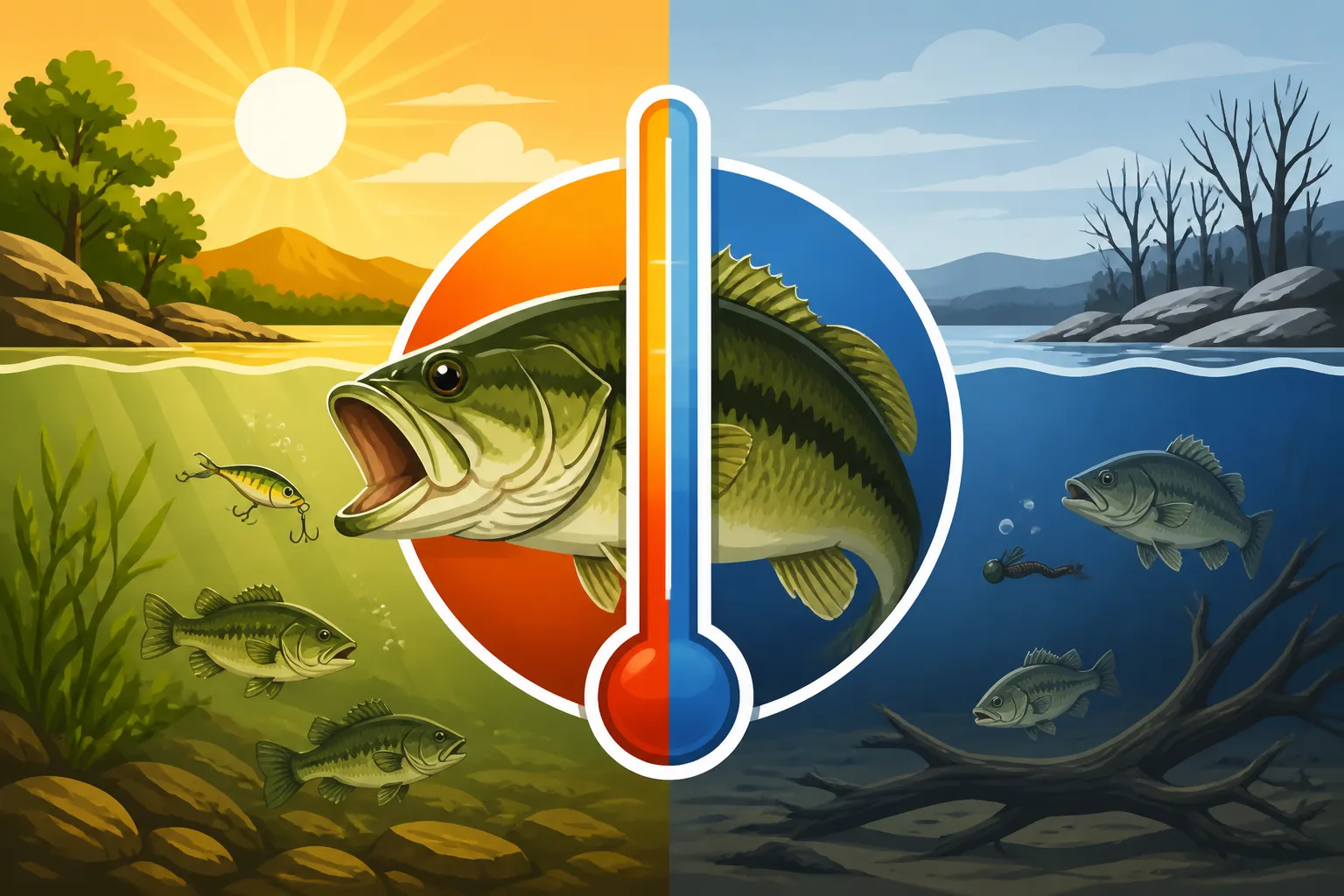
When the water is cold, a fish's metabolism slows way down. Imagine trying to run a marathon in freezing temperatures; every movement would be an enormous effort. Fish experience something similar. Their need for food decreases, digestion becomes sluggish, and they conserve energy by moving less. They might be present, but they're not actively hunting or chasing down meals with enthusiasm. Conversely, when the water warms up, their metabolism speeds up dramatically. They need more food to fuel their increased activity, they digest faster, and they become much more active, ranging further and feeding more aggressively. This is why you often find fish incredibly active during the spring and fall transitions, when temperatures are often in their metabolic sweet spot.
Oxygen Levels and Comfort Zones
Temperature doesn't just affect a fish's internal thermostat; it also profoundly impacts the water around them, especially the dissolved oxygen content. Colder water can hold more dissolved oxygen than warmer water. This is a vital piece of the puzzle, especially during the scorching Oklahoma summers.
As surface water temperatures climb, especially in our shallower lakes and ponds, the amount of dissolved oxygen decreases. This can create uncomfortable, even dangerous, conditions for many fish species. To find relief, fish will often seek out deeper, cooler water where oxygen levels remain higher, creating a thermal refuge. Conversely, after a long winter, as the surface water begins to warm and oxygenate, fish will move shallower to take advantage of these more comfortable conditions. Understanding how oxygen levels intertwine with temperature helps you predict vertical fish movement throughout the water column. You might find fish holding tight to structure in cool, oxygen-rich depths during the summer, or basking in the warmer, oxygenated shallows during the spring.
Spawning Triggers
Beyond day-to-day feeding, water temperature is perhaps the most critical factor in triggering the annual spawning rituals for almost all fish species. Each species has a precise temperature range that signals it's time to reproduce.
For instance, you'll hear anglers talk endlessly about the "Spring Bass Spawn Timing in Oklahoma" because it's a huge event. Largemouth bass typically start their spawning activities when water temperatures consistently hit the mid-60s Fahrenheit. Crappie, on the other hand, might start a bit earlier, often when temperatures are in the low to mid-50s. Catfish have their own triggers, too. These temperature cues are so powerful that fish will often suspend their feeding or change their location drastically to prepare for or engage in spawning. Knowing these temperature windows is not just about catching fish, it's about understanding the entire life cycle happening beneath the surface.
Species-Specific Temperature Preferences in Oklahoma
While all fish are influenced by water temperature, each species has its unique preferences and tolerances. What makes a bass happy might send a striper packing. Knowing these differences for Oklahoma's popular game fish is key to targeting them effectively.
Bass (Largemouth, Smallmouth, Spotted)
Oklahoma is a bass angler's paradise, but catching these popular game fish means understanding their thermal preferences. Largemouth, smallmouth, and spotted bass are generally warm-water species, but they still have sweet spots.
- Optimal Feeding Range: For robust feeding activity, bass generally prefer water temperatures between 60°F and 75°F. In this range, their metabolism is high, they're energetic, and they'll actively chase down prey. You'll often find them roaming open water or patrolling structure looking for a meal.
- Pre-Spawn and Spawn: As temperatures creep into the mid-50s to low-60s in spring, bass move from deeper wintering grounds to shallower areas to stage for the spawn. Once the water consistently hits the mid-60s, the spawn begins in earnest. During this time, while they are guarding nests, they might strike out of aggression more than hunger. Learning "Pre-Spawn Bass Fishing Techniques Explained" can significantly boost your success.
- Summer Heat: When Oklahoma's summer temperatures soar into the 80s and 90s, bass seek refuge. They'll move to deeper, cooler water, often around thermoclines, or hide in heavy shade, under docks, or in dense vegetation. Their feeding windows become shorter, often at dawn, dusk, or through the night, as they conserve energy during the hottest parts of the day.
- Winter Slump: Below 50°F, bass become much less active. They'll school up in deep water, often near significant structure, and feed sparingly. Slower presentations are key here.
Crappie (Black and White)
Crappie are another incredibly popular species in Oklahoma, prized for their delicious fillets and aggressive bites. They are also highly sensitive to water temperature.
- Optimal Range: Crappie are generally comfortable and active in water temperatures between 55°F and 70°F.
- Spring Run: One of the most anticipated events is the "Fall Crappie Fishing Patterns in Oklahoma" where crappie move into shallow brush piles, submerged timber, and along rip-rap shorelines when water temps hit the mid-50s. They're focused on spawning, and you can often find them in huge numbers.
- Summer Depths: As summer progresses and water temperatures rise into the 80s, crappie retreat to deeper, cooler water, often suspending over brush piles, submerged creek channels, or the thermocline. Locating them often requires boat electronics to find these deeper structures. Understanding "How to Find Crappie in Deep Water in Summer" is crucial for summer success.
- Winter Schools: In winter, crappie form large schools in deep water, often congregating around standing timber, bridge pilings, or deep brush. They remain catchable, but their bites can be subtle.
Catfish (Channel, Blue, Flathead)
Oklahoma is famous for its catfish, and these hardy fish are present across a wide range of water temperatures, though their activity levels vary greatly.
- Tolerance and Activity: Catfish are perhaps the most temperature-tolerant of our common game fish, able to survive in waters from near freezing to the low 90s. However, their activity and feeding peak in warmer water, generally between 70°F and 85°F.
- Warm Water Feeding Frenzy: In the summer, when water temperatures are high, catfish are incredibly active. Blue and channel catfish will roam flats and channels, feeding aggressively. This is often the best time for "Catfish Bottom Fishing Techniques". Flatheads, being ambush predators, will also be very active, often hiding in submerged timber or undercut banks.
- Winter Slowdown: While you can still catch catfish in winter, especially larger blue catfish, their metabolism slows significantly once water temperatures drop below 50°F. They'll congregate in deep holes, river bends, or dam tailraces. Slow-moving baits and patience are key. For dedicated anglers, there are still productive "Winter Catfishing Techniques in Oklahoma".
Striped Bass
Striped bass, particularly the landlocked variety and hybrids found in lakes like Texoma, have a different set of temperature requirements, largely due to their ocean-going heritage.
- Need for Oxygenated Cold Water: Striped bass are particularly sensitive to high water temperatures and low dissolved oxygen. While they tolerate warmer surface water for short periods, they need access to cooler, well-oxygenated water to survive and thrive, especially during the summer. Their optimal feeding temperature is typically between 60°F and 70°F.
- Summer Thermoclines: During Oklahoma's hot summers, stripers will often be found in the thermocline layer – the distinct boundary between warmer surface water and cooler, deeper water – where they can find both cooler temperatures and adequate oxygen. Locating this layer is crucial for "How to Catch Striped Bass in Summer Heat".
- Spring and Fall Activity: In spring and fall, when entire lakes are within their preferred temperature range, stripers will be much more widespread and active, chasing baitfish in open water or along main lake points. They can be incredibly aggressive during these times.
Here's a quick reference table for optimal feeding temperatures:
| Fish Species | Optimal Feeding Temperature Range (°F) | Peak Activity Season |
|---|---|---|
| Largemouth Bass | 60-75 | Spring, Fall, Summer |
| Smallmouth Bass | 58-72 | Spring, Fall |
| Spotted Bass | 60-75 | Spring, Fall, Summer |
| Black Crappie | 55-70 | Spring, Fall |
| White Crappie | 55-70 | Spring, Fall |
| Channel Catfish | 70-85 | Summer, Late Spring |
| Blue Catfish | 70-85 | Summer, Late Spring |
| Flathead Catfish | 70-85 | Summer, Late Spring |
| Striped Bass | 60-70 | Spring, Fall |
Reading the Water: Tools and Tips for Anglers
Understanding how water temperature affects fish is only half the battle. The other half is knowing how to measure it, interpret it, and use that information to find fish. Modern technology makes this easier than ever.
Essential Temperature Measuring Tools
Gone are the days when you had to guess the water temperature by dipping your hand in. Today, anglers have several reliable tools.
- Handheld Thermometers: These are simple, affordable, and effective. You can get a basic floating thermometer or one attached to a weight on a string, allowing you to check temperatures at various depths. They are invaluable for bank anglers or those who want a quick, accurate reading before launching. Many fishing supply stores and online retailers like Amazon offer a wide variety of these.
- Fish Finders with Temperature Sensors: Most modern fish finders, even entry-level models, come equipped with a transducer that reads water temperature right at the surface where it's mounted. More advanced units can even read temperatures at different depths or show a thermocline, which is incredibly helpful for open-water fishing. While I can't name specific models or prices, reputable brands offer a range of options that include this feature. Investing in one can significantly improve your understanding of the water you're fishing.
- "Hot Spot" Probes: Some dedicated anglers use more sophisticated probes that can be deployed to specific depths to get extremely accurate temperature readings, especially when trying to pinpoint a thermocline or a subtle temperature break that might be holding fish.
Interpreting Temperature Gradients
It's not just the absolute temperature that matters; it's also the changes in temperature. Fish are often drawn to "gradients" or "breaks" where the water temperature shifts, sometimes by just a few degrees, over a short distance or depth.
- Warm Water Pockets: In cooler months, look for areas that warm up faster. North-facing banks, shallow coves, dark-bottomed areas, or even the top of submerged humps can absorb more sunlight and hold a few degrees warmer water, attracting baitfish and then predators. These subtle temperature increases can be like a magnet for sluggish fish.
- Cool Water Refuges: In the summer, the opposite is true. Fish will seek out cooler water. This could be deep channels, areas near spring feeds, or the shaded side of large structures. A temperature drop of just a couple of degrees can concentrate fish in these cooler zones. Using your fish finder to locate these subtle changes can make a huge difference in finding active fish.
Surface vs. Thermocline
Understanding the difference between surface temperature and the thermocline is crucial for targeting fish, especially in deeper reservoirs.
- Surface Temperature: This is what you'll read on most basic thermometers or on your boat's fish finder transducer. It's important for understanding overall lake conditions and activity patterns.
- Thermocline: In deeper lakes, especially during summer, the water column stratifies into layers. The top layer is warm, the bottom layer is cold, and in between is the thermocline – a distinct layer where the temperature changes rapidly. This layer is often rich in dissolved oxygen in its upper half, making it a prime holding area for many species like striped bass, crappie, and even bass seeking relief from the surface heat. Your fish finder, particularly those with good sonar, can often visualize the thermocline, appearing as a dense line on your screen. Knowing where this layer is will dictate how deep you need to fish your baits. For more on this, check out "How Water Temperature Affects Fish Feeding Habits".
Adapting Your Approach: Seasonal and Daily Changes
Armed with knowledge about water temperature and how to measure it, the next step is to adapt your fishing strategy. This isn't just about seasons; it's about daily fluctuations and even hour-to-hour changes.
Seasonal Adjustments
Oklahoma's seasons bring dramatic temperature swings, and successful anglers shift their tactics accordingly.
- Spring Warming Trends: As winter loosens its grip, the gradual warming of water invigorates fish. Look for fish moving shallower, especially in sun-drenched coves and flats. This is a time of increased feeding and the lead-up to spawning. Using fast-moving baits that cover water, like crankbaits or spinnerbaits, can be very effective as fish become more active. Many anglers consider this the "Best Time of Year to Fish in Oklahoma".
- Summer Deep Water: When the summer sun bakes Oklahoma, surface water can become too hot and oxygen-depleted. Fish will move deeper, seeking the cooler, more oxygenated waters of the thermocline or the deepest available cover. This often means switching to jigs, deep-diving crankbaits, or even vertical jigging techniques. For those venturing out, consider "Summer Night Fishing Techniques in Oklahoma" as nocturnal temperatures often bring fish shallower.
- Fall Turnover: In autumn, as air temperatures drop, surface water cools and becomes denser, eventually sinking. This process, known as "turnover," can mix the entire water column, temporarily scattering fish. Once the turnover stabilizes, cooler surface temperatures and generally consistent temperatures throughout the water column lead to a "fall feeding frenzy" as fish pack on weight for winter. This is a fantastic time for aggressive presentations.
- Winter Sluggishness: During the coldest months, fish metabolism slows dramatically. They'll often school up in deep, stable water. Your presentations need to be much slower, more subtle, and often smaller. Patience is key, and live bait or slow-moving jigs can often out-produce fast retrieves. Understanding "Oklahoma Fishing Seasons: A Month-by-Month Guide" will give you a broader overview of these changes.
Daily Fluctuations and Strategy
Even within a single day, water temperature can change, particularly in shallower areas. These subtle shifts can influence when and where fish decide to feed.
- Early Morning and Evening: During warmer months, the coolest water temperatures of the day are found at dawn. As the sun rises, shallow water warms quickly, often prompting an early morning bite. Similarly, as the sun sets, water temperatures begin to drop, leading to an evening bite. These transitional periods often offer the most comfortable conditions for fish to feed actively in shallower water.
- Midday Heat: In the heat of midday, especially in summer, fish often retreat to deeper, cooler water or dense cover. Targeting these areas or simply taking a break during the hottest hours can save you frustration.
- Weather Fronts: A sudden cold front can drop water temperatures, especially in shallower water, sending fish into a state of shock or sluggishness. Conversely, a warm front can increase activity. Knowing "How Cold Fronts Change Fishing Patterns on Oklahoma Lakes" is vital for adjusting your plans.
Bait and Lure Selection
Water temperature also dictates a fish's willingness to chase a meal, which directly impacts your bait and lure choices.
- Cold Water (Below 50°F): Fish are lethargic and less likely to expend energy chasing fast-moving baits. Think slow presentations. Jigging spoons, small jigs, or live bait (like minnows for crappie or worms for catfish) fished very slowly and on the bottom are often most effective. Consider vertical presentations directly to fish you mark on your fish finder.
- Cool to Moderate Water (50-65°F): As water warms up, fish become more active. You can start to incorporate moderate retrieve speeds and a wider variety of lures. Crankbaits, spinnerbaits, jerkbaits, and soft plastics rigged for a slower retrieve can all be productive. Fish are often willing to move a little further to strike.
- Warm to Hot Water (65°F and above): In optimal warm water, fish are aggressive and will readily chase. Fast-moving topwater baits in the mornings and evenings, lipless crankbaits, swimbaits, and jigs fished with more action can all produce strikes. However, if the water is extremely hot (85°F+), fish might be stressed and prefer more subtle presentations, or only feed in low-light conditions. You might find a good selection of these lures on Amazon. Knowing "Seasonal Bait Selection for Bass" can help tailor your choices even further.
Paying attention to water temperature is one of the most effective ways to improve your fishing success in Oklahoma. It's a key piece of information that ties together fish behavior, location, and feeding habits, allowing you to make informed decisions and present your bait in a way that fish are most likely to strike. So next time you head out, make sure checking that water temp is high on your pre-fishing checklist!
Disclaimer
This article is for general informational purposes only and does not constitute professional advice. Laws, prices and regulations vary by location and change over time. Consult a qualified professional for guidance on your specific situation.