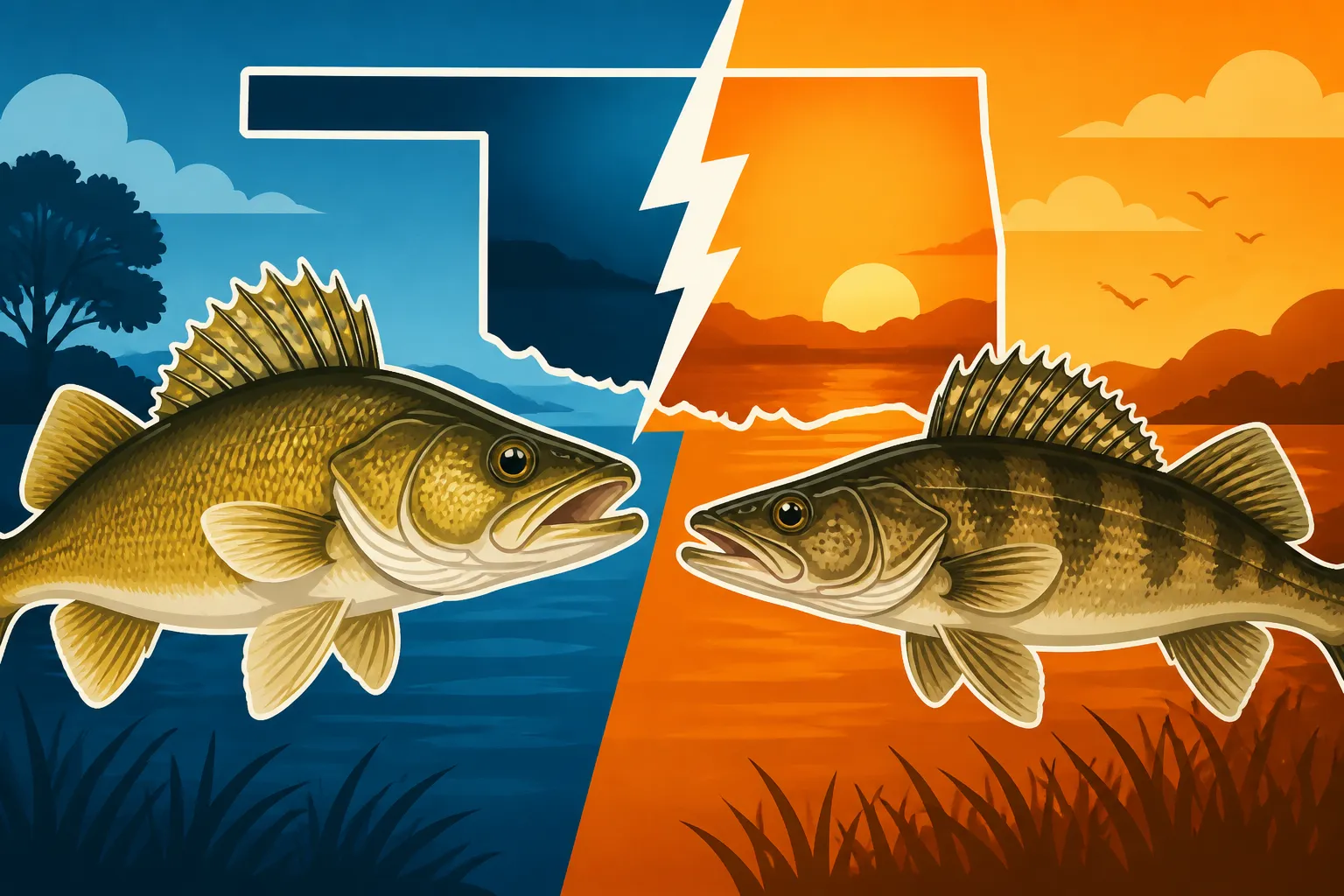
Walleye vs Sauger: How to Tell Them Apart
It can be incredibly frustrating to reel in a beautiful fish, only to stare at it and wonder, "Is this a walleye, or is it a sauger?" This confusion is super common among Oklahoma anglers, and it's not just about bragging rights – getting it right can impact whether you're following local regulations. This guide will meticulously break down the differences between these two often-mistaken species, giving you the confidence to identify your catch every single time.
Why Identifying Walleye and Sauger Matters More Than You Think
Let's be real, sometimes you just want to fish and not have to be a marine biologist. But when it comes to walleye and sauger, knowing the difference isn't just a fun fact; it's a practical skill that can keep you out of trouble and help you appreciate the unique qualities of each fish. Many anglers assume they're essentially the same, but the subtle distinctions can have big implications.
The Angler's Dilemma: It's Not Always Obvious
You're out on Lake Tenkiller, the sun's setting, and you've just landed a gorgeous fish with those tell-tale reflective eyes. You're ecstatic, but then a flicker of doubt hits you. Is it a walleye, or a sauger? They both have elongated bodies, sharp teeth, and that distinctive golden-olive hue. From a distance, or even up close in dim light, they can look remarkably similar. It's especially tricky for new anglers or those who don't target these species regularly. I've had countless conversations at the boat ramp where folks are genuinely scratching their heads, comparing notes and photos, trying to nail down the identification. It’s a completely understandable struggle, and you're definitely not alone in feeling a little uncertain.
Regulations and Limits: Why Getting It Right Counts
Beyond just knowing what you caught, there's a serious reason to get your identification correct: fishing regulations. While both walleye and sauger are prized game fish in Oklahoma, their specific size and daily bag limits can sometimes differ, especially in certain bodies of water. Imagine you've had an incredible day, filled your stringer, only to find out later that two of your "walleye" were actually sauger, and you've accidentally exceeded the sauger limit for that particular lake. That's a headache no one wants! Game wardens are out there enforcing these rules to protect our fisheries, and a simple misidentification could lead to a citation. Knowing the precise differences means you can confidently keep what's legal and release what isn't, contributing to sustainable fishing practices and avoiding any unpleasant surprises. Before heading out, it's always a good idea to refresh your memory on Oklahoma's Bag Limit Rules by Species.
The Key Physical Differences: A Side-by-Side Look
When you've got a fish in hand, there are a few tell-tale signs that can help you distinguish between a walleye and a sauger. These aren't just minor details; they're reliable markers that once you know, you'll start spotting instantly. Think of them as the secret handshake of fish identification.
Dorsal Fin Markings: The Easiest Clue
Hands down, the easiest and most reliable way to tell a walleye from a sauger is by looking at their dorsal fins. Both fish have two dorsal fins, the first of which is spiny.
- Walleye: Look at the first dorsal fin. You'll almost always see a distinct, dark blotch at the very rear base of this spiny fin. It's often referred to as a "thumbprint" or "smudge." This blotch is consistently present and is a fantastic indicator. Additionally, the rest of the walleye's first dorsal fin usually has a uniform, mottled appearance without any distinct rows of spots. Another key walleye feature is the white tip on the lower lobe of its tail fin (caudal fin). This white tip is very prominent and a signature mark.
- Sauger: In contrast, the sauger's first dorsal fin typically lacks that prominent dark blotch at the base. Instead, it usually has several distinct rows of small, dark spots running across the entire fin. It looks almost like a dotted pattern, rather than a single smudge. The sauger's tail fin, unlike the walleye's, will not have a white tip. It will be more uniformly colored or subtly mottled.
When you're comparing them side-by-side, the difference is striking. If you catch one and you're unsure, gently spread that first dorsal fin and check for the distinct blotch or the rows of spots. It’s like a secret code nature uses to tell them apart.
Body Shape and Coloration: Subtle But Significant
While both fish share a generally elongated, slender profile, there are subtle differences in their overall body shape and coloration that become more apparent with practice.
- Walleye: Walleye tend to have a slightly deeper body profile and a more consistent, olive-gold to dark green coloration on their backs, fading to a lighter yellow-white belly. Their sides are usually more uniformly golden with subtle brassy or mottled bars that aren't always distinct. The overall impression is often one of a cleaner, more vibrant gold-green. Their eyes, famously large and opaque, have a distinctive "glassy" appearance due to a reflective layer (the tapetum lucidum) that helps them see in low light, giving them their name.
- Sauger: Sauger, on the other hand, often appear more slender and snake-like. Their coloration tends to be more brassy brown to dark olive on the back, with very distinct, saddle-like dark blotches or bars along their sides that extend down towards the belly. These markings are usually much more pronounced and irregular than those on a walleye, giving them a more "camouflaged" or "tiger-striped" look. Their eyes are also reflective, but generally appear a bit less prominent or "cloudy" than a walleye's. If you ever found yourself examining one caught on a retrieve from a deep spot, you'd immediately notice those distinct, almost zebra-like bands.
Pectoral Fin and Cheek Scales: Getting Up Close
For those truly dedicated to identification, or when the dorsal fin and coloration clues are ambiguous (which sometimes happens with hybrids, but we’ll get to that later!), you can look at the scales on their pectoral fins and cheeks. You might need a keen eye or even a magnifying glass for this one, but it's another reliable indicator.
- Walleye: The walleye generally has very few, if any, scales on its pectoral fin, which is the fin located just behind the gill plate. The cheek area, specifically the operculum (gill cover), is usually sparsely scaled or completely scale-less. It feels smoother to the touch. This can be a bit tricky to see without really examining the fish carefully, but it’s a consistent feature.
- Sauger: The sauger typically has more pronounced scaling on both its pectoral fin and its cheeks. You'll likely see a good patch of scales on the pectoral fin, and the operculum will feel rougher and be noticeably scaled. This difference in scaling is one of the more scientific ways fisheries biologists use to classify them, and it works for anglers too if you're willing to get a little hands-on with your catch. It’s a detail that might escape a quick glance, but if you’re trying to be absolutely certain, it’s worth the extra inspection. This is where a small pocket guide or even a quick image search on your phone can really help when you're lakeside.
Habitat and Behavior Clues
Knowing where these fish typically hang out and how they behave can also give you some strong hints about what you've caught, even before you get a good look. They often prefer slightly different environments, which can influence your fishing spots and techniques.
Preferred Waters: Where You're Likely to Find Them
While there's certainly overlap, walleye and sauger often show preferences for different types of water bodies and specific structures within them.
- Walleye: Walleye are quite adaptable and can be found in a variety of environments, from large reservoirs like Lake Eufaula and Lake Texoma to smaller lakes. However, they generally prefer larger, deeper, and clearer lakes and reservoirs with rocky bottoms, gravel, or submerged timber. They are very light-sensitive and will often retreat to deeper, darker water during bright daylight, becoming more active during low-light conditions like dawn, dusk, or even at night. You might find them suspended over deep water or relating to structure like humps, points, and ledges. Where to Catch Walleye in Oklahoma can give you some great starting points.
- Sauger: Sauger, on the other hand, tend to be more prevalent in river systems and large, turbid (murky) reservoirs with significant current. They thrive in waters that are a bit more stained or muddy, which provides them with cover from the light. You'll often find them congregating in current seams, behind wing dams, in deep holes, and along channel edges in rivers. They are less common in the ultra-clear, deep lakes where walleye might dominate. If you're fishing a major river system in Oklahoma, especially below a dam, the chances of encountering a sauger increase significantly.
Feeding Habits and Time of Day: Behavioral Differences
Their preferred habitats often lead to slightly different feeding behaviors and activity patterns. Understanding this can help you anticipate which species you're likely to hook.
- Walleye: Being more light-sensitive, walleye are masters of ambush in low-light conditions. They'll often feed most actively at dawn, dusk, throughout the night, or on heavily overcast days. Their large, reflective eyes are perfectly adapted for hunting baitfish in dim light. They'll often key in on schools of shad, minnows, or smaller panfish. Their feeding can be quite aggressive, but they can also be notoriously finicky, sometimes only biting during short windows of opportunity. This is why many anglers swear by night fishing for walleye, or targeting them during a morning bite just as the sun peeks over the horizon.
- Sauger: Sauger are generally less light-sensitive than walleye, likely due to their preference for murkier waters. While they still bite well in low light, they can be more consistently active throughout the day, particularly in stained water or deeper, darker river channels. They also primarily feed on baitfish, but their association with current means they are often opportunistic feeders, grabbing whatever comes by in the flow. Anglers targeting sauger might find consistent action during midday in their preferred riverine habitats. Knowing Best Time to Catch Walleye in Oklahoma versus sauger can really help you plan your trip.
Seasonal Movements: What Changes Throughout the Year
Both species exhibit seasonal movements tied to spawning, water temperature, and baitfish migration, but these can also differ subtly.
- Walleye: In spring, walleye move to shallower, rocky areas to spawn when water temperatures hit the sweet spot, often in the low to mid-40s F. After spawning, they'll disperse and follow baitfish into deeper main lake basins during summer, often suspending or relating to deep structure. In fall, they'll often move shallower again as water temperatures cool, feeding heavily before winter sets in. During winter, they can be found in deeper holes and channels, often biting well through the ice.
- Sauger: Sauger also spawn in spring, but often slightly earlier than walleye and typically in flowing water, moving upstream in rivers or into tributary streams of reservoirs. After spawning, they'll remain more associated with current and structure in river channels throughout the summer, seeking out cooler, oxygenated water in deeper scour holes or behind obstructions. Their movements can be more localized to river stretches compared to the wide-ranging patterns of reservoir walleye. Understanding these seasonal changes can help you predict which fish you might encounter in a particular spot at a given time of year.
Beyond the Looks: Other Ways to Tell
Sometimes, even with all the visual cues, these fish can still be tricky. Environmental factors or even hybridization can make identification difficult. But there are still more clues, some of which you only discover after the catch is landed, or even after it's on the dinner plate!
Size and Weight Potential
While not a definitive identification method, the typical size and weight you expect from each species can sometimes offer a strong hint.
- Walleye: Walleye generally grow larger and heavier than sauger. Oklahoma has some impressive walleye, with many anglers routinely catching fish in the 3-8 pound range, and genuine trophies pushing into the double digits. Their potential for growth is simply higher. If you've just hauled in a substantial fish, say over 5 or 6 pounds, it's statistically more likely to be a walleye. For a deeper dive into their growth potential, check out How Big Do Walleye Get in Oklahoma.
- Sauger: Sauger, while still a respectable catch, typically don't reach the same trophy sizes as walleye. Most sauger caught by anglers are in the 1-3 pound range, with fish over 4 or 5 pounds considered exceptional. They tend to be more slender, even at maturity. So, if you're reeling in a fish that's hefty and broad-shouldered, lean towards walleye. If it's a bit more "streamlined" and under 5 pounds, it could very well be a sauger.
The Saugeye Factor: A Hybrid Challenge
Here's where it gets truly interesting – and sometimes confusing! Oklahoma waters are home to a hybrid cross between a walleye and a sauger, affectionately known as a "saugeye." These fish are often stocked by the state wildlife department because they grow fast, fight hard, and adapt well to reservoir conditions. The problem? They can exhibit characteristics of both parent species, making identification a real puzzle.
A saugeye might have a faint dorsal fin blotch like a walleye, but also some scattered spots like a sauger. Its body coloration could be a mix, and its overall appearance often falls somewhere in between. This is why focusing on multiple identification markers is so crucial. If you're still stumped after checking the dorsal fin, body shape, and scaling, you might just have one of these awesome hybrids. It’s definitely a testament to why understanding Which of Oklahoma's Three Cousin Fish Did You Just Catch? is so important. And if you're specifically trying to understand this hybrid, take a look at What Does a Saugeye Look Like or Sauger vs Saugeye: Key Differences for Oklahoma Anglers.
Taste and Texture: The Culinary Distinction
Once you've brought your catch home, the ultimate test for many anglers is the taste. Both walleye and sauger are renowned for their delicious, flaky white meat, making them highly sought-after table fare. However, there are subtle differences in their culinary qualities.
- Walleye: Walleye meat is often described as having a very clean, mild, and sweet flavor with a firm, flaky texture. Because they often come from clearer, colder waters, their flesh can be exceptionally white and lean. Many consider walleye to be one of the best-tasting freshwater fish. It holds up well to various cooking methods, from pan-frying to baking.
- Sauger: Sauger meat is also excellent, very similar to walleye but sometimes described as being slightly richer or having a slightly stronger flavor. This might be attributed to their preference for warmer, often more turbid, riverine environments. Their flesh is also white and flaky, though perhaps not quite as firm as a walleye's. It's still incredibly delicious and highly prized by those who catch them. So, if you're having a fish fry and notice a slight difference in richness, it could be a clue. On a related note, if you're curious about the hybrid's culinary appeal, you might want to read Is Saugeye Good to Eat?.
Fishing Techniques That Favor One Over The Other
While many techniques will catch both, understanding their preferences can help you target one over the other.
- Walleye Techniques: Walleye often respond well to jigging with live bait (like shiners or nightcrawlers) or artificial lures (such as soft plastics, blade baits, or lipless crankbaits) fished along deep structure. Trolling with crankbaits or spinner rigs is also incredibly effective, especially for covering large expanses of water. Given their light sensitivity, targeting them early morning, late evening, or at night can be particularly productive. If you're looking for gear, you can find a huge selection of Best Lures for Walleye at Oklahoma Reservoirs on Amazon. For specific techniques, consider How to Troll for Walleye in Summer or Best Walleye Lures for Spring Fishing.
- Sauger Techniques: Sauger are often caught by vertical jigging in current, using jigs tipped with minnows or soft plastics. They're also susceptible to bottom-bouncing rigs in rivers and deep reservoir channels. Since they prefer murkier water and current, heavy jigs or rigs that get down quickly and stay in the strike zone are key. While less common, bank fishing can also yield sauger if you're targeting the right current breaks and deep pockets, so checking out How to Catch Walleye from the Bank can offer some adaptable insights.
To help summarize, here’s a quick comparison table:
| Feature | Walleye | Sauger |
|---|---|---|
| Dorsal Fin | Dark blotch at rear base, no distinct spots | Rows of distinct spots, no rear blotch |
| Tail Fin | Prominent white tip on lower lobe | No white tip, uniformly mottled |
| Body Color | Olive-gold to dark green, subtle mottling | Brassy brown to olive, distinct dark saddle-marks |
| Body Shape | Slightly deeper, robust | More slender, "snake-like" |
| Pectoral/Cheek | Sparsely scaled or scale-less | Noticeably scaled |
| Typical Size | Larger (3-8+ lbs common) | Smaller (1-3 lbs common) |
| Preferred H2O | Clearer, deeper lakes/reservoirs, rocky | Murkier, river systems, current, deep channels |
| Activity | Primarily low-light (dawn, dusk, night) | More consistent throughout the day, especially in murky water |
The Uniqueness of Oklahoma's "Cousin Fish"
It’s worth remembering that walleye, sauger, and their hybrid cousin, the saugeye, are all part of the perch family and offer fantastic angling opportunities in Oklahoma. Each brings its own challenge and reward. The more you learn about these distinct species, the better equipped you'll be to enjoy your time on the water, fill your cooler, and confidently identify your catch. Don't let the confusion deter you; embrace the learning process! For a broader understanding of these interconnected species, make sure to check out Walleye, Sauger and Saugeye: Oklahoma's Cousin Fish. It truly helps to see them as a family, even with their individual quirks.
Disclaimer
This article is for general informational purposes only and does not constitute professional advice. Laws, prices and regulations vary by location and change over time. Consult a qualified professional for guidance on your specific situation.