Seasonal Bait Selection for Bass
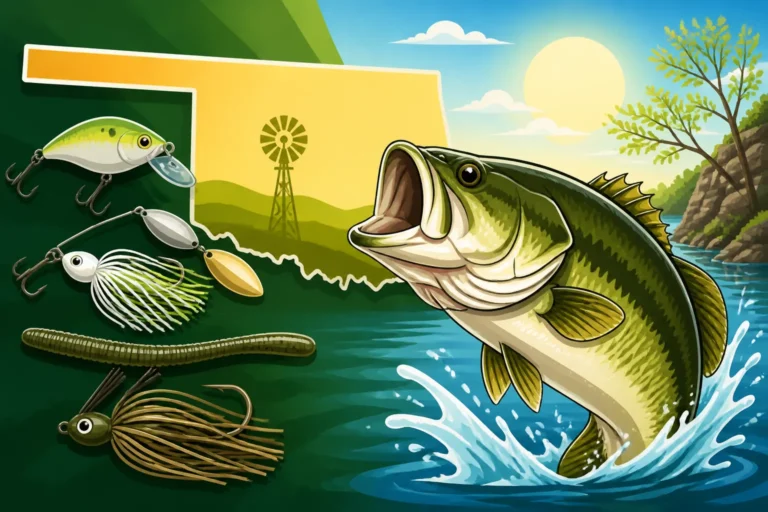
One of the most common frustrations for any bass angler, whether you're a seasoned pro or just starting out, is showing up to the lake with a tackle box full of confidence, only to find the bass completely uninterested in what you're throwing. It's a humbling experience, and often, the culprit isn't your skill, but simply using the wrong bait for the season. Bass behavior changes dramatically with water temperature and forage availability throughout the year. This comprehensive guide will peel back the layers of seasonal bass behavior in Oklahoma and arm you with the knowledge to select the perfect bait, ensuring you're always presenting what the fish want to eat.
Understanding Bass Behavior Through the Seasons
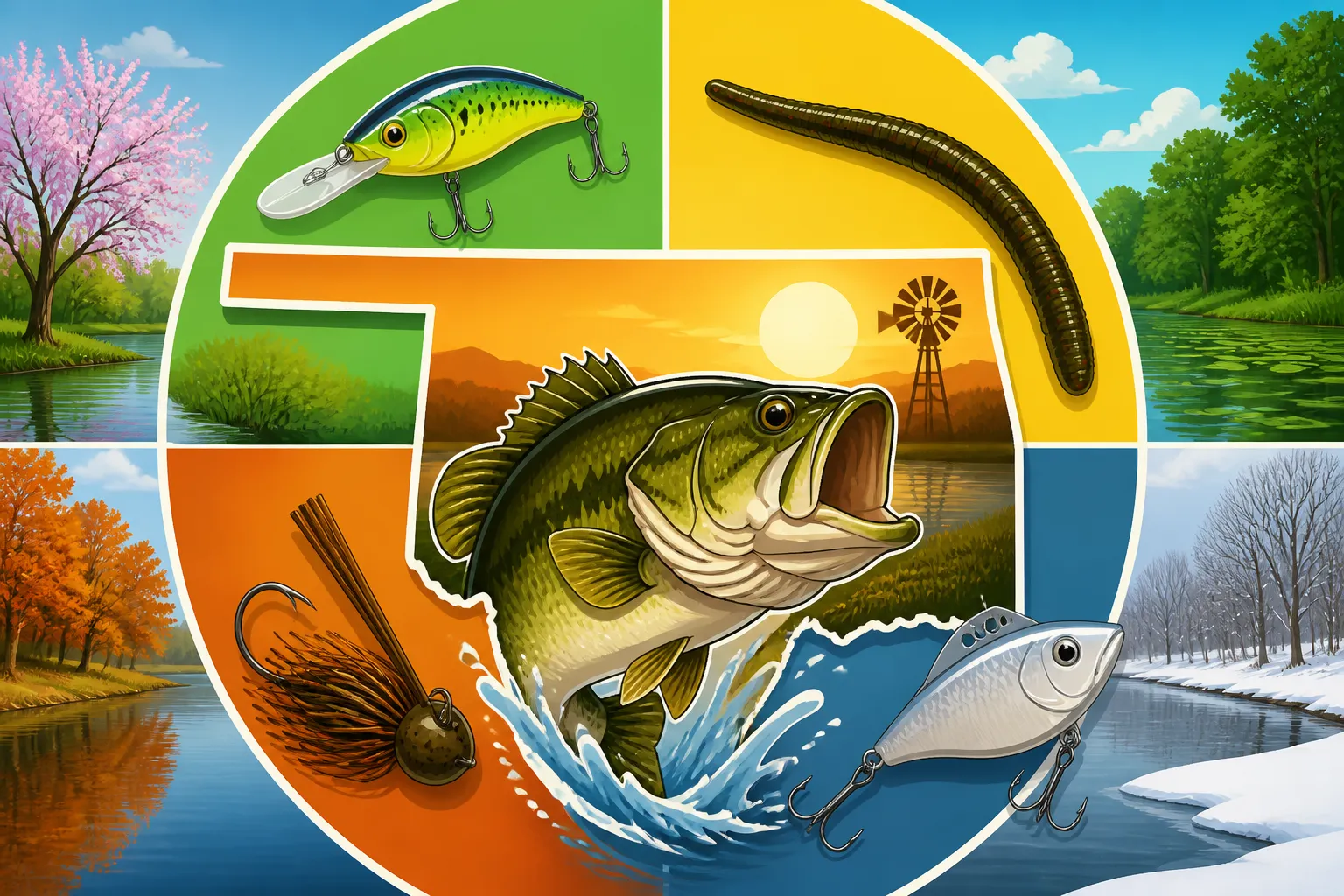
To truly master seasonal bait selection, you first have to understand what makes bass tick at different times of the year. Their priorities shift from reproduction to survival, and these changes dictate where they'll be and what they'll be willing to chase. Ignoring these natural rhythms is like trying to convince someone to wear a heavy winter coat in July – it just doesn't make sense.
Spring: The Pre-Spawn and Spawn Frenzy
Spring in Oklahoma is arguably the most exciting time to chase bass. As the water temperatures begin to climb into the mid-50s and low 60s Fahrenheit, bass shake off their winter lethargy and begin to move. This period, often called the pre-spawn, is characterized by aggressive feeding as females load up on calories for the monumental task of laying eggs. They're often found staging near spawning flats, gorging themselves on anything that swims by. You can find more detailed information on this period in our guide on Spring Bass Spawn Timing in Oklahoma.
Once the water hits that magic range of 60-70 degrees, usually in April and May across much of Oklahoma, the actual spawn begins. Males move into shallower waters to fan out beds, and females follow to lay their eggs. During this time, bass are incredibly focused on reproduction and defense. They become territorial, striking at anything that invades their space, even if they're not actively feeding. This can be a tricky bite to crack, as their motivation isn't hunger, but instinct.
Summer: Deep Dives and Early Morning Feeds
As Oklahoma's temperatures soar and water warms into the 70s and 80s, bass shift dramatically. The comfort of shallow spawning areas quickly becomes too hot, especially midday. They'll retreat to deeper, cooler waters, often seeking out thermal refuges, submerged structure, or areas with better oxygen levels. This doesn't mean they stop eating, but their feeding windows become much narrower.
You'll typically find bass feeding heavily during the low-light hours of dawn and dusk, or even at night, when surface temperatures are more tolerable and baitfish are more active in shallower zones. During the harsh midday sun, they become much more lethargic, holding tight to cover, suspending over deep channels, or burying themselves in thick vegetation. Anglers who only fish from 10 AM to 4 PM during summer often find themselves frustrated by the lack of activity.
Fall: The Migration and Feeding Blitz
Fall is another fantastic time for Oklahoma bass fishing, often rivaling spring in terms of action. As water temperatures begin to cool from the high 70s back down into the 60s and 50s, bass sense the coming winter and initiate a major feeding spree. This period is often called the "fall migration" or "feeding blitz" because bass will follow schools of baitfish, like shad, from deeper summer haunts back into shallower coves and creek arms.
This time of year is all about baitfish patterns. If you can locate schools of shad, you'll likely find bass close by, ambushing them. They're trying to pack on as much weight as possible, making them incredibly aggressive. The cooler water also re-energizes them, leading to some truly explosive strikes. It's a great time to experiment with various presentations as bass are often less finicky. Our guide on Fall Crappie Fishing Patterns in Oklahoma also touches on how cooling temperatures affect other species, indicating a broader trend of increased activity.
Winter: Slow and Deep Presentations
Winter in Oklahoma can be a challenging time for bass anglers, but it's far from impossible to catch fish. As water temperatures drop below 50 degrees and sometimes even into the low 40s, a bass's metabolism slows significantly. They don't need to eat as often, and when they do, they're rarely chasing down fast-moving prey. They become highly concentrated in specific areas, often relating to the deepest available structure or warmest water pockets.
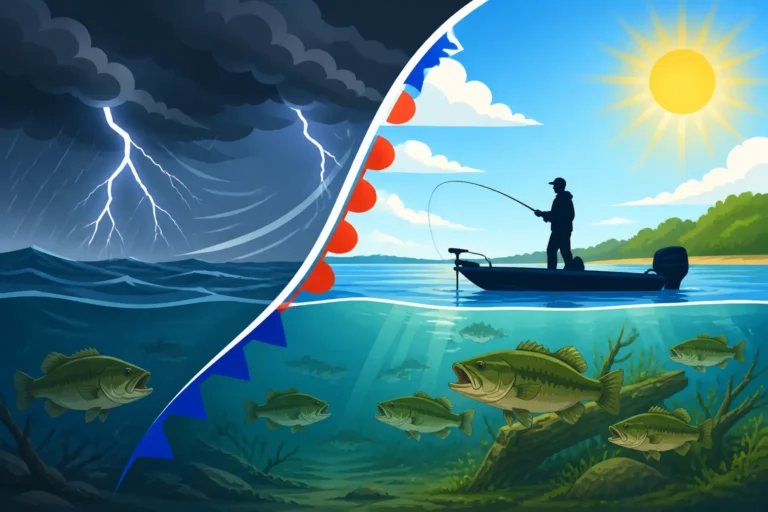
Bass will seek out thermal refuges, whether it's the warmest water on the lake (often in the main lake basin near points, humps, or deep ledges) or areas where they can expend minimal energy to ambush slow-moving forage. Your approach needs to be incredibly slow and precise, focusing on finesse and getting the bait right in front of their faces. Understanding How Cold Fronts Change Fishing Patterns on Oklahoma Lakes is crucial during this time, as sudden drops in temperature can make an already tough bite even tougher.
Spring Bass Baits: Capitalizing on the Spawn
Spring is a season of transition, meaning your bait choices will need to evolve as the water warms and the bass move through their reproductive cycle. From aggressive pre-spawn feeding to territorial bed guarding, each phase demands a slightly different approach. This is where truly understanding bass behavior makes all the difference.
Pre-Spawn Aggression: Reaction Baits
During the pre-spawn, when water temperatures are typically in the mid-50s to low 60s, bass are hungry and actively searching for food. They've spent all winter conserving energy, and now they need to fuel up for the spawn. This is a fantastic time to use baits that trigger a reaction strike, even if the bass aren't aggressively feeding. Think about covering water and eliciting a chase.
Crankbaits are kings during this time. Medium-diving crankbaits that deflect off submerged timber or rock piles can be incredibly effective. Go for shad patterns if that's the primary forage, or crawfish patterns, especially in clearer water, as crawfish are a prime food source. Another excellent choice is a bladed jig, often called a ChatterBait, or a spinnerbait. These baits create a lot of vibration and flash, mimicking fleeing baitfish or crawfish and drawing strikes from actively cruising bass. Fishing a lipless crankbait over submerged grass flats or along points can also be deadly, especially when trying to locate schools of pre-spawn bass. For more on getting them to bite, check out our guide on Pre-Spawn Bass Fishing Techniques Explained.
During the Spawn: Bed Fishing and Finesse
Once the water hits the 60-70 degree range and bass are actively on beds, their feeding instinct takes a backseat to their protective instincts. They're not necessarily eating, but they will violently strike anything that gets too close to their eggs. This is where finesse tactics and realistic presentations shine. The key is to irritate them into biting.
Soft plastics are your best friend here. Wacky-rigged Senkos, creature baits like Brush Hogs, or even simple Texas-rigged worms can be incredibly effective. Cast past the bed and slowly drag the bait into the strike zone, letting it sit there and agitate the bass. Often, they'll pick it up and move it off the bed rather than eat it, so a subtle retrieve and keen eye for line movement are critical. The goal is a precise, repetitive presentation that eventually pushes the bass over the edge. These baits typically don't have a lot of action on their own, making them perfect for sitting still and tempting a territorial bass. Learning How to Tell When Bass Are Spawning in Oklahoma Lakes can give you a leg up on this sensitive period.
Post-Spawn Recovery: Topwater and Plastics
After the grueling process of spawning, both male and female bass need a little recovery time. Females are often exhausted and vulnerable, retreating to slightly deeper water or nearby cover to regain strength. Males, on the other hand, are still guarding fry for a period and can be quite aggressive. As the water continues to warm, topwater action starts to pick up, and finesse plastics remain strong.
For those bass that are recovering or guarding fry, weightless soft plastics like a Texas-rigged Fluke or a Neko rig can be very productive around cover such as docks, brush piles, or submerged timber. The key is a slow, methodical presentation. As temperatures rise and bass become more active, especially in the mornings and evenings, topwater lures like poppers, walking baits, and frogs come into their own. They mimic injured baitfish or frogs along the surface, drawing explosive strikes from recuperating bass. This is particularly effective around shallow cover like lily pads, laydowns, or grass lines. Check out Post-Spawn Bass Fishing Techniques Explained for more strategies to succeed in this phase.
Summer Bass Baits: Beating the Heat and Finding Them Deep
Oklahoma summers are hot, plain and simple. Bass move deeper and their feeding habits become more particular. Adapting your bait selection to these conditions means focusing on low-light periods and targeting specific deep-water structures when the sun is high.
Early Morning and Evening: Topwater and Shallow Cranks
As the sun begins to rise or dip below the horizon, and surface temperatures are at their coolest, bass will often venture into shallower waters to feed on baitfish that have moved up. This is prime time for topwater action. Walking baits like a Heddon Super Spook or a Zara Spook, poppers, or even buzzbaits can draw thrilling blow-ups in the low light.
Beyond topwater, shallow-diving crankbaits are excellent choices for covering water along grass lines, riprap, or rocky points during these cooler periods. They can effectively mimic shad or sunfish feeding in the shallows. Spinnerbaits and bladed jigs also remain viable, especially when fished quickly over submerged vegetation or around isolated cover. The goal is to capitalize on that brief window when bass are actively hunting in the cooler, shallower water columns before retreating to the depths. These are some of the Best Bass Lures for Summer Fishing, especially during these crucial times.
Midday Heat: Deep Cranks, Jigs, and Carolina Rigs
When the Oklahoma sun is beating down and water temperatures peak, bass will typically be found in their deepest, coolest haunts. Think about deep ledges, offshore humps, creek channels, and submerged timber. Your baits need to get down to them and present a slow, enticing meal.
Deep-diving crankbaits are fantastic for covering large areas of deep water and finding those offshore schools of bass. Look for models that can dive to 15-20 feet or more, matching them to the depths you're fishing. Football jigs, often tipped with a crawfish-imitating plastic trailer, are incredibly effective when bounced along the bottom of ledges or rock piles. They mimic crawfish or an easy meal, and their slower fall allows lethargic bass to commit. The Carolina rig, with its separated weight and floating worm or creature bait, is another stellar choice for probing deep structure. It presents the bait subtly above the bottom, perfect for inactive bass. Learning How to Rig a Carolina Rig for Bass properly is key to its effectiveness in deep water.
Night Fishing for Summer Giants
One of the most overlooked and productive strategies for summer bass in Oklahoma is night fishing. As the sun sets, surface temperatures drop, and many larger bass, which are often nocturnal predators, become incredibly active. This is when some of the biggest bass are caught.
Dark-colored jigs, large worms (like a 10-inch Power Worm or a Culprit worm), and even black buzzbaits can be incredibly effective. The key is to rely on sound and silhouette. Bass use their lateral line to detect vibrations in the dark, so a thumping spinnerbait or a slow-crawled jig with a paddle-tail worm can be deadly. Casting these baits along docks, brush piles, and shallow flats adjacent to deeper water can yield some surprising results. Don't forget a headlamp and bug spray, but the rewards of catching a summer giant under the stars are well worth it.
Fall Bass Baits: Following the Baitfish Bonanza
Fall is all about following the bait. As temperatures cool, shad and other forage fish migrate into shallower creek arms and coves, and bass follow them like a shadow. This makes it one of the most exciting times to be on the water, with plenty of aggressive, fat bass to be caught.
Transition Period: Squarebills and Spinnerbaits
In early fall, as water temperatures just start to drop into the low 70s and high 60s, bass begin to transition from their deep summer patterns to shallower feeding zones. This is an excellent time for baits that cover water and mimic migrating baitfish.
Squarebill crankbaits are perfect for this period. Their wide wobble and ability to deflect off cover without getting hung up make them ideal for fishing shallow flats, rocky points, and submerged wood in creek arms. Pair them with shad or crawfish patterns. Spinnerbaits, particularly those with willow leaf blades for a flashier presentation, are also highly effective for covering water and mimicking schools of baitfish. They excel when retrieved quickly over grass beds or around brush piles. For more tips on this period, our guide on Best Bass Lures for Fall Fishing offers additional insights.
Peak Fall Feed: Jerkbaits and Lipless Cranks
As fall progresses and water temperatures settle into the 60s, the feeding frenzy truly begins. Bass are actively chasing schools of shad and gorging themselves. This is the prime time for reaction baits that perfectly imitate these frantic baitfish.
Jerkbaits become incredibly potent. Their erratic, darting action perfectly mimics a dying or confused baitfish, triggering aggressive strikes from hungry bass. Experiment with different retrieve pauses – sometimes a long pause is key, other times a quick twitch-twitch-pause works wonders. Lipless crankbaits, like a Rat-L-Trap or a Bill Lewis Rat-L-Trap, are also phenomenal for locating and catching schooling bass. Rip them through grass beds or retrieve them quickly along points and flats. The loud rattle and tight wobble are irresistible to active bass. This is when bass are often schooled up, making it possible to catch multiple fish from one spot.
Late Fall Cool Down: Jigs and Finesse Worms
As late fall arrives and water temperatures dip into the 50s, bass might start to slow down slightly, though they're still feeding. They'll often pull back to slightly deeper staging areas near main lake points or channel swings, but will still venture shallow for feeding opportunities, especially during warmer spells.
Football jigs, once again, come into play here, particularly if you're targeting bass that have pulled back to deeper structure. Slowly drag or hop them along the bottom, mimicking crawfish or a lethargic baitfish. Finesse worms, such as a drop shot rig or a shaky head, are excellent for tempting less active bass. These presentations are subtle and mimic a natural, easy meal. When bass aren't as willing to chase, putting a small, natural-looking bait right in front of them is often the best strategy.
Winter Bass Baits: Patience for the Coldwater Bite
Winter fishing requires a shift in mindset and technique. Forget the fast-paced power fishing of spring and fall. In the cold Oklahoma waters, patience and precision are paramount. Bass are conserving energy, so your baits need to be presented slowly and enticingly right in their strike zone.
Targeting Deep Structure: Spoons and Blade Baits
When water temperatures are in the 40s, bass will often stack up on deep structure – ledges, humps, creek channel bends, and submerged timber. They're looking for stable temperatures and an easy meal. This is where vertical presentations truly shine.
Jigging spoons, like a Hopkins Shorty or a Luhr-Jensen Crippled Herring, are incredibly effective. Drop them directly onto schools of bass or structure, then jig them up and down, letting them flutter on the fall. This action mimics a dying baitfish, a tempting target for cold, sluggish bass. Blade baits, such as a Sebile Vibe Blade or a Johnson ThinFisher, also work wonders. They produce a tight vibration on the lift and flutter enticingly on the fall, often drawing strikes even from seemingly inactive fish. The key is to keep them in the strike zone for extended periods and pay close attention to subtle bites.
Finesse Presentations: Drop Shots and Small Jigs
For those days when bass are even more lethargic, or when you're targeting suspended fish, finesse tactics become your bread and butter. These baits are designed to elicit a bite from the most finicky bass without requiring them to expend much energy.
A drop shot rig, with a small worm or creature bait suspended above a weight, is perfect for tempting inactive bass. It allows the bait to quiver enticingly in place, often right at eye level with the fish. Small jig heads (1/8 to 1/4 ounce) tipped with tiny grub tails or finesse worms are also excellent. Cast them to deep cover or structure and slowly crawl or hop them along the bottom. The slower the better in cold water. You'll often find that the bite is incredibly light, feeling like a slight "tick" or just added weight on your line.
The Sun's Influence: Jerkbaits on Warmer Days
While winter fishing is primarily about slow, deep presentations, Oklahoma can experience warmer, sunny days even in January or February. These brief warm spells can sometimes push bass up shallower, particularly on north-facing banks that absorb more sunlight, or into areas where baitfish might be temporarily more active.
On these slightly warmer days, especially if you're seeing water temperatures tick up a few degrees, a jerkbait can still be a surprisingly effective tool. Fish it incredibly slowly, with very long pauses between twitches. The idea is to make the bait look like a struggling, easy meal. Hard jerks might be too aggressive, but subtle twitches and extended dead-sticking can often trigger a strike from a bass that's briefly more active. Concentrate on these warmer banks or sun-drenched main lake points.
General Tips for Year-Round Bass Bait Selection
Beyond the seasonal shifts, there are some fundamental principles that apply to bass bait selection no matter the time of year. Keeping these in mind can significantly improve your success rate and help you adapt to changing conditions on the fly.
Matching the Hatch and Water Clarity
One of the most enduring pieces of fishing advice is "match the hatch." This means using baits that closely resemble the size, shape, and color of the primary forage in the water you're fishing. If bass are feeding on small shad, use a small, silver-colored crankbait or soft plastic. If crawfish are abundant, use a brown, green, or red jig or creature bait. Observing what's in the water – whether it's baitfish fleeing, frogs jumping, or crawfish scuttling – can give you major clues.
Water clarity also plays a huge role. In clear water, natural colors (greens, browns, clear with flake) and more subtle presentations are often best. Bass rely heavily on sight, so realistic baits are key. In stained or muddy water, brighter colors (chartreuse, orange, black-and-blue) that provide a strong silhouette or baits with lots of vibration (chatterbaits, spinnerbaits, loud crankbaits) are more effective. Bass in dirty water rely more on their lateral line and scent to find food.
Experimentation and Local Knowledge
While guides like this offer a fantastic starting point, bass fishing is rarely a one-size-fits-all endeavor. Different lakes, and even different parts of the same lake, can have unique characteristics. What works wonders on Lake Texoma might not be as effective on Lake Eufaula, or vice versa. Talking to local bait shop owners, other anglers, or even hiring a guide for a day can provide invaluable local knowledge. You can often find great local insights by exploring resources such as Best Bass Fishing Lakes Across Oklahoma.
Don't be afraid to experiment! If what you're throwing isn't working, change it up. Try a different color, a different size, or a completely different type of bait. Vary your retrieve speed. Sometimes a subtle change is all it takes to unlock the bite. Keep a log of what worked (and didn't work) on different lakes, in different seasons, and under various conditions. This personal data will become your most powerful tool over time.
Essential Baits for Your Tackle Box
No matter the season, some baits are just staples that every bass angler should have readily available. While seasonal specifics are important, having a core selection of versatile baits ensures you're prepared for most situations. Many of these can be found easily online, for example, on Amazon.
Here's a quick rundown of some year-round essentials:
| Bait Type | Key Application |
|---|---|
| Soft Plastics | Versatile for finesse, flipping, Texas rigs; year-round. |
| Jigs | Imitate crawfish; effective on bottom structure year-round. |
| Crankbaits | Cover water; shallow to deep diving; pre-spawn/fall. |
| Spinnerbaits | Good vibration/flash; stained water, pre-spawn, fall. |
| Topwater Lures | Exciting surface bites; warm water, low light. |
| Jerkbaits | Erratic action; cool to cold water, clear water. |
| Lipless Cranks | Cover water, mimic shad; pre-spawn, fall. |
Having a variety of these baits in different sizes and colors will give you the flexibility to adapt to changing conditions and bass moods. A solid understanding of Oklahoma Bass Fishing: Techniques by Season combined with these essentials will make you a much more successful angler.
Disclaimer
Please note that fishing regulations and conditions can change. Always consult the latest Oklahoma Department of Wildlife Conservation (ODWC) regulations before heading out on the water. This guide provides general information and best practices, but local conditions, weather, and specific lake rules should always be verified.